
ABB
In Stock OK
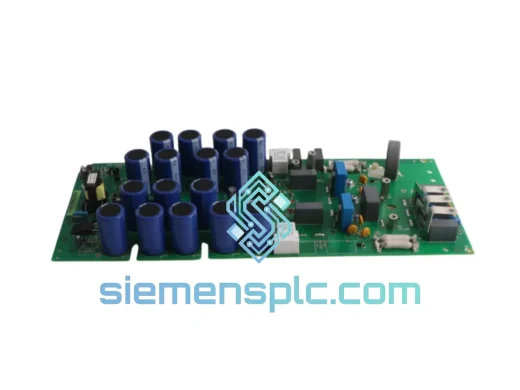
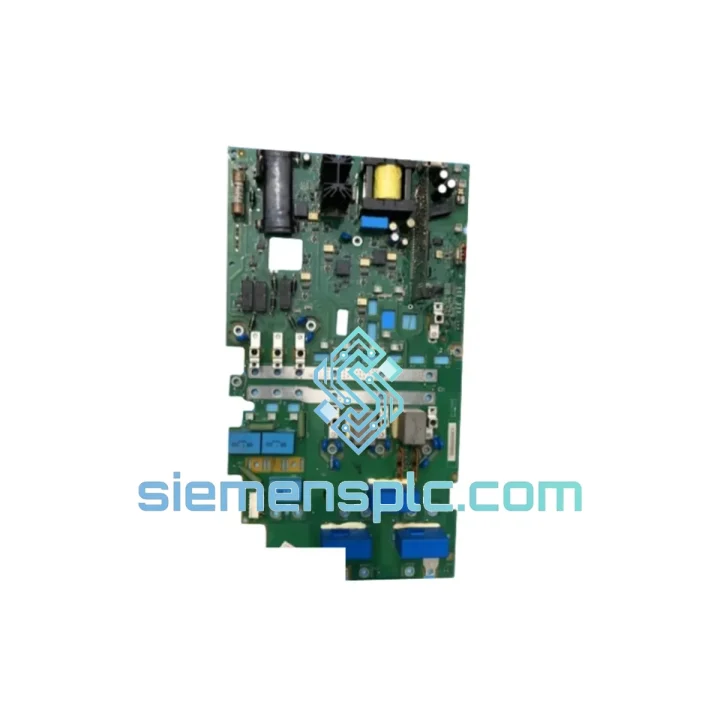
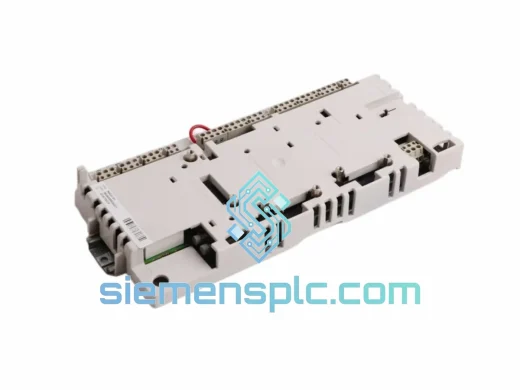
ABB RINT-5521C Drive Interface Board – ACS800 Series
Request verified availability, condition, replacement risk review, packing options and courier lead time for RINT-5521C.
BrandABB
Part NumberRINT-5521C
ConditionAvailability Check
Lead TimeRFQ Confirmation
DocumentsDatasheet / photos by RFQ
ShippingExport packing available
Auto-filled RFQ
RINT-5521C
Click Request Quote and the part number is inserted into the inquiry form automatically.
- Reply by email: [email protected]
- WhatsApp / Tel: +86 18359268345
- Mon-Sat 9:00-18:00 GMT+8
Procurement Data
Key Product Information
Core fields for model confirmation and RFQ routing. Detailed product narrative remains below.
- Brand
- ABB
- Primary Part Number
- RINT-5521C
- Product Type
- Drive Interface Board
- Series / Family
- S800
- Manufacturer
- ABB
- Country of Origin
- SE
- Catalog Category
- Motor Drives
- Operating Temp.
- -10 °C to +55 °C (ambient, with drive enclosure ventilation)
- Humidity
- 5–95% RH, non-condensing
- Warranty
- 12 months from date of shipment
- Compliance
- CE, RoHS 2011/65/EU
Model confirmed for inquiry
RINT-5521C
Send quantity, destination and urgency. The RFQ form keeps this part number attached.
Request Quote
Product Overview
ABB RINT-5521C — Gate-Drive Signal Interface Board in ACS800 Variable Frequency Drive Architecture
The ABB RINT-5521C is the main circuit interface board deployed within the ACS800 series variable frequency drive platform. Its primary function is to serve as the signal bridge between the drive’s RMIO control board and the IGBT power module gate-drive circuitry. In a standard ACS800 power stage, the control board generates PWM switching commands at logic-level voltages; the RINT-5521C receives these signals, conditions them through optocoupler isolation stages, and delivers amplified gate pulses to each IGBT in the three-phase inverter bridge. Simultaneously, it routes desaturation fault signals, overcurrent trip events, and thermal status feedback from the power module back to the control board within microseconds, enabling the drive’s Direct Torque Control (DTC) algorithm to respond to fault conditions before thermal damage propagates.
The board is mechanically and electrically rated for ACS800 frame sizes R2 through R6, covering drive output ratings from approximately 2.2 kW up to 355 kW in standard single-drive configurations. Its PCB layout follows ABB’s internal EMC design rules for industrial power electronics: ground planes are segmented to prevent high-frequency switching noise from coupling into low-level signal traces, and all inter-board connectors are keyed and latched to prevent mis-seating during vibration. The RINT-5521C carries CE marking and is manufactured to RoHS compliance standards.
In multi-drive cabinet configurations, the RINT-5521C fulfills the same gate-drive interface role within each inverter module, and its standardized connector pinout allows the RMIO control board to address multiple power modules through a common backplane without firmware modification. This architectural consistency is a deliberate design choice by ABB to reduce spare-parts inventory complexity across large installations.
Real-time Stock & RFQ: [email protected] | WhatsApp: +86 18359268345
Technical Parameters
| Parameter | Value |
|---|---|
| Part Number | RINT-5521C |
| Manufacturer | ABB |
| Compatible Drive Series | ACS800 (single-drive & multi-drive) |
| Compatible Frame Sizes | R2, R3, R4, R5, R6 |
| Compatible Control Boards | RMIO-11C, RMIO-12C |
| Board Function | Main circuit gate-drive signal interface |
| Isolation Technology | Optocoupler-based galvanic isolation (signal & fault channels) |
| PWM Signal Routing | 6-channel (3-phase upper & lower IGBT gate drive) |
| Fault Feedback Latency | < 2 µs (desaturation detection to control board notification) |
| Operating Temperature | -10 °C to +55 °C (ambient, with drive enclosure ventilation) |
| Storage Temperature | -40 °C to +70 °C |
| Humidity | 5–95% RH, non-condensing |
| PCB Coating | Conformal coating (IEC 60721-3-3 Class 3C2) |
| Compliance | CE, RoHS 2011/65/EU |
| Weight | Approx. 1,180 g (board + mounting hardware) |
| Warranty | 12 months from date of shipment |
Hardware Logical Analysis
Optocoupler Isolation Architecture: Each of the six PWM gate-drive channels on the RINT-5521C passes through a dedicated high-speed optocoupler. This galvanic isolation barrier separates the low-voltage logic domain of the RMIO control board (typically 3.3 V or 5 V CMOS logic) from the high-voltage gate-drive domain (±15 V relative to each IGBT emitter). The isolation barrier sustains transient voltages in excess of 2,500 Vrms, which is critical in ACS800 drives operating on 400 V or 690 V AC bus systems where common-mode transients during switching events can reach several kilovolts per microsecond (dV/dt). Without this isolation, a single switching transient could corrupt the PWM timing signals and cause shoot-through in the inverter bridge.
Desaturation Detection and Fault Propagation: The RINT-5521C implements hardware-level desaturation detection on each IGBT channel. When an IGBT fails to saturate properly — typically due to overcurrent or a short-circuit condition — its collector-emitter voltage rises above the saturation threshold. The RINT-5521C detects this condition within the gate-drive circuit itself, immediately blanks the gate signal to that IGBT, and simultaneously asserts a fault signal back to the RMIO board. This hardware-level response occurs in under 2 µs, well within the safe operating area (SOA) of the IGBT module, preventing thermal runaway before the software-level protection layer in the DTC firmware can respond.
EMC Design and Ground Plane Segmentation: The PCB employs a split ground plane strategy. The high-frequency switching ground (associated with gate-drive output stages) is physically separated from the signal-return ground (associated with the RMIO interface connectors) and connected only at a single star point. This prevents the high dI/dt currents flowing in the gate-drive output traces from inducing noise voltages in the low-level signal traces. Decoupling capacitors are placed within 1 mm of each optocoupler power pin to suppress supply rail perturbations caused by the fast current transients during IGBT turn-on and turn-off.
Connector Keying and Mechanical Retention: All inter-board connectors on the RINT-5521C use polarized, latched housings. This design prevents incorrect insertion during field replacement — a common failure mode in industrial environments where boards are swapped under time pressure. The latch mechanism provides a tactile confirmation of full engagement and resists vibration-induced connector fretting, which is a documented failure mode in drives installed on compressor skids and marine vessels.
System Integration Benefits
- Deterministic PWM Delivery: The optocoupler propagation delay is tightly matched across all six channels (typically within ±10 ns), ensuring that the three-phase switching pattern generated by the DTC algorithm is reproduced at the IGBT gates without phase skew that could introduce torque ripple or DC bus imbalance.
- Sub-microsecond Fault Isolation: Hardware desaturation detection at the board level reduces fault-to-trip time to under 2 µs, protecting IGBT modules from short-circuit destruction without relying on software interrupt latency.
- Plug-and-Play Frame Compatibility: A single RINT-5521C variant covers ACS800 frame sizes R2–R6, reducing the number of distinct spare-part SKUs a maintenance team must stock for a mixed-frame installation.
- No Firmware Re-parameterization: Replacing the RINT-5521C does not require drive parameter backup or restoration. The board carries no user-configurable firmware; all drive parameters remain stored on the RMIO control board.
- Conformal Coating for Harsh Environments: The IEC 60721-3-3 Class 3C2 conformal coating provides resistance to condensation, industrial chemical vapors, and airborne conductive particulates — extending board service life in cement, paper mill, and chemical plant environments.
- Standardized Multi-Drive Architecture: In ACS800 multi-drive cabinet systems, the RINT-5521C’s standardized pinout allows the master RMIO board to interface with multiple inverter modules without hardware modification, simplifying cabinet-level spare-parts management.
- Diagnostic Transparency: Fault signals routed through the RINT-5521C are logged by the RMIO board with timestamp and fault code, providing a traceable fault history accessible via the drive keypad or DriveWindow software for root-cause analysis.
- Reduced Commissioning Risk: Genuine ABB RINT-5521C boards are factory-tested against ABB’s gate-drive timing specifications before shipment, eliminating the timing calibration uncertainty associated with third-party compatible boards.
Quality Assurance & Global Logistics
Every RINT-5521C unit supplied by siemensplc.com is sourced through verified ABB-authorized distribution channels. Each board undergoes incoming inspection including visual examination of PCB traces, optocoupler date codes, and connector integrity before entering our inventory. Units are stored in anti-static shielding bags with humidity indicator cards in a temperature-controlled warehouse in Xiamen, China.
Xiamen’s geographic position — served by Xiamen Gaoqi International Airport and the Port of Xiamen — provides direct access to international air freight and sea freight routes covering North America, Europe, Southeast Asia, the Middle East, and Australia. Air freight shipments to major European hubs (Frankfurt, Amsterdam) typically transit in 3–5 business days; shipments to North American destinations (Los Angeles, Chicago) transit in 4–6 business days. All shipments are accompanied by a commercial invoice, packing list, and certificate of origin. DDP (Delivered Duty Paid) terms are available on request for customers requiring customs-cleared delivery.
A 12-month warranty is provided on all new units from the date of shipment. Warranty claims are processed with batch traceability records that allow us to identify the manufacturing lot and, where applicable, coordinate directly with ABB’s service network. Expedited replacement units can be dispatched within 24 hours for customers with critical production downtime situations.
Contact Information
Email: [email protected]
WhatsApp: +86 18359268345
Web: siemensplc.com
Location: Xiamen, China
© 2026 siemensplc.com. All rights reserved.
Ready to quote
[email protected]
Send This Part Number to Sales
RFQ workflow
Quality workflow ->
Confirmation Process
01Model confirmation
We check the full part number, brand, series and visible nameplate information before quotation.
02Availability reply
Sales confirms stock path, condition option, quantity and realistic lead time for export dispatch.
03Packing & courier
DHL, FedEx, UPS or buyer courier arrangements can be reviewed with packing requirements.
Continue sourcing
Browse full catalog ->
Related Automation Parts
Similar brand or category products for fast comparison and multi-item RFQ lists.
ABB
RFQ Ready
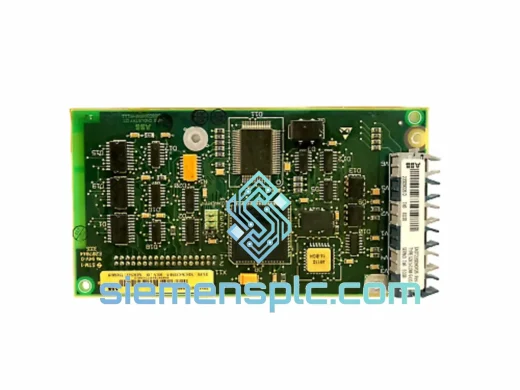
ABB SDCS-COM-5 3BSE006567R1 Fieldbus Communication Module
S800
Origin SE
Fieldbus Communication Module
ABB
RFQ Ready
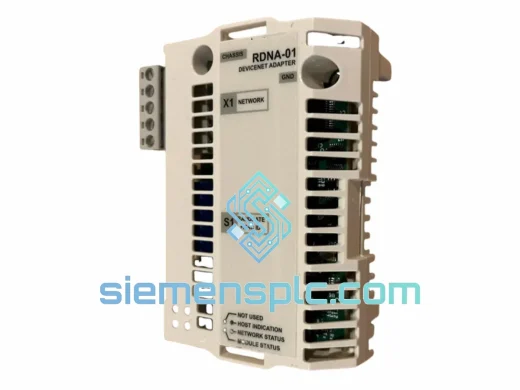
ABB RDNA-01 DeviceNet Adapter Module – ACS800 ACS600
S800
Origin SE
Fieldbus Communication Module
ABB
RFQ Ready
ABB RDCU-12C 3AUA0000036521 Drive Control Unit
S800
Origin SE
PLC & Drive Control Module