ABB
RFQ Ready
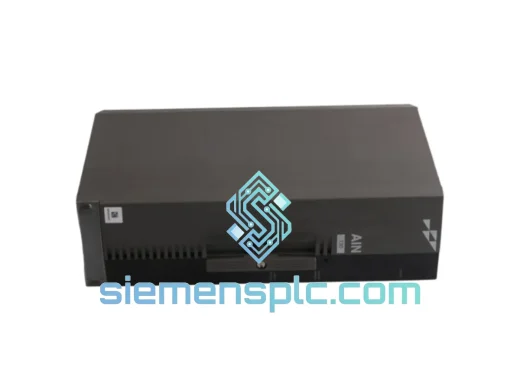
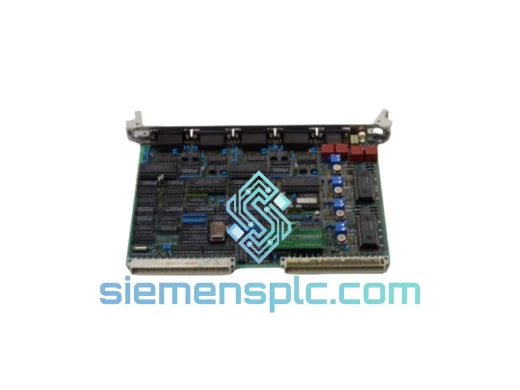
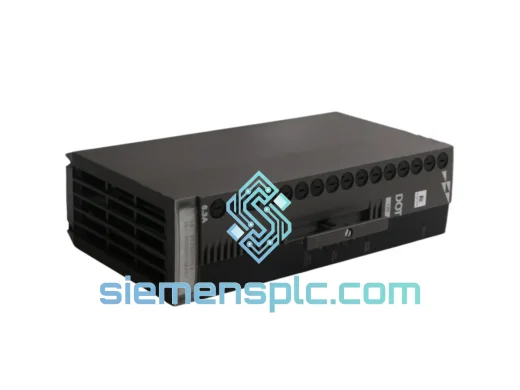
ABB P-HB-DOT-12010000 Safety Digital Output Module – AC500-S
AC500
Origin SE
Safety Digital Output Module
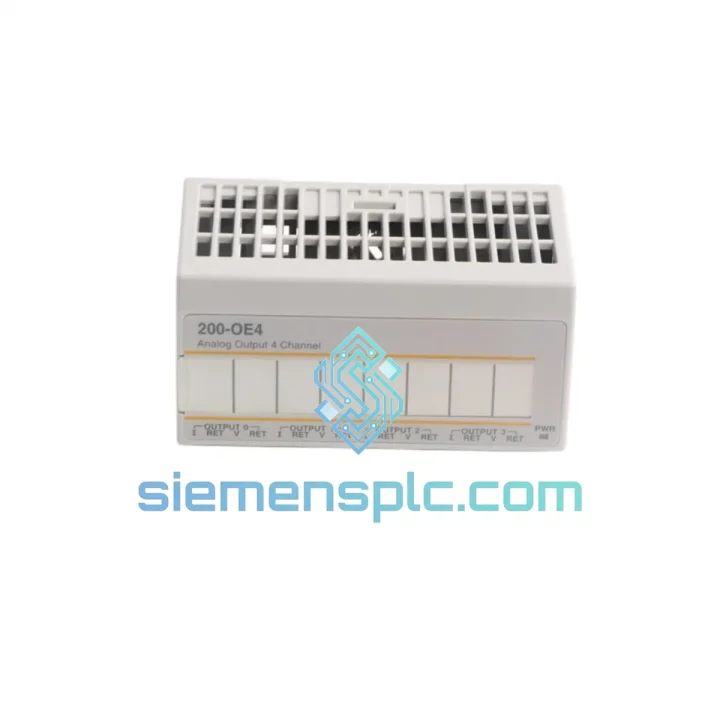
Request verified availability, condition, replacement risk review, packing options and courier lead time for S200-OE4.
Click Request Quote and the part number is inserted into the inquiry form automatically.
Core fields for model confirmation and RFQ routing. Detailed product narrative remains below.
It’s 02:30. Your DCS alarm console is lit up. The S200-OE4 on the secondary cooling loop rack has dropped all four output channels — valve positioners are frozen, the VFD speed reference is stuck at last value, and your process engineer just called asking why the flow curves look wrong. You already know the answer. The module is dead. Now the only question is how fast you can get a replacement on site.
We carry the ABB S200-OE4 in our Xiamen warehouse. Not a lead-time quote. Not a back-order promise. Physical stock, verified, boxed, and staged for same-day dispatch on orders confirmed before 16:00 CST. DHL Express and FedEx International Priority run daily from Xiamen Gaoqi Airport. For most of Asia and the Middle East, that means the module is in your hands within 24 to 48 hours. For Europe and North America, 72 to 96 hours. That’s the window between a controlled recovery and a full production write-off.
The S200-OE4 is ABB’s four-channel analog output module within the S200 distributed I/O platform, engineered to pair natively with the AC500 PLC family. Each of the four channels independently sources a 4–20 mA current signal or a 0–10 V voltage signal to field actuators — proportional control valves, variable frequency drive speed references, electropneumatic positioners, proportional pressure regulators. The 12-bit DAC per channel delivers the resolution that closed-loop process control requires. When a channel fails, there is no firmware patch, no software remap that restores it. The hardware must be swapped.
We have supplied S200-OE4 units to petrochemical facilities running continuous distillation columns, to food and beverage plants where CIP cycle timing is automated through analog outputs, to power generation sites where turbine governor control depends on a clean 4–20 mA signal. The failure pattern is consistent: one channel degrades first, the team compensates manually, and within days the remaining channels follow. The module that looked like a single-channel problem becomes a full rack issue. We exist to cut that timeline short.
Every unit we ship is sourced from verified, traceable supply chains. Original ABB labeling, original date codes, original firmware. No remarked parts. No refurbished boards. If your incoming inspection team requires documentation to confirm authenticity before installation, we provide it.
URGENT REQUIREMENT? Contact: [email protected] | WhatsApp: +86 18359268345
| Parameter | Specification |
|---|---|
| Manufacturer | ABB |
| Full Part Number | S200-OE4 |
| Module Function | Analog Output — 4 independent channels |
| Compatible Platform | ABB S200 I/O Series / AC500 PLC Family |
| Output Signal Types | 4–20 mA (current loop) / 0–10 V (voltage), selectable per channel |
| DAC Resolution | 12-bit per channel |
| Channel Isolation | Galvanically isolated from S200 backplane bus |
| Mounting | 35 mm DIN rail, S200 passive backplane |
| Operating Temperature | 0°C to +55°C continuous ambient |
| Storage Temperature | -25°C to +70°C |
| Relative Humidity | 5–95% RH, non-condensing |
| Vibration Resistance | IEC 60068-2-6 compliant |
| Certifications | CE, IEC 61131-2 |
| Country of Origin | Germany |
| Address Configuration | Automatic slot-based — no DIP switches required |
| Stock Status | ✅ In Stock — Xiamen Warehouse, Ready to Ship |
| Same-Day Cutoff | 16:00 CST on business days |
| Freight Options | DHL Express / FedEx International Priority |
Single-channel hard failure — the most common call we get. One channel locks at 20 mA or drops to 0 V while the other three continue operating within spec. The actuator connected to that channel goes to its fail-safe position and stays there. Root cause in the majority of cases: a transient overvoltage event on the field cable — a VFD switching spike, an inductive kick from a solenoid valve without a suppression diode, or a lightning-induced surge on an unshielded run. The DAC’s input protection absorbs the transient but the DAC itself is destroyed. Diagnosis: command the suspect channel to exactly 4.000 mA from the DCS and measure at the field terminal with a calibrated loop calibrator. Anything outside 4.000 mA ±0.1 mA confirms the channel is non-functional. No field repair is possible at the component level. Replace the module.
Uniform drift across all four channels. All outputs reading consistently low or high by a fixed offset — not a random scatter, a systematic shift. This is precision voltage reference degradation, a thermal aging failure that accelerates above 45°C continuous at the module face. Before installing the replacement, measure the actual temperature at the module location inside the cabinet. If it exceeds 45°C, identify and correct the thermal issue first. A replacement installed into the same thermal environment will fail on the same timeline as the module it replaces.
Module not enumerated on the S200 bus after power-up. The AC500 CPU logs an I/O configuration fault. The module’s status LED is red or dark. First action: reseat the S200 bus connector. The passive backplane connector develops intermittent contact after repeated thermal cycling — the connector body expands and contracts, and contact pressure decreases over time. If reseating resolves the fault, inspect the connector pins for oxidation or deformation and replace the backplane connector if necessary. If reseating does not resolve it, verify the hardware configuration in Automation Builder: module type and slot position must match exactly. A replacement S200-OE4 installed in the same slot will enumerate automatically without a configuration change. A module installed in a different slot requires a hardware configuration update and a full CPU download before it will come online.
Replacement procedure — field-tested sequence:
Address configuration note: The S200-OE4 has no user-accessible DIP switches, rotary address selectors, or firmware configuration for slot addressing. The module’s physical position on the DIN rail within the S200 passive backplane determines its I/O address as seen by the AC500 CPU. Install it in the correct slot and it configures itself. No additional steps required.
A control cabinet in an active plant is not a laboratory. It shares space with motor starters, contactors, switching power supplies, and transformer inrush currents that generate heat, vibration, and broadband electrical noise on a continuous basis. The S200-OE4 is rated and tested to operate in that environment without performance degradation across a multi-year service life.
Mechanical vibration from compressors, pumps, and rotating machinery transmits through the cabinet structure to every component mounted inside. Solder joint fatigue from sustained vibration is a documented failure mechanism in industrial electronics. ABB’s S200 I/O modules use PCB layout practices and component mounting geometries that distribute vibration stress away from critical solder joints. The conformal coating applied to the PCB assembly prevents vibration-induced micro-cracking from propagating into signal traces and reference circuit nodes.
Thermal cycling is the second primary aging mechanism. A cabinet that reaches 50°C during peak production and cools to 20°C overnight subjects every component to a 30°C thermal swing twice per day. Over a five-year service life, that exceeds 3,600 thermal cycles. The S200-OE4’s component selection accounts for the differential thermal expansion coefficients of the PCB substrate, component bodies, and solder alloy, maintaining electrical continuity and signal accuracy across the full rated temperature range throughout the module’s design life.
Humidity is particularly destructive to precision analog output circuits. A 12-bit DAC operating at rated accuracy requires a stable, low-noise voltage reference. Surface moisture on an uncoated PCB creates leakage paths that inject noise into the reference circuit, degrading output accuracy and introducing signal instability. The conformal coating on the S200-OE4’s PCB provides a continuous moisture barrier, protecting the analog signal chain in facilities without climate-controlled control rooms — coastal installations, outdoor enclosures, high-humidity process environments, and tropical climates.
Common-mode electrical noise from large VFDs and arc welding equipment can corrupt analog output signals on modules without proper isolation. The S200-OE4’s output channels are galvanically isolated from the S200 backplane bus, breaking the ground loop path that would otherwise allow noise currents to modulate the output signal. This isolation is critical for installations with long cable runs between the control cabinet and field devices, where ground potential differences between the cabinet and the actuator location can be significant.
Our dispatch facility is in Xiamen, Fujian Province — a primary export hub with direct daily access to DHL Express and FedEx International Priority freight services via Xiamen Gaoqi International Airport. Orders confirmed before 16:00 CST ship the same business day. Orders confirmed after the cutoff ship the following morning on the first available flight.
Estimated transit times from Xiamen:
Every shipment includes full end-to-end tracking. The AWB number is sent within two hours of dispatch. Export documentation — commercial invoice with HS code classification, packing list, and certificate of origin — is prepared for every international shipment as standard. For destinations with specific import permit requirements or customs pre-clearance procedures for industrial automation components, contact us before placing the order. We have active experience with customs procedures in more than 40 countries and can advise on documentation requirements that will prevent clearance delays at the destination port.
For critical downtime situations where standard business hours don’t apply, reach us directly on WhatsApp. We can arrange weekend dispatch, after-hours courier pickup, and direct carrier coordination for priority handling on urgent shipments. The objective is straightforward: get the module to your site before the next production window opens.
📧 Email: [email protected]
💬 WhatsApp: +86 18359268345
🌐 Web: siemensplc.com
© 2026. All rights reserved.
We check the full part number, brand, series and visible nameplate information before quotation.
Sales confirms stock path, condition option, quantity and realistic lead time for export dispatch.
DHL, FedEx, UPS or buyer courier arrangements can be reviewed with packing requirements.
Similar brand or category products for fast comparison and multi-item RFQ lists.