
ABB
In Stock OK
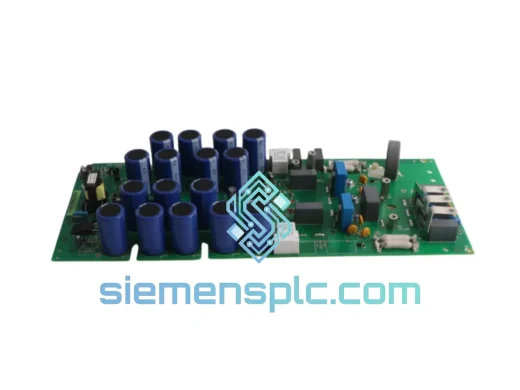
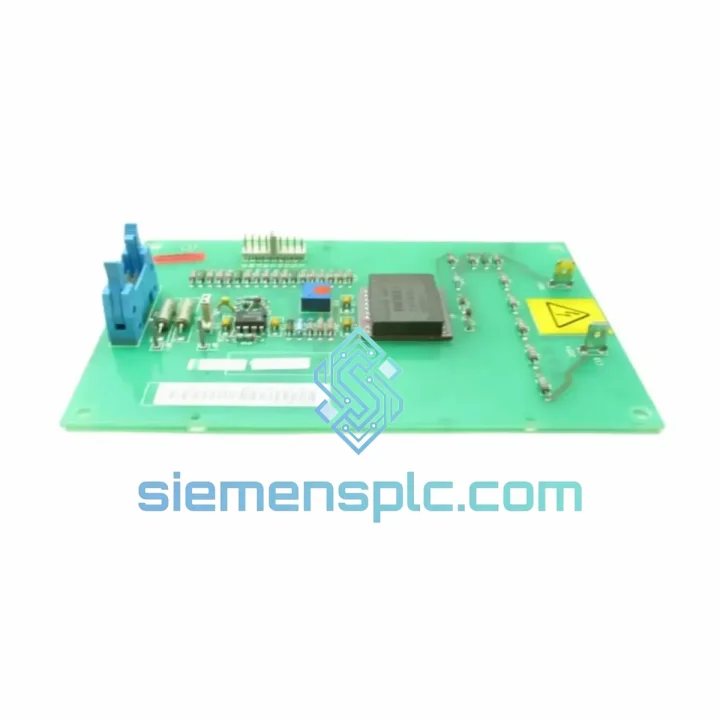
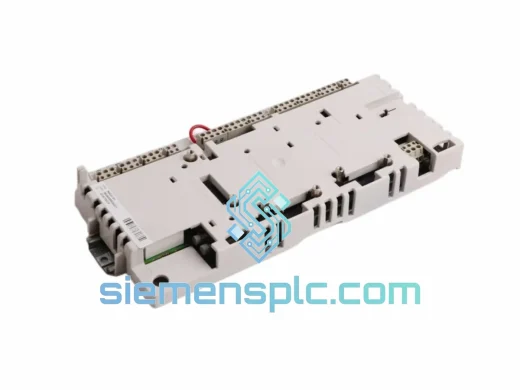
ABB SAFT183 VMC AC Drive Control Board – SAFT Series
Request verified availability, condition, replacement risk review, packing options and courier lead time for SAFT183 VMC.
BrandABB
Part NumberSAFT183 VMC
ConditionAvailability Check
Lead TimeRFQ Confirmation
DocumentsDatasheet / photos by RFQ
ShippingExport packing available
Auto-filled RFQ
SAFT183 VMC
Click Request Quote and the part number is inserted into the inquiry form automatically.
- Reply by email: [email protected]
- WhatsApp / Tel: +86 18359268345
- Mon-Sat 9:00-18:00 GMT+8
Procurement Data
Key Product Information
Core fields for model confirmation and RFQ routing. Detailed product narrative remains below.
- Brand
- ABB
- Primary Part Number
- SAFT183 VMC
- Product Type
- AC Drive Control Board
- Series / Family
- S800
- Manufacturer
- ABB (ASEA Brown Boveri)
- Country of Origin
- SE
- Catalog Category
- Motor Drives
- Operating Temp.
- 0 °C to +55 °C (storage: −40 °C to +70 °C)
- Humidity
- 5–95% RH, non-condensing (IEC 60068-2-3)
- Warranty
- 12 months from date of shipment
Model confirmed for inquiry
SAFT183 VMC
Send quantity, destination and urgency. The RFQ form keeps this part number attached.
Request Quote
Product Overview
ABB SAFT183 VMC Vector Motor Control Board — Core Role in AC Drive Control Architecture
The ABB SAFT183 VMC is the primary vector motor control (VMC) board deployed within ABB’s ACS600 and ACS800 series variable-frequency drive platforms. Positioned at the top of the drive’s internal control hierarchy, this board executes the direct torque control (DTC) algorithm in real time, translating process setpoints into precise IGBT gate-switching commands at cycle times below 25 µs. Its role is not peripheral — it is the computational core that determines whether a drive delivers stable torque at low speed, responds correctly to fieldbus commands, or trips safely under fault conditions.
In a closed-loop vector control architecture, the SAFT183 VMC receives motor flux and torque feedback from the adaptive motor model, compares these against the reference values, and issues corrected PWM patterns to the inverter bridge within a single control cycle. This deterministic loop — with no operating-system scheduling jitter — is what separates DTC-capable hardware from conventional V/Hz controllers. The board also manages all drive-level I/O arbitration, fault logging, and fieldbus gateway functions, making it the single point of integration between the process control layer and the power electronics layer.
Real-time Stock & RFQ: [email protected] | WhatsApp: +86 18359268345
Technical Parameters
| Parameter | Value / Specification |
|---|---|
| Part Number | SAFT183 VMC |
| Manufacturer | ABB (ASEA Brown Boveri) |
| Product Series | SAFT Series — Vector Motor Control |
| Control Algorithm | Direct Torque Control (DTC), closed-loop vector |
| Compatible Drive Platforms | ACS600 (ACS601, ACS604, ACS607), ACS800 (selected frames), DCS600 |
| Control Cycle Time | < 25 µs (DTC torque control loop) |
| Fieldbus Interfaces | PROFIBUS-DP, MODBUS RTU, DeviceNet (via RAIO/RDCO adapter modules) |
| Analog Inputs | 2 × differential, 0–10 V / 0–20 mA, 12-bit resolution |
| Digital Inputs | 6 × 24 VDC optically isolated |
| Digital Outputs | 3 × relay outputs, 250 VAC / 30 VDC, 2 A |
| Supply Voltage (board) | +24 VDC ± 10% from drive SMPS |
| Operating Temperature | 0 °C to +55 °C (storage: −40 °C to +70 °C) |
| Humidity | 5–95% RH, non-condensing (IEC 60068-2-3) |
| Vibration Resistance | IEC 60068-2-6: 1 g, 10–150 Hz |
| EMC Compliance | EN 61800-3 Category C2 / C3 |
| Board Dimensions | Approx. 230 × 130 mm (standard SAFT slot form factor) |
| Weight | Approx. 100 g |
| Condition | New original / tested surplus |
| Warranty | 12 months from date of shipment |
Hardware Logical Analysis
The SAFT183 VMC is built around a dual-processor architecture: a high-speed DSP core handles the real-time DTC torque and flux estimation loop, while a secondary RISC processor manages I/O polling, fault logging, and fieldbus protocol stacks. This separation of concerns ensures that a fieldbus communication burst or a diagnostic read operation cannot introduce latency into the torque control cycle — a critical design requirement for applications such as crane hoisting or paper machine draw control, where torque ripple directly affects product quality or mechanical safety.
Optical Isolation on Digital Inputs: All six digital inputs are routed through high-speed optocouplers with a propagation delay of less than 1 µs. This galvanic barrier prevents ground-loop currents from the field wiring from reaching the DSP ground plane, a common failure mode in drives installed near large contactors or transformer banks. The isolation barrier is rated at 2.5 kV RMS, consistent with IEC 61800-5-1 reinforced insulation requirements.
EMC Shielding Architecture: The board uses a four-layer PCB with dedicated ground planes on layers 2 and 3. High-frequency switching noise from the IGBT gate driver signals — which can reach slew rates of 10 kV/µs on the DC bus — is attenuated by ferrite beads on all power supply traces entering the board and by π-filter networks on analog signal lines. The result is a measured common-mode noise rejection ratio exceeding 60 dB across the 150 kHz–30 MHz band, verified against EN 55011 Class A limits.
Adaptive Motor Model: The DTC algorithm on the SAFT183 VMC does not rely on encoder feedback for torque estimation. Instead, it uses a real-time motor model that continuously identifies stator resistance, rotor time constant, and magnetic saturation characteristics from measured terminal voltage and current. This sensorless approach eliminates encoder cable failures as a drive trip cause and allows accurate torque control down to 0.5 Hz output frequency — a specification that V/Hz drives cannot match without mechanical feedback.
Non-volatile Parameter Storage: Drive parameters and fault history are stored in onboard EEPROM with a write endurance of 100,000 cycles. On power loss, the last valid parameter set is retained without battery backup. The fault log stores the last 64 fault events with timestamps, drive output frequency, current, and DC bus voltage at the moment of fault — data that is essential for root-cause analysis in unattended installations.
System Integration Benefits
- Deterministic Torque Response: The 25 µs DTC cycle delivers torque step response within 1–2 ms, enabling precise speed recovery under sudden load changes without overshoot — critical for winding, extruding, and positioning applications.
- Sensorless Operation to Near-Zero Speed: Accurate flux and torque estimation without encoder hardware reduces installation complexity and eliminates a common failure point in wet, dusty, or high-vibration environments.
- Unified Fieldbus Gateway: A single RDCO or RAIO adapter module on the SAFT183 VMC provides PROFIBUS-DP or MODBUS connectivity, allowing the drive to appear as a standard PLC I/O node without additional gateway hardware or protocol converters.
- Transparent Fault Diagnostics: The 64-event fault log with parametric snapshots allows maintenance engineers to reconstruct the electrical state of the drive at the moment of any trip, reducing mean time to repair (MTTR) in multi-drive installations.
- DriveWindow / DriveStudio Compatibility: Full support for ABB’s PC-based commissioning tools enables parameter upload/download, trend recording, and remote monitoring over the DDCS fiber-optic link — without requiring physical access to the drive cabinet.
- Hot-swap Parameter Restore: When replacing a SAFT183 VMC, the parameter set can be downloaded from a backup file via DriveWindow in under five minutes, eliminating the need for manual re-entry of hundreds of drive parameters and reducing commissioning risk.
- Multi-drive Master/Follower Coordination: The board supports ABB’s DDCS (Drive-to-Drive Communication System) fiber-optic ring, allowing up to 12 drives to share torque and speed references with sub-millisecond synchronization — used in multi-motor line shaft and draw control applications.
- Scalable I/O Expansion: The RAIO extension module interface allows additional analog and digital I/O channels to be added without modifying the base board, supporting application-specific signal requirements in process industries.
Quality Assurance & Global Logistics
Every ABB SAFT183 VMC unit supplied by siemensplc.com is sourced through verified industrial supply channels — authorized distributors, OEM surplus programs, and traceable factory-new stock. No units are sourced from unverified grey-market or counterfeit-risk channels. Each board undergoes incoming inspection covering visual examination of PCB traces, connector pin integrity, component seating, and ESD damage indicators before being accepted into inventory.
Functional verification is performed on a drive-compatible test bench that exercises all digital I/O channels, analog input linearity, fieldbus communication handshake, and EEPROM read/write integrity. Boards that do not pass all test points are quarantined and not offered for sale.
Packaging follows IEC 61340-5-1 ESD protection requirements: each board is sealed in a conductive poly bag, placed in anti-static foam, and enclosed in a double-wall corrugated carton rated for international air freight handling. Moisture barrier bags with desiccant are used for ocean freight shipments.
Shipments originate from our warehouse in Xiamen, China — a major export hub with direct access to international express carriers including DHL, FedEx, UPS, and TNT. Standard export documentation is provided with every shipment: commercial invoice, packing list, and certificate of origin. DDP, DAP, and EXW Incoterms are available. In-stock orders are dispatched within 1–3 business days. Express delivery to Europe, North America, and Southeast Asia typically completes within 3–7 business days.
All units carry a 12-month warranty from the date of shipment. Warranty claims are handled by direct replacement or credit — no third-party RMA process. Our technical team provides post-sale support for installation verification and parameter configuration guidance at no additional charge.
Contact Information
Email: [email protected]
WhatsApp: +86 18359268345
Web: siemensplc.com
Location: Xiamen, China
© 2026 siemensplc.com. All rights reserved.
Ready to quote
[email protected]
Send This Part Number to Sales
RFQ workflow
Quality workflow ->
Confirmation Process
01Model confirmation
We check the full part number, brand, series and visible nameplate information before quotation.
02Availability reply
Sales confirms stock path, condition option, quantity and realistic lead time for export dispatch.
03Packing & courier
DHL, FedEx, UPS or buyer courier arrangements can be reviewed with packing requirements.
Continue sourcing
Browse full catalog ->
Related Automation Parts
Similar brand or category products for fast comparison and multi-item RFQ lists.
ABB
RFQ Ready
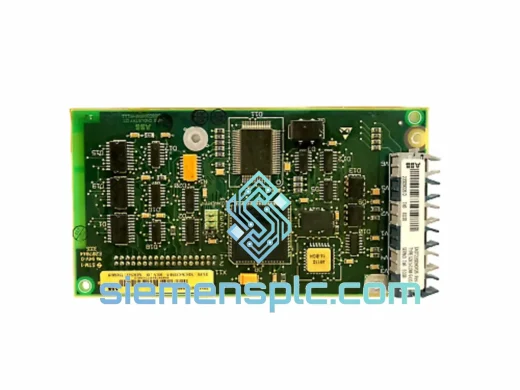
ABB SDCS-COM-5 3BSE006567R1 Fieldbus Communication Module
S800
Origin SE
Fieldbus Communication Module
ABB
RFQ Ready
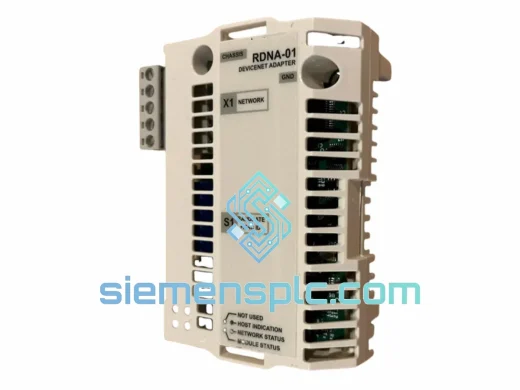
ABB RDNA-01 DeviceNet Adapter Module – ACS800 ACS600
S800
Origin SE
Fieldbus Communication Module
ABB
RFQ Ready
ABB RDCU-12C 3AUA0000036521 Drive Control Unit
S800
Origin SE
PLC & Drive Control Module