ABB
RFQ Ready
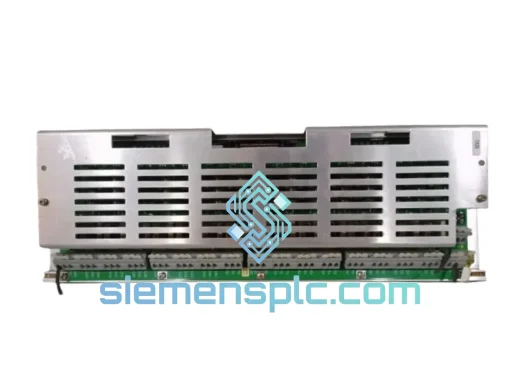
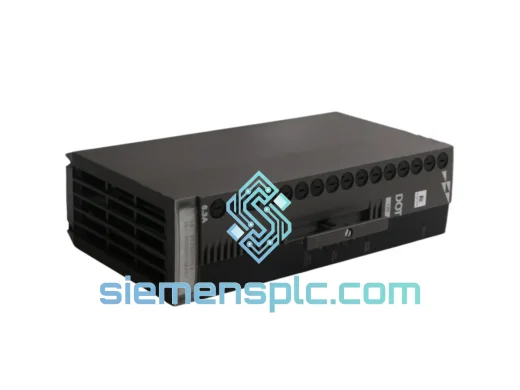
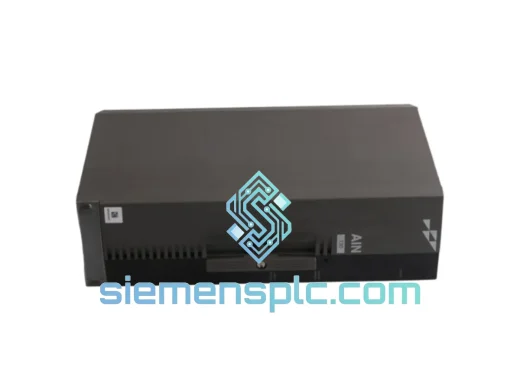
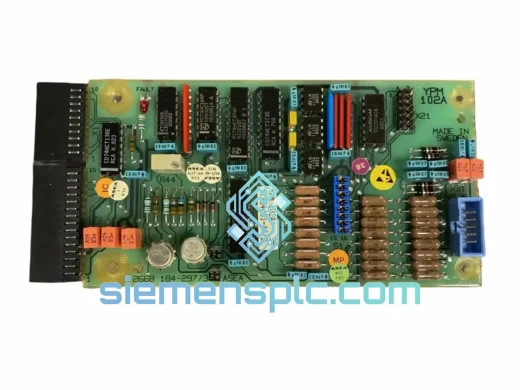
ABB YPM102A YT204001-AA Analog Output Module – AC 800M S800 I/O
S800
Origin SE
Analog Output Module
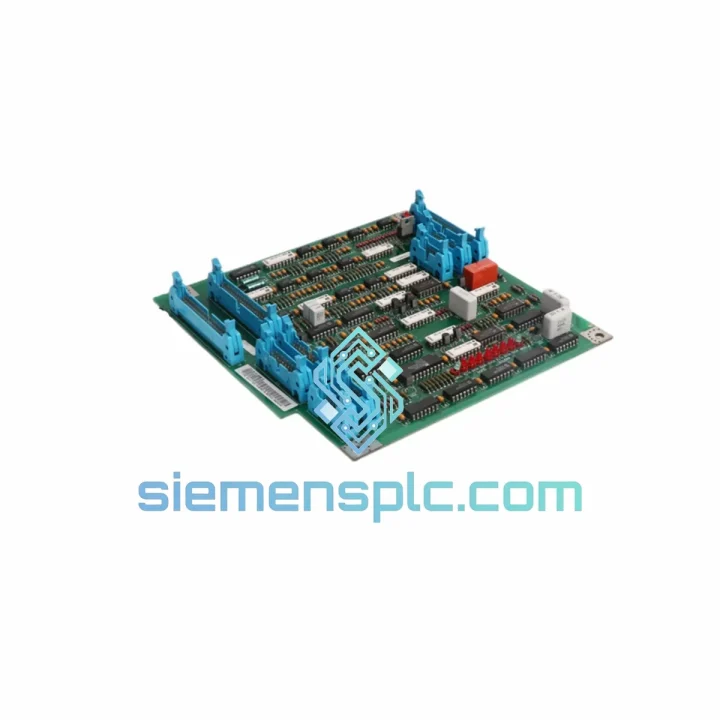
Request verified availability, condition, replacement risk review, packing options and courier lead time for SNAT620PCB SNAT 620 PCB.
Click Request Quote and the part number is inserted into the inquiry form automatically.
Core fields for model confirmation and RFQ routing. Detailed product narrative remains below.
The ABB SNAT620PCB is a dedicated resistance temperature detector (RTD) input module engineered for integration into ABB’s ACS 600 series variable speed drives. Its primary function within the control loop is to deliver continuous, high-accuracy thermal state data from motor windings and mechanical bearings directly to the drive’s control processor. This closed-loop thermal feedback eliminates the need for external signal conditioning hardware and enables the drive to execute real-time protective actions — including programmable trip thresholds, pre-alarm warnings, and automatic derating — based on measured temperature rather than estimated thermal models.
In process-critical environments such as pulp and paper mills, water treatment stations, steel rolling lines, and HVAC central plant rooms, the SNAT620PCB serves as the thermal guardian of the motor asset. Without accurate RTD feedback, drives must rely on conservative fixed-parameter overload curves that either under-protect the motor or unnecessarily restrict operational throughput. The SNAT620PCB resolves this by providing direct sensor-level measurement with a resolution sufficient to detect gradual insulation degradation trends before they escalate into unplanned downtime events.
Real-time Stock & RFQ: [email protected] | WhatsApp: +86 18359268345
| Parameter | Specification |
|---|---|
| Part Number | SNAT620PCB |
| Manufacturer | ABB |
| Module Classification | RTD (Resistance Temperature Detector) Input Module |
| Compatible Drive Platform | ABB ACS 600 series (ACS601, ACS604, ACS607) |
| Supported Sensor Types | PT100, PT1000 (3-wire RTD configuration) |
| Number of Input Channels | 3 channels (motor winding phases + bearing monitoring) |
| Measurement Temperature Range | −50 °C to +200 °C (sensor-dependent) |
| Measurement Resolution | 0.1 °C (typical) |
| Excitation Current | Constant current source, internally generated |
| Interface to Drive | Internal drive backplane slot / DDCS fiber optic ring |
| Module Supply Voltage | Derived from ACS 600 control board power rail |
| Form Factor | PCB plug-in module, direct slot insertion |
| Approvals / Compliance | CE (as part of ACS 600 certified system) |
| Operating Ambient Temperature | 0 °C to +55 °C (drive enclosure ambient) |
| Storage Temperature | −40 °C to +70 °C |
| Relative Humidity | 5–95%, non-condensing |
| Module Weight | Approx. 280 g |
| Warranty | 12 months against manufacturing defects |
The SNAT620PCB is built around a three-channel constant-current RTD excitation architecture. Each channel sources a stable, low-magnitude DC current through the connected PT100 or PT1000 sensor element. The resulting voltage drop across the sensor — which varies linearly with temperature according to the Callendar–Van Dusen equation — is sampled by a dedicated analog-to-digital converter stage on the PCB. The three-wire connection topology is mandatory: the module uses the third wire to measure and cancel lead resistance error, ensuring that cable runs of practical industrial length do not introduce systematic offset into the temperature reading.
From an EMC standpoint, the SNAT620PCB incorporates differential input filtering on each channel to suppress common-mode noise induced by the drive’s own PWM switching transients. The ACS 600 power stage generates high dV/dt edges on the motor cable that couple capacitively into sensor wiring routed within the same conduit. The module’s front-end filter network attenuates these coupled transients to below the ADC’s noise floor, preventing false temperature readings during high-load switching events.
The module communicates with the NAMC control board via the ACS 600 internal backplane bus. Temperature data is transferred as a scaled integer value at the drive’s control cycle rate, making the thermal measurement synchronous with the speed and torque control loops. This synchronous update architecture means the drive’s thermal protection logic operates on data that is never more than one control cycle old — a critical property in applications where motor temperature can rise rapidly under blocked-rotor or stall conditions.
When the DDCS fiber optic adapter (NDCO) is present in the system, the SNAT620PCB’s data is also accessible to higher-level supervisory systems via the DDCS ring, enabling remote temperature trending and historian logging without additional signal conditioning hardware. The fiber optic medium provides galvanic isolation between the drive and the supervisory network, which is particularly valuable in high-voltage drive installations where ground potential differences between control room and motor control center can be significant.
The PCB substrate and component selection reflect ABB’s industrial-grade thermal cycling and vibration specifications. Conformal coating on the PCB surface provides protection against condensation and airborne contaminants in environments where the drive enclosure does not maintain a fully sealed IP rating. The module’s edge connector is gold-plated to maintain low contact resistance over the service life of the drive, even in environments with mild atmospheric corrosion.
Every SNAT620PCB unit supplied by our team is sourced as genuine ABB original equipment. Prior to dispatch, each module undergoes functional verification: the RTD excitation circuits are energized, channel-by-channel ADC output is confirmed against reference resistance values, and the backplane connector is inspected for pin integrity and contact cleanliness. Units are packaged in anti-static ESD bags with foam-lined cartons to prevent mechanical and electrostatic damage during transit.
Shipments originate from our warehouse in Xiamen, China. Xiamen’s port infrastructure and direct air freight connections to major international hubs — including Hong Kong, Singapore, Frankfurt, Los Angeles, and Dubai — enable consistent transit times of 3–7 business days to most destinations in Europe, Southeast Asia, the Middle East, and the Americas. Expedited DHL Express and FedEx Priority services are available for urgent requirements. All shipments include a commercial invoice, packing list, and where required, a certificate of conformance. Customs HS code documentation is provided to facilitate smooth clearance in regulated import markets.
A 12-month warranty is provided against manufacturing defects from the date of shipment. Warranty claims are processed with a target response time of 48 hours. Advance replacement units can be arranged for critical production environments where waiting for return logistics is not operationally acceptable.
📧 Email: [email protected]
📱 WhatsApp: +86 18359268345
🌐 Web: siemensplc.com
📍 Location: Xiamen, China
© 2026 siemensplc.com. All rights reserved.
We check the full part number, brand, series and visible nameplate information before quotation.
Sales confirms stock path, condition option, quantity and realistic lead time for export dispatch.
DHL, FedEx, UPS or buyer courier arrangements can be reviewed with packing requirements.
Similar brand or category products for fast comparison and multi-item RFQ lists.