ABB
RFQ Ready
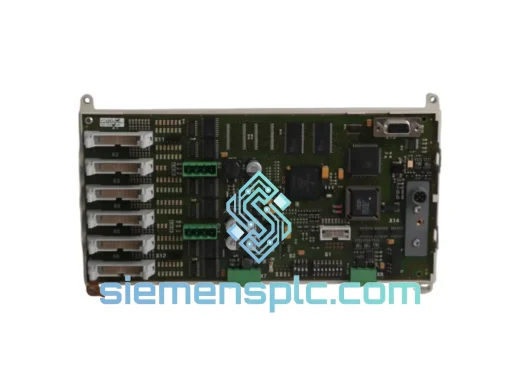
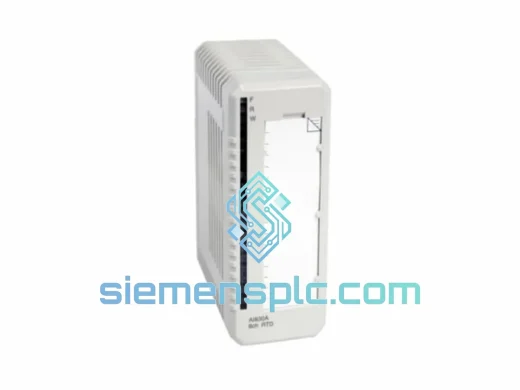
ABB GJR2393200R1210 88TK05B-E Bus Coupler Module – AC500 Series
AC500
Origin SE
Bus Coupler Module
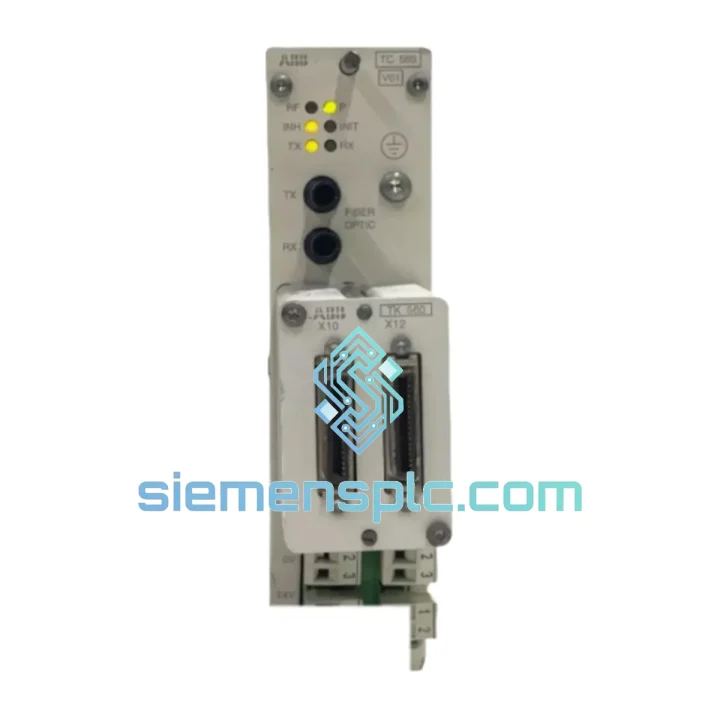
Request verified availability, condition, replacement risk review, packing options and courier lead time for TC560V2-3BSE022178R1.
Click Request Quote and the part number is inserted into the inquiry form automatically.
Core fields for model confirmation and RFQ routing. Detailed product narrative remains below.
The ABB TC560V2, catalogued under part number 3BSE022178R1, is a second-generation CPU controller module within ABB’s AC500 programmable logic controller platform. It occupies the central processing position in a distributed or standalone control architecture, executing user programs, managing I/O data exchange across the backplane bus, and maintaining deterministic scan-cycle timing under continuous industrial load. Unlike general-purpose computing hardware, the TC560V2 is engineered to sustain uninterrupted operation across temperature gradients, vibration profiles, and electromagnetic environments characteristic of process plant floors, substations, and offshore control rooms.
The module interfaces directly with the AC500 V2 backplane, communicating with expansion I/O modules via a high-speed internal bus that supports synchronous data transfer without introducing jitter into the control loop. Its onboard memory architecture separates program code, retain data, and I/O image tables into distinct address spaces, preventing runtime memory contention that could degrade scan-cycle consistency. The TC560V2 supports IEC 61131-3 programming in all five languages — Ladder Diagram, Function Block Diagram, Structured Text, Instruction List, and Sequential Function Chart — through ABB Automation Builder, enabling engineers to implement both discrete interlocking logic and continuous PID regulation within a single project environment.
In process industries where control loop failure carries safety and financial consequences, the TC560V2’s support for hot-standby CPU redundancy is a primary specification driver. In a redundant pair configuration, the standby CPU maintains a synchronized copy of the active CPU’s memory state via a dedicated synchronization link. Upon primary CPU fault detection, bumpless switchover occurs within the controller’s internal watchdog timeout window, preserving analog output values and discrete output states without requiring operator intervention or process restart.
Communication flexibility is a defining characteristic of this module. The TC560V2 supports PROFIBUS DP master/slave operation, Modbus RTU and TCP/IP, and Ethernet-based protocols, allowing it to serve as the head-end controller in multi-vendor field device networks. This protocol breadth makes the TC560V2 a practical choice for brownfield integration projects where legacy field devices operating on serial buses must coexist with newer Ethernet-connected instrumentation.
Real-time Stock & RFQ: [email protected] | WhatsApp: +86 18359268345
| Manufacturer | ABB |
| Part Number (SKU) | TC560V2 / 3BSE022178R1 |
| Product Series | AC500 V2 |
| Module Function | CPU / Controller Module |
| Supply Voltage | 24 V DC (nominal), 20.4–28.8 V DC (operating range) |
| Power Consumption | ≤ 6 W (typical, without I/O load) |
| Program Memory | Up to 4 MB user program flash |
| Retain Data Memory | 512 KB battery-backed SRAM |
| Backplane Bus | AC500 V2 internal high-speed parallel bus |
| Communication Ports | 2× RJ45 Ethernet (10/100 Mbps), 1× RS-485 (PROFIBUS DP / Modbus RTU) |
| Supported Protocols | PROFIBUS DP Master/Slave, Modbus RTU, Modbus TCP, EtherNet/IP (via CM), FTP, SNTP |
| Programming Standard | IEC 61131-3 (LD, FBD, ST, IL, SFC) |
| Programming Software | ABB Automation Builder (Control Builder Plus) |
| Scan Cycle Time | Configurable; minimum task cycle 1 ms |
| Operating Temperature | 0 °C to +55 °C |
| Storage Temperature | −40 °C to +70 °C |
| Relative Humidity | 5–95% RH, non-condensing |
| Vibration Resistance | IEC 60068-2-6: 10–57 Hz, 0.075 mm; 57–150 Hz, 1 g |
| Shock Resistance | IEC 60068-2-27: 15 g, 11 ms half-sine |
| EMC Immunity | IEC 61000-4-2 (ESD), IEC 61000-4-4 (EFT), IEC 61000-4-5 (Surge) |
| Protection Class | IP20 |
| Mounting | AC500 V2 backplane (TB511-ETH, TB521-ETH, TB541-ETH) |
| Certifications | CE, UL, cUL, RoHS |
| Country of Origin | Germany |
| Warranty | 12 months from date of shipment |
The TC560V2’s internal architecture reflects design decisions made to address the specific failure modes of industrial control hardware rather than general-purpose computing constraints.
Backplane Bus Arbitration: The AC500 V2 backplane uses a deterministic token-passing arbitration scheme between the CPU and expansion I/O modules. Unlike shared-bus architectures where I/O modules can contend for bus access and introduce variable latency, the TC560V2 controls bus grant timing centrally, ensuring that each I/O module’s data is sampled within a fixed window relative to the CPU scan cycle. This eliminates the scan-cycle jitter that would otherwise accumulate in systems with large I/O counts.
EMC Design: The module’s PCB layout employs multi-layer ground plane segmentation, separating the analog signal ground, digital logic ground, and chassis earth at a single star point. Ferrite bead filtering is applied at all external connector interfaces, and the RS-485 port incorporates transient voltage suppression (TVS) diodes rated for ±15 kV ESD per IEC 61000-4-2. The Ethernet ports include common-mode chokes and isolation transformers, providing 1500 V AC galvanic isolation between the network and the controller’s internal logic.
Memory Integrity: The retain data SRAM is protected by a hardware watchdog that monitors both the CPU execution thread and the memory write bus. If a write operation does not complete within the expected clock window — a condition that can arise from power transients or firmware exceptions — the watchdog asserts a non-maskable interrupt, forcing a controlled restart rather than allowing corrupted retain data to persist. The battery-backed SRAM retains variable values through power outages of up to 10 years at 25 °C with a standard lithium cell.
Thermal Management: The module operates without active cooling fans, relying on conduction-cooled PCB design and a thermally conductive housing to dissipate heat to the mounting rail. This fanless design eliminates the primary mechanical wear component in industrial electronics, contributing to the module’s rated MTBF exceeding 300,000 hours under nominal operating conditions.
Redundancy Synchronization Logic: In hot-standby configurations, the TC560V2 uses a dedicated synchronization port to transfer the active CPU’s I/O image table and retain variable block to the standby unit at the end of each scan cycle. The synchronization transfer is completed before the active CPU asserts its output update, ensuring that the standby unit’s memory state is never more than one scan cycle behind. Switchover detection relies on hardware heartbeat signals rather than software polling, reducing switchover latency to the order of the watchdog timeout period.
Every ABB TC560V2 3BSE022178R1 unit dispatched from our Xiamen, China facility undergoes a structured incoming inspection process before it is allocated to customer orders. Physical inspection covers housing integrity, connector pin condition, label authenticity, and firmware version verification against ABB’s published release matrix. Units sourced from authorized distribution channels carry original ABB factory packaging and traceability documentation.
Shipments are prepared in anti-static shielding bags with desiccant packs and humidity indicator cards, placed in foam-lined cartons rated for the vibration and drop profiles of international air and sea freight. Export documentation — including commercial invoice, packing list, certificate of origin, and HS code classification — is prepared in compliance with the import requirements of the destination country, covering major markets in Europe, North America, Southeast Asia, the Middle East, and South America.
Standard in-stock orders ship within 1–3 business days via DHL Express, FedEx International Priority, or UPS Worldwide, with typical transit times of 3–7 business days to most destinations. For project-volume orders, consolidated sea freight and air freight options are available with DDP and DAP Incoterms. All shipped units carry a 12-month warranty covering manufacturing defects and functional failure under normal operating conditions.
Email: [email protected]
WhatsApp: +86 18359268345
Web: siemensplc.com
Location: Xiamen, China
© 2026 siemensplc.com. All rights reserved.
We check the full part number, brand, series and visible nameplate information before quotation.
Sales confirms stock path, condition option, quantity and realistic lead time for export dispatch.
DHL, FedEx, UPS or buyer courier arrangements can be reviewed with packing requirements.
Similar brand or category products for fast comparison and multi-item RFQ lists.