ABB
RFQ Ready
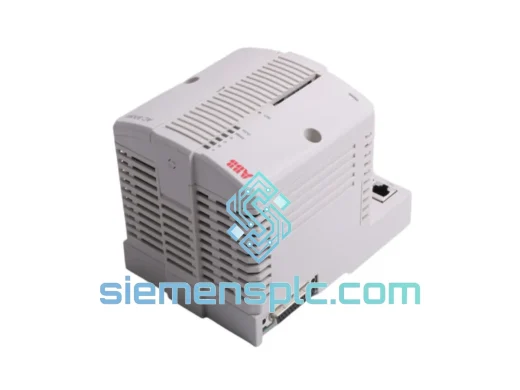
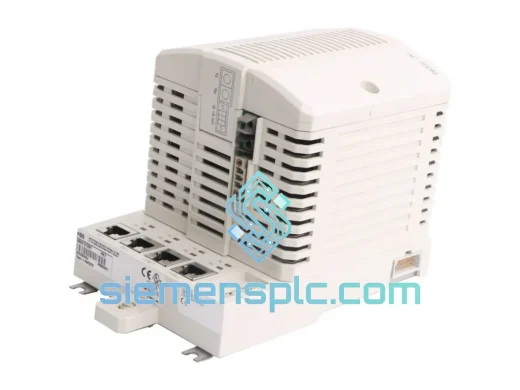
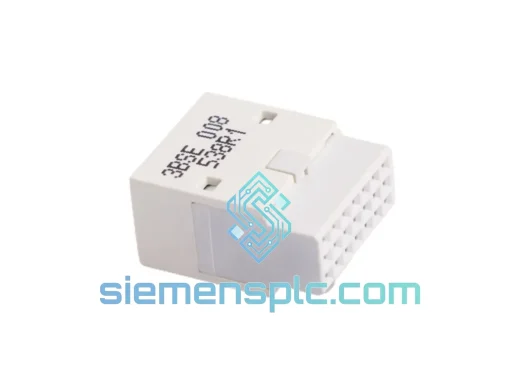
ABB TB807 3BSE008538R1 DCS Modulebus Terminator
AC800M
Origin SE
DCS Backplane Terminator
Request verified availability, condition, replacement risk review, packing options and courier lead time for TK811V015.
Click Request Quote and the part number is inserted into the inquiry form automatically.
Core fields for model confirmation and RFQ routing. Detailed product narrative remains below.
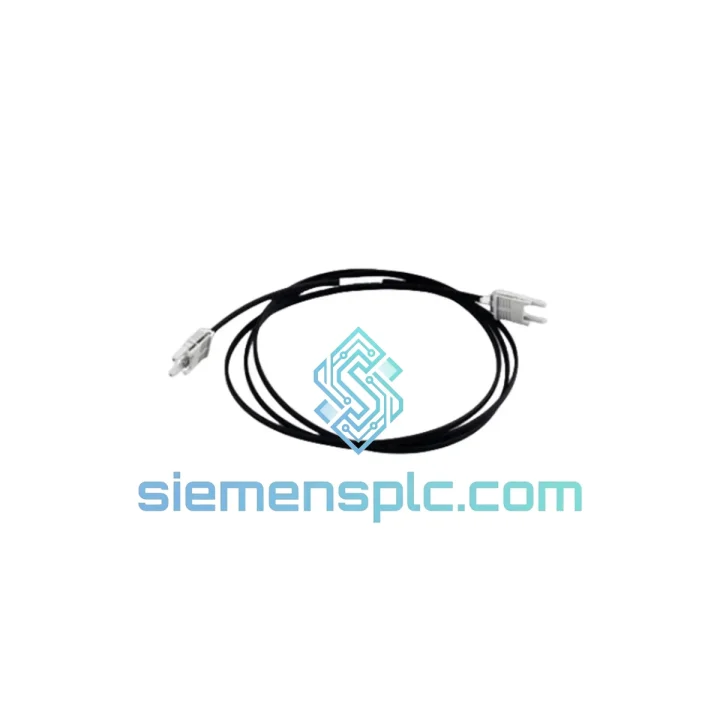
The TK811V015 (catalog reference 3BSC950107R1) is a factory-terminated, 1.5-meter duplex Plastic Optical Fiber (POF) cable manufactured by ABB for exclusive use within the AC800M controller platform and its associated S800 I/O subsystem. Within a DCS control loop, this cable occupies the physical layer of the optical ModuleBus — the proprietary high-speed serial backplane that ABB uses to decouple controller logic from field I/O clusters. Without a correctly specified optical link at this layer, deterministic scan-cycle communication between the PM8xx CPU and remote S800 I/O stations cannot be maintained. The TK811V015 is not a generic fiber patch cord; it is a precision-length, connector-matched assembly whose optical budget, numerical aperture, and HFBR-style snap-in terminations are validated against ABB’s ModuleBus transceiver specifications to guarantee bit-error-rate performance within the system’s 12-node optical branch topology.
In process industries — oil and gas compression trains, combined-cycle power plant turbine controls, continuous chemical reactors, and pharmaceutical batch systems — the integrity of the DCS optical layer directly determines whether the controller can execute its configured scan cycle without communication-induced jitter. A degraded or mismatched fiber link introduces latency variance that propagates into PID loop execution timing, potentially destabilizing tightly tuned control loops. The TK811V015 eliminates this risk by providing a factory-verified, OEM-matched optical path with defined insertion loss characteristics.
Real-time Stock & RFQ: [email protected] | WhatsApp: +86 18359268345
| Parameter | Value |
|---|---|
| Part Number | TK811V015 |
| Catalog / Reference No. | 3BSC950107R1 |
| Cable Type | Duplex Plastic Optical Fiber (POF), 980 µm core |
| Nominal Length | 1.5 m (±50 mm) |
| Connector Type | HFBR-style snap-in, factory-molded (non-field-terminable) |
| Optical Wavelength | 660 nm (visible red, LED source) |
| Typical Insertion Loss | < 1.0 dB per connector pair at 660 nm |
| Numerical Aperture (NA) | 0.47 (step-index PMMA) |
| Minimum Bend Radius | 25 mm (static); 50 mm (dynamic) |
| Operating Temperature | 0°C to +60°C |
| Storage Temperature | −20°C to +70°C |
| Compatible Platform | ABB AC800M (PM860, PM861, PM864, PM866); S800 I/O; TB820/TB840 optical ports |
| Max. Nodes per Optical Branch | 12 S800 I/O clusters |
| Jacket Material | PVC, grey, UV-stabilized |
| Approximate Weight | 300 g |
| Country of Origin | Sweden (EU) |
| Compliance | CE, RoHS, IEC 60793, IEC 61158 |
| Warranty | 12 months from date of shipment |
The AC800M ModuleBus operates as a master-slave optical serial bus at a fixed baud rate, with the PM8xx CPU acting as the sole bus master. Each TB820 or TB840 optical port module on an S800 I/O baseplate functions as a repeater node, regenerating the optical signal before forwarding it to the next cluster in the daisy-chain. This architecture means that the optical link between any two adjacent nodes must maintain a signal-to-noise margin sufficient for the repeater’s photodetector to reconstruct the digital waveform without bit errors — a requirement that directly governs the maximum permissible insertion loss per cable segment.
The TK811V015 uses a 980 µm core step-index PMMA (polymethyl methacrylate) fiber, which offers a large numerical aperture of 0.47. This wide acceptance cone is deliberately chosen to maximize coupling efficiency with the low-cost LED transceivers used in ABB’s optical port modules, compensating for the inherently lower coherence of LED sources compared to laser diodes. The trade-off — higher modal dispersion — is acceptable at the ModuleBus data rate and 1.5 m segment length, where dispersion-induced pulse broadening remains well within the bit period.
From an EMC standpoint, the dielectric nature of the POF medium provides complete galvanic isolation between the controller rack and each I/O cluster. In installations where S800 I/O modules are mounted in field junction boxes sharing a common earth with high-power motor drives or transformer neutrals, copper-based communication links would be susceptible to common-mode noise injection at the receiver input. The TK811V015 eliminates this failure mode entirely: no conductive path exists between the transmitter ground reference at the PM8xx port and the receiver ground at the TB820 node. This isolation characteristic also satisfies the requirements of IEC 61000-4-5 surge immunity testing at the system level, as the optical link cannot conduct surge energy between nodes.
The factory-molded HFBR-style connectors are precision-aligned to the fiber core during manufacture using active alignment techniques, achieving repeatable insertion loss below 1.0 dB per connector pair. Field-terminated POF assemblies using cleave-and-polish methods typically exhibit 2–4 dB higher insertion loss due to core misalignment and surface roughness — a margin that can exhaust the optical budget of a fully loaded 12-node branch. Specifying the factory-terminated TK811V015 is therefore not merely a convenience choice; it is an engineering requirement for maintaining optical link margin in maximum-configuration systems.
Every TK811V015 unit dispatched from our Xiamen, China facility is an original ABB-manufactured assembly sourced through verified supply channels. Each unit undergoes incoming inspection covering connector end-face condition, jacket continuity, label authenticity cross-referenced against ABB documentation (3BSC950107R1), and physical length verification. Lot traceability documentation is retained and available upon request for quality-critical procurement processes.
Our Xiamen location provides direct access to major international freight gateways including Xiamen Gaoqi International Airport and Xiamen Port, enabling competitive transit times to Southeast Asia (2–4 days), Europe (5–8 days), the Americas (5–9 days), and the Middle East (3–6 days) via DHL Express, FedEx International Priority, and UPS Worldwide Expedited. Export documentation — commercial invoice, packing list, certificate of origin, and CITES/RoHS declarations where applicable — is prepared in-house to minimize customs clearance delays. All shipments are insured against transit loss and damage. A 12-month warranty covers manufacturing defects from the date of shipment, with DOA replacement processed within 5 business days of confirmed fault report.
Email: [email protected]
WhatsApp: +86 18359268345
Web: siemensplc.com
Location: Xiamen, China
© 2026 siemensplc.com. All rights reserved.
We check the full part number, brand, series and visible nameplate information before quotation.
Sales confirms stock path, condition option, quantity and realistic lead time for export dispatch.
DHL, FedEx, UPS or buyer courier arrangements can be reviewed with packing requirements.
Similar brand or category products for fast comparison and multi-item RFQ lists.