
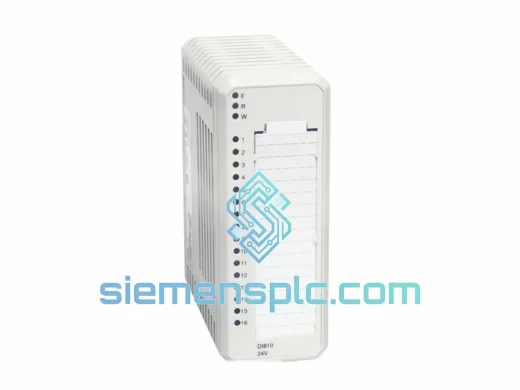
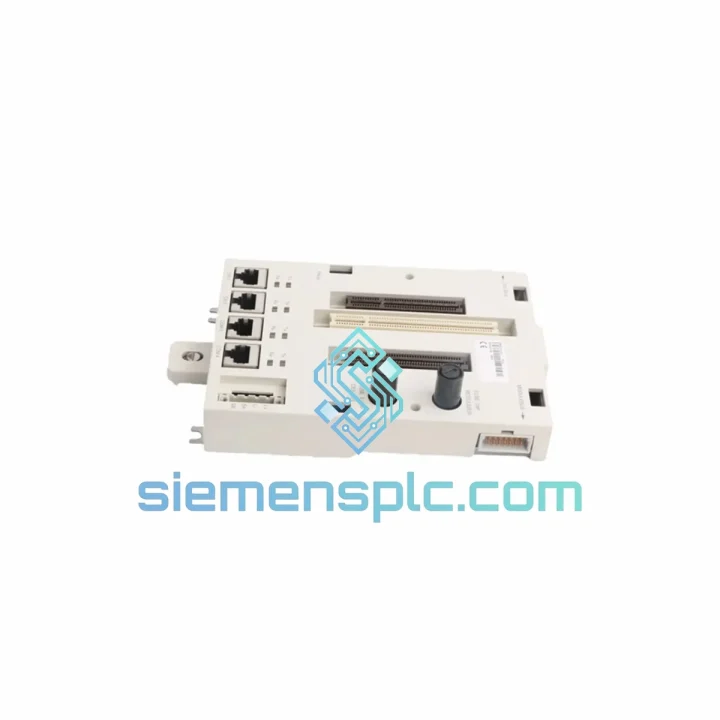
ABB
In Stock OK
ABB TP830 3BSE018114R1 Controller Base Module – AC800M DCS
Request verified availability, condition, replacement risk review, packing options and courier lead time for TP830-3BSE018114R1.
BrandABB
Part NumberTP830-3BSE018114R1
ConditionAvailability Check
Lead TimeRFQ Confirmation
DocumentsDatasheet / photos by RFQ
ShippingExport packing available
Auto-filled RFQ
TP830-3BSE018114R1
Click Request Quote and the part number is inserted into the inquiry form automatically.
- Reply by email: [email protected]
- WhatsApp / Tel: +86 18359268345
- Mon-Sat 9:00-18:00 GMT+8
Procurement Data
Key Product Information
Core fields for model confirmation and RFQ routing. Detailed product narrative remains below.
- Brand
- ABB
- Primary Part Number
- TP830-3BSE018114R1
- Product Type
- Controller Base Module
- Series / Family
- AC800M
- Manufacturer
- ABB
- Country of Origin
- SE
- Catalog Category
- PLCs & Controllers
- Warranty
- 12 months from dispatch date
Model confirmed for inquiry
TP830-3BSE018114R1
Send quantity, destination and urgency. The RFQ form keeps this part number attached.
Request Quote
Product Overview
ABB TP830 3BSE018114R1 — Backplane Interface Module Governing ModuleBus Arbitration in AC800M Nodes
The ABB TP830, catalogued under part number 3BSE018114R1, is the dedicated controller base module for the AC800M Distributed Control System platform. Its structural position within the AC800M rack is not interchangeable: the TP830 occupies the base slot that physically seats the PM8xx-series processor module and electrically bridges it to the S800 I/O subsystem via the ModuleBus backplane. Every closed-loop control task executed by the CPU — whether a PID regulator, a sequence controller, or a safety-rated interlock — depends on the TP830’s backplane to deliver I/O data within the deterministic scan window configured in ABB Control Builder M.
In distributed process industries — refinery fractionation columns, combined-cycle power plant auxiliaries, pharmaceutical batch reactors — the AC800M node built around the TP830 handles the real-time data exchange between field transmitters and the control algorithm. The ModuleBus implemented on the TP830 backplane uses a synchronous token-passing protocol: the CPU issues a scan initiation signal at the start of each task period, and each populated I/O slot responds within a fixed time slice. The aggregate scan latency across a fully populated eight-slot node remains bounded, which is the prerequisite for control loops with cycle times below 100 ms.
Because the TP830 is a passive backplane component — it contains no programmable logic, no firmware, and no battery-backed memory — its failure mode is limited to mechanical damage or trace degradation. This characteristic makes it a high-priority spare: a single failed TP830 takes an entire AC800M node offline, yet the module itself carries no software dependency that would complicate a field replacement. Engineers responsible for DCS spare parts management at facilities running AC800M infrastructure should maintain at least one TP830 per controller node as a cold standby.
siemensplc.com stocks verified genuine ABB TP830 3BSE018114R1 units, sourced through established industrial distribution channels and inspected at our Xiamen, China facility before dispatch. Each unit is tested for backplane connector integrity, power trace continuity, and mechanical alignment before being packaged for shipment to customers across Europe, the Americas, Southeast Asia, and the Middle East.
Real-time Stock & RFQ: [email protected] | WhatsApp: +86 18359268345
Technical Parameters
| Parameter | Specification |
|---|---|
| Manufacturer | ABB |
| Model | TP830 |
| Part Number | 3BSE018114R1 |
| Platform | AC800M Distributed Control System |
| Module Function | Controller Base Module (backplane + power interface) |
| Backplane Bus Protocol | ModuleBus — synchronous token-passing, time-division multiplexed |
| Maximum Local I/O Slots | 8 × S800 I/O modules per node |
| Supply Voltage | 24 V DC nominal (supplied via AC800M rack power unit) |
| Power Consumption (base module) | ≤ 2.5 W (passive backplane; load depends on seated controller) |
| Operating Temperature Range | 0 °C to +55 °C |
| Storage Temperature Range | −25 °C to +70 °C |
| Relative Humidity | 5% to 95%, non-condensing |
| Mechanical Weight | 870 g |
| Mounting | Dedicated base position in AC800M rack; guided rail insertion |
| Compatible CPU Modules | PM861A, PM864A, PM866, PM891 |
| Compatible I/O Family | S800 I/O (AI810, AO810V2, DI810, DO810, etc.) |
| Redundancy Support | Yes — hardware arbitration with paired redundant base module |
| Protection Class | IP20 (cabinet-mounted installation) |
| EMC Immunity Standard | EN 61000-6-2 (industrial environment) |
| EMC Emissions Standard | EN 61000-6-4 |
| Firmware Dependency | None — passive hardware component |
| Country of Origin | Germany |
| Warranty | 12 months from dispatch date |
Hardware Logical Analysis
The TP830’s backplane architecture addresses three distinct engineering challenges: signal integrity across the ModuleBus traces, power distribution uniformity across all module slots, and mechanical reliability under industrial vibration and thermal cycling.
ModuleBus Signal Integrity: The backplane PCB traces connecting the CPU slot to each of the eight I/O slots are impedance-controlled to match the ModuleBus characteristic impedance specification. Unterminated or mismatched traces at the operating clock frequency would produce reflections that corrupt the synchronization token, causing the CPU to log a ModuleBus communication fault and potentially forcing a controller restart. The TP830’s trace geometry and termination resistor placement prevent this failure mode across the full operating temperature range, where PCB dielectric properties shift by several percent.
Power Distribution Topology: The 24 V DC input from the rack power unit is distributed to each module slot via a star topology etched into the TP830’s power layer. In a daisy-chained power architecture, a high-current transient from one slot — such as the inrush current during a hot-inserted I/O module — creates a momentary voltage drop that propagates to adjacent slots. The star topology on the TP830 isolates each slot’s power feed, so the voltage at any given slot is determined only by the impedance of its own feed trace, not by the load state of neighboring slots.
EMC Ground Plane Design: The TP830 incorporates a dedicated ground plane layer between the signal traces and the power distribution layer. This arrangement provides a return current path that is co-planar with the signal traces, minimizing the loop area of the signal return path and reducing radiated emissions. The chassis bonding point on the TP830 connects this ground plane to the cabinet earth via a low-impedance path, diverting common-mode transients — induced by nearby variable-frequency drives or high-voltage switching equipment — away from the ModuleBus signal conductors.
Connector Sequencing and Hot-Swap Protection: The guided insertion rail system on the TP830 ensures that the controller module’s edge connector is aligned with the backplane socket before the two surfaces make contact. The connector pin layout follows a sequenced mating order: chassis ground pins engage first, followed by the 24 V DC power pins, and finally the ModuleBus signal pins. This sequence prevents the controller’s internal logic from experiencing undefined voltage states during insertion, which would otherwise risk latch-up in the CPU’s I/O interface circuitry. The locking lever provides a retention force rated to IEC 60068-2-6 vibration test profiles, maintaining connector integrity in installations subject to mechanical vibration from rotating machinery.
System Integration Benefits
- Bounded I/O scan latency: The TP830’s impedance-matched ModuleBus backplane ensures that the CPU’s I/O scan completes within the configured task period. For a fully populated eight-slot node, the aggregate scan time remains within the ModuleBus specification, supporting task periods as short as 10 ms without scan overrun faults.
- Automatic slot-to-address mapping: Each physical slot position on the TP830 backplane maps directly to a fixed I/O module address in Control Builder M. This eliminates manual address assignment during commissioning and prevents address conflicts in multi-node installations where dozens of I/O modules are configured simultaneously.
- Hardware-level redundancy arbitration: When two TP830 base modules are configured in a redundant controller pair, the backplane arbitration logic determines the active controller based on hardware signals rather than software polling. This approach achieves bumpless transfer with switchover times below 100 ms, independent of the CPU’s software state at the moment of the primary controller fault.
- Integrated module presence detection: The TP830 backplane exposes presence detection signals for each I/O slot to the CPU. Control Builder M uses these signals to generate hardware fault alarms when a module is absent or fails to respond within its allocated time window, providing diagnostic transparency without requiring additional monitoring hardware in the cabinet.
- Thermal conduction pathway for CPU module: The TP830’s aluminum base plate conducts heat away from the underside of the seated controller module, supplementing the controller’s convection cooling. This is particularly relevant in high-ambient-temperature installations — such as outdoor substations or tropical process plants — where the controller’s internal temperature would otherwise approach its rated limit during peak load conditions.
- No firmware lifecycle dependency: As a passive backplane component, the TP830 does not require firmware updates, license files, or software compatibility checks when the AC800M system is upgraded to a newer Control Builder M version. This simplifies spare parts management and eliminates the risk of a firmware mismatch causing a commissioning delay during an emergency replacement.
- Direct S800 I/O compatibility without bus extenders: The TP830 supports up to eight S800 I/O modules on the local ModuleBus without requiring an external bus coupler or extender. For the majority of single-loop and multi-loop control applications, this eliminates an additional hardware component from the signal chain, reducing the number of potential failure points in the I/O communication path.
- Vibration-rated connector retention: The locking lever mechanism on the TP830 maintains the controller module’s edge connector under vibration loads consistent with IEC 60068-2-6 test profiles. In installations adjacent to reciprocating compressors, pumps, or other vibration-generating equipment, this retention mechanism prevents the intermittent contact faults that would otherwise cause sporadic ModuleBus communication errors.
- Simplified field replacement procedure: Because the TP830 carries no configuration data, a field replacement requires only mechanical installation and power-up — no parameter download, no address configuration, and no calibration. The replacement controller module reads its configuration from the AC800M project database on first boot, reducing the mean time to repair in an unplanned outage scenario.
Quality Assurance & Global Logistics
Each ABB TP830 3BSE018114R1 unit offered by siemensplc.com passes a structured pre-shipment inspection at our Xiamen, China facility. The inspection protocol covers four stages: visual examination of the backplane connector pins for mechanical deformation, oxidation, or contamination; continuity testing of the 24 V DC power distribution traces from the input connector to each module slot; verification of the chassis bonding point resistance to confirm the ground plane connection is intact; and cross-referencing of the module’s serial number and production label against the original ABB packaging documentation.
Units that do not pass all four inspection stages are quarantined and removed from saleable inventory. This protocol ensures that every unit dispatched carries the same electrical and mechanical characteristics as a new production unit from ABB’s manufacturing facility.
Packaging uses a sealed anti-static bag with a humidity indicator card, placed within a custom-cut anti-static foam insert inside a double-wall corrugated carton. For shipments to destinations with transit times exceeding five days, a silica gel desiccant sachet is added to maintain internal relative humidity below 40%, protecting the backplane connector pins from oxidation during transit.
Logistics from Xiamen covers all major industrial regions globally. Standard air freight to Europe and North America achieves delivery within 5 to 7 business days from dispatch. Express courier services (DHL Express, FedEx International Priority, UPS Worldwide Express) are available for urgent plant maintenance requirements, with door-to-door transit times of 3 to 5 business days to most destinations. All shipments include a commercial invoice, packing list, and certificate of conformance. Export documentation is prepared in compliance with Chinese customs regulations and the import requirements of the destination country, including HS code classification for industrial automation components.
A 12-month warranty from the dispatch date covers all units against defects in materials and workmanship. Warranty claims are handled by advance replacement: a replacement unit is dispatched upon receipt and inspection of the returned module, minimizing plant downtime. Lot traceability records are retained for a minimum of five years, supporting audit and compliance requirements in regulated process industries.
Contact Information
Email: [email protected]
WhatsApp: +86 18359268345
Web: siemensplc.com
Location: Xiamen, China
© 2026 siemensplc.com. All rights reserved.
Ready to quote
[email protected]
Send This Part Number to Sales
RFQ workflow
Quality workflow ->
Confirmation Process
01Model confirmation
We check the full part number, brand, series and visible nameplate information before quotation.
02Availability reply
Sales confirms stock path, condition option, quantity and realistic lead time for export dispatch.
03Packing & courier
DHL, FedEx, UPS or buyer courier arrangements can be reviewed with packing requirements.
Continue sourcing
Browse full catalog ->
Related Automation Parts
Similar brand or category products for fast comparison and multi-item RFQ lists.
ABB
RFQ Ready
ABB 3BHE021889R0101 Excitation Control Module
AC800M
Origin SE
Excitation Control Module
ABB
RFQ Ready
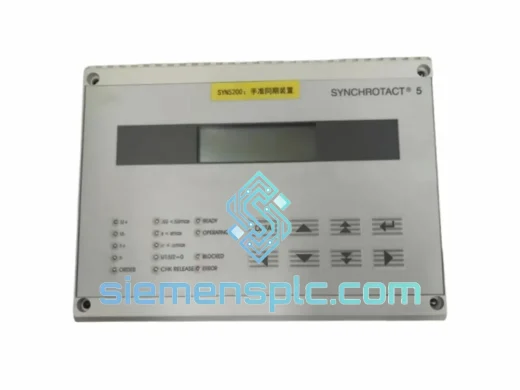
ABB 3BHB006713R0217 SYN5200a-Z Synchronous Control Module
AC800M
Origin SE
Synchronous Control Module