ABB
In Stock OK
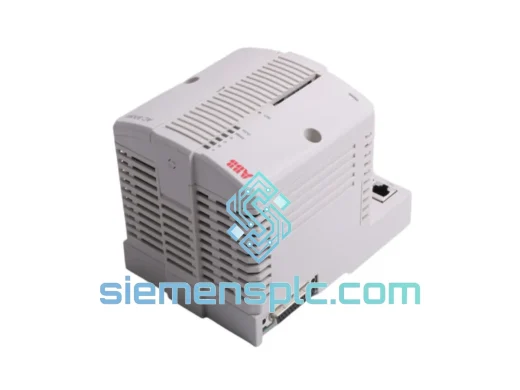
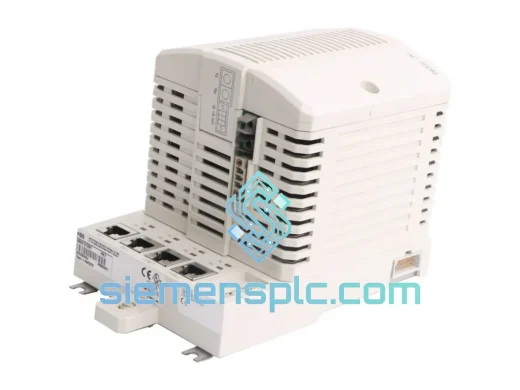
ABB TPSTU02 Safety Trip Unit – TPS Series
Request verified availability, condition, replacement risk review, packing options and courier lead time for TPSTU02.
BrandABB
Part NumberTPSTU02
ConditionAvailability Check
Lead TimeRFQ Confirmation
DocumentsDatasheet / photos by RFQ
ShippingExport packing available
Auto-filled RFQ
TPSTU02
Click Request Quote and the part number is inserted into the inquiry form automatically.
- Reply by email: [email protected]
- WhatsApp / Tel: +86 18359268345
- Mon-Sat 9:00-18:00 GMT+8
Procurement Data
Key Product Information
Core fields for model confirmation and RFQ routing. Detailed product narrative remains below.
- Brand
- ABB
- Primary Part Number
- TPSTU02
- Product Type
- Safety Trip Unit
- Series / Family
- TPS Platform
- Manufacturer
- ABB
- Country of Origin
- SE
- Catalog Category
- DCS & Safety Modules
- Operating Temp.
- 0 °C to +60 °C
- Warranty
- 12 months from date of shipment
Model confirmed for inquiry
TPSTU02
Send quantity, destination and urgency. The RFQ form keeps this part number attached.
Request Quote
Product Overview
ABB TPSTU02 – Hardwired Trip Enforcement in Turbine Safety Instrumented Systems
The ABB TPSTU02 is a dedicated safety trip unit within ABB’s Turbine Protection System (TPS) platform, designed to execute final-element shutdown commands for steam, gas, and hydro turbine trains operating under IEC 61511 functional safety requirements. Unlike supervisory monitoring modules, the TPSTU02 sits at the enforcement boundary of the safety instrumented function (SIF): it receives voted logic signals from upstream protection processors and drives hardwired solenoid trip outputs with deterministic latency, independent of any DCS or SCADA layer. This architectural separation is not a configuration option — it is a fixed design constraint that prevents a control system fault from masking or delaying a legitimate emergency shutdown.
The module integrates directly into the ABB TPS backplane, occupying a standard rack slot and communicating over the proprietary TPS system bus. Its input interface accepts conditioned logic signals from speed measurement channels (magnetic pickup and proximity probe types), vibration transducer circuits (eddy-current and piezoelectric), and axial displacement sensors. Each parameter is evaluated against pre-configured trip thresholds on a fixed-cycle scan. The scan period is hardware-clocked, not software-scheduled, which means the evaluation interval does not expand under high diagnostic load or communication traffic — a property that must be verified by design in any SIL-rated protection loop.
Response latency from threshold breach detection to solenoid output de-energization is below 10 ms under all operating conditions. To contextualize this figure: a turbine shaft rotating at 3,000 RPM completes one full revolution in 20 ms. A 10 ms trip response budget therefore limits shaft rotation after threshold breach to less than half a revolution — within the mechanical tolerance margins of most turbine OEM trip specifications. Systems that rely on software-scheduled protection logic with variable scan periods cannot provide this guarantee without extensive probabilistic analysis; the TPSTU02’s hardware-clocked architecture makes the guarantee deterministic by construction.
Redundant deployment uses 2oo3 (two-out-of-three) voting across three TPS racks, each housing an independent TPSTU02. The voting arbiter logic is implemented in hardware within the TPS backplane, not in a shared software process. This means a single module failure — whether a processor fault, power supply dropout, or communication error — does not reduce the system to a 1oo2 configuration silently; the fault is flagged immediately, and the remaining two modules continue to enforce the full protection function at the original SIL integrity level until the faulted module is replaced.
The TPSTU02 is applicable across power generation, petrochemical, and heavy industrial sectors wherever rotating machinery protection is governed by functional safety standards. Its compatibility with ABB Symphony Plus DCS and AC800M controller platforms allows unified event logging and alarm management across the protection and control layers without requiring a separate engineering interface for the safety system.
Real-time Stock & RFQ: [email protected] | WhatsApp: +86 18359268345
Technical Parameters
| Parameter | Specification |
|---|---|
| Part Number / SKU | TPSTU02 |
| Manufacturer | ABB |
| Product Series | Turbine Protection System (TPS) |
| Module Classification | Safety Trip Unit – Final Element Driver |
| Functional Safety Standard | IEC 61511, IEC 61508 |
| SIL Capability | SIL 2 (simplex); SIL 3 (2oo3 redundant voting) |
| Voting Architecture | 1oo1, 1oo2, 2oo3 (hardware arbiter) |
| Trip Response Latency | < 10 ms (hardware-clocked scan, all load conditions) |
| Speed Input Interface | Magnetic pickup; proximity probe (passive/active) |
| Vibration Input Interface | Eddy-current; piezoelectric transducer |
| Axial Displacement Input | Eddy-current proximity probe |
| Trip Output Type | Hardwired relay; solenoid de-energize-to-trip |
| Output Contact Rating | 24 V DC / 2 A (resistive load) |
| Backplane Interface | ABB TPS proprietary system bus |
| Input Isolation | Optical isolation, 500 V galvanic barrier per channel |
| Diagnostic Coverage | > 90 % of dangerous detectable failures |
| Operating Temperature | 0 °C to +60 °C |
| Storage Temperature | -25 °C to +70 °C |
| Relative Humidity | 5 % to 95 % RH, non-condensing |
| EMC Compliance | EN 61000-4-2 (ESD), EN 61000-4-4 (EFT), EN 61000-4-5 (Surge), EN 61000-4-6 (Conducted RF) |
| Module Weight | 620 g |
| Country of Origin | Germany |
| Warranty | 12 months from date of shipment |
Hardware Logical Analysis
The TPSTU02’s signal path begins at the field connector, where each analog input channel passes through a dedicated signal conditioning stage before crossing an optical isolation barrier rated at 500 V galvanic separation. The conditioner performs amplitude normalization and frequency-to-voltage conversion for speed pickup channels, and amplitude demodulation for eddy-current vibration channels. This front-end processing occurs in analog circuitry, not in firmware — the digital logic processor receives a pre-conditioned signal whose integrity does not depend on software calibration routines executing correctly. The consequence is that a firmware fault in the protection processor cannot corrupt the analog measurement chain; the two domains are electrically and logically independent.
The protection logic processor operates on a fixed-priority interrupt architecture. The overspeed evaluation interrupt has the highest priority in the system and cannot be preempted by any other task — not by the self-diagnostic routine, not by the TPS bus communication handler, and not by configuration write operations initiated from the engineering workstation. This is a hardware-enforced property implemented in the interrupt controller, not a software scheduling policy that could be inadvertently modified by a firmware update. The practical implication is that the trip response latency specification of <10 ms is valid under all concurrent operating conditions, including during active diagnostic tests and live parameter changes.
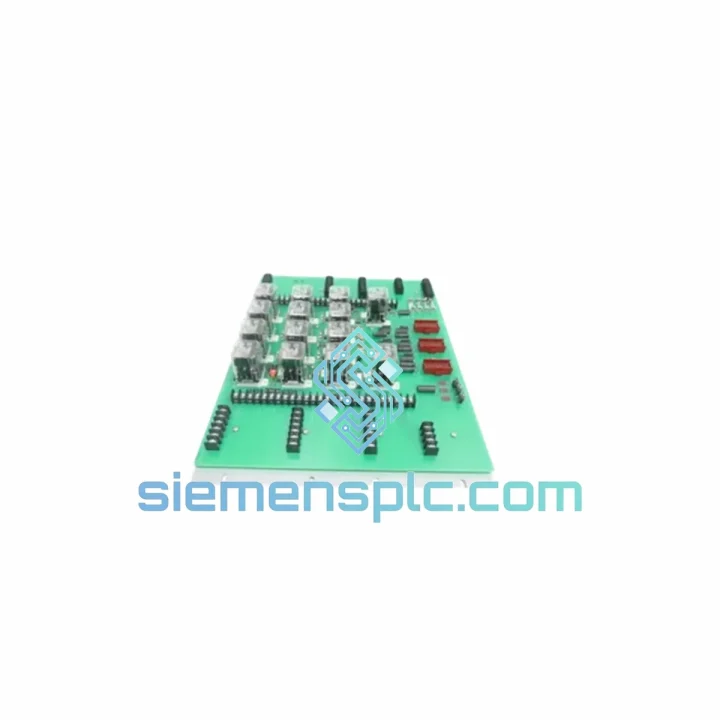
EMC hardening follows a layered PCB design strategy. The board uses a four-layer stackup with dedicated power and ground planes, minimizing return current loop area for high-frequency transients. Ferrite beads with impedance characteristics matched to the 30–300 MHz range are placed at all I/O connector entry points. The analog signal traces are routed with controlled impedance and shielded by ground pour on adjacent layers. The module housing provides additional shielding attenuation for radiated fields above 30 MHz. This combination has demonstrated stable protection function operation in environments with variable-frequency drives (VFDs) installed within 2 meters of the TPS rack — a scenario that generates conducted and radiated interference at levels that cause false trips in less robustly designed protection hardware.
The self-diagnostic architecture runs three concurrent test routines without interrupting the protection scan: a watchdog timer monitors the logic processor’s execution cycle and forces a safe-state output if the processor fails to service the watchdog within the configured timeout; a relay coil loopback test verifies output circuit continuity by measuring coil current during the energized state; and an analog channel range validator checks that each input signal remains within the physically plausible range for the connected sensor type, flagging open-circuit and short-circuit faults before they can produce a spurious trip or a missed trip. Aggregate diagnostic coverage exceeds 90 % of dangerous detectable failures, supporting the SIL 2 hardware fault tolerance claim without requiring proof test intervals shorter than 12 months.
System Integration Benefits
- Direct TPS Backplane Installation: The TPSTU02 occupies a standard TPS rack slot with no adapter hardware, preserving original system bus timing and eliminating the integration risk associated with third-party protection modules inserted into a proprietary backplane.
- Hardware-Clocked Scan Cycle: The protection evaluation interval is governed by a hardware clock, not a software scheduler. Scan period does not expand under diagnostic load or communication traffic, providing a deterministic response time budget that can be cited in SIL verification calculations without probabilistic qualification.
- Hardware Voting Arbiter: 2oo3 voting logic is implemented in the TPS backplane hardware, not in a shared software process. A single module fault does not silently degrade the voting configuration; it is flagged immediately while the remaining modules maintain full SIL integrity.
- 500 V Optical Isolation Per Channel: Galvanic separation on every analog input eliminates ground loop interference from turbine hall cabling and protects the protection processor from transient overvoltage events on sensor leads — a common failure mode in environments with large rotating machinery.
- Continuous Three-Layer Self-Diagnostics: Watchdog, relay coil loopback, and analog range validation run concurrently without interrupting the protection scan, achieving >90 % diagnostic coverage and supporting annual proof test intervals.
- IEC 61511 / IEC 61508 Certified Documentation: Factory-issued functional safety documentation covers hardware fault tolerance calculations, systematic capability assessment, and diagnostic coverage data, eliminating the need for the end user to derive these values independently during SIL verification.
- Symphony Plus and AC800M Compatibility: The TPS system bus interfaces with ABB’s Symphony Plus DCS and AC800M controller platforms, enabling unified alarm management, event sequence recording, and SOE (sequence of events) logging across the protection and control layers from a single engineering workstation.
- Hot-Swap Maintenance in Redundant Configurations: In 2oo3 deployments, a faulted TPSTU02 can be extracted and replaced under power without initiating a spurious trip on the remaining two modules, reducing mean time to repair and supporting maintenance during live plant operation without requiring a controlled shutdown.
- Configurable Threshold Parameters via Engineering Workstation: Trip setpoints for overspeed, vibration amplitude, and axial displacement are configurable from the TPS engineering workstation with access-controlled write permissions, eliminating the need for physical jumper changes or module replacement when process conditions change.
- Established Platform Lifecycle with Documented Obsolescence Management: ABB’s TPS platform carries a published service lifecycle with defined obsolescence notification periods, providing procurement certainty for facilities with 20+ year asset life expectations and reducing the risk of unplanned spare parts shortages.
Quality Assurance & Global Logistics
Each ABB TPSTU02 unit dispatched from siemensplc.com undergoes a structured incoming inspection before it enters available stock. The inspection protocol covers PCB surface condition under magnification, connector pin geometry and plating integrity, housing for evidence of unauthorized disassembly or repair, and label authenticity verification against known genuine ABB markings. Serial numbers and date codes are cross-referenced against manufacturer traceability records. Units that cannot be positively traced to a verifiable supply chain are quarantined and excluded from sale — a non-negotiable policy for safety-critical hardware where counterfeit components present unacceptable risk to plant personnel and asset integrity.
Where functional test fixtures are available for the TPSTU02, a simulated overspeed threshold exceedance test is performed to verify that the trip output de-energizes within the specified latency window. Results are recorded and retained with the unit’s dispatch documentation.
Packaging follows anti-static and moisture-barrier protocols. Each module is sealed in an ESD-protective bag with a humidity indicator card, placed in a foam-lined inner carton dimensioned to prevent movement during air freight handling, and packed in a double-wall outer carton rated for international courier drop-test standards. Fragile and ESD-sensitive labels are applied to all outer surfaces. For shipments to high-humidity transit routes, desiccant sachets are included inside the ESD bag.
Dispatch is from Xiamen, China, with direct air freight access to major industrial hubs across Europe, Southeast Asia, the Middle East, South Asia, and the Americas. Standard air freight transit times are 3–7 business days to most destinations. Express courier options via DHL, FedEx, and UPS are available for urgent requirements with next-flight-out booking on request. Full export documentation — commercial invoice, packing list, certificate of conformance, and airway bill — accompanies every shipment. Customers requiring specific customs documentation formats, HS code declarations, or country-of-origin certificates for their import clearance process are accommodated on request.
All units carry a 12-month warranty against manufacturing defects and functional failure under normal operating conditions, effective from the date of shipment. Warranty claims are processed with a target response time of 48 hours from receipt of the defective unit.
Contact Information
Email: [email protected]
WhatsApp: +86 18359268345
Web: siemensplc.com
Location: Xiamen, China
© 2026 siemensplc.com. All rights reserved.
Ready to quote
[email protected]
Send This Part Number to Sales
RFQ workflow
Quality workflow ->
Confirmation Process
01Model confirmation
We check the full part number, brand, series and visible nameplate information before quotation.
02Availability reply
Sales confirms stock path, condition option, quantity and realistic lead time for export dispatch.
03Packing & courier
DHL, FedEx, UPS or buyer courier arrangements can be reviewed with packing requirements.
Continue sourcing
Browse full catalog ->
Related Automation Parts
Similar brand or category products for fast comparison and multi-item RFQ lists.
ABB
RFQ Ready
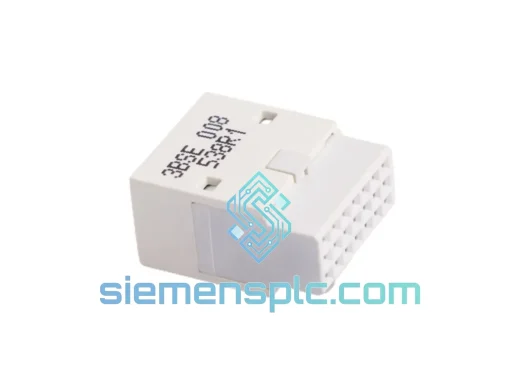
ABB TB807 3BSE008538R1 DCS Modulebus Terminator
AC800M
Origin SE
DCS Backplane Terminator