Advantech
RFQ Ready
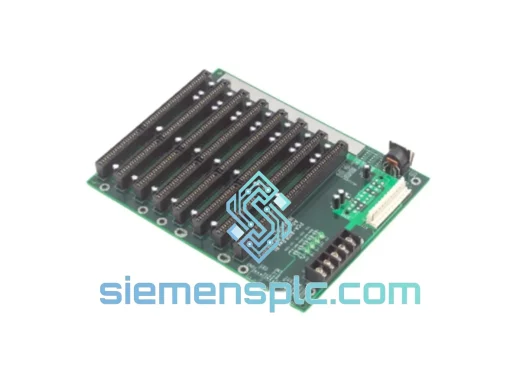
Advantech PCA-6108 Industrial Backplane
Industrial IPC
Origin TW
Industrial Backplane
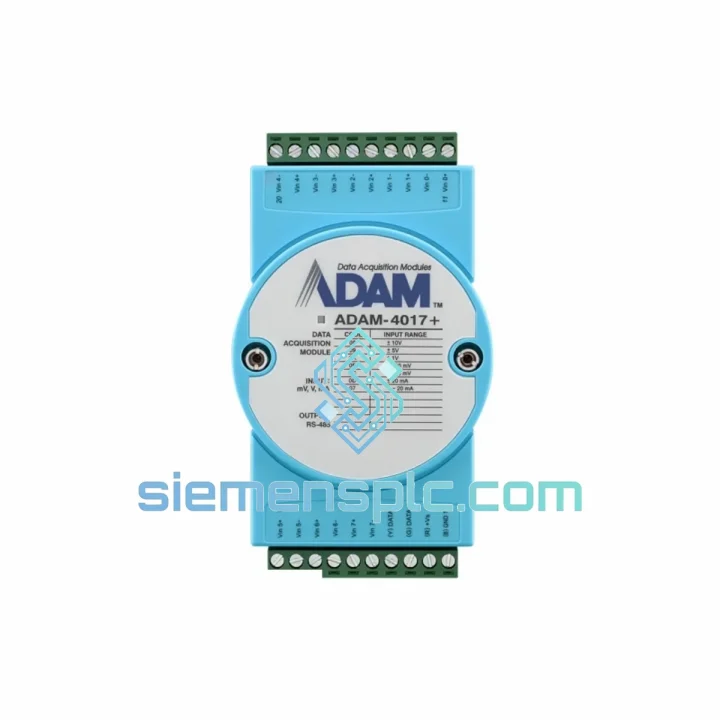
Request verified availability, condition, replacement risk review, packing options and courier lead time for ADAM-4012.
Click Request Quote and the part number is inserted into the inquiry form automatically.
Core fields for model confirmation and RFQ routing. Detailed product narrative remains below.
The ADAM-4012 is a single-channel, isolated analog input module from Advantech’s ADAM-4000 series, designed for distributed data acquisition over RS-485 networks in industrial process environments. Unlike multi-channel scan-based modules, the ADAM-4012 dedicates its full 16-bit ADC pipeline to one differential input, enabling higher per-channel accuracy and faster effective sample rates for closed-loop monitoring applications. The module accepts thermocouple inputs (Types J, K, T, E, R, S, B), millivolt signals (±15 mV to ±500 mV), voltage signals (±1 V to ±10 V), and current loop signals (0–20 mA, 4–20 mA) — all selectable via software command without hardware jumper changes.
In a control loop architecture, the ADAM-4012 occupies the field-side signal conditioning and digitization layer. It converts raw analog process variables — temperature, pressure differential, flow rate, or position — into IEEE 754 floating-point engineering-unit values transmitted over RS-485 using Modbus RTU or Advantech ASCII protocol. The host controller (PLC, DCS, or SCADA server) polls the module at configurable intervals, receiving calibrated, isolated, and linearized data without requiring any additional signal conditioning hardware between the field instrument and the control network.
Real-time Stock & RFQ: [email protected] | WhatsApp: +86 18359268345
| Parameter | Specification |
|---|---|
| Model | ADAM-4012 |
| Series | ADAM-4000 |
| Manufacturer | Advantech Co., Ltd. |
| Analog Input Channels | 1 differential channel |
| Input Signal Types | Thermocouple J / K / T / E / R / S / B; ±15 mV, ±50 mV, ±100 mV, ±500 mV; ±1 V, ±2.5 V, ±5 V, ±10 V; 0–20 mA, 4–20 mA |
| ADC Resolution | 16-bit (65,536 counts) |
| Accuracy | ±0.1% FSR (typical, at 25°C) |
| Thermocouple CJC | Built-in cold-junction compensation |
| Communication Interface | RS-485, 2-wire, half-duplex |
| Protocol | Modbus RTU / Advantech ASCII |
| Baud Rate | 1200 / 2400 / 4800 / 9600 / 19200 / 38400 / 57600 / 115200 bps |
| Max. RS-485 Bus Length | 1200 m (shielded twisted-pair, 120 Ω termination) |
| Max. Nodes per Segment | 256 |
| Isolation Voltage | 3000 VDC (field-to-logic) |
| Power Supply | +10 to +30 VDC (unregulated) |
| Power Consumption | 1.2 W (typical) |
| Operating Temperature | -10°C to +70°C |
| Storage Temperature | -25°C to +85°C |
| Relative Humidity | 5–95% RH, non-condensing |
| Dimensions (W × H × D) | 72 × 123 × 35 mm |
| Weight | ~200 g (module only) |
| Mounting | DIN-rail (EN 50022, 35 mm) or panel mount |
| Country of Origin | Taiwan |
| Certifications | CE (EMC Directive 2014/30/EU), FCC Part 15 Class A, RoHS |
| Warranty | 12 months against manufacturing defects |
The ADAM-4012’s internal architecture is built around a dedicated sigma-delta ADC front end, which oversamples the input signal at a rate significantly higher than the output data rate, then applies a digital decimation filter to achieve 16-bit effective resolution. This approach inherently suppresses high-frequency noise and aliasing without requiring external anti-aliasing capacitors on the field wiring — a practical advantage in electrically noisy panel environments where capacitive loading on thermocouple leads can introduce measurement error.
The galvanic isolation barrier — rated at 3000 VDC continuous — is implemented using a transformer-coupled DC/DC converter on the power rail and optocoupler-based signal paths on the RS-485 data lines. This dual-barrier topology ensures that neither a power fault nor a communication transient on the host side can propagate to the field wiring, and vice versa. In installations where field instruments share a common ground with high-power motor drives or welding equipment, this isolation level is the primary defense against ground-loop-induced measurement offset, which can otherwise introduce errors of several millivolts — equivalent to tens of degrees Celsius error on a Type K thermocouple at low temperatures.
The RS-485 transceiver within the ADAM-4012 is configured for automatic transmit/receive direction switching, controlled by the module’s internal UART logic. This eliminates the need for external RS-485 direction-control signals from the host, simplifying wiring in multi-drop bus topologies. The transceiver meets the EIA-485 standard for ±7 V common-mode range, providing tolerance against ground potential differences between nodes — a common condition in large plant installations where cable runs span multiple electrical panels.
Cold-junction compensation for thermocouple inputs is performed by an on-board precision thermistor located adjacent to the terminal block. The firmware applies the appropriate NIST thermocouple polynomial linearization in real time, delivering temperature readings in engineering units (°C or °F) directly to the host without requiring the host controller to perform linearization calculations. This offloads computational burden from the PLC or SCADA server and ensures consistent accuracy regardless of the host platform’s floating-point precision.
EMC immunity is addressed through a combination of hardware filtering on the analog input lines (RC low-pass filters with cutoff frequencies matched to the ADC’s decimation filter), transient voltage suppression (TVS) diodes on the RS-485 bus lines, and a grounded metal enclosure that provides shielding against radiated interference. The module meets IEC 61000-4-2 (ESD), IEC 61000-4-4 (EFT/Burst), and IEC 61000-4-5 (Surge) immunity levels, making it suitable for installation in the same cabinet as variable-frequency drives and contactors without additional shielding enclosures.
Every ADAM-4012 unit supplied through siemensplc.com is sourced from verified Advantech distribution channels and authenticated against Advantech’s original packaging, holographic labels, and serial number traceability. Incoming units undergo a structured inspection protocol: visual verification of label authenticity and enclosure integrity, functional power-on test confirming RS-485 communication handshake at 9600 bps Modbus RTU, input range verification across at least two signal types (voltage and current), and review of accompanying documentation including the calibration certificate where applicable.
Shipments originate from our warehouse in Xiamen, China — a major export hub with direct access to international freight forwarders serving Asia-Pacific, Europe, the Middle East, and the Americas. Standard export documentation (commercial invoice, packing list, certificate of origin) is prepared for all international orders. For time-critical MRO requirements, DHL Express and FedEx International Priority services are available with typical transit times of 3–5 business days to most destinations. Bulk orders for system integrators and EPC contractors are handled with consolidated packing and project-specific labeling on request.
All units are covered by a 12-month warranty against manufacturing defects from the date of shipment. Warranty claims are processed with a replacement-first policy — a replacement unit is dispatched upon confirmation of the defect, minimizing plant downtime. Technical support for integration, configuration, and troubleshooting is available via email and WhatsApp at no additional charge.
Email: [email protected]
WhatsApp: +86 18359268345
Web: siemensplc.com
Location: Xiamen, China
© 2026 siemensplc.com. All rights reserved.
We check the full part number, brand, series and visible nameplate information before quotation.
Sales confirms stock path, condition option, quantity and realistic lead time for export dispatch.
DHL, FedEx, UPS or buyer courier arrangements can be reviewed with packing requirements.
Similar brand or category products for fast comparison and multi-item RFQ lists.