Allen-Bradley
RFQ Ready
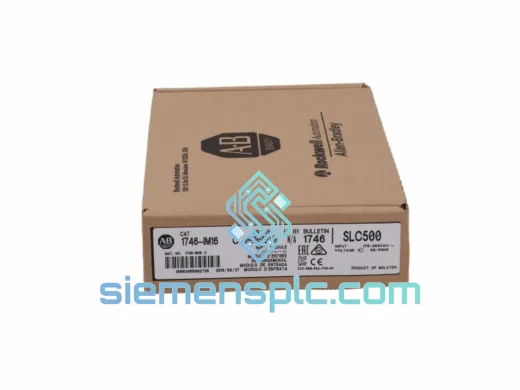
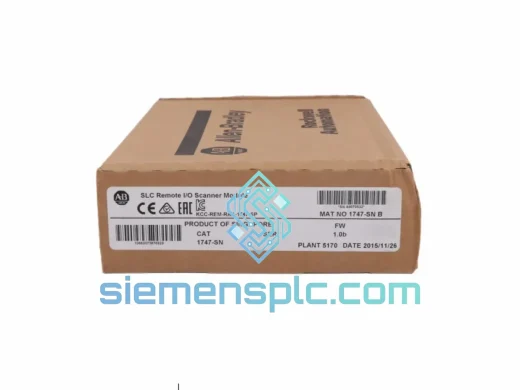
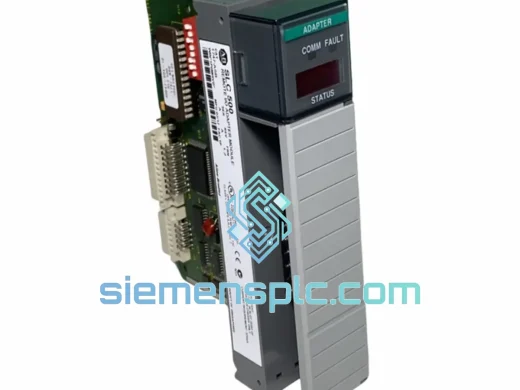
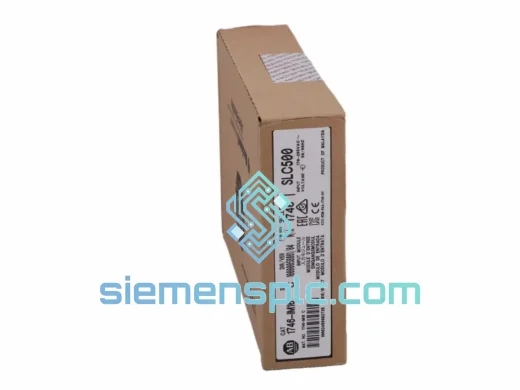
Allen-Bradley DIM16 Discrete Input Module
SLC 500
Origin US
Discrete Input Module
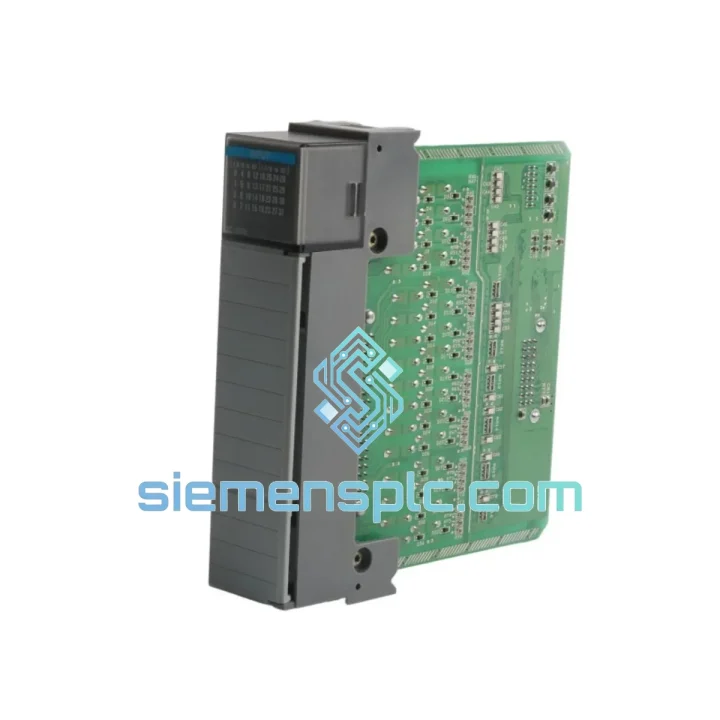
Request verified availability, condition, replacement risk review, packing options and courier lead time for 1746-IB32.
Click Request Quote and the part number is inserted into the inquiry form automatically.
Core fields for model confirmation and RFQ routing. Detailed product narrative remains below.
You didn’t come here to browse. Your SLC 500 rack threw an I/O fault, half your discrete inputs went dark, and production is standing still. The 1746-IB32 is a 32-point 24V DC sink input module — and when it fails in a high-cycle environment, it doesn’t give you a warning. It just stops. We carry verified, bench-tested stock in Xiamen and dispatch via DHL Express or FedEx International Priority within one business day of payment. That’s the only thing that matters right now.
URGENT REQUIREMENT? Contact: [email protected] | WhatsApp: +86 18359268345
| Part Number | 1746-IB32 ✅ Ready to Ship |
| Brand | Allen-Bradley / Rockwell Automation |
| Platform | SLC 500 |
| Module Function | 32-Point Digital DC Input — Sink (NPN) |
| Nominal Input Voltage | 24V DC |
| Input Voltage Range | 10–30V DC |
| Input Current @ 24V DC | 6 mA per point |
| ON-State Threshold (min) | 10V DC |
| OFF-State Threshold (max) | 5V DC |
| Input Impedance | 4 kΩ |
| Hardware Response Time | ≤ 1 ms (OFF→ON and ON→OFF) |
| Backplane Current (5V DC bus) | 185 mA |
| Field Wiring Connector | 40-pin Removable Terminal Block (RTB) |
| Operating Temperature | 0°C to +60°C |
| Storage Temperature | -40°C to +85°C |
| Relative Humidity | 5–95% non-condensing |
| Certifications | UL, CE, CSA, C-Tick, RoHS |
| Country of Origin | USA |
| Dispatch Lead Time | ✅ Within 24 hours of payment |
Ten years of field calls on SLC 500 systems teaches you where the 1746-IB32 actually breaks — and it’s rarely where the fault code points. Here’s what to check before you condemn the module, and what to watch when you swap it.
Failure Pattern 1 — Half the inputs dead (points 0–15 or 16–31 as a block):
The IB32 splits its 32 inputs into two 16-point groups, each with its own common terminal (C1 and C2). A corroded or loose common screw is the single most common cause of a 16-point block failure. Before pulling the module, measure resistance from C1 to chassis ground and C2 to chassis ground. Anything above 1.5Ω is a wiring fault, not a module fault. Tighten or replace the RTB terminal first.
Failure Pattern 2 — Intermittent inputs on press or compressor lines:
The 40-pin RTB develops contact fretting after years of vibration. The gold plating wears through, oxidation builds, and you get random input dropouts that disappear when you wiggle the connector. If reseating the RTB clears the fault temporarily, order a 1746-RT32 replacement RTB — the module itself is fine. This is a $15 fix that gets misdiagnosed as a $300 module failure constantly.
Failure Pattern 3 — Phantom inputs / input chatter with VFDs nearby:
The IB32 has a 1 ms hardware filter and nothing else. If VFD output cables are routed within 100 mm of sensor wiring, induced noise will trigger false ON states. Check cable separation first. Verify sensor cable shields are grounded at the panel end only — double-grounded shields act as antennas. If the problem persists after cable management, consider adding an external RC filter on the affected input terminals.
Failure Pattern 4 — Module not recognized, I/O fault LED solid red:
Ninety-five percent of the time this is a backplane connector issue. Inspect the 42-pin edge connector on the module under magnification — look for bent pins, debris, or oxidation. Clean the chassis slot with 99% IPA and a soft brush. If the module still faults after reseating in a known-good slot, then you have a genuine module failure.
Swap Procedure — What to do in sequence:
The SLC 500 platform was built for the factory floor, and the 1746-IB32 reflects that. The PCB carries a conformal coating that resists moisture ingress in environments where humidity swings are routine — think foundry floors, outdoor enclosures in tropical climates, and food processing areas where washdown mist is a daily reality. The 60°C operating ceiling means the module survives inside poorly ventilated panels during summer production peaks without thermal derating or nuisance faults.
Vibration and shock performance is validated to IEC 60068-2-6 (sinusoidal sweep, 10–500 Hz, 2g) and IEC 60068-2-27 (half-sine shock, 15g, 11 ms). In practice, IB32 modules pulled from stamping press control panels after 12–15 years of continuous service routinely test within original specification. The module is not the weak link in high-vibration installations — the RTB and field wiring are.
Every unit dispatched from our Xiamen facility goes through a bench verification cycle: all 32 inputs stimulated at 24V DC via a calibrated signal source, response time measured against a 1 ms threshold, and backplane communication confirmed via RSLogix 500 I/O tree scan on a live SLC 5/04 chassis. If it doesn’t pass every point, it doesn’t ship. We do not move untested stock.
Our warehouse is in Xiamen — a tier-1 international freight hub with dedicated DHL and FedEx sort facilities operating daily. From the moment payment clears, the clock starts:
For extreme-urgency situations where standard next-day dispatch is still too slow, contact us directly on WhatsApp. We maintain relationships with same-day domestic courier services and can coordinate hand-carry arrangements with your freight forwarder for the highest-priority shutdowns.
Email: [email protected]
WhatsApp: +86 18359268345
Web: siemensplc.com
© 2026. All rights reserved.
We check the full part number, brand, series and visible nameplate information before quotation.
Sales confirms stock path, condition option, quantity and realistic lead time for export dispatch.
DHL, FedEx, UPS or buyer courier arrangements can be reviewed with packing requirements.
Similar brand or category products for fast comparison and multi-item RFQ lists.