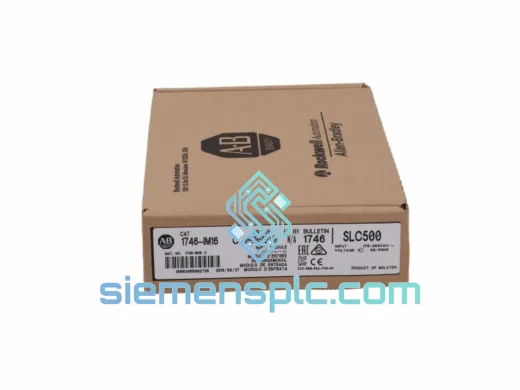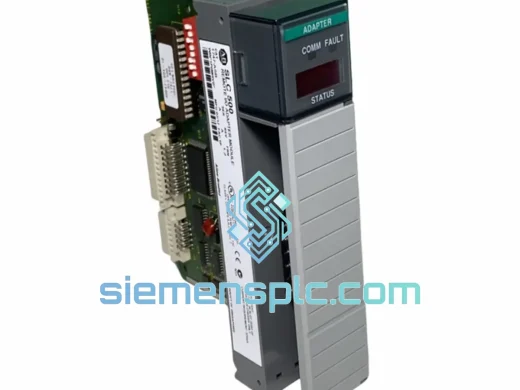
Allen-Bradley
RFQ Ready
Allen-Bradley DIM16 Discrete Input Module
SLC 500
Origin US
Discrete Input Module
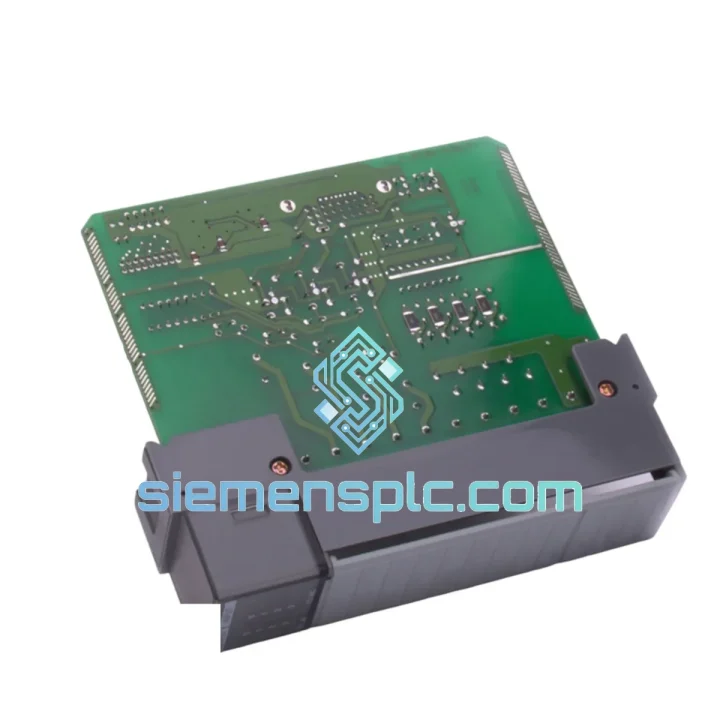
Request verified availability, condition, replacement risk review, packing options and courier lead time for 1746-NR4.
Click Request Quote and the part number is inserted into the inquiry form automatically.
Core fields for model confirmation and RFQ routing. Detailed product narrative remains below.
Your SLC 500 rack just threw a fault. The 1746-NR4 is dead. Temperature readings across all four channels have gone flat, your process is blind, and the line is stopped. You’ve been here before — you know what the next few hours look like if you can’t source a verified replacement immediately. That’s exactly why this page exists.
We stock the Allen-Bradley 1746-NR4 in Xiamen, China. Verified original hardware. Ships same day or next business day via DHL Express or FedEx International Priority. No waiting on distributor lead times. No grey-market risk. Just a working module in your hands as fast as physically possible.
URGENT REQUIREMENT? Contact: [email protected] | WhatsApp: +86 18359268345
| Parameter | Specification |
|---|---|
| Part Number | 1746-NR4 |
| Platform | Allen-Bradley SLC 500 |
| Module Type | Analog RTD / Resistance Input |
| Input Channels | 4 (differential, isolated) |
| Supported RTD Types | Pt100, Pt200, Pt500, Pt1000, Ni100, Ni120, Cu10 |
| Resistance Range | 0 – 3000 Ω |
| Resolution | 16-bit (including sign bit) |
| Accuracy | ±0.1% full scale @ 25°C |
| Wiring Modes | 2-wire, 3-wire, 4-wire RTD |
| Backplane Current | 150 mA @ 5 VDC |
| Channel Isolation | 250 VAC continuous, channel-to-backplane |
| Operating Temp | 0°C to 60°C |
| Storage Temp | -40°C to 85°C |
| Compatible Chassis | 1746-A4, A7, A10, A13 |
| Compatible Processors | SLC 5/01 through SLC 5/05 |
| Certifications | UL, CE, CSA, RoHS |
| Dimensions (H×W×D) | 111.8 × 30.5 × 87.4 mm |
| Weight | ~300 g |
| Stock Status | ✅ Ready to Ship — Xiamen, China |
After ten years of field work on SLC 500 systems, here are the failure patterns and swap pitfalls that actually matter when you’re standing in front of a dead rack at 2 AM:
Common Failure Signatures on the 1746-NR4:
Replacement Configuration Checklist — Do This Before You Power Up:
The 1746-NR4 was designed for the kind of environments where PLCs actually live — not climate-controlled server rooms, but steel mill floors, offshore platforms, chemical plant junction boxes, and food processing facilities where washdowns happen daily.
The module’s 250 VAC channel-to-backplane isolation isn’t a marketing number — it’s what keeps a ground fault on a field RTD from taking out your entire SLC 500 rack. In petrochemical and water treatment applications where ground loops are endemic, this isolation is the difference between a single-channel fault and a full system shutdown.
Thermal performance is rated to 60°C ambient — but the real-world test is sustained operation at that temperature with all four channels active and the backplane fully loaded. The module’s power dissipation of 0.75 W max is low enough that thermal runaway in a fully populated chassis is not a concern under normal operating conditions.
Vibration tolerance meets IEC 61131-2 requirements: 5–8.4 Hz at 3.5 mm displacement, 8.4–150 Hz at 1 g. In practice, this covers the vast majority of industrial machinery mounting scenarios. For high-vibration applications (compressors, presses, vibrating conveyors), ensure the chassis is mounted on vibration-isolating standoffs — the module itself is not the weak point, the backplane connector engagement is.
Humidity tolerance: 5–95% RH non-condensing. In high-humidity environments (tropical climates, coastal installations, paper mills), the primary failure mode is not the module electronics but the terminal block connections. Inspect and re-torque terminal screws annually. Conformal coating of the PCB is not standard on the 1746-NR4 — if your environment is genuinely corrosive, consider an enclosure upgrade rather than expecting the module to compensate.
Every unit we ship has been bench-tested in a live SLC 500 chassis across all four channels using calibrated RTD simulators. We verify channel accuracy, open-circuit detection, and correct fault code generation before the module leaves our facility. You’re not getting a module that’s been sitting in a warehouse for five years untested — you’re getting one that we know works.
We ship from Xiamen, China — one of the country’s primary export hubs with direct access to DHL, FedEx, and UPS international gateways. Here’s what the process looks like from the moment you confirm your order:
If your line is down and you need the fastest possible delivery, tell us when you contact us. We will prioritize your order, select the fastest available carrier service for your destination, and provide tracking within hours of dispatch.
📧 Email: [email protected]
💬 WhatsApp: +86 18359268345
🌐 Web: siemensplc.com
© 2026 siemensplc.com. All rights reserved.
We check the full part number, brand, series and visible nameplate information before quotation.
Sales confirms stock path, condition option, quantity and realistic lead time for export dispatch.
DHL, FedEx, UPS or buyer courier arrangements can be reviewed with packing requirements.
Similar brand or category products for fast comparison and multi-item RFQ lists.