Allen-Bradley
RFQ Ready
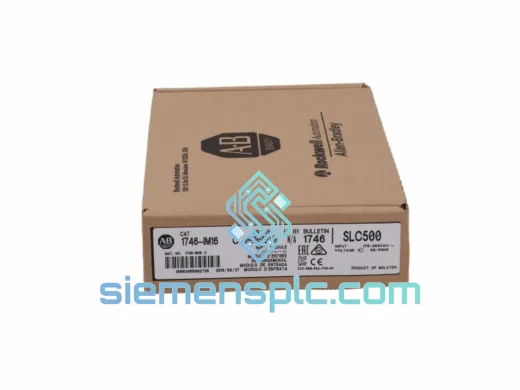
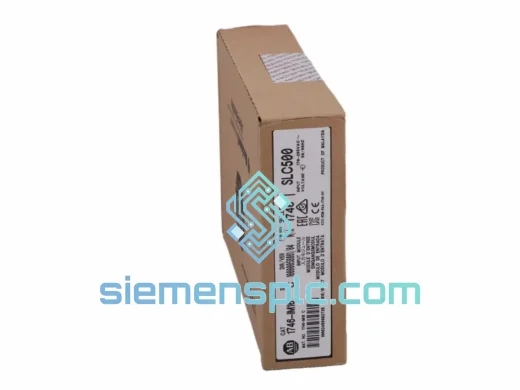
Allen-Bradley DIM16 Discrete Input Module
SLC 500
Origin US
Discrete Input Module
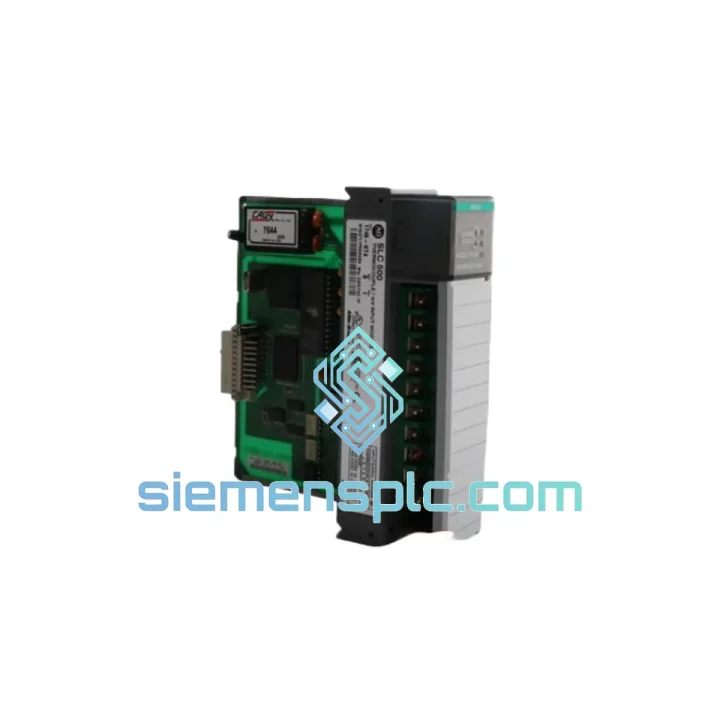
Request verified availability, condition, replacement risk review, packing options and courier lead time for 1746-NT4.
Click Request Quote and the part number is inserted into the inquiry form automatically.
Core fields for model confirmation and RFQ routing. Detailed product narrative remains below.
In process-critical environments — continuous casting lines, pharmaceutical autoclaves, glass tempering furnaces, or petrochemical heat exchangers — temperature measurement is not a peripheral function. It is the primary feedback variable that governs product quality, equipment longevity, and personnel safety. The Allen-Bradley 1746-NT4 is a four-channel isolated thermocouple and millivolt input module engineered for the SLC 500 backplane, delivering high-resolution thermal data directly into the controller’s I/O scan with the electrical isolation and signal conditioning demanded by industrial-grade deployments.
Unlike generic analog input modules that require external signal conditioners, the 1746-NT4 integrates cold junction compensation, open-wire detection, and per-channel isolation into a single-slot form factor. This architectural decision reduces panel wiring complexity, eliminates a class of common measurement errors, and lowers the total component count in temperature-intensive control panels. For MRO teams managing aging SLC 500 infrastructure, and for system integrators building new panels around proven mid-range PLC platforms, the 1746-NT4 remains the technically correct and commercially available solution.
Real-time Stock & RFQ: [email protected] | WhatsApp: +86 18359268345
| Catalog Number | 1746-NT4 |
| Manufacturer | Allen-Bradley / Rockwell Automation |
| Platform | SLC 500 (1746 Series) |
| Module Type | Thermocouple / Millivolt Analog Input |
| Input Channels | 4, individually isolated |
| Thermocouple Types | J, K, E, T, R, S, B |
| Direct mV Input Range | ±100 mV |
| Resolution | 16-bit (including sign bit) |
| Accuracy | ±0.1% of full scale (typical at 25 °C) |
| Cold Junction Compensation | Automatic, internal thermistor-based sensor |
| Channel-to-Channel Isolation | 250 V AC continuous |
| Channel-to-Backplane Isolation | 250 V AC continuous |
| Backplane Current (5 V DC) | 150 mA |
| Backplane Current (24 V DC) | 0 mA |
| Operating Temperature | 0 °C to +60 °C |
| Storage Temperature | −40 °C to +85 °C |
| Relative Humidity | 5% to 95%, non-condensing |
| Chassis Compatibility | 1746-A4, A7, A10, A13 modular chassis |
| Slot Occupancy | Single slot |
| Certifications | UL, CSA, CE |
| Warranty (siemensplc.com) | 12 months from shipment date |
| Lead Time | In-stock units: 1–3 business days; project quantities confirmed at RFQ stage |
The 1746-NT4’s internal architecture addresses three fundamental challenges in thermocouple signal acquisition: microvolt-level signal amplification, ground-loop rejection, and ambient temperature drift compensation.
Per-Channel Optical and Transformer Isolation: Each of the four input channels is galvanically isolated from the SLC 500 backplane and from adjacent channels at 250 V AC. This is not a shared isolation barrier — it is implemented per channel, which means a ground fault or high common-mode voltage event on one thermocouple circuit cannot propagate to the backplane bus or corrupt readings on other channels. In furnace applications where thermocouples are embedded in electrically grounded metallic structures, this architecture is the only reliable approach to eliminating ground-loop-induced offset errors.
Instrumentation Amplifier Front-End: Thermocouple output voltages are in the microvolt-to-millivolt range (e.g., Type K produces approximately 41 µV/°C). The module’s front-end uses a high-CMRR instrumentation amplifier topology to reject common-mode noise — typically 50/60 Hz interference induced by proximity to power cables — while amplifying the differential thermocouple signal with minimal added noise. The 16-bit ADC then digitizes the conditioned signal, yielding temperature resolution finer than 0.1 °C for most thermocouple types across their usable range.
Automatic Cold Junction Compensation (CJC): The Seebeck voltage generated by a thermocouple is referenced to the temperature at the point where the thermocouple wire terminates at the module’s screw terminals — the cold junction. The 1746-NT4 uses an onboard thermistor to continuously measure this terminal temperature and applies a software correction to the raw ADC reading. This eliminates the need for isothermal terminal blocks or external reference junction assemblies, reducing both BOM cost and wiring complexity.
Open-Wire Detection Logic: The module applies a small bias current to each input channel. When a thermocouple wire is intact, this current is absorbed by the low-impedance thermocouple circuit. If the wire breaks or a connector becomes loose, the input impedance rises sharply, driving the channel output to a defined over-range value. The SLC 500 processor can monitor this condition in ladder logic and trigger an alarm or safe-state output before a process fault develops into equipment damage or a safety event.
EMC Design Considerations: The module’s PCB layout routes high-impedance analog traces away from digital switching circuits, with ground planes segmented to prevent digital return currents from coupling into the analog measurement path. Input filtering attenuates high-frequency interference above the signal bandwidth, and the module’s metal housing provides shielding against radiated emissions from adjacent variable-frequency drives and contactors — a common noise source in the same panel enclosures where SLC 500 systems are deployed.
Every 1746-NT4 unit dispatched from siemensplc.com undergoes a structured pre-shipment inspection protocol:
Shipments originate from Xiamen, China — a designated free-trade port with direct air freight connections to major hubs in Europe, North America, Southeast Asia, and the Middle East. Standard export documentation includes a commercial invoice, packing list, and certificate of origin compliant with Xiamen Customs requirements. DHL Express, FedEx International Priority, and SF International are the primary carriers, with typical transit times of 3–7 business days to most destinations. Sea freight consolidation is available for bulk orders exceeding 50 kg. Multi-currency payment is supported: USD, EUR, and CNY via T/T bank transfer; PayPal and credit card for smaller orders.
Email: [email protected]
WhatsApp: +86 18359268345
Web: siemensplc.com
Location: Xiamen, China
© 2026 siemensplc.com. All rights reserved.
We check the full part number, brand, series and visible nameplate information before quotation.
Sales confirms stock path, condition option, quantity and realistic lead time for export dispatch.
DHL, FedEx, UPS or buyer courier arrangements can be reviewed with packing requirements.
Similar brand or category products for fast comparison and multi-item RFQ lists.