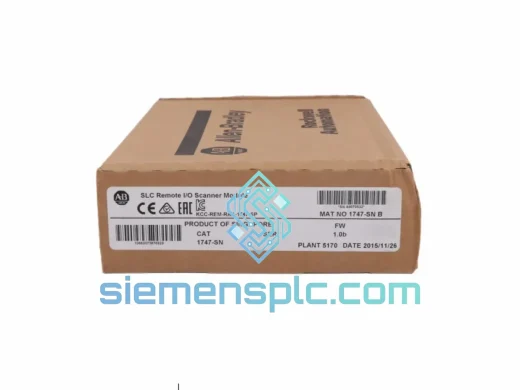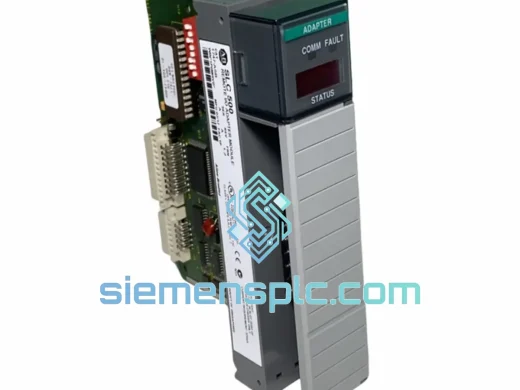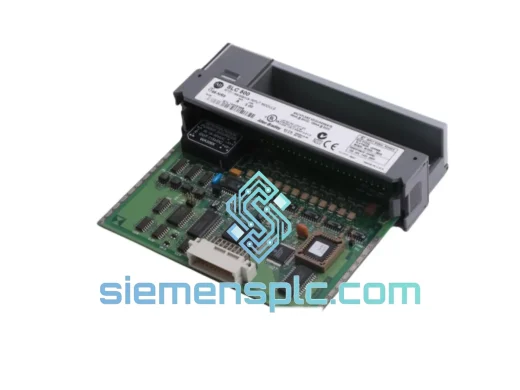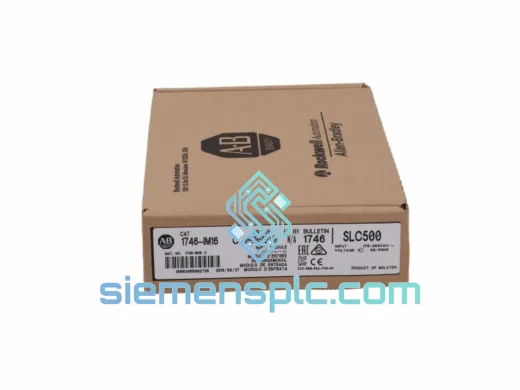
Allen-Bradley
RFQ Ready
Allen-Bradley AIM16 PLC Input Module – SLC 500 Series
SLC 500
Origin US
PLC Input Module
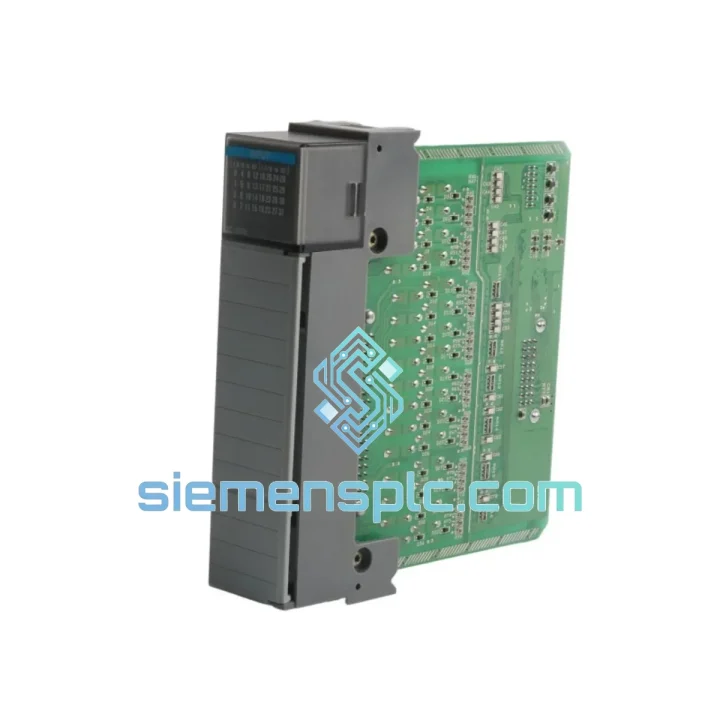
Request verified availability, condition, replacement risk review, packing options and courier lead time for 1746-OG16.
Click Request Quote and the part number is inserted into the inquiry form automatically.
Core fields for model confirmation and RFQ routing. Detailed product narrative remains below.
It’s 2 AM. Your SLC 500 rack just threw a fault. Output module 1746-OG16 is dead — 16 points gone dark, solenoids frozen, line stopped. You’ve already called your local distributor; lead time is 6–8 weeks. That’s not an option when your line is bleeding $8,000–$15,000 per hour.
This is exactly the scenario we built siemensplc.com for. We stock the Allen-Bradley 1746-OG16 in Xiamen, China — inspected, tested, and ready to clear customs today. DHL Express gets it to your dock in 2–4 business days, anywhere in the world. No broker delays, no grey-market risk. Just a verified, functional module in your hands before your next shift.
URGENT REQUIREMENT? Contact: [email protected] | WhatsApp: +86 18359268345
| Parameter | Specification | Status |
|---|---|---|
| Catalog Number | 1746-OG16 | ✅ Ready to Ship |
| Series | Allen-Bradley SLC 500 | — |
| Module Type | Current Sinking (NPN) TTL DC Output | — |
| Number of Output Points | 16 | — |
| Output Voltage Range | 10–30 VDC | — |
| Output Current (per point) | 1 A continuous / 2 A peak (10 ms) | — |
| Module Total Current | 8 A maximum | — |
| ON-State Voltage Drop | ≤ 1.0 VDC @ 1 A | — |
| OFF-State Leakage | ≤ 1.0 mA | — |
| Output Response Time | < 1 ms (ON→OFF and OFF→ON) | — |
| Isolation | 1500 VAC optical (field to backplane) | — |
| Backplane Current Draw | 185 mA @ 5 VDC | — |
| Operating Temperature | 0 °C to +60 °C | — |
| Storage Temperature | –40 °C to +85 °C | — |
| Relative Humidity | 5–95% non-condensing | — |
| Wiring | Removable Terminal Block (RTB), 22–14 AWG | — |
| Status Indicators | 16 × green LED (one per output point) | — |
| Chassis Compatibility | All 1746 chassis (4, 7, 10, 13-slot) | — |
| Certifications | UL, CSA, CE, C-Tick | — |
| Country of Origin | United States | — |
| Weight (approx.) | 300 g | — |
Most common failure modes on the 1746-OG16 in the field:
1. Shorted output transistor (single point or multiple points stuck ON)
This is the #1 failure mode. Caused by inductive kickback from solenoid coils without flyback protection, or by a field wiring short that exceeded the 2 A peak rating. Symptom: one or more output LEDs stay lit even when the ladder rung is false. Confirm with a multimeter — measure voltage at the suspect terminal with the output commanded OFF. If you read field voltage instead of near-zero, the transistor is shorted. Replace the module; there is no field repair for a shorted output transistor.
2. Entire module goes dark — no LEDs, no outputs
First suspect: blown internal fuse or failed backplane power draw. Pull the module and check backplane connector pins for burn marks or corrosion. Measure 5 VDC backplane supply at the chassis slot with a known-good module seated — if supply is present and the 1746-OG16 still shows no life, the module’s internal logic supply has failed. Swap the module.
3. Intermittent output faults — fault code F001 or I/O module fault in RSLogix 500
Typically caused by a loose RTB (Removable Terminal Block) seating. The RTB locking tab can fatigue after repeated removal cycles. Re-seat the RTB firmly until you hear the latch click. If the fault clears and returns, replace the RTB — catalog number 1746-RT25 for the 25-pin version used on the OG16. Do not overlook this; a loose RTB causes intermittent faults that are notoriously difficult to trace without knowing this failure mode.
4. Outputs respond slowly or inconsistently at high cycle rates (> 200 cycles/min)
Verify your SLC 500 RPI (Requested Packet Interval) and I/O scan time in RSLogix 500. If the scan time exceeds 5 ms, the processor is the bottleneck, not the module. The 1746-OG16 itself switches in < 1 ms. Also check for excessive ladder logic in the main scan — move time-critical output rungs to a high-priority STI (Selectable Timed Interrupt) subroutine.
Replacement procedure — step by step:
Configuration notes:
The 1746-OG16 has no DIP switches and requires no firmware matching — it is purely hardware-configured by slot position. The SLC 500 processor automatically detects the module type at power-up. If you are replacing a Series A module with a Series C, the I/O configuration is fully backward-compatible; no RSLogix 500 project changes are needed. Confirm your chassis power supply (1746-P2, P4, or P7) has sufficient 5 VDC headroom — the OG16 draws 185 mA, and a fully loaded 10-slot chassis can approach the P2’s 2 A limit.
The 1746-OG16 was designed for the plant floor, not the lab. Its 1500 VAC optical isolation barrier between field wiring and the SLC 500 backplane is the first line of defence against the voltage transients that kill lesser modules — motor starter inrush, welding gun discharge, and VFD switching noise all generate spikes that would corrupt an unprotected backplane. The optical isolator absorbs these without passing them upstream.
Solid-state output transistors have no moving parts, no contact bounce, and no wear-out mechanism tied to switching cycles. A relay output module rated for 1 million operations will fail in a high-cycle application running 300 cycles per minute within 23 months. The 1746-OG16’s transistor outputs have no such limitation — they will outlast the machinery they control in normal operating conditions.
The module’s operating range of 0 °C to +60 °C covers the vast majority of industrial panel environments, including outdoor enclosures in subtropical climates and furnace-adjacent panels in steel mills. The conformal coating on the PCB provides additional protection against humidity and airborne contaminants — critical in coastal facilities, food processing plants, and chemical environments where condensation and corrosive vapours are routine.
Vibration resistance meets IEC 68-2-6 standards, making the module suitable for mobile equipment, compressor skids, and any application where the control panel is subject to continuous mechanical vibration. The backplane connector’s positive locking mechanism prevents the module from unseating under vibration — a failure mode that plagues modules with friction-only retention.
Our warehouse is located in Xiamen, Fujian Province — one of China’s primary export hubs with direct access to Xiamen Gaoqi International Airport (XMN) and daily DHL Express and FedEx International Priority flight connections to major global hubs.
Typical transit times from Xiamen:
What’s included with every shipment:
Commercial invoice with accurate HS code (8537.10 for PLC modules), packing list, certificate of origin, and — upon request — a material test report or inspection certificate. We handle all export documentation in-house; you do not need a freight forwarder for standard DHL/FedEx shipments. For orders requiring an import licence or specific customs declaration format (common in Brazil, India, and Russia), contact us before ordering and we will prepare the documentation set your customs broker requires.
Orders confirmed before 14:00 CST (UTC+8) ship the same business day. For production-down emergencies, contact us via WhatsApp — we can arrange same-day pickup by DHL courier for orders confirmed before 11:00 CST.
📧 Email: [email protected]
💬 WhatsApp: +86 18359268345
🌐 Web: siemensplc.com
© 2026 siemensplc.com. All rights reserved.
We check the full part number, brand, series and visible nameplate information before quotation.
Sales confirms stock path, condition option, quantity and realistic lead time for export dispatch.
DHL, FedEx, UPS or buyer courier arrangements can be reviewed with packing requirements.
Similar brand or category products for fast comparison and multi-item RFQ lists.