Allen-Bradley
RFQ Ready
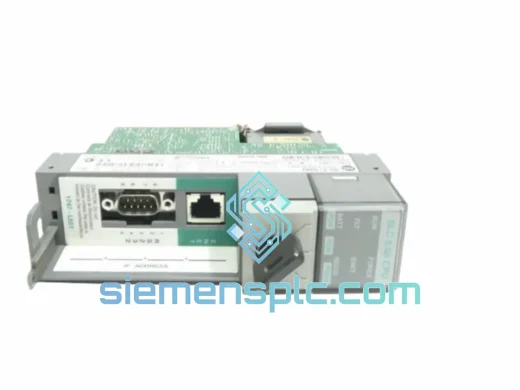
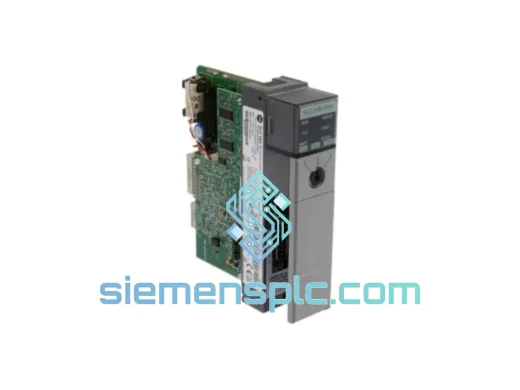
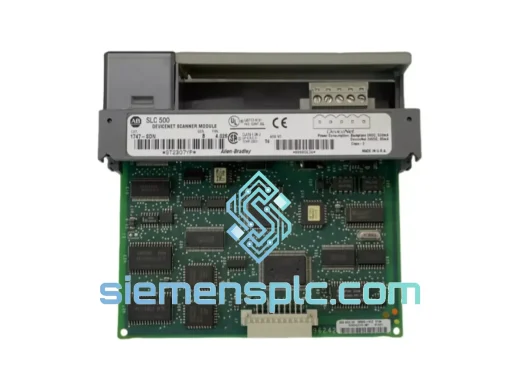
Allen-Bradley 1747-SDN PLC Scanner Module
SLC 500
Origin US
PLC Scanner Module
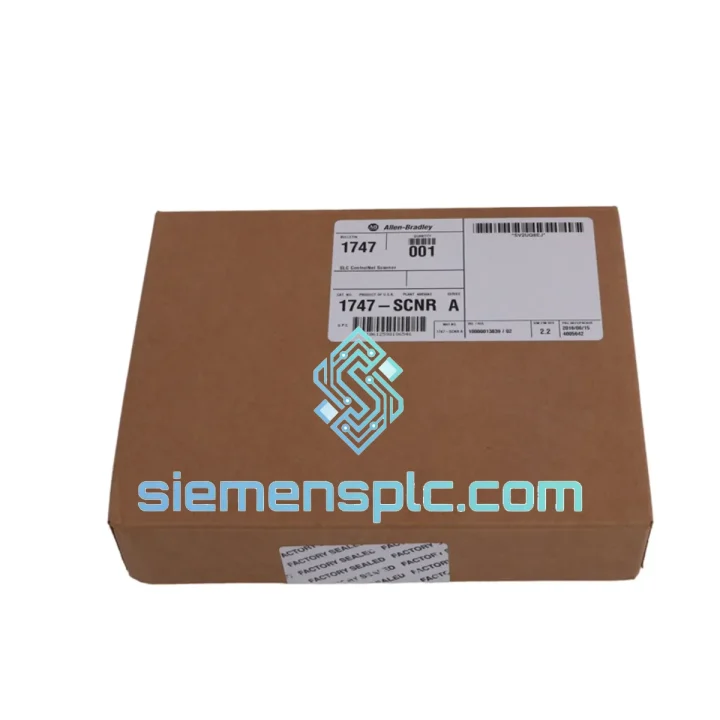
Request verified availability, condition, replacement risk review, packing options and courier lead time for 1747-SCNR.
Click Request Quote and the part number is inserted into the inquiry form automatically.
Core fields for model confirmation and RFQ routing. Detailed product narrative remains below.
The 1747-SCNR occupies a single slot in any 1746-series modular chassis and grants the SLC 500 controller full originator-class authority on a ControlNet segment. Unlike the 1747-KFC15 — which provides programming-port access only — the SCNR manages both scheduled (implicit) and unscheduled (explicit) ControlNet connections simultaneously, making it the sole module within the SLC 500 platform capable of deterministic I/O scanning across a ControlNet trunk. It supports up to 48 addressable nodes and 32 concurrent scheduled connections, with per-connection Requested Packet Intervals (RPI) configurable from 2 ms to 100 ms via RSNetWorx for ControlNet. This range covers the majority of discrete and process I/O applications where ControlNet was originally specified: automotive body-in-white lines, petrochemical unit operations, power generation auxiliaries, and municipal water/wastewater treatment.
The module draws 800 mA from the 5 VDC backplane rail and dissipates 4.0 W maximum — figures that must be verified against the installed chassis power supply budget before commissioning, particularly in fully populated 13-slot racks. Communication with the SLC 500 CPU occurs through the standard 1746 backplane protocol; the scanner maps remote I/O data directly into the controller’s input and output data files, with each scheduled connection capable of transferring up to 64 words of input and 64 words of output data per RPI cycle. Unscheduled connections are handled via MSG instructions in the SLC ladder program, enabling on-demand parameter reads and writes to ControlNet-capable drives, HMI nodes, and peer controllers without consuming scheduled bandwidth.
Real-time Stock & RFQ: [email protected] | WhatsApp: +86 18359268345
| Parameter | Value |
|---|---|
| Catalog Number | 1747-SCNR |
| Platform | SLC 500 (1746 modular chassis) |
| Network Protocol | ControlNet (CTDMA media access) |
| Network Data Rate | 5 Mbps (fixed) |
| Physical Media | RG-6 coaxial, dual BNC ports (Channel A / Channel B) |
| Max ControlNet Nodes | 48 |
| Max Scheduled Connections | 32 |
| RPI Range | 2 ms – 100 ms (per connection, configurable) |
| Max I/O Data per Connection | 64 words input / 64 words output |
| Backplane Current Draw | 800 mA @ 5 VDC |
| Power Dissipation | 4.0 W (max) |
| Form Factor | Single-slot, 1746 backplane |
| Operating Temperature | 0 °C to +60 °C |
| Storage Temperature | −40 °C to +85 °C |
| Relative Humidity | 5% – 95% non-condensing |
| Vibration Compliance | IEC 68-2-6 |
| Shock Compliance | IEC 68-2-27 |
| Certifications | UL 508, CE (EMC + LVD), CSA, ControlNet International |
| Chassis Compatibility | 1746-A4, A7, A10, A13 (all slot counts) |
| CPU Compatibility | SLC 5/01 through SLC 5/05 |
| Configuration Tool | RSNetWorx for ControlNet |
| Warranty | 12 months from shipment date |
CTDMA Scheduled Bandwidth Allocation: ControlNet’s Concurrent Time Domain Multiple Access protocol divides each network interval into a scheduled segment and an unscheduled segment. The 1747-SCNR, as originator, negotiates scheduled bandwidth during the RSNetWorx configuration phase — not at runtime. This means that once the network schedule is downloaded, the scanner’s I/O data transfers occur at mathematically guaranteed intervals regardless of unscheduled traffic volume. This is architecturally distinct from EtherNet/IP, where CIP I/O connections share bandwidth with TCP/IP traffic and are subject to switch congestion. For applications where a missed I/O update triggers a safety interlock or a process upset, this determinism is a functional requirement, not a preference.
Dual-Port Redundant Media Architecture: The module’s two BNC connectors (Channel A and Channel B) connect to physically separate coaxial cable runs that form a redundant media pair. The 1747-SCNR monitors both channels simultaneously and switches to the surviving channel within one network interval if the active channel fails — without generating a controller fault or interrupting scheduled I/O. This passive redundancy requires no additional configuration and imposes no CPU overhead, making it suitable for installations where cable damage from mechanical interference or rodent activity is a realistic failure mode.
Backplane Data Path and M0/M1 File Mapping: The scanner communicates with the SLC 500 CPU via the 1746 backplane using the standard I/O image table mechanism. Scheduled connection data is mapped into the controller’s input (I:) and output (O:) files at addresses assigned during RSNetWorx configuration. Unscheduled data accessed via MSG instructions uses the M0 (output) and M1 (input) data files associated with the scanner’s slot address. This architecture means the CPU’s scan cycle is not extended by ControlNet communication latency — the scanner operates asynchronously, updating the I/O image table at the configured RPI independent of the ladder scan time.
EMC Design Considerations: The RG-6 coaxial physical layer provides approximately 95 dB of shielding effectiveness across the 1–1000 MHz range, which is substantially higher than twisted-pair alternatives. In environments with variable-frequency drives, arc welders, or high-current bus bars in proximity to the network cable, this shielding margin is the primary reason ControlNet was specified over DeviceNet or RS-485-based networks in the original system design. The 1747-SCNR’s BNC connectors maintain this shielding continuity at the module interface, provided the cable termination is performed with proper BNC crimp connectors and the shield is bonded to the enclosure ground at one end of each segment.
Each 1747-SCNR unit offered through siemensplc.com is sourced from verified industrial surplus channels and decommissioned OEM production lines. Before shipment, every unit passes a structured four-stage inspection protocol:
Shipment from Xiamen reaches major industrial hubs in Southeast Asia within 3–5 business days, Europe within 5–8 business days, and North America within 5–7 business days via DHL Express or FedEx International Priority. Full export documentation — commercial invoice, packing list, and certificate of conformance — is provided with every shipment. For orders requiring expedited customs clearance, pre-shipment documentation packages are available on request.
Email: [email protected]
WhatsApp: +86 18359268345
Web: siemensplc.com
Location: Xiamen, China
© 2026 siemensplc.com. All rights reserved.
We check the full part number, brand, series and visible nameplate information before quotation.
Sales confirms stock path, condition option, quantity and realistic lead time for export dispatch.
DHL, FedEx, UPS or buyer courier arrangements can be reviewed with packing requirements.
Similar brand or category products for fast comparison and multi-item RFQ lists.