Allen-Bradley
RFQ Ready
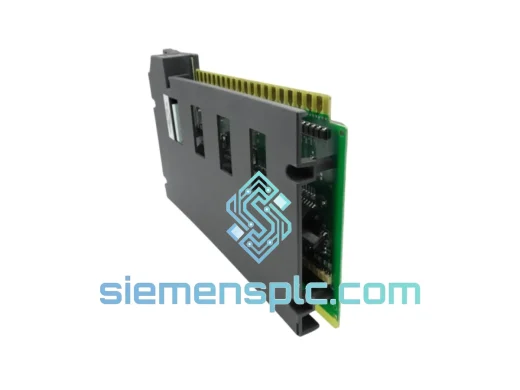
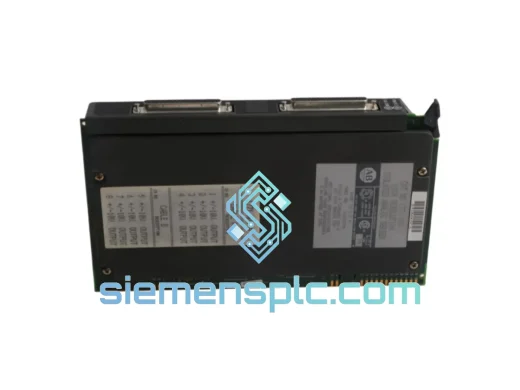
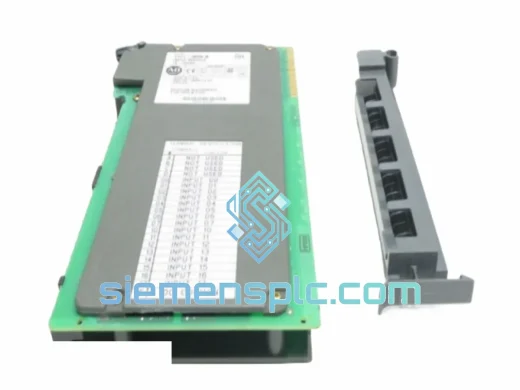
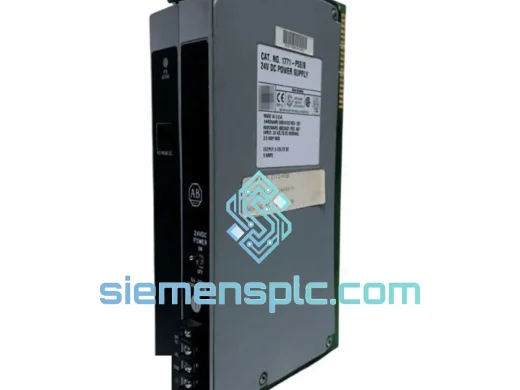
Allen-Bradley 1771-P5E Power Supply Interface Module – PLC-5
PLC-5
Origin US
Power Supply Interface Module
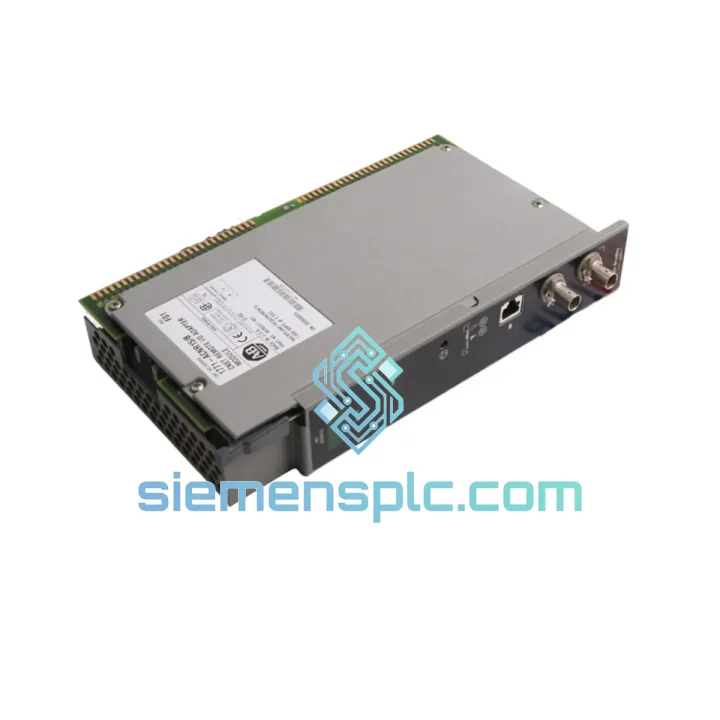
Request verified availability, condition, replacement risk review, packing options and courier lead time for 1771-ACNR15.
Click Request Quote and the part number is inserted into the inquiry form automatically.
Core fields for model confirmation and RFQ routing. Detailed product narrative remains below.
In distributed control architectures where I/O chassis are physically separated from the host controller by tens or hundreds of meters, the integrity of the communication link is not a secondary concern — it is the primary engineering constraint. The Allen-Bradley 1771-ACNR15 addresses this constraint directly: it is a ControlNet-native remote I/O adapter designed for the 1771 I/O chassis platform, with built-in support for redundant media topology. Where a single cable fault would disable a standard adapter, the 1771-ACNR15 maintains uninterrupted scheduled I/O scanning by switching to the intact coaxial path without controller intervention or data loss.
The 1771 platform was engineered for modular, slot-based I/O expansion in environments where discrete and analog signals must be aggregated reliably under deterministic scan cycles. The 1771-ACNR15 occupies the adapter slot of the 1771 chassis and presents the entire rack’s I/O data to the ControlNet scanner — typically a PLC-5/CN or ControlLogix CNB module — as a scheduled connection with a fixed Requested Packet Interval (RPI). This architecture eliminates the variable latency inherent in polled or token-passing networks, making the 1771-ACNR15 appropriate for motion-adjacent control, interlock logic, and process loops where scan-time consistency is a hard requirement.
The module’s dual-port BNC interface connects to two independent ControlNet cable segments. Under normal operation, both ports are active and the module monitors signal quality on each. If one segment degrades below threshold — due to cable damage, connector corrosion, or tap failure — the adapter continues operating on the surviving segment. This behavior is transparent to the PLC program: no fault bit is asserted that would interrupt the control loop, though a diagnostic status is available for maintenance personnel via RSNetWorx for ControlNet.
From a backplane perspective, the 1771-ACNR15 communicates with installed I/O modules via the 1771 parallel backplane bus. The adapter arbitrates backplane access, reads output data from the ControlNet scheduled connection, writes it to the appropriate module slots, then reads input data from all configured modules and assembles it into the scheduled input data table transmitted back to the scanner. This cycle executes at the configured RPI — typically 5 ms to 100 ms depending on application requirements — with jitter measured in microseconds rather than milliseconds.
The 1771-ACNR15 supports both scheduled (implicit) and unscheduled (explicit) messaging on the same ControlNet segment. Scheduled connections carry the real-time I/O data under guaranteed bandwidth allocation established during network commissioning with RSNetWorx. Unscheduled messaging capacity on the same segment allows configuration uploads, diagnostic reads, and peer-to-peer data exchange without consuming scheduled bandwidth or affecting I/O scan determinism.
Electrically, the module is designed for operation in Class I, Division 2 adjacent environments and meets the EMC requirements applicable to industrial control equipment. The ControlNet physical layer — 75-ohm RG-6 coaxial cable with BNC connectors — provides inherent noise immunity superior to twisted-pair alternatives at the signal frequencies used by ControlNet (5 Mbps, Manchester-encoded). The module’s internal circuitry includes transient suppression on the backplane power rails and signal conditioning on the ControlNet receiver path to maintain reliable operation in environments with significant conducted and radiated interference from variable-frequency drives, welding equipment, and high-current switching loads.
The 1771-ACNR15 is a direct replacement for the 1771-ACN15 in applications requiring redundant media. The two modules share the same chassis slot footprint and backplane connector, but the ACNR15 adds the second BNC port and the redundant media management logic. Existing RSNetWorx schedules configured for a 1771-ACN15 node can be retained when upgrading to the 1771-ACNR15, provided the network is re-commissioned to recognize the redundant media capability of the new adapter.
📩 Real-time Stock & RFQ: [email protected] | WhatsApp: +86 18359268345
| Parameter | Value |
|---|---|
| Part Number | 1771-ACNR15 |
| Brand | Allen-Bradley / Rockwell Automation |
| Series | 1771 I/O Platform |
| Module Type | ControlNet Remote I/O Adapter (Redundant Media) |
| Network Protocol | ControlNet (ANSI/IEC 61158, 5 Mbps) |
| Physical Interface | Dual BNC (75-ohm RG-6 coaxial) |
| Messaging Support | Scheduled (implicit) + Unscheduled (explicit) |
| Chassis Compatibility | 1771 I/O Chassis (all standard slot configurations) |
| Backplane Bus | 1771 parallel I/O backplane |
| Redundancy Type | Dual-media ControlNet cable redundancy |
| Typical RPI Range | 5 ms – 100 ms (application-dependent) |
| Configuration Tool | RSNetWorx for ControlNet |
| Operating Temperature | 0 °C to +60 °C (verify against Rockwell pub. 1771-UM) |
| Storage Temperature | -40 °C to +85 °C |
| Relative Humidity | 5% – 95% non-condensing |
| Weight | Approx. 960 g |
| Country of Origin | United States |
| Warranty | 12 months from date of shipment |
The 1771-ACNR15’s internal architecture separates three functional domains: the ControlNet media interface layer, the backplane arbitration engine, and the data assembly buffer.
The media interface layer contains two independent ControlNet transceivers, each connected to one BNC port. A signal quality monitor continuously evaluates the received waveform on each port — measuring amplitude, edge timing, and Manchester decode error rate. The redundancy arbitration logic selects the primary port based on signal quality metrics and switches to the secondary port within one network update time (NUT) if the primary degrades below the configured threshold. This switchover is handled entirely within the adapter’s local logic; no message to the scanner is required to initiate or complete the transition.
The backplane arbitration engine manages slot-by-slot read/write cycles across the 1771 chassis backplane. The engine maintains an internal slot map populated during initialization, identifying which slots contain I/O modules and their data word widths. During each scan cycle, the engine executes a deterministic sequence: write output words to output modules in slot order, then read input words from input modules in slot order. The assembled input image is transferred to the ControlNet transmit buffer; the received output image from the ControlNet receive buffer is applied to the output write sequence. This pipelined architecture ensures that backplane access latency does not accumulate across slots — the total backplane cycle time scales linearly with the number of populated slots rather than quadratically.
The EMC design of the 1771-ACNR15 addresses both conducted and radiated interference paths. The BNC connectors are chassis-grounded through the module’s front panel, providing a low-impedance return path for shield currents that prevents common-mode noise from entering the receiver circuitry. Internal DC-DC converters on the backplane power rails use synchronous rectification with spread-spectrum frequency modulation to reduce conducted emissions below the thresholds specified in EN 55011 Class A. The module’s PCB layout isolates the ControlNet analog front-end from the digital logic section using a split ground plane with a single-point connection, minimizing ground loop coupling between the high-frequency ControlNet signal path and the backplane digital logic.
Every Allen-Bradley 1771-ACNR15 unit supplied by siemensplc.com is sourced through verified industrial automation supply channels and subjected to a structured pre-shipment inspection process. Physical examination covers connector integrity, PCB condition, label authenticity, and date code consistency against Rockwell Automation manufacturing records. Units exhibiting signs of counterfeit manufacture, unauthorized repair, or undisclosed damage are rejected and not offered for sale.
Functional verification — where test bench infrastructure permits — includes power-on initialization, ControlNet port response, and backplane communication checks. Each shipment is accompanied by a packing list with part number, condition grade, and inspection sign-off. A 12-month warranty covers defects in materials and workmanship from the date of shipment.
Logistics operations are based in Xiamen, China, with direct access to international express carriers including DHL Express, FedEx International Priority, and UPS Worldwide Expedited. Standard export documentation — commercial invoice, packing list, and certificate of origin — is prepared for each shipment. For customers requiring additional documentation such as certificates of conformance or material test records, these are available upon request at the time of order placement. Typical transit times to major industrial hubs: Europe 3–5 business days, North America 4–6 business days, Southeast Asia 2–3 business days via express freight.
Email: [email protected]
WhatsApp: +86 18359268345
Web: siemensplc.com
Location: Xiamen, China
© 2026 siemensplc.com. All rights reserved.
We check the full part number, brand, series and visible nameplate information before quotation.
Sales confirms stock path, condition option, quantity and realistic lead time for export dispatch.
DHL, FedEx, UPS or buyer courier arrangements can be reviewed with packing requirements.
Similar brand or category products for fast comparison and multi-item RFQ lists.