Allen-Bradley
RFQ Ready
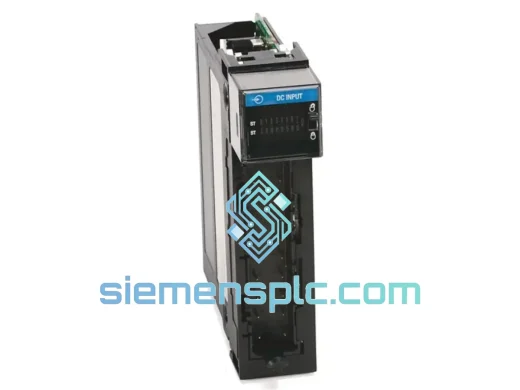
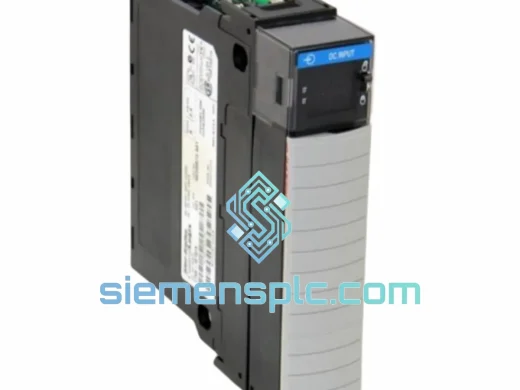
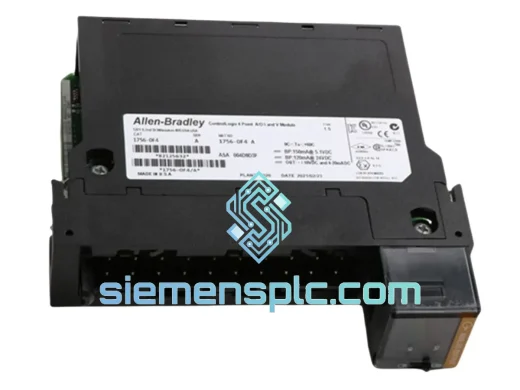
Allen-Bradley 1756-OF4 PLC Analog Output Module
ControlLogix
Origin US
PLC Analog Output Module
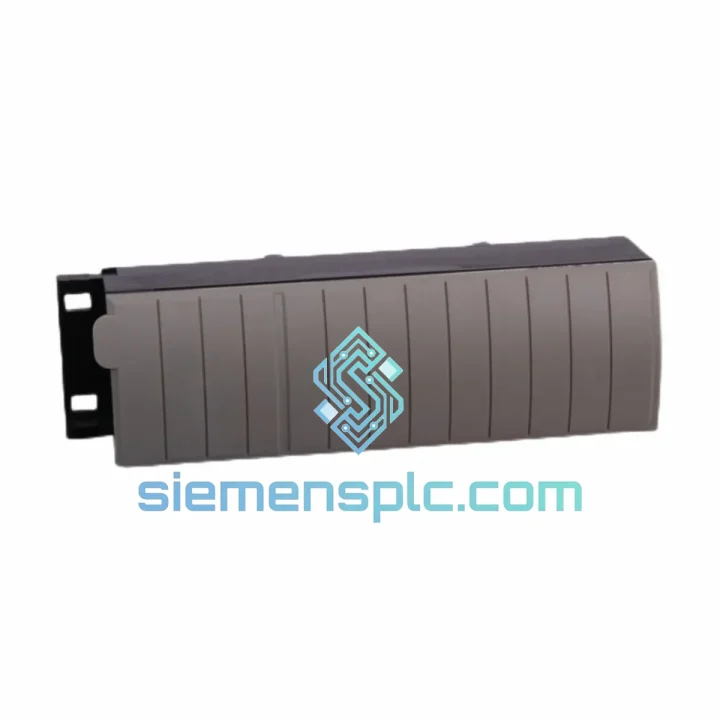
Request verified availability, condition, replacement risk review, packing options and courier lead time for 1756-TBS6H.
Click Request Quote and the part number is inserted into the inquiry form automatically.
Core fields for model confirmation and RFQ routing. Detailed product narrative remains below.
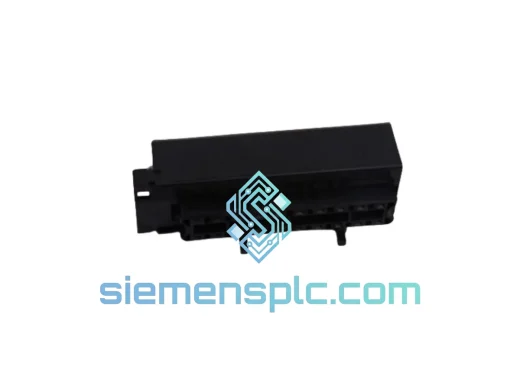
The 1756-TBS6H is a 36-position screw-clamp Removable Terminal Block (RTB) manufactured by Rockwell Automation for use with the Allen-Bradley ControlLogix 1756 platform. Its function within a control loop is unambiguous: it serves as the physical demarcation point between field instrumentation wiring and the I/O module’s internal signal conditioning circuitry. In any discrete I/O subsystem, the integrity of this interface directly determines signal fidelity, maintenance cycle time, and long-term wiring reliability.
Unlike hardwired terminal strip arrangements, the RTB architecture decouples field wiring from module hardware. When a 1756-series digital I/O module requires replacement — whether due to channel failure, firmware upgrade, or scheduled preventive maintenance — the 1756-TBS6H remains seated with all field conductors intact. The module is extracted from the chassis backplane while the RTB stays in position, eliminating the need to re-terminate, re-label, or re-verify any field wiring. This design characteristic is not incidental; it is the primary engineering rationale for specifying RTB-based I/O in high-availability process environments.
The 1756-TBS6H is specifically dimensioned for 36-pin ControlLogix I/O modules — the standard form factor for 16-point digital input and output modules including the 1756-IB16, 1756-OB16E, 1756-IA16, and 1756-OA16. Each of the 36 positions accommodates conductors from 22 AWG (0.34 mm²) to 14 AWG (2.08 mm²), covering the full range of field instrument cable gauges used in industrial panel construction. The screw-clamp termination mechanism provides a gas-tight, vibration-resistant connection that maintains contact integrity across the thermal cycling and mechanical vibration profiles typical of manufacturing and process plant environments.
Real-time Stock & RFQ: [email protected] | WhatsApp: +86 18359268345
| Part Number | 1756-TBS6H |
| Manufacturer | Allen-Bradley / Rockwell Automation |
| Series | ControlLogix 1756 RTB |
| Terminal Positions | 36 pins |
| Termination Type | Screw-clamp (cage clamp) |
| Wire Gauge Range | 22–14 AWG (0.34–2.08 mm²), solid or stranded |
| Compatible I/O Modules | 1756-IB16, 1756-OB16E, 1756-IA16, 1756-OA16, 1756-IB16D, 1756-OB16D, and all 36-pin ControlLogix digital I/O modules |
| Mounting Interface | Direct plug-on to 1756 I/O module front face connector |
| Housing Material | UL 94V-0 flame-retardant thermoplastic |
| Keying | Mechanical keying to prevent incorrect module mating |
| Label Strip | Compatible with standard ControlLogix RTB identification inserts |
| Approximate Weight | 150 g |
| Country of Origin | United States of America |
| Certifications | UL Listed, cUL Listed, CE (EMC 2014/30/EU, LVD 2014/35/EU), RoHS 2011/65/EU, IEC 61131-2 |
| Warranty | 12 months from date of shipment |
The 1756-TBS6H operates at the physical layer of the ControlLogix I/O architecture, but its mechanical design encodes several engineering decisions that affect system-level behavior.
Screw-Clamp vs. Spring-Cage Termination: Rockwell Automation specifies screw-clamp terminals on the TBS6H rather than spring-cage alternatives. In high-vibration environments — compressor skids, press lines, mobile equipment — spring-cage contacts can exhibit micro-motion fretting under sustained mechanical excitation, gradually increasing contact resistance. Screw-clamp terminals, torqued to specification (typically 0.5–0.6 N·m for 14–22 AWG conductors), maintain a defined clamping force independent of vibration amplitude. This makes the 1756-TBS6H the preferred RTB variant for applications where vibration profiles exceed 2g continuous.
36-Pin Connector Geometry and Signal Density: The 36-position layout maps directly to the internal pin-out of 16-point digital I/O modules: 16 signal terminals, 16 common/return terminals, and 4 power or shield terminals depending on module type. This 1:1 terminal-to-signal mapping eliminates the need for external jumper bars or common bus extensions that introduce additional resistance and potential failure points in high-density wiring schemes.
Mechanical Keying and Mis-Wiring Prevention: The RTB body incorporates a physical keying feature that prevents the terminal block from mating with an incompatible module form factor. In a multi-module chassis where different RTB variants (TBS6H, TBCH, TBNH) may coexist, this keying mechanism provides a hardware interlock against incorrect module-to-RTB pairing — a failure mode that can cause immediate I/O channel damage or incorrect field signal routing.
EMC Considerations at the Termination Point: The RTB is the entry point for field cable shields and common references. Proper shield termination at the RTB — connecting cable drain wires to the designated shield/common terminals rather than floating them — is the primary EMC mitigation strategy for discrete I/O channels. The 1756-TBS6H provides dedicated terminal positions for this purpose, consistent with IEC 61131-2 wiring practice requirements for programmable controller I/O interfaces.
Hot-Swap Mechanical Interface: The RTB latching mechanism is rated for repeated insertion and extraction cycles without degradation of the connector interface. This is a deliberate design parameter for MRO environments where module swap frequency may be high. The latch provides tactile confirmation of full seating, preventing intermittent contact conditions caused by partially engaged connectors.
Every 1756-TBS6H unit supplied by siemensplc.com is sourced through verified industrial distribution channels with full traceability to Rockwell Automation’s authorized supply chain. Each unit undergoes the following verification process prior to dispatch:
Logistics operations are managed from Xiamen, China, with established freight lanes to Southeast Asia, the Middle East, Europe, Australia, and North America. Standard export documentation — commercial invoice, packing list, certificate of origin — is provided with every shipment. DDP (Delivered Duty Paid) and DAP (Delivered at Place) Incoterms are available on request for customers requiring landed cost certainty. Expedited air freight with 3–5 business day delivery to most destinations is available for urgent MRO requirements.
Email: [email protected]
WhatsApp: +86 18359268345
Web: siemensplc.com
Location: Xiamen, China
© 2026 siemensplc.com. All rights reserved.
We check the full part number, brand, series and visible nameplate information before quotation.
Sales confirms stock path, condition option, quantity and realistic lead time for export dispatch.
DHL, FedEx, UPS or buyer courier arrangements can be reviewed with packing requirements.
Similar brand or category products for fast comparison and multi-item RFQ lists.