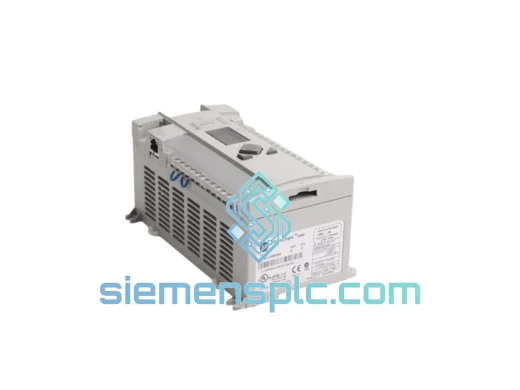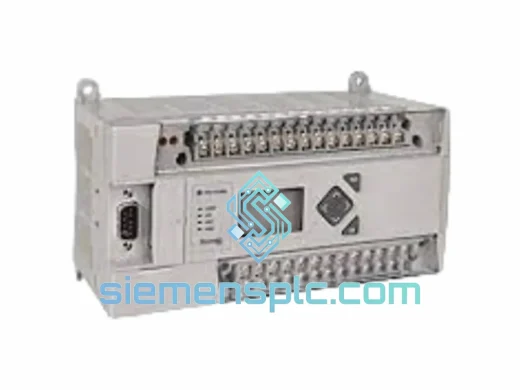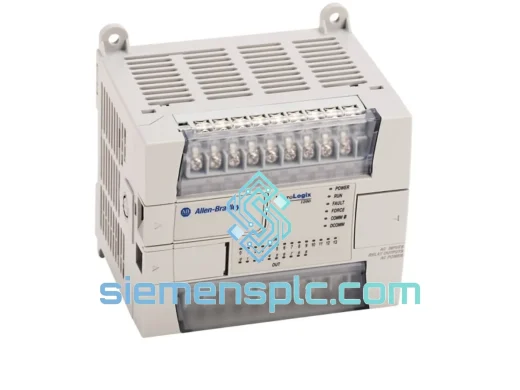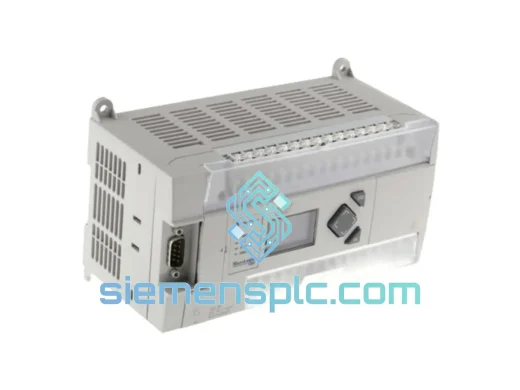
Allen-Bradley
RFQ Ready
Allen-Bradley 1766-L32BXB PLC Controller
MicroLogix
Origin US
Programmable Logic Controller
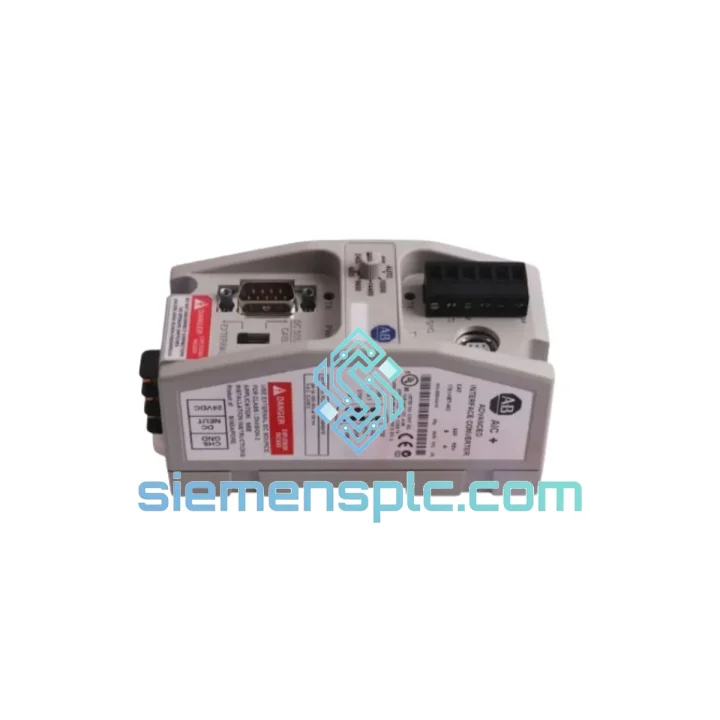
Request verified availability, condition, replacement risk review, packing options and courier lead time for 1761-NET-AIC.
Click Request Quote and the part number is inserted into the inquiry form automatically.
Core fields for model confirmation and RFQ routing. Detailed product narrative remains below.
The 1761-NET-AIC is a dedicated protocol interface device manufactured by Allen-Bradley (Rockwell Automation), designed to bridge RS-232 serial communication channels to the DH-485 (Data Highway 485) multi-drop network. Within a distributed control loop, this adaptor occupies the physical layer boundary between a host device — typically a programming terminal, SCADA workstation, or HMI panel — and the DH-485 segment where MicroLogix or SLC 500 controllers reside. Its function is deterministic signal conversion: it does not introduce buffering latency beyond the baud-rate synchronization window, and it does not require firmware configuration on the host side. The adaptor draws operating power directly from the DH-485 network bus, eliminating the need for a separate 24 VDC supply in standard deployments, which reduces panel wiring complexity and potential ground loop interference paths.
In control loop terms, the 1761-NET-AIC enables a single RS-232 master port — such as the Channel 0 port on a MicroLogix 1000, 1100, 1200, or 1500 — to participate as a node on a DH-485 segment carrying up to 32 addressable devices. This is architecturally significant in multi-controller installations where a single programming workstation must access multiple PLCs sequentially without physical cable re-routing. The adaptor handles the electrical conversion from RS-232 (±12 V single-ended) to RS-485 (differential pair, ±5 V), providing the common-mode noise rejection inherent to balanced transmission lines — a property that directly improves signal integrity in environments with variable-frequency drives, contactors, and high-current switching loads operating in proximity.
Real-time Stock & RFQ: [email protected] | WhatsApp: +86 18359268345
| Parameter | Specification |
|---|---|
| Part Number | 1761-NET-AIC |
| Manufacturer | Allen-Bradley / Rockwell Automation |
| Product Series | MicroLogix / SLC 500 |
| Device Function | RS-232 to DH-485 Network Interface Adaptor |
| DH-485 Port Connector | RJ45 (8-pin modular), 2× ports for daisy-chain topology |
| RS-232 Port Connector | DB-9 female (DCE configuration) |
| Supported Baud Rates | 1,200 / 2,400 / 4,800 / 9,600 / 19,200 bps (auto-detect) |
| Max DH-485 Nodes | 32 nodes per network segment |
| Max Cable Length (DH-485) | 1,219 m (4,000 ft) at 1,200 bps; 304 m (1,000 ft) at 19,200 bps |
| Power Source | DH-485 network bus (primary); external 24 VDC via terminal block (secondary) |
| Power Consumption | ≤ 100 mA at 24 VDC |
| Operating Temperature | 0 °C to +60 °C (32 °F to 140 °F) |
| Storage Temperature | −40 °C to +85 °C |
| Relative Humidity | 5% to 95% RH, non-condensing |
| Enclosure Rating | Open-type; intended for installation within a control enclosure |
| Mounting | DIN rail (EN 50022) or panel mount |
| Approx. Weight | 200 g |
| Certifications | UL Listed (UL 508), CE (EMC 2014/30/EU, LVD 2014/35/EU), cUL, RoHS |
| Warranty | 12 months from date of shipment |
The 1761-NET-AIC implements a two-stage signal path. On the RS-232 side, the device presents a standard DCE interface, accepting TXD, RXD, RTS, and CTS signals at ANSI/EIA-232-F voltage levels. An internal level-shifting circuit — typically built around a charge-pump RS-232 transceiver IC — converts these single-ended ±12 V signals to 3.3 V or 5 V CMOS logic levels for the internal microcontroller. On the DH-485 side, a differential RS-485 transceiver drives the balanced pair with a minimum differential output voltage of ±1.5 V, well above the ±200 mV receiver threshold specified by TIA-485-A, providing a noise margin of approximately 1.3 V against common-mode interference — a meaningful margin in industrial panel environments where conducted emissions from motor drives can reach several hundred millivolts on cable shields.
The adaptor’s internal arbitration logic manages the half-duplex direction control of the RS-485 bus. Rather than relying on fixed propagation delay timers (which can cause bus contention at higher baud rates), the 1761-NET-AIC monitors the RTS signal from the RS-232 host to gate the RS-485 driver enable line. This RTS/CTS hardware handshaking mechanism ensures the transmit driver is asserted only during active data transmission, then tri-stated within the RS-485 driver’s specified turn-off time, preventing line contention when multiple nodes share the segment. The two RJ45 ports on the DH-485 side are wired in parallel, implementing a passive daisy-chain topology that allows the adaptor to be inserted mid-segment without breaking the network — a practical advantage during maintenance when a node must be added or removed without full network shutdown.
EMC performance is reinforced through the differential transmission architecture itself: common-mode noise induced equally on both conductors of the twisted pair is rejected at the receiver’s differential input stage. The device’s compact PCB layout minimizes loop area on the RS-232 side, reducing susceptibility to magnetically coupled interference from adjacent power wiring. The DIN-rail mounting configuration provides a low-impedance chassis ground path, which, when bonded to the panel earth, further attenuates capacitively coupled high-frequency noise from the enclosure environment.
Every 1761-NET-AIC unit dispatched from our Xiamen, China facility is sourced through verified supply channels with full traceability to Allen-Bradley’s authorized distribution network. Pre-shipment inspection covers physical label integrity (date code, catalog number, country of origin marking), connector pin condition on both the DB-9 and RJ45 ports, and a functional power-on verification confirming LED status indicator operation. Units exhibiting any evidence of counterfeit marking, re-labeling, or non-OEM PCB construction are rejected at intake and not offered for sale.
Xiamen’s geographic position — adjacent to Xiamen Gaoqi International Airport and within 48 hours of major Southeast Asian transshipment hubs — enables competitive transit times to North America (5–8 business days via DHL/FedEx express), Europe (4–7 business days), Southeast Asia (2–4 business days), and the Middle East (5–9 business days). All shipments are accompanied by a commercial invoice, packing list, and certificate of origin. Export classification is handled under HS Code 8537.10, and EAR99 classification applies for standard commercial export to most destinations. Expedited customs clearance documentation is available upon request for time-critical project deliveries. A 12-month warranty covers manufacturing defects; DOA (Dead on Arrival) units are replaced within 5 business days of confirmed fault report.
Email: [email protected]
WhatsApp: +86 18359268345
Web: siemensplc.com
Location: Xiamen, China
© 2026 siemensplc.com. All rights reserved.
We check the full part number, brand, series and visible nameplate information before quotation.
Sales confirms stock path, condition option, quantity and realistic lead time for export dispatch.
DHL, FedEx, UPS or buyer courier arrangements can be reviewed with packing requirements.
Similar brand or category products for fast comparison and multi-item RFQ lists.