Allen-Bradley
RFQ Ready
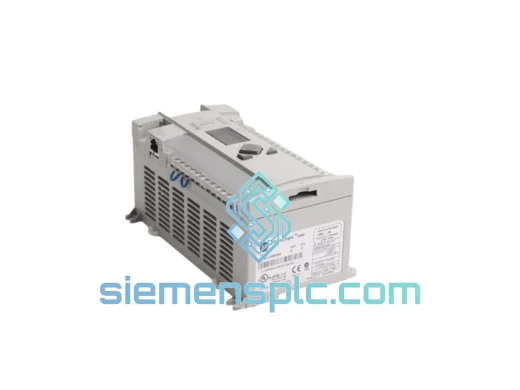
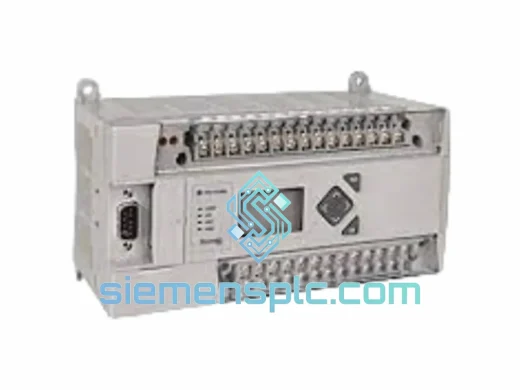
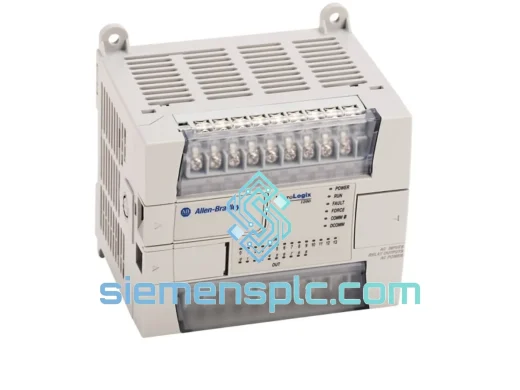
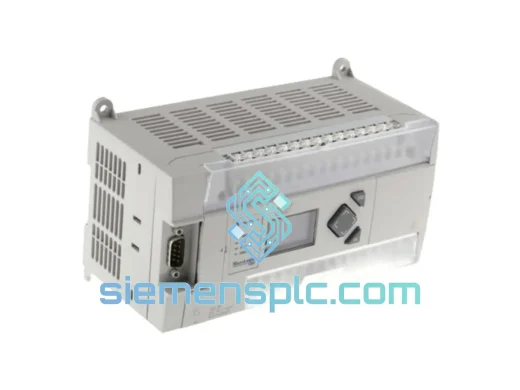
Allen-Bradley 1766-L32BXB PLC Controller
MicroLogix
Origin US
Programmable Logic Controller
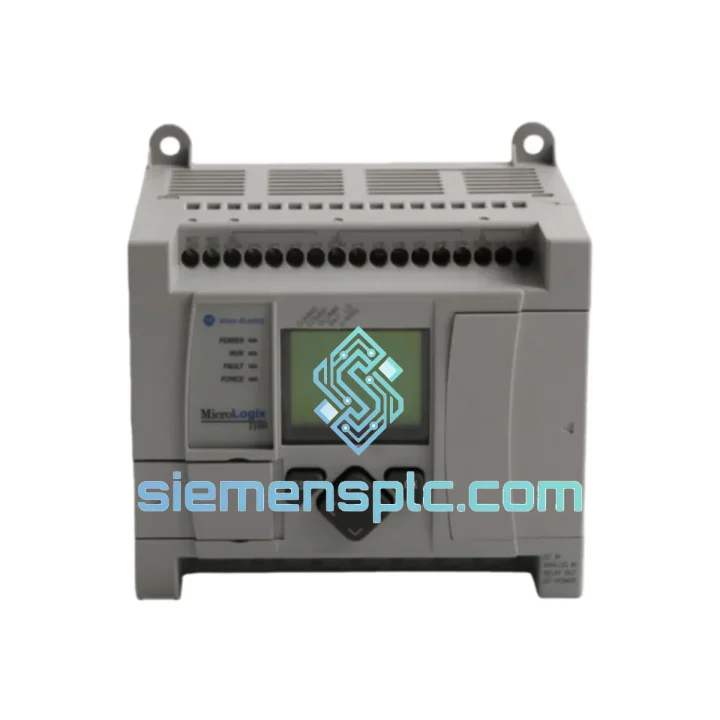
Request verified availability, condition, replacement risk review, packing options and courier lead time for 1763-L16BWA.
Click Request Quote and the part number is inserted into the inquiry form automatically.
Core fields for model confirmation and RFQ routing. Detailed product narrative remains below.
The 1763-L16BWA is a fixed-I/O programmable logic controller within Rockwell Automation’s MicroLogix 1100 platform. It integrates 10 DC digital inputs, 6 relay digital outputs, and an AC power supply into a single compact housing — a configuration specifically engineered for machine-level discrete control where panel space is constrained and relay-grade output switching is mandatory. Unlike transistor-output variants, the relay output architecture of the L16BWA allows direct switching of mixed AC/DC loads without interposing relays, reducing BOM complexity in motor starter panels, solenoid valve manifolds, and contactor-driven circuits.
The controller’s dual-port communication design — RS-232 (DH-485/DF1) combined with an integrated EtherNet/IP RJ-45 port — positions it as a network-capable node without requiring an external communication module. This is a meaningful distinction in panel design: the EtherNet/IP port enables the 1763-L16BWA to participate in a CIP-based control network, exchange data with SCADA systems via MSG instructions, and support remote programming through RSLinx Classic or FactoryTalk Linx — all without consuming additional DIN-rail space or adding wiring complexity.
Real-time Stock & RFQ: [email protected] | WhatsApp: +86 18359268345
| Parameter | Specification |
|---|---|
| Part Number | 1763-L16BWA |
| Series | MicroLogix 1100 |
| Manufacturer | Allen-Bradley / Rockwell Automation |
| Digital Inputs | 10 × 24V DC, sink/source configurable |
| Digital Outputs | 6 × Relay, Form A (SPST-NO), 240V AC / 30V DC, 2A per point |
| Output Relay Endurance | 100,000 operations (electrical), 10,000,000 (mechanical) |
| Power Supply Input | 100–240V AC, 50/60 Hz, 30W max |
| User Program Memory | 8 KB (ladder logic) |
| Data Memory | 4 KB |
| Communication Port 1 | RS-232 (DH-485 / DF1 Full-Duplex / DF1 Half-Duplex) |
| Communication Port 2 | EtherNet/IP, 10/100 Mbps, RJ-45 |
| Real-Time Clock | Integrated, battery-backed (CR2032) |
| LCD Operator Panel | 4-line × 20-character display, 4 user-configurable function keys |
| Scan Time | ~0.9 ms per 1K instructions (typical) |
| Operating Temperature | 0°C to 55°C (32°F to 131°F) |
| Storage Temperature | -40°C to 85°C (-40°F to 185°F) |
| Relative Humidity | 5–95%, non-condensing |
| Vibration Resistance | 2g @ 10–500 Hz (IEC 60068-2-6) |
| Shock Resistance | 15g, 11 ms half-sine (IEC 60068-2-27) |
| Dimensions (H × W × D) | 90 × 130 × 87 mm |
| Weight | Approx. 450 g |
| Mounting | 35 mm DIN rail or panel mount |
| Certifications | UL 508, CE (EN 61131-2), cUL, RCM, RoHS |
| Country of Origin | United States |
| Warranty | 12 months from shipment date |
The 1763-L16BWA’s input circuit uses optocoupler-based galvanic isolation on all 10 digital input channels. Each input node is separated from the controller’s internal logic bus by a phototransistor stage rated at 1,500V AC isolation — a design that prevents field-side transients, ground loops, and common-mode noise from propagating into the CPU’s instruction execution cycle. In environments with variable-frequency drives (VFDs), inductive switching loads, or long cable runs, this isolation barrier is the primary defense against spurious input state changes that would otherwise cause false triggering in ladder logic.
The relay output stage uses electromechanical Form A contacts with a rated switching capacity of 2A at 240V AC. Each output channel is independently fused at the terminal block level, and the relay coil drive circuitry is isolated from the backplane logic supply. This means an output-side short circuit or overload does not collapse the controller’s internal 5V logic rail — the CPU continues executing the scan cycle while the affected output channel fails safely. For applications driving inductive loads (solenoids, motor starters), the relay contact arc suppression is handled externally via RC snubbers or MOV suppressors at the load terminal — a standard practice that extends relay contact life beyond the rated 100,000 electrical operations.
The EtherNet/IP port implements the Common Industrial Protocol (CIP) stack at the application layer, supporting both explicit messaging (Class 3 connected/unconnected) and implicit I/O messaging (Class 1 cyclic). The MAC address is factory-assigned and stored in non-volatile flash. IP address assignment supports BOOTP, DHCP, or static configuration via RSLinx — the controller does not require a separate DHCP server in isolated machine networks when configured with a static IP. The RS-232 port supports DH-485 multi-drop at up to 19.2 kbps, enabling legacy integration with MicroLogix 1000/1200 networks and older PanelView terminals without protocol conversion hardware.
The real-time clock module is battery-backed with a CR2032 lithium cell rated for approximately 10 years of standby operation at 25°C. Clock accuracy is ±2 minutes per month — sufficient for time-stamped event logging and scheduled task execution in the ladder program. The 4-line LCD with 4 function keys allows operators to navigate user-defined screens, monitor integer/float data values, and acknowledge alarms without a connected programming terminal — a feature that reduces service call frequency in remote installations.
Every 1763-L16BWA unit dispatched from our Xiamen facility is an original Allen-Bradley product sourced through verified industrial supply channels. Prior to shipment, each unit undergoes a structured inspection protocol: physical label and date-code verification, connector pin integrity check, power-on self-test (POST) confirmation, and I/O point functional verification. Units that do not pass all four stages are quarantined and not dispatched. A 12-month warranty covers manufacturing defects from the shipment date; DOA units are replaced within 30 days at no cost.
Logistics from Xiamen operate through DHL Express, FedEx International Priority, and UPS Worldwide Expedited. Transit times to major industrial hubs are 3–5 business days to Europe and North America, 2–4 days to Southeast Asia, and 4–7 days to the Middle East and South America. Each shipment includes a commercial invoice, packing list, and HS Code 8537.10 declaration for customs clearance. For projects requiring pre-shipment inspection (PSI) certificates or third-party testing reports, these can be arranged prior to dispatch — contact us with your project timeline and we will coordinate accordingly. Anti-static ESD packaging and foam-cushioned outer cartons are standard for all controller shipments.
Email: [email protected]
WhatsApp: +86 18359268345
Web: siemensplc.com
Location: Xiamen, China
© 2026 siemensplc.com. All rights reserved.
We check the full part number, brand, series and visible nameplate information before quotation.
Sales confirms stock path, condition option, quantity and realistic lead time for export dispatch.
DHL, FedEx, UPS or buyer courier arrangements can be reviewed with packing requirements.
Similar brand or category products for fast comparison and multi-item RFQ lists.