Allen-Bradley
RFQ Ready
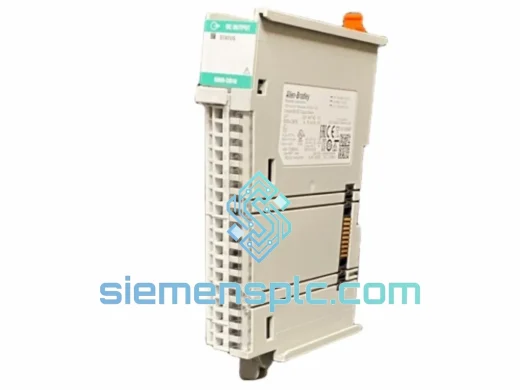
Allen-Bradley 5069-OW16 Relay Output Module
CompactLogix
Origin US
PLC Output Module
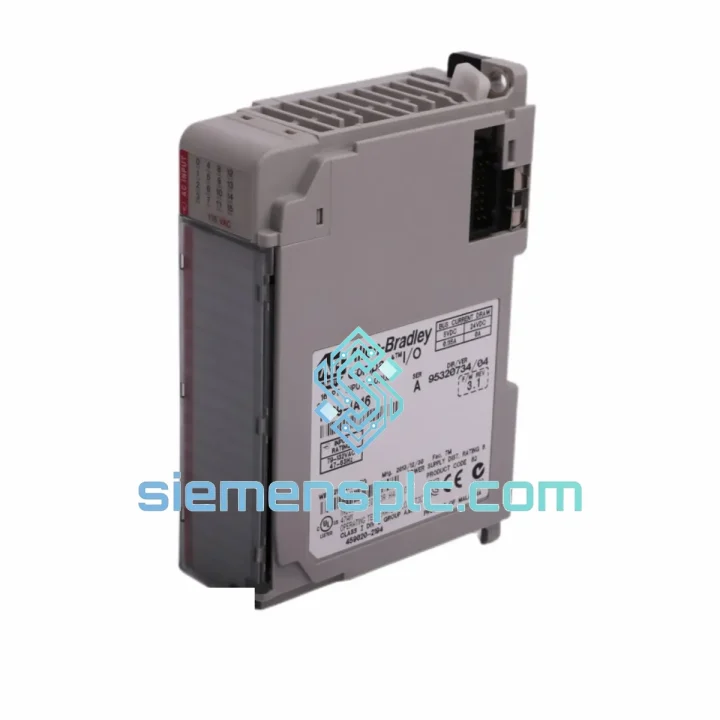
Request verified availability, condition, replacement risk review, packing options and courier lead time for 1769-IA16.
Click Request Quote and the part number is inserted into the inquiry form automatically.
Core fields for model confirmation and RFQ routing. Detailed product narrative remains below.
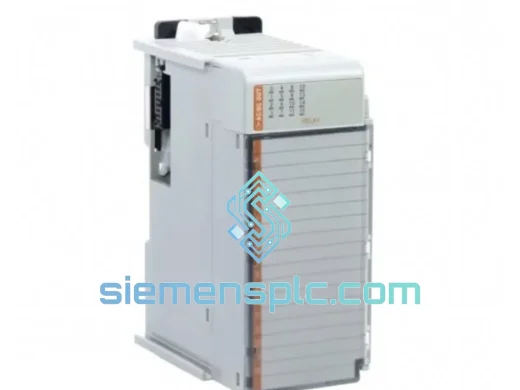
In discrete manufacturing and process control environments, the integrity of field-signal acquisition determines the determinism of the entire control loop. The Allen-Bradley 1769-IA16 is a 16-channel, 120VAC digital input module engineered for the CompactLogix 1769 compact I/O bus. It serves as the primary electrical boundary between 120VAC field devices — limit switches, pushbuttons, proximity sensors, and relay contacts — and the CompactLogix controller’s backplane logic. Every scan cycle, the module samples all 16 input channels, converts AC presence/absence into discrete logic states, and transfers that data across the 1769 bus to the CPU’s input image table with deterministic latency. The absence of signal ambiguity at this interface is not incidental; it is the result of deliberate hardware design choices that govern how the module handles AC waveform detection, optical isolation, and backplane arbitration.
The 1769-IA16 occupies a single slot on the 1769 compact I/O bus and draws 120 mA at 5 VDC from the backplane. Its 16 input points share a common neutral, making it suited for applications where all field devices reference the same AC common — a standard configuration in North American industrial panels wired to 120VAC control transformers. The module’s input threshold architecture defines an OFF-state maximum of 20 VAC and an ON-state minimum of 74 VAC, establishing a 54 VAC hysteresis band that prevents false triggering from voltage sag, line noise, or capacitive leakage common in long cable runs. At nominal 120 VAC, each channel draws a minimum of 6 mA, which is sufficient to hold most solid-state relay outputs in their ON state without requiring external burden resistors.
Real-time Stock & RFQ: [email protected] | WhatsApp: +86 18359268345
| Parameter | Specification |
|---|---|
| Catalog Number | 1769-IA16 |
| I/O Bus | 1769 CompactLogix Compact I/O |
| Number of Input Points | 16 |
| Input Voltage (Nominal) | 120 VAC |
| Input Voltage Range (ON) | 74–132 VAC |
| Input Voltage Max (OFF) | 20 VAC |
| Input Frequency | 47–63 Hz |
| Input Current (ON state @ 120 VAC) | 6 mA minimum |
| Optical Isolation (Field to Backplane) | 1500 VAC |
| Backplane Current Draw | 120 mA @ 5 VDC |
| Module Width | Single slot (1769 bus) |
| Operating Temperature | 0°C to 60°C |
| Storage Temperature | -40°C to 85°C |
| Relative Humidity | 5–95% non-condensing |
| Approx. Weight | 200 g |
| Certifications | UL, CE, CSA |
| Warranty | 12 months from siemensplc.com |
The 1769-IA16’s input detection circuit operates on half-wave rectification of the incoming AC signal. Each channel passes the field voltage through a current-limiting resistor network before reaching the anode of an optocoupler LED. The optocoupler’s phototransistor output is then read by the module’s ASIC logic, which debounces the signal and presents a stable logic level to the backplane interface. This architecture has two direct consequences for system behavior.
First, the optical isolation barrier — rated at 1500 VAC continuous — physically separates the field wiring ground from the controller backplane ground. In environments where ground potential differences exist between field panels and the control cabinet (a common condition in large facilities with distributed grounding systems), this isolation prevents ground loop currents from corrupting backplane data or damaging the CPU’s I/O interface circuitry. The isolation also provides a defined withstand level against transient overvoltages generated by inductive load switching on the same AC distribution circuit.
Second, the half-wave detection method means the module responds to the positive half-cycle of the AC waveform. At 60 Hz, this gives a maximum detection latency of approximately 8.3 ms per half-cycle. In practice, the module’s input filter — configurable in Studio 5000 — adds additional debounce time (default 10 ms, adjustable from 1 ms to 64 ms) to suppress contact bounce from mechanical switches. Engineers specifying this module for high-speed applications should account for the combined filter delay when calculating worst-case input-to-output response times in their control loop timing analysis.
The module’s EMC design follows IEC 61000-4 series test criteria. The input wiring terminals are positioned to maximize physical separation from the backplane connector, reducing capacitive coupling between field-side transients and the 5 VDC backplane logic. The module housing is conductive and bonds to the 1769 bus chassis ground, providing a low-impedance return path for high-frequency noise currents induced on the field cable shield. This grounding topology is consistent with IEC 61000-5-2 shielding and grounding recommendations for industrial control systems.
Local:2:I.Data) in the controller tag database. No manual tag creation is required, reducing configuration errors in large I/O systems.Every 1769-IA16 unit supplied by siemensplc.com is sourced as genuine Allen-Bradley / Rockwell Automation product. Authenticity verification includes inspection of Rockwell Automation catalog markings, series letter, date code, and holographic label integrity against manufacturer reference standards. Units are bench-verified for correct backplane enumeration and input channel response prior to dispatch.
All modules are packed in anti-static (ESD) bags with foam cushioning inside double-wall corrugated cartons. Export documentation — commercial invoice, packing list, and certificate of conformance — is prepared for every international shipment. Our logistics operation is based in Xiamen, China, with direct access to DHL Express, FedEx International Priority, and UPS Worldwide Express services. In-stock units typically clear our warehouse within 1–2 business days of order confirmation. Transit times to major industrial hubs: Europe 3–5 days, North America 3–5 days, Southeast Asia 2–3 days, Middle East 4–6 days. A 12-month warranty is provided on all units supplied through siemensplc.com, covering defects in materials and workmanship under normal operating conditions.
Email: [email protected]
WhatsApp: +86 18359268345
Web: siemensplc.com
Location: Xiamen, China
© 2026 siemensplc.com. All rights reserved.
We check the full part number, brand, series and visible nameplate information before quotation.
Sales confirms stock path, condition option, quantity and realistic lead time for export dispatch.
DHL, FedEx, UPS or buyer courier arrangements can be reviewed with packing requirements.
Similar brand or category products for fast comparison and multi-item RFQ lists.