Allen-Bradley
RFQ Ready
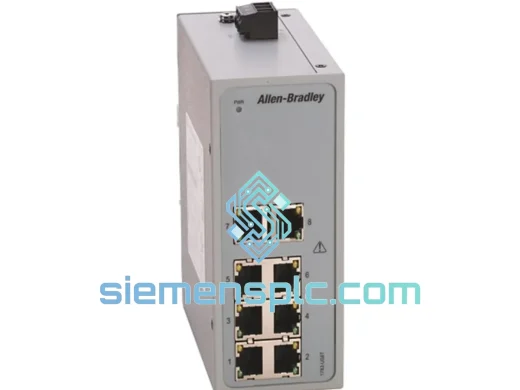
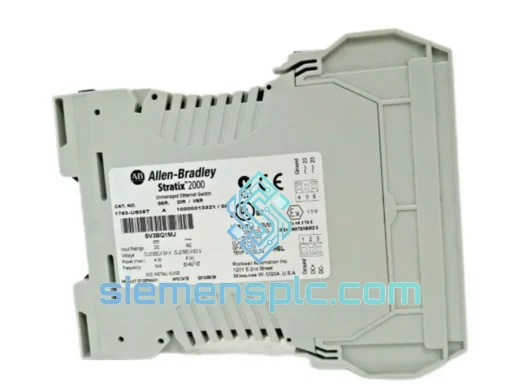
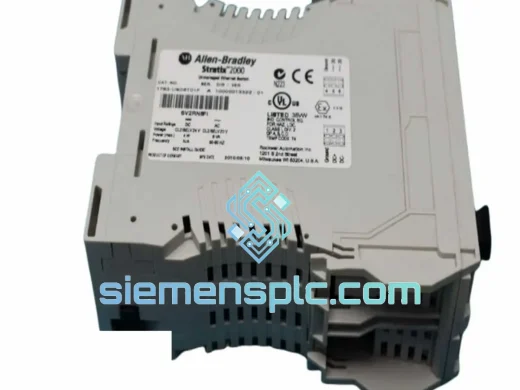
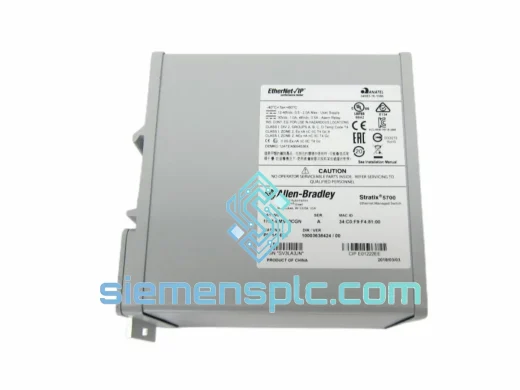
Allen-Bradley 1783-BMS10CGN Industrial Ethernet Switch – Stratix 2000
Stratix
Origin US
Industrial Ethernet Switch
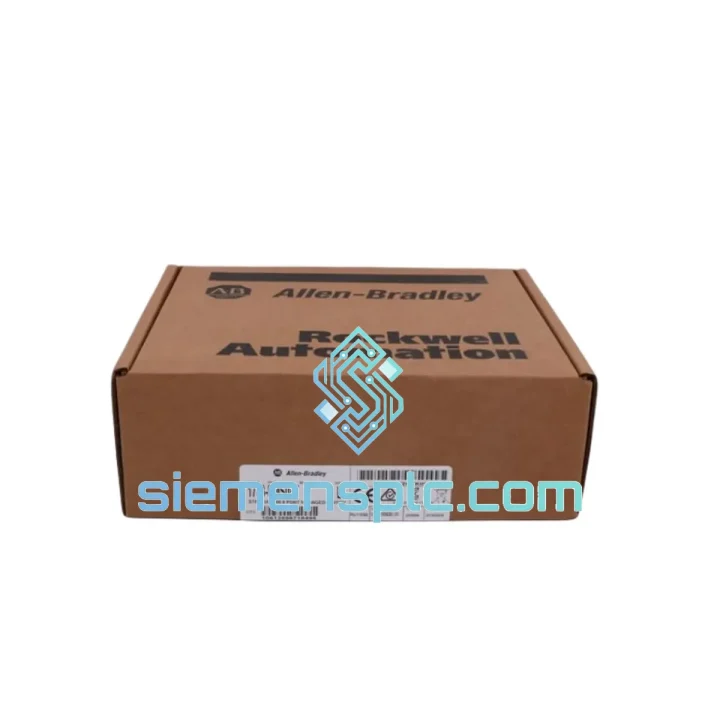
Request verified availability, condition, replacement risk review, packing options and courier lead time for 1783-MS08T.
Click Request Quote and the part number is inserted into the inquiry form automatically.
Core fields for model confirmation and RFQ routing. Detailed product narrative remains below.
The Allen-Bradley 1783-MS08T is an 8-port, 10/100 Mbps managed Ethernet switch belonging to the Stratix 6000 platform — a product line engineered specifically for machine-level and cell-level EtherNet/IP deployments within Rockwell Automation control architectures. Unlike generic IT-grade switches adapted for industrial use, the 1783-MS08T is purpose-built around the Common Industrial Protocol (CIP) object model, enabling direct configuration, diagnostics, and health monitoring from within Studio 5000 Logix Designer via a certified Add-On Profile (AOP). This native integration eliminates the need for separate network management toolchains and reduces commissioning overhead in Logix-based systems.
The switch operates at the Device Level (Level 1) of the Purdue Reference Model, sitting between field devices — 1734 POINT I/O adapters, servo drives, vision systems, safety PLCs — and the cell-level ControlLogix or CompactLogix backplane. Its 1.6 Gbps non-blocking switching fabric ensures wire-speed forwarding across all eight copper ports simultaneously, with no head-of-line blocking under full traffic load. The forwarding engine processes up to 1.19 million packets per second (Mpps), sufficient for high-density I/O polling cycles at sub-millisecond RPI (Requested Packet Interval) rates.
Physically, the unit occupies a 45 mm DIN-rail footprint (EN 50022-35), enabling high-density panel layouts in space-constrained enclosures. Power input accepts 18–30V DC, directly compatible with standard 24V DC panel power supplies without intermediate conversion. Typical power draw is ≤7W, minimizing thermal load in sealed enclosures. The operating temperature range of 0°C to +60°C covers the majority of industrial panel environments, while storage tolerance extends to −40°C to +85°C for cold-chain logistics and warehouse storage.
Real-time Stock & RFQ: [email protected] | WhatsApp: +86 18359268345
| Parameter | Specification |
|---|---|
| Part Number | 1783-MS08T |
| Series | Stratix 6000 |
| Manufacturer | Allen-Bradley / Rockwell Automation |
| Port Configuration | 8 × RJ45 10/100BASE-TX copper ports |
| Switching Fabric | 1.6 Gbps non-blocking |
| Forwarding Rate | 1.19 Mpps |
| MAC Address Table | 8,000 entries |
| VLAN Support | IEEE 802.1Q, up to 255 simultaneous VLANs |
| QoS | IEEE 802.1p, 4 hardware queues per port, WRR scheduling |
| Spanning Tree | IEEE 802.1D STP / 802.1w RSTP (<50 ms convergence) |
| IGMP Snooping | v1 / v2 / v3 |
| Port Mirroring | Supported (SPAN) |
| Management Interfaces | Web GUI, CLI (Telnet / SSH), SNMP v1/v2c/v3, RMON |
| EtherNet/IP Integration | Native CIP object support; Studio 5000 AOP certified |
| Input Voltage | 24V DC nominal (18–30V DC operating range) |
| Power Consumption | ≤7W typical |
| Operating Temperature | 0°C to +60°C |
| Storage Temperature | −40°C to +85°C |
| Relative Humidity | 5–95% non-condensing |
| Mounting | DIN rail EN 50022-35 |
| Enclosure Rating | IP30 |
| Dimensions (W×H×D) | 45 mm × 99 mm × 107 mm |
| Weight | Approx. 600 g |
| Certifications | UL 508, CE, cULus, RoHS |
| Country of Origin | USA |
| Warranty | 12 months from date of shipment |
The 1783-MS08T is built on a Cisco IOS-derived switching ASIC, a deliberate architectural choice that brings enterprise-grade forwarding determinism to the OT layer. The store-and-forward switching mode employed by the device performs full frame integrity verification (FCS check) before forwarding, eliminating corrupted frames from propagating across the EtherNet/IP segment — a critical requirement in environments where a single malformed CIP packet can trigger a controller fault.
EMC and Signal Integrity: The PCB layout incorporates differential pair routing for all RJ45 signal traces with controlled impedance (100Ω ±10%), minimizing common-mode noise injection from adjacent high-current motor drive cabling. The DC power input stage includes transient voltage suppression (TVS) diodes rated to absorb inductive load switching transients up to ±1 kV (8/20 µs waveform), consistent with IEC 61000-4-5 surge immunity requirements. Ferrite bead filtering on the power rail attenuates high-frequency conducted emissions above 30 MHz.
RSTP Convergence Logic: The Rapid Spanning Tree Protocol implementation uses the Proposal/Agreement handshake mechanism defined in IEEE 802.1w, achieving topology reconvergence in under 50 ms on ring segments. In a typical 8-node EtherNet/IP ring, this translates to a maximum I/O communication gap of one to two RPI cycles at a 20 ms RPI setting — within the fault tolerance window of most ControlLogix motion and process control applications.
IGMP Snooping and Multicast Containment: EtherNet/IP implicit (I/O) messaging uses UDP multicast for produced tags. Without IGMP snooping, multicast frames flood all ports, consuming bandwidth on ports with no subscribed consumers. The 1783-MS08T’s IGMP v3 snooping engine maintains a per-port group membership table, forwarding multicast I/O streams only to ports with active IGMP Report registrations. This reduces unnecessary unicast-equivalent load on non-consuming devices by up to 60–70% in dense multicast topologies.
QoS Traffic Shaping: The four hardware queues per port implement Weighted Round Robin (WRR) scheduling. Queue 3 (highest priority) is mapped to DSCP EF (Expedited Forwarding, DSCP 46) and IEEE 802.1p CoS 7, reserving strict priority bandwidth for time-critical CIP I/O traffic. Queues 0–2 handle HMI polling, historian data, and best-effort management traffic in descending priority. This prevents HMI screen refresh bursts from inducing jitter on the I/O communication path.
CIP Object Model Integration: The switch exposes a TCP/IP Interface Object (Class 0xF5), Ethernet Link Object (Class 0xF6), and a proprietary Stratix Network Object via EtherNet/IP explicit messaging. Studio 5000 Logix Designer reads these objects through the AOP to display port link status, traffic counters, and VLAN membership directly in the controller project tree — without requiring a separate SNMP management station. This architecture supports diagnostic transparency at the PLC programming layer, reducing mean time to diagnose (MTTD) network faults.
Every Allen-Bradley 1783-MS08T unit supplied by siemensplc.com is sourced through verified OEM and authorized distribution channels. Pre-shipment inspection includes holographic label authentication against Rockwell Automation’s factory label database, PCB revision cross-check against the published hardware revision matrix, firmware version verification, and a functional power-on test confirming all eight ports achieve link at 100 Mbps full-duplex. Units that do not pass all inspection criteria are quarantined and not shipped.
Documentation available upon request includes Certificate of Conformance (CoC), factory test report, and packing list with individual serial number traceability. For regulated industries (pharmaceutical, nuclear, defense), full material traceability documentation can be provided.
Logistics operations are based in Xiamen, China, with direct access to Xiamen Gaoqi International Airport and Xiamen Port, supporting both air express and sea freight consolidation. Standard export packaging uses anti-static foam inserts with humidity indicator cards inside sealed polyethylene bags, protecting sensitive PCB assemblies during transit. Typical air express transit times: 3–5 business days to Europe, 2–4 business days to Southeast Asia, 4–7 business days to North America via DHL / FedEx / UPS. Sea freight LCL consolidation available for volume orders exceeding 50 units. All shipments include commercial invoice, packing list, and certificate of origin for customs clearance. A 12-month warranty covers manufacturing defects; DOA units are replaced within 5 business days of confirmed fault report.
Email: [email protected]
WhatsApp: +86 18359268345
Web: siemensplc.com
Location: Xiamen, China
© 2026 siemensplc.com. All rights reserved.
We check the full part number, brand, series and visible nameplate information before quotation.
Sales confirms stock path, condition option, quantity and realistic lead time for export dispatch.
DHL, FedEx, UPS or buyer courier arrangements can be reviewed with packing requirements.
Similar brand or category products for fast comparison and multi-item RFQ lists.