
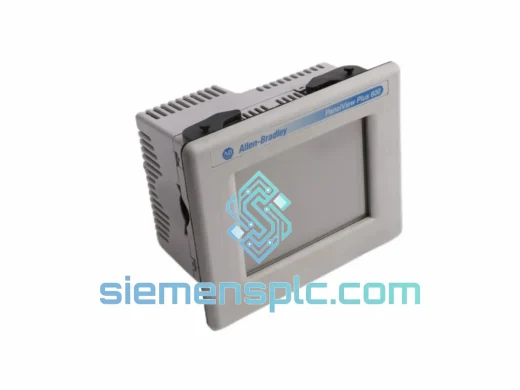
Allen-Bradley
In Stock OK
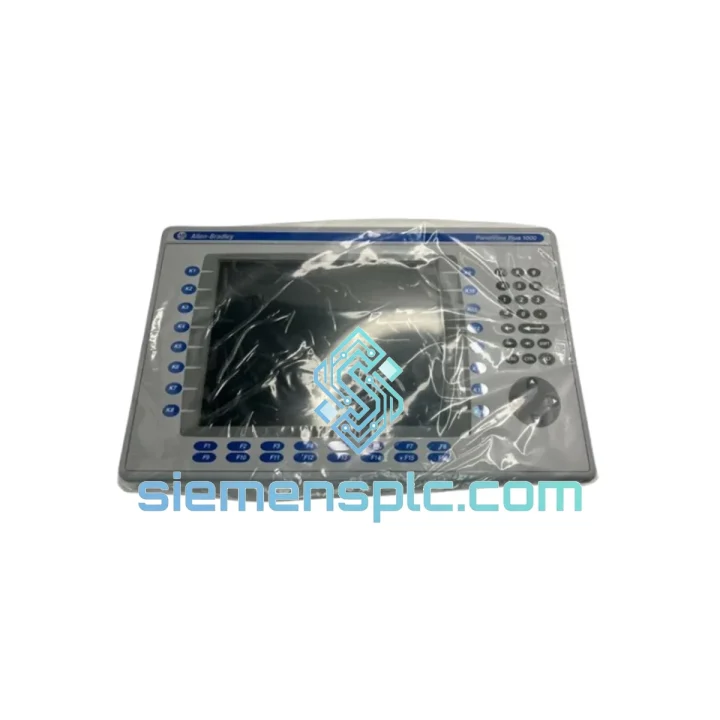
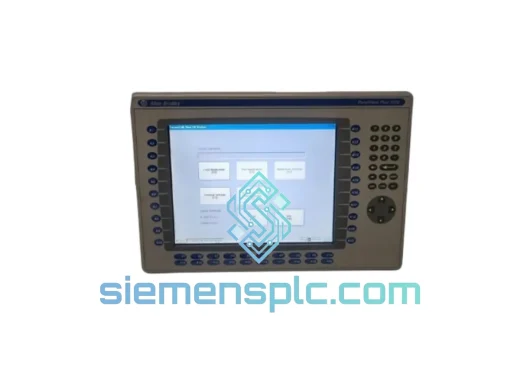
Allen-Bradley 2711P-K10C4A8 HMI Terminal – PanelView Plus 1000
Request verified availability, condition, replacement risk review, packing options and courier lead time for 2711P-K10C4A8.
BrandAllen-Bradley
Part Number2711P-K10C4A8
ConditionAvailability Check
Lead TimeRFQ Confirmation
DocumentsDatasheet / photos by RFQ
ShippingExport packing available
Auto-filled RFQ
2711P-K10C4A8
Click Request Quote and the part number is inserted into the inquiry form automatically.
- Reply by email: [email protected]
- WhatsApp / Tel: +86 18359268345
- Mon-Sat 9:00-18:00 GMT+8
Procurement Data
Key Product Information
Core fields for model confirmation and RFQ routing. Detailed product narrative remains below.
- Brand
- Allen-Bradley
- Primary Part Number
- 2711P-K10C4A8
- Product Type
- HMI Terminal
- Series / Family
- PanelView
- Manufacturer
- Rockwell Automation / Allen-Bradley
- Country of Origin
- US
- Catalog Category
- HMI Panels
- Operating Temp.
- 0 °C to +55 °C
- Warranty
- 12 months from shipment date
Model confirmed for inquiry
2711P-K10C4A8
Send quantity, destination and urgency. The RFQ form keeps this part number attached.
Request Quote
Product Overview
Allen-Bradley 2711P-K10C4A8: 10.4-Inch Color Keypad Terminal for Deterministic Operator Interface in Industrial Control Systems
The 2711P-K10C4A8 is a 10.4-inch color keypad operator terminal within Rockwell Automation’s PanelView Plus 1000 platform. It functions as the structured interface layer between plant operators and the live data table of a ControlLogix, CompactLogix, PLC-5, or SLC 500 controller. Within a control loop, the terminal performs three bounded functions: it renders real-time process variable values sourced from the controller’s tag database onto a 640 × 480 VGA TFT LCD panel; it accepts operator-initiated setpoint entries and discrete command inputs through a 24-key configurable function keypad and numeric entry pad; and it writes those inputs back to the controller’s data table with latency governed by the configured Network Update Time (NUT) on the ControlNet connection — a deterministic parameter, not a variable OS scheduler interval.
The decision to specify a physical keypad matrix rather than a capacitive or resistive touchscreen carries measurable engineering consequences in specific field environments. Capacitive sensors exhibit input drift under sustained mechanical vibration, require periodic recalibration in thermally cycling enclosures, and cannot be reliably operated with chemical-resistant gloves, welding gauntlets, or cut-resistant hand protection. The 2711P-K10C4A8 eliminates all three constraints. The keypad matrix is scanned by the PXA255 GPIO controller at a fixed 10 ms polling interval; firmware-level debounce filtering applies a 20 ms hold-time threshold before registering any key event, suppressing false inputs from mechanical contact bounce under vibration loads up to 2 g across 5–2000 Hz. In chemical processing, food manufacturing, pharmaceutical filling, and heavy fabrication environments — where touchscreen hygiene protocols or recalibration maintenance represent a recurring operational cost — the keypad variant delivers a lower total cost of ownership across a 10-year panel lifecycle.
The compute substrate is an Intel PXA255 processor running at 400 MHz, hosting Windows CE 5.0 as the kernel and FactoryTalk View Machine Edition (ME) Station as the HMI runtime. Screen refresh intervals and tag polling rates are explicitly configured by the application engineer in FactoryTalk View ME, not governed by a general-purpose OS scheduler. The 64 MB SDRAM tag cache decouples display refresh from network round-trip time. During transient ControlNet or DH-485 communication interruptions within the configured fault timeout window, the display continues rendering the last valid tag values with a configurable fault indicator overlay — sustaining operator situational awareness through brief network events without requiring a controller-side buffer or a redundant communication path at the HMI layer.
Alarm and event records are timestamped at the terminal using its onboard real-time clock, synchronized to the controller’s clock via ControlNet time synchronization messages. Alarm logs can be written to CompactFlash (Type II slot) or USB mass storage, satisfying data retention requirements under FDA 21 CFR Part 11, OSHA PSM, and ISO 9001 production environments without dependency on a network-connected historian server. The RS-232 port (DB-9) supports legacy hardcopy alarm log printers and barcode scanner integration for recipe selection workflows in batch manufacturing applications.
The terminal’s CCFL backlight inverter operates at 40–80 kHz, above the threshold of flicker perception under fluorescent ambient lighting at 50 or 60 Hz mains frequency. The backlight module is mechanically isolated from the main PCB and is field-replaceable at end of rated service life without disturbing application software, communication configuration, or panel wiring. In facilities where panel downtime carries a measurable production cost per hour, this design allows a planned backlight replacement to be executed during a scheduled maintenance window rather than requiring an unplanned shutdown for a full terminal swap.
The 64 MB NOR flash stores the FactoryTalk View ME application file, firmware image, and communication configuration in separate logical partitions. NOR flash provides byte-addressable random read access, allowing the firmware to execute directly from flash (execute-in-place, XIP) without requiring a full image copy into SDRAM at boot. This reduces cold-boot time to operator-ready state and eliminates a class of boot failure modes associated with NAND flash block management under power-loss conditions during write cycles.
The ControlNet interface is built around Rockwell’s CN2 ASIC, which manages scheduled and unscheduled messaging on independent internal queues. Scheduled connections carry I/O tag data at the configured NUT. Unscheduled messaging handles explicit parameter reads, alarm data transfers, and ControlNet time synchronization frames without consuming any portion of the scheduled bandwidth allocation. This architectural separation prevents alarm floods, engineering-initiated parameter polls, or recipe download operations from introducing jitter into the deterministic I/O scan cycle — a condition with direct and measurable consequences on PID loop stability where scan-to-scan timing variance exceeds the derivative filter’s tolerance.
Real-time Stock & RFQ: [email protected] | WhatsApp: +86 18359268345
Technical Parameters
| Parameter | Specification |
|---|---|
| Catalog Number | 2711P-K10C4A8 |
| Platform | PanelView Plus 1000 |
| Manufacturer | Rockwell Automation / Allen-Bradley |
| Display Size | 10.4 in (264 mm) diagonal active area |
| Display Technology | Color TFT LCD, CCFL backlight |
| Resolution | 640 × 480 px (VGA) |
| Luminance | 250 cd/m² typical at 25 °C |
| Backlight Service Life | 50,000 h to half-brightness at 25 °C ambient |
| Input Device | Physical keypad — 24 configurable function keys + numeric entry pad |
| Keypad Scan Rate | 10 ms GPIO polling interval |
| Debounce Filter | 20 ms firmware hold-time threshold |
| Processor | Intel PXA255, 400 MHz |
| RAM | 64 MB SDRAM |
| Onboard Flash | 64 MB NOR flash (XIP-capable) |
| Removable Storage | CompactFlash Type II; USB Type A host port |
| Operating System | Windows CE 5.0 |
| HMI Runtime | FactoryTalk View ME Station (v5.x – v8.x compatible) |
| Max Tags per Application | 500 |
| Max Objects per Screen | 500 |
| Communication — Port 1 | ControlNet: BNC coaxial, IEEE 802.4, up to 5 Mbit/s; NUT 0.5–100 ms configurable |
| Communication — Port 2 | DH-485: RS-485 token-passing, 19.2 kbit/s max, 32-node maximum |
| Communication — Port 3 | RS-232 (DB-9), 115.2 kbit/s max |
| USB Ports | Type A (host) + Type B (device) |
| Optional Ethernet | EtherNet/IP via 2711P-RN15S expansion module |
| Supply Voltage | 24 V DC nominal; operating range 18–32 V DC |
| Power Consumption | 35 W typical at 24 V DC, 25 °C |
| Operating Temperature | 0 °C to +55 °C |
| Storage Temperature | −20 °C to +70 °C |
| Relative Humidity | 5 % to 95 % RH, non-condensing |
| Vibration Resistance | 2 g, 5–2000 Hz (operating) |
| Shock Resistance | 15 g, 11 ms half-sine pulse |
| Enclosure Rating (Front) | NEMA 4 / 4X / 12 / 13; IP65 |
| Panel Cutout | 310 mm (W) × 248 mm (H) |
| Unit Weight | Approx. 1.2 kg |
| Certifications | UL Listed, CE Mark, C-Tick (RCM) |
| Warranty | 12 months from shipment date |
| Country of Origin | United States |
Hardware Logical Analysis
The ControlNet physical layer on the 2711P-K10C4A8 uses a BNC coaxial interface conforming to IEEE 802.4 token-bus framing at up to 5 Mbit/s. The CN2 ASIC manages two independent message queues: a scheduled queue carrying I/O tag data at the configured NUT, and an unscheduled queue handling explicit messaging, alarm transfers, and time synchronization frames. Because these queues are processed independently, unscheduled traffic — including engineering workstation parameter polls and recipe downloads — cannot consume scheduled bandwidth or introduce timing jitter into the deterministic scan cycle. In PID loop applications where derivative filter stability depends on scan-to-scan timing consistency, this queue isolation is a functional requirement, not a convenience feature.
EMC hardening follows IEC 61000-4 series test criteria across conducted and radiated immunity categories. The steel rear housing forms a continuous Faraday enclosure around the main PCB assembly, with conductive elastomer gaskets at all panel seam interfaces to maintain shielding continuity across the front-face NEMA 4 / IP65 seal. The 24 V DC power input passes through a common-mode choke and a transient voltage suppressor (TVS) array rated to IEC 61000-4-5 Level 3 — 2 kV line-to-earth surge — protecting against switching transients from adjacent variable-frequency drives, solenoid valve coils, and contactor banks sharing the same panel power bus. The ControlNet BNC port is galvanically isolated via a pulse transformer providing 1500 V AC isolation between the network cable shield and the terminal’s internal ground plane. This isolation is a necessary design feature in large-footprint process plants where ground potential differences exist between the HMI enclosure and the PLC cabinet — a condition that, without isolation, would drive common-mode current through the coaxial shield and corrupt ControlNet frame timing.
The NOR flash memory architecture deserves specific attention. Unlike NAND flash, which requires block-level erase operations and a flash translation layer (FTL) to manage wear leveling and bad block mapping, NOR flash supports byte-addressable random reads and in-place execution. The firmware image executes directly from the NOR array without staging into SDRAM, reducing boot time and eliminating the class of write-cycle power-loss failures that can corrupt NAND FTL metadata tables. In panel installations where unexpected power interruptions are a routine occurrence — as in facilities with unstable utility supply or frequent emergency stops — this architecture provides a measurable improvement in boot reliability over NAND-based alternatives.
System Integration Benefits
- Per-connection configurable tag scan rates (10 ms minimum): FactoryTalk View ME assigns independent update rates per ControlNet scheduled connection, allowing fast-changing analog variables — flow rate, motor current, pressure — to be polled at rates matched to their process dynamics without forcing all tags to the fastest common denominator and overloading the controller’s communication buffer.
- SDRAM tag cache maintains display continuity through network faults: The 64 MB SDRAM tag cache holds the last valid value of all subscribed tags. During transient communication interruptions within the configured fault timeout window, operators continue to see process data with a fault indicator overlay rather than a blank screen, preserving situational awareness through network recovery sequences without controller-side buffering.
- ISA-18.2-aligned alarm state machine with RTC-synchronized timestamps: The FactoryTalk Alarms & Events subsystem implements the full ISA-18.2 alarm lifecycle — normal, unacknowledged active, acknowledged active, return-to-normal unacknowledged — with timestamps derived from the terminal’s RTC synchronized to the controller clock via ControlNet time sync messages, producing alarm records suitable for incident investigation and regulatory reporting.
- Remote communication diagnostics via RSLinx: The terminal exposes connection health metrics — packet error rate, NUT compliance percentage, connection status — to RSLinx Classic or RSLinx Enterprise on an engineering workstation, enabling remote fault diagnosis without dispatching a technician to the panel location.
- Runtime language switching across 40 language sets: FactoryTalk View ME stores up to 40 language sets within the application file. Operators switch display language at runtime without application reload or hardware reconfiguration, supporting multilingual workforces in global manufacturing facilities without maintaining separate application files per language.
- Shared 310 × 248 mm panel cutout with touchscreen variants: The cutout dimension is identical between the 2711P-K10C4A8 keypad and 2711P-T10C4A8 touchscreen variants, allowing hardware substitution between input method types during plant-wide HMI standardization projects without panel rework or new cutout fabrication.
- Optional EtherNet/IP path via 2711P-RN15S expansion module: Adding the Ethernet expansion card alongside the native ControlNet port provides a secondary EtherNet/IP communication path to a ControlLogix controller, enabling communication redundancy for high-availability applications and supporting phased migration from ControlNet to Ethernet backbones without terminal replacement.
- CompactFlash and USB data logging for audit-trail compliance: Alarm event logs, recipe change records, and production count data are written to CompactFlash Type II or USB mass storage at configurable intervals, satisfying data retention requirements under FDA 21 CFR Part 11, ISO 9001, and OSHA PSM without a network-connected historian server.
- FactoryTalk Security integration for role-based access control: The terminal enforces operator-level access restrictions on setpoint entry, recipe modification, and alarm acknowledgment functions through FactoryTalk Security, providing an auditable access control layer without requiring a separate authentication server at the panel level.
- Identical mechanical footprint enables fleet-wide standardization: A single panel cutout template, a single wiring harness standard, and a single FactoryTalk View ME application file format apply across the full PanelView Plus 1000 product family, reducing engineering documentation overhead and spare parts inventory complexity in multi-panel installations.
Quality Assurance & Global Logistics
Every 2711P-K10C4A8 unit dispatched from siemensplc.com passes a structured pre-shipment inspection before packaging. The inspection sequence covers: housing and keypad mechanical integrity check against Rockwell’s published dimensional tolerances; 24 V DC power-on boot sequence to Windows CE desktop with FactoryTalk View ME runtime launch confirmation; ControlNet BNC port and DH-485 terminal block continuity verification; firmware revision documentation recorded in the shipment record; and catalog number label cross-reference against Rockwell’s published date code and revision format conventions. Any unit presenting inconsistent PCB markings, non-standard label formats, or anomalous boot behavior is rejected before packaging.
All shipments originate from our warehouse in Xiamen, China — a primary international logistics hub with direct carrier access to DHL Express, FedEx International Priority, UPS Worldwide Express, and sea freight LCL consolidation services. Standard export packaging: anti-static bag, foam-lined double-wall corrugated carton, humidity indicator card. Typical DHL Express transit times: Southeast Asia 1–2 business days; Europe 3–5 business days; North America 4–6 business days; Middle East and Africa 5–7 business days. Sea freight LCL consolidation is available for multi-unit orders where freight cost optimization takes priority over transit speed. A 12-month warranty from shipment date covers manufacturing defects and power-on operational failures, with warranty claims processed against the pre-shipment inspection report provided at dispatch.
Contact Information
Email: [email protected]
WhatsApp: +86 18359268345
Web: siemensplc.com
Location: Xiamen, China
© 2026 siemensplc.com. All rights reserved.
Ready to quote
[email protected]
Send This Part Number to Sales
RFQ workflow
Quality workflow ->
Confirmation Process
01Model confirmation
We check the full part number, brand, series and visible nameplate information before quotation.
02Availability reply
Sales confirms stock path, condition option, quantity and realistic lead time for export dispatch.
03Packing & courier
DHL, FedEx, UPS or buyer courier arrangements can be reviewed with packing requirements.
Continue sourcing
Browse full catalog ->
Related Automation Parts
Similar brand or category products for fast comparison and multi-item RFQ lists.
Allen-Bradley
RFQ Ready
Allen-Bradley 2711P-T15C22D9P HMI Terminal
PanelView
Origin US
HMI Graphic Terminal
Allen-Bradley
RFQ Ready
Allen-Bradley 2711P-T10C21D8S HMI Operator Terminal
PanelView
Origin US
HMI Operator Terminal
Allen-Bradley
RFQ Ready
Allen-Bradley 2711P-RN15S ControlNet Communication Module
PanelView
Origin US
PLC Communication Module