
Allen-Bradley
In Stock OK
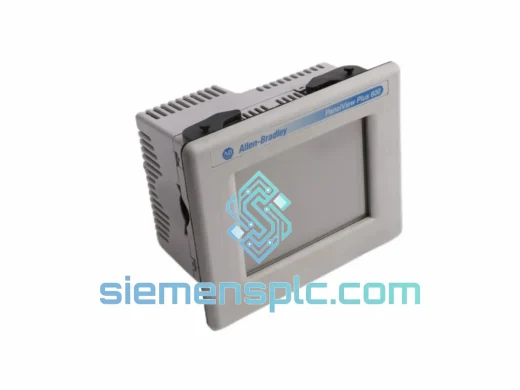
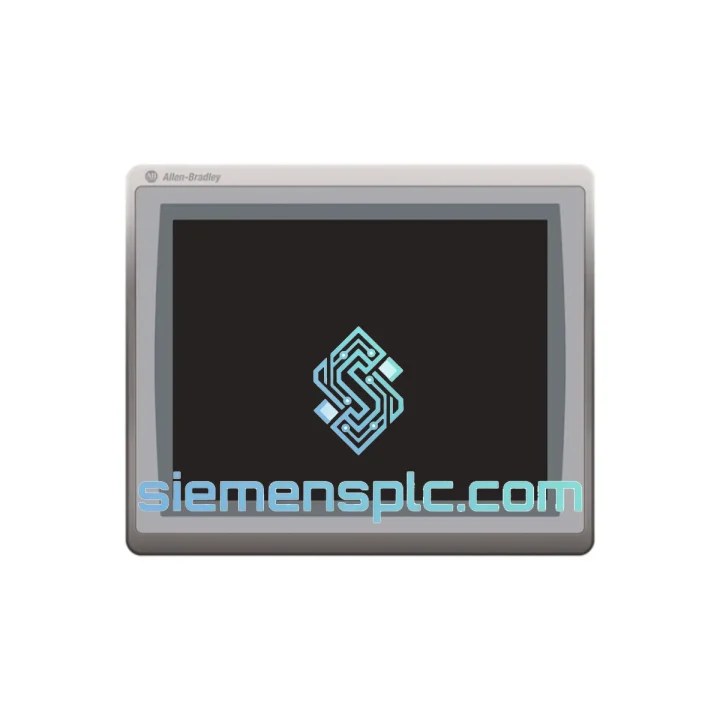
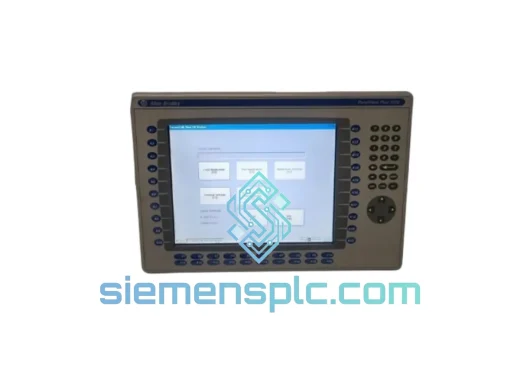
Allen-Bradley 2711P-T15C21D8S HMI Terminal – PanelView Plus 7 Standard
Request verified availability, condition, replacement risk review, packing options and courier lead time for 2711P-T15C21D8S.
BrandAllen-Bradley
Part Number2711P-T15C21D8S
ConditionAvailability Check
Lead TimeRFQ Confirmation
DocumentsDatasheet / photos by RFQ
ShippingExport packing available
Auto-filled RFQ
2711P-T15C21D8S
Click Request Quote and the part number is inserted into the inquiry form automatically.
- Reply by email: [email protected]
- WhatsApp / Tel: +86 18359268345
- Mon-Sat 9:00-18:00 GMT+8
Procurement Data
Key Product Information
Core fields for model confirmation and RFQ routing. Detailed product narrative remains below.
- Brand
- Allen-Bradley
- Primary Part Number
- 2711P-T15C21D8S
- Product Type
- HMI Terminal
- Series / Family
- PanelView
- Manufacturer
- Allen-Bradley / Rockwell Automation
- Country of Origin
- US
- Catalog Category
- HMI Panels
- Operating Temp.
- 0 °C to +55 °C
- Warranty
- 12 months from date of shipment
Model confirmed for inquiry
2711P-T15C21D8S
Send quantity, destination and urgency. The RFQ form keeps this part number attached.
Request Quote
Product Overview
Allen-Bradley 2711P-T15C21D8S — 15-Inch Operator Interface Node in EtherNet/IP-Based Control Architectures
The 2711P-T15C21D8S is a large-format operator terminal within Rockwell Automation’s PanelView Plus 7 Standard series. It functions as the primary human-machine interface node in Logix-based control systems, translating controller tag data into actionable operator displays and routing operator commands back to the control layer via CIP (Common Industrial Protocol) over EtherNet/IP. Unlike passive display units, this terminal maintains an active Class 1 implicit messaging session with the target controller, polling configured tags at defined RPI (Requested Packet Interval) rates — typically 100 ms to 500 ms per display element — ensuring that process variable updates reach the operator screen within deterministic latency bounds.
The terminal’s 800 MHz ARM Cortex-A8 processor runs Windows CE 6.0 and hosts the FactoryTalk View Machine Edition (ME) runtime. Application logic — including alarm management, trend data buffering, recipe handling, and security access levels — executes entirely on the terminal’s local processor, offloading visualization computation from the PLC CPU. This architecture means the controller’s scan cycle is not burdened by HMI rendering tasks; the terminal independently manages screen refresh, alarm queue processing, and USB peripheral I/O while the controller maintains its deterministic ladder or function block execution.
The dual-port EtherNet/IP switch embedded in the 2711P-T15C21D8S allows the terminal to participate in linear daisy-chain topologies without requiring an external managed switch at each node. Both ports share a single MAC address and operate as a two-port unmanaged switch, enabling the terminal to pass EtherNet/IP traffic to downstream devices while simultaneously maintaining its own CIP connection to the upstream controller. This topology reduces panel wiring cost and simplifies cable routing in machine-mounted enclosures where space is constrained.
The 15.0-inch XGA (1024 × 768) TFT LCD panel provides sufficient pixel density to render multi-loop process faceplates, alarm summary tables, and trend graphs simultaneously on a single screen without operator scrolling. At this display size, a typical process overview screen can accommodate 12–16 analog indicators, a 30-minute trend window, and a 10-row alarm banner concurrently — a configuration that would require multiple smaller terminals or screen navigation on sub-10-inch panels. The analog resistive touch layer responds to gloved-hand input, which is a practical requirement in environments where operators wear nitrile or leather work gloves.
Real-time Stock & RFQ: [email protected] | WhatsApp: +86 18359268345
Technical Parameters
| Part Number | 2711P-T15C21D8S |
| Manufacturer | Allen-Bradley / Rockwell Automation |
| Series | PanelView Plus 7 Standard |
| Display Size | 15.0″ Widescreen TFT LCD |
| Display Resolution | 1024 × 768 (XGA) |
| Touch Technology | Analog Resistive (glove-compatible) |
| Processor | 800 MHz ARM Cortex-A8 |
| RAM | 512 MB DDR3 |
| Flash Storage | 512 MB internal NAND + SD card expansion slot |
| Operating System | Windows CE 6.0 |
| HMI Runtime | FactoryTalk View Machine Edition (ME) |
| Communication — Ethernet | 2× EtherNet/IP RJ-45, 10/100 Mbps, integrated 2-port switch |
| Communication — Serial | 1× RS-232 (DH-485 / DF1 via adapter cable) |
| USB Ports | 1× USB Type-A (host), 1× USB Type-B (device/programming) |
| Supply Voltage | 24V DC nominal (18–32V DC operating range) |
| Power Consumption | ≤ 40 W typical at 24V DC |
| Operating Temperature | 0 °C to +55 °C |
| Storage Temperature | −20 °C to +70 °C |
| Relative Humidity | 5–95% RH, non-condensing |
| Ingress Protection | IP65 / NEMA 4 / NEMA 4X (front bezel) |
| Vibration | IEC 60068-2-6: 5–500 Hz, 2G |
| Shock | IEC 60068-2-27: 15G, 11 ms half-sine |
| Certifications | UL Listed, CE Marked, cULus, RCM |
| Mounting | Front-of-panel, flush mount |
| Approximate Weight | 3.2 kg (terminal only) |
| Warranty | 12 months from date of shipment |
Hardware Logical Analysis
Dual-Port Ethernet Switch Architecture: The integrated two-port EtherNet/IP switch uses a store-and-forward switching fabric with a shared MAC address across both ports. Frames arriving on Port 1 are forwarded to Port 2 (and vice versa) at wire speed, with the terminal’s own CIP stack intercepting frames addressed to its MAC. This eliminates the latency penalty of an external switch hop and keeps the terminal’s EtherNet/IP connection latency within the same order of magnitude as a directly connected device. In a 10-node daisy-chain, cumulative switch latency remains below 1 ms per hop at 100 Mbps — acceptable for HMI polling intervals of 100 ms or greater.
EMC Design and Noise Immunity: The 2711P-T15C21D8S is designed to IEC 61000-4 series immunity standards. The DC power input incorporates transient suppression rated to IEC 61000-4-5 (surge immunity, 1 kV line-to-earth), and the Ethernet ports include common-mode chokes and transformer isolation to attenuate conducted noise from cable runs in high-EMI environments such as variable frequency drive (VFD) panels. The resistive touch overlay is grounded through the bezel frame, preventing electrostatic charge accumulation that could cause false touch events in low-humidity environments.
Local Application Execution Model: FactoryTalk View ME applications compile to a binary runtime format stored in the terminal’s internal NAND flash. At runtime, the ME engine loads the compiled application into RAM and executes display logic, alarm detection, and trend data logging independently of the controller. Alarm detection occurs at the terminal level by comparing polled tag values against configured alarm thresholds — this means alarm annunciation continues even if the EtherNet/IP connection to the controller is temporarily interrupted, provided the terminal retains the last-known tag values in its runtime cache. The terminal logs up to 10,000 alarm events to internal flash with timestamp resolution of 1 ms.
Power Supply Filtering: The 24V DC input stage includes an LC filter network that attenuates high-frequency switching noise from adjacent DC/DC converters on the same bus. The operating range of 18–32V DC accommodates voltage sag conditions on long cable runs (up to 30 m at 1.5 mm² conductor cross-section) without requiring a local voltage regulator, simplifying panel wiring design.
System Integration Benefits
- Direct Logix Tag Binding: FactoryTalk View ME imports tag databases directly from Studio 5000 Logix Designer (.ACD files), eliminating manual tag re-entry and reducing HMI configuration errors. Tag name changes in the controller propagate to the HMI application via re-import without requiring screen-by-screen edits.
- Deterministic CIP Polling: Each display element is assigned an individual RPI, allowing engineers to prioritize high-frequency updates (e.g., 50 ms for safety-critical indicators) alongside low-frequency updates (e.g., 1000 ms for energy meters) within a single application — optimizing EtherNet/IP bandwidth utilization.
- Alarm Transparency: The ME alarm system supports alarm shelving, acknowledgment tracking, and alarm history export to USB — providing a complete audit trail for ISO 9001 and FDA 21 CFR Part 11 compliance requirements without additional middleware.
- Recipe Management: The terminal supports up to 1,000 recipe sets stored in internal flash, with recipe download to the controller via CIP write operations. Recipe changeover time is under 500 ms for sets containing up to 200 parameters — suitable for high-mix manufacturing environments.
- Multi-Controller Connectivity: A single 2711P-T15C21D8S application can maintain simultaneous CIP connections to multiple Logix controllers (up to the EtherNet/IP connection limit), enabling cross-controller data aggregation on a single operator screen without a SCADA server.
- Diagnostic Transparency: The terminal exposes its own health data — CPU load, memory utilization, EtherNet/IP connection status, and application runtime errors — via FactoryTalk Diagnostics, allowing remote monitoring from FactoryTalk View SE or FactoryTalk AssetCentre without physical access to the panel.
- USB Peripheral Flexibility: The Type-A USB host port supports barcode scanners (HID class), USB keyboards, and USB mass storage devices. This enables operator-driven data entry workflows (e.g., scanning a work order barcode to load the corresponding recipe) without network infrastructure dependency.
- Scalable Screen Navigation: The ME runtime supports up to 500 display screens per application with configurable navigation buttons, pop-up displays, and parameter entry dialogs — sufficient for complex machine sequences with multiple operating modes, maintenance screens, and calibration interfaces.
Quality Assurance & Global Logistics
Every 2711P-T15C21D8S unit dispatched from our Xiamen, China facility undergoes a structured pre-shipment verification protocol. Units are visually inspected for bezel integrity, connector pin condition, and label authenticity. Power-on functional testing confirms display backlight uniformity, touch calibration accuracy, and Ethernet port link negotiation at 100 Mbps. Firmware version is verified against Rockwell Automation’s published release history to confirm authenticity and rule out unauthorized modifications. Units with firmware below the current stable release are flagged and updated prior to shipment where applicable.
Packaging uses anti-static foam inserts with a minimum 50 mm cushion on all six faces, rated to withstand 1.2-meter drop impacts per ISTA 2A transit testing standards. Each shipment includes a packing list, commercial invoice, and certificate of origin (COO) for customs clearance. HS Code 8537.10 applies to this product category for most jurisdictions.
Logistics options from Xiamen include DHL Express (3–5 business days to Europe and North America), FedEx International Priority (3–4 business days), and sea freight LCL consolidation for volume orders. Export documentation — including ECCN classification and end-user declaration templates — is prepared by our logistics team to minimize customs clearance delays. All units carry a 12-month warranty from the date of shipment, covering manufacturing defects and functional failures under normal operating conditions. Warranty claims are processed within 5 business days of receipt of the returned unit.
Contact Information
Email: [email protected]
WhatsApp: +86 18359268345
Web: siemensplc.com
Location: Xiamen, China
© 2026 siemensplc.com. All rights reserved.
Ready to quote
[email protected]
Send This Part Number to Sales
RFQ workflow
Quality workflow ->
Confirmation Process
01Model confirmation
We check the full part number, brand, series and visible nameplate information before quotation.
02Availability reply
Sales confirms stock path, condition option, quantity and realistic lead time for export dispatch.
03Packing & courier
DHL, FedEx, UPS or buyer courier arrangements can be reviewed with packing requirements.
Continue sourcing
Browse full catalog ->
Related Automation Parts
Similar brand or category products for fast comparison and multi-item RFQ lists.
Allen-Bradley
RFQ Ready
Allen-Bradley 2711P-T15C22D9P HMI Terminal
PanelView
Origin US
HMI Graphic Terminal
Allen-Bradley
RFQ Ready
Allen-Bradley 2711P-T10C21D8S HMI Operator Terminal
PanelView
Origin US
HMI Operator Terminal
Allen-Bradley
RFQ Ready
Allen-Bradley 2711P-RN15S ControlNet Communication Module
PanelView
Origin US
PLC Communication Module