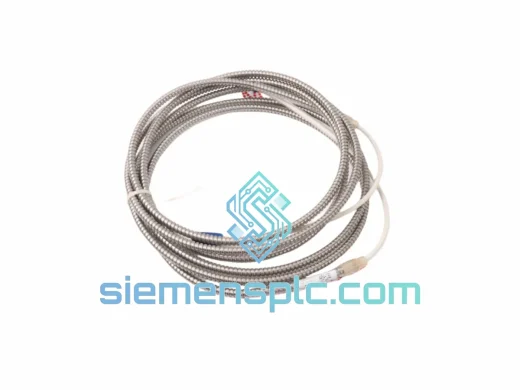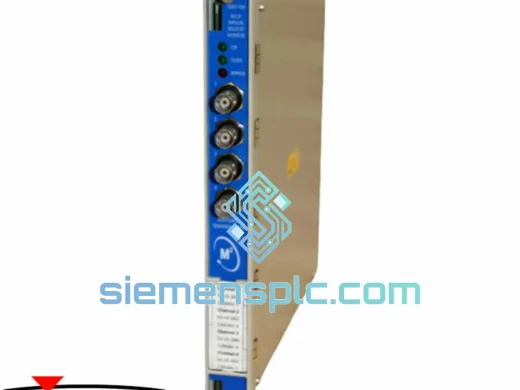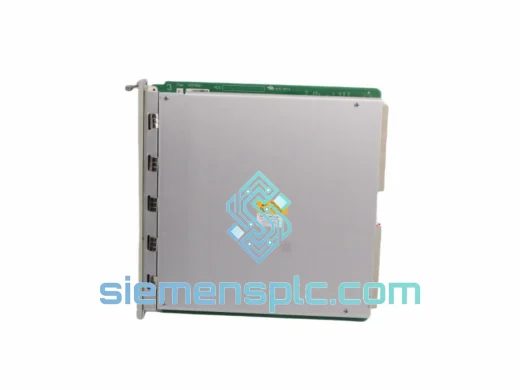
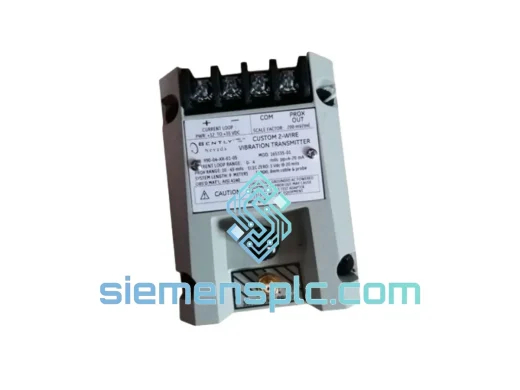
Bently Nevada
RFQ Ready
Bently Nevada TA150/AL 08276D Tachometer Module – 3500 Series
3500 Series
Origin US
Tachometer Module
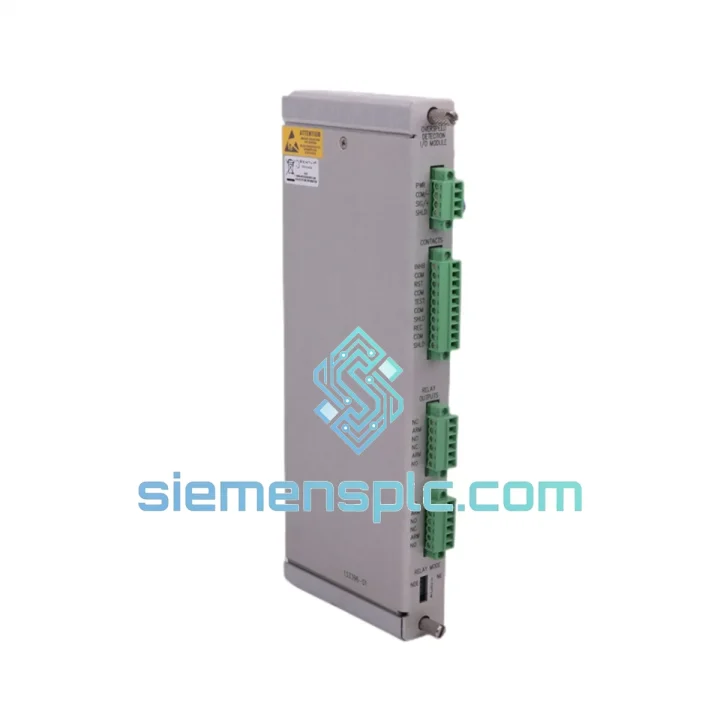
Request verified availability, condition, replacement risk review, packing options and courier lead time for 133396-01.
Click Request Quote and the part number is inserted into the inquiry form automatically.
Core fields for model confirmation and RFQ routing. Detailed product narrative remains below.
The Bently Nevada 133396-01 is a dedicated overspeed detection I/O module engineered for slot-based integration within the 3500 Series Machinery Protection System rack. Its primary function is to receive discrete speed or phase signals from field-mounted proximity probes or magnetic pickups, execute configurable voting logic, and assert hardware-level trip relay outputs when shaft speed exceeds the programmed overspeed threshold. The module operates independently of any host DCS or PLC — trip execution is resident in the module’s own logic, not in a software scan cycle — which is the architectural distinction that makes it suitable for safety-instrumented applications.
In a control loop context, the 133396-01 sits at the intersection of the sensing layer and the final element layer. Speed sensors deliver pulse trains proportional to shaft rotational velocity; the module converts these pulse trains into frequency measurements, compares them against the configured setpoint, and drives relay outputs that connect directly to turbine trip solenoids or emergency shutdown valves. The response path from speed exceedance to relay state change is deterministic and hardware-enforced, with no dependency on network latency or controller availability.
📩 Real-time Stock & RFQ: [email protected] | WhatsApp: +86 18359268345
| Manufacturer | Bently Nevada (Baker Hughes) |
| Part Number | 133396-01 |
| Module Classification | Overspeed Detection I/O Module |
| Compatible Platform | Bently Nevada 3500 Series Machinery Protection Rack |
| Speed Input Channels | 3 independent speed/phase signal inputs |
| Voting Logic | 2-out-of-3 (2oo3) configurable majority voting |
| Trip Output Type | Relay outputs; normally energized or de-energized configurable |
| Setpoint Configuration | Software-configurable via Rack Configuration Software or System 1 |
| Backplane Interface | Proprietary 3500 rack backplane bus; no external power required |
| Operating Temperature | 0 °C to +65 °C (32 °F to 149 °F) |
| Storage Temperature | −40 °C to +85 °C |
| Humidity | 5% to 95% RH, non-condensing |
| Form Factor | Single-slot 3500 rack module |
| Weight | Approx. 450 g |
| Applicable Standards | API 670, IEC 61511, IEC 61508 (SIL 2/3 capable architecture) |
| Warranty | 12 months from date of shipment |
The 133396-01 implements a three-channel speed acquisition front end, each channel independently conditioned to accept both passive magnetic pickup (MPU) signals and active proximity probe outputs. Signal conditioning circuitry at each input applies hysteresis thresholding to reject low-amplitude noise and prevent false zero-crossing counts — a critical requirement in environments with high electromagnetic interference from variable-frequency drives, large motor starters, and bus-bar switching transients.
Each conditioned pulse train feeds a dedicated frequency counter implemented in hardware logic (not firmware polling), which eliminates the jitter introduced by interrupt-driven software counters. The three frequency measurements are then passed to the voting comparator block, which evaluates all three against the configured overspeed setpoint and applies the 2oo3 decision rule. This architecture means that a single sensor failure — whether open-circuit, short-circuit, or signal degradation — does not produce a spurious trip, nor does it silently disable overspeed protection. The remaining two channels continue to provide valid protection, and the module asserts a channel fault alarm to the rack processor for operator notification.
EMC design on the 133396-01 follows the same shielding and filtering philosophy applied across the 3500 platform. The module’s PCB incorporates ground plane partitioning that isolates the analog signal conditioning section from the digital logic section, reducing capacitive coupling of switching noise into the measurement path. Relay output circuits are optically isolated from the logic domain, preventing ground loop currents from the field wiring from affecting measurement accuracy or logic state. The rack backplane itself provides a low-impedance common ground reference, and the module’s backplane connector includes dedicated shield drain pins that terminate cable shields at a single point — the preferred EMC practice for instrumentation-grade installations.
The relay output stage uses bifurcated contacts rated for the inductive loads typical of solenoid valve coils and trip relay coils, with gold-flashed contact surfaces on the low-current signal paths to maintain reliable contact resistance over the module’s service life. Contact bounce suppression is implemented in hardware to prevent multiple trip pulses from being registered by downstream logic during a single trip event.
Every 133396-01 unit supplied through siemensplc.com is sourced from verified supply channels with documented traceability. Prior to dispatch from our Xiamen, China operations center, each module undergoes a structured pre-shipment inspection protocol: visual examination of PCB, connector pins, and housing for physical damage; verification of part number label, revision code, and date code against Bently Nevada documentation; and where test equipment is available, functional bench verification of input conditioning and output relay operation.
Packaging follows ESD-safe handling requirements throughout — anti-static bags, conductive foam inserts, and rigid outer cartons rated for international air freight. Shipments from Xiamen reach major industrial hubs in Southeast Asia within 2–4 business days, the Middle East and Europe within 5–7 business days, and North America within 6–9 business days via DHL Express, FedEx International Priority, or UPS Worldwide Express, depending on destination and urgency. All shipments include full tracking, commercial invoice, and packing list. Certificate of conformance and available test records are provided upon request at no additional charge.
For plant shutdown scenarios where lead time is critical, contact our team directly via WhatsApp for real-time stock confirmation and same-day dispatch coordination. We maintain working stock of high-demand 3500 Series modules specifically to support unplanned outage recovery.
Email: [email protected]
WhatsApp: +86 18359268345
Web: siemensplc.com
Location: Xiamen, China
© 2026 siemensplc.com. All rights reserved.
We check the full part number, brand, series and visible nameplate information before quotation.
Sales confirms stock path, condition option, quantity and realistic lead time for export dispatch.
DHL, FedEx, UPS or buyer courier arrangements can be reviewed with packing requirements.
Similar brand or category products for fast comparison and multi-item RFQ lists.