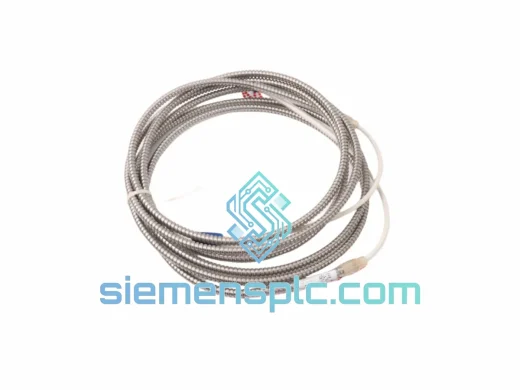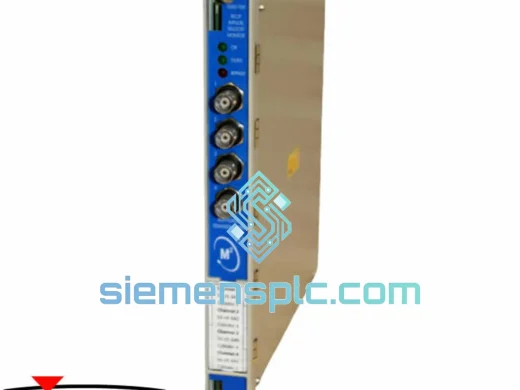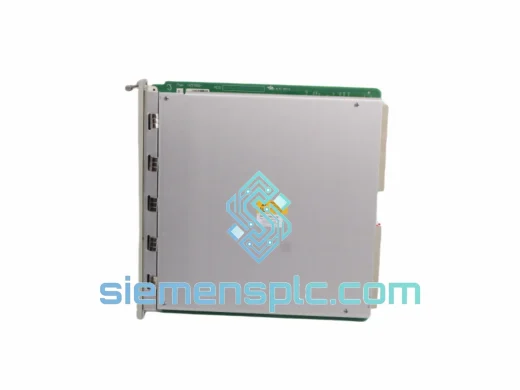
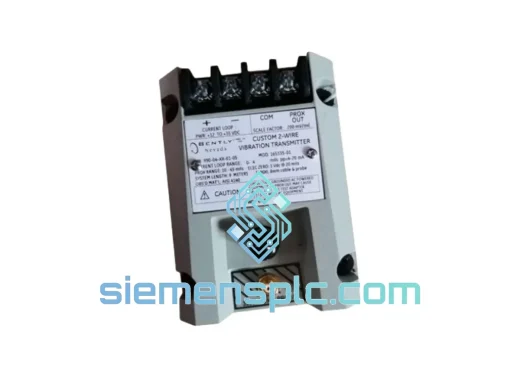
Bently Nevada
RFQ Ready
Bently Nevada TA150/AL 08276D Tachometer Module – 3500 Series
3500 Series
Origin US
Tachometer Module
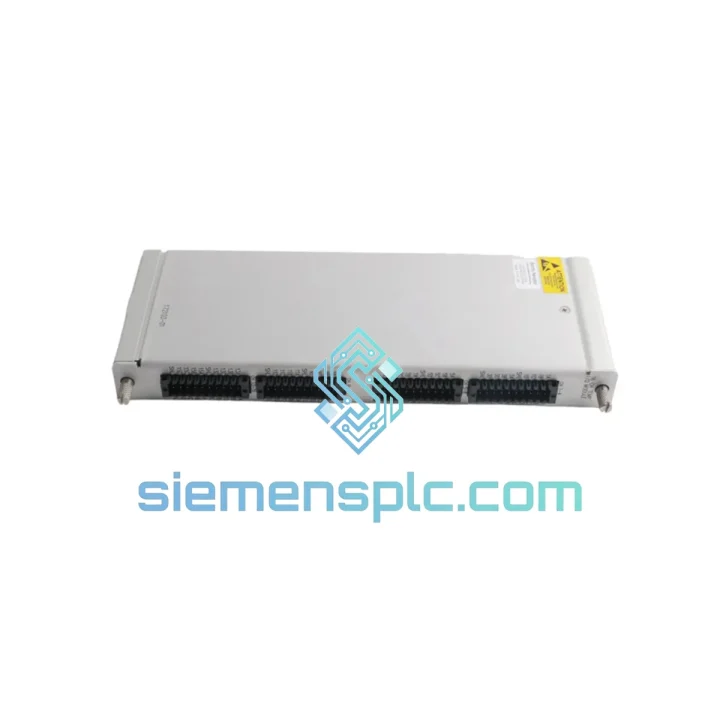
Request verified availability, condition, replacement risk review, packing options and courier lead time for 172103-01.
Click Request Quote and the part number is inserted into the inquiry form automatically.
Core fields for model confirmation and RFQ routing. Detailed product narrative remains below.
The Bently Nevada 172103-01 is a single-slot temperature signal conditioning module designed exclusively for the 3500 Series Machinery Protection System rack architecture. It accepts both 2-wire and 3-wire RTD inputs and isolated-tip thermocouple inputs — covering J, K, T, E, R, S, and B type sensors — within a single rack slot. This dual-input capability is not a convenience feature; it is an engineering response to the reality that rotating machinery trains in petrochemical, power generation, and LNG facilities routinely deploy mixed sensor populations across bearings, windings, exhaust streams, and process fluid interfaces. Consolidating both input types into one module eliminates the external signal conditioners that would otherwise be required, reduces rack slot consumption, and simplifies the spare-parts inventory that maintenance teams must hold on-site.
The module’s isolated-tip thermocouple input architecture addresses a specific and persistent problem in industrial temperature measurement: ground loop interference. In environments where turbine casings, motor frames, or compressor housings carry stray potentials — whether from cathodic protection systems, variable-frequency drive leakage, or high-voltage proximity — a non-isolated TC input will couple that common-mode voltage directly into the millivolt-level thermocouple signal. The result is measurement error that is difficult to distinguish from a genuine temperature excursion. The 172103-01’s isolation barrier breaks this coupling path at the sensor tip, maintaining signal integrity regardless of the chassis potential at the measurement point. This is not a passive filter; it is a galvanic separation that prevents the interference from entering the measurement circuit in the first place.
The 3-wire RTD input topology provides a complementary benefit for long cable runs. In a 2-wire RTD circuit, the resistance of the field cable adds directly to the measured resistance, introducing a systematic positive temperature offset that scales with cable length and conductor gauge. The third wire in a 3-wire configuration allows the measurement circuit to sample the cable resistance independently and subtract it from the total, canceling the lead resistance error. For bearing pedestal RTDs routed through cable trays to a control room rack — runs of 50 to 200 meters are common in large plant installations — this compensation is the difference between a calibrated measurement and a biased one.
Signal conditioning within the module includes automatic cold junction compensation for thermocouple inputs, a 16-bit analog-to-digital converter, and a backplane interface that transfers digitized temperature data to the paired monitor card — either the 3500/62 (8-channel) or 3500/63 (16-channel) Temperature Monitor. The monitor card applies the configured alarm setpoints and trip thresholds, drives relay outputs, and makes the data available over the rack’s communication interface to the plant DCS or historian. The 172103-01 is the signal conditioning layer in this chain; its accuracy and isolation integrity directly determine the quality of the data that the monitor card acts upon.
Real-time Stock & RFQ: [email protected] | WhatsApp: +86 18359268345
| Parameter | Specification |
|---|---|
| Part Number | 172103-01 |
| Compatible Rack | Bently Nevada 3500 Series |
| Input Types | RTD (2-wire / 3-wire); Isolated-Tip Thermocouple (J, K, T, E, R, S, B) |
| RTD Excitation Current | ≤ 1 mA (minimizes self-heating error) |
| TC Input Impedance | > 1 MΩ |
| Cold Junction Compensation | Internal, automatic |
| A/D Resolution | 16-bit |
| Channel Isolation | Isolated-tip; channel-to-channel and channel-to-chassis per IEC 61010-1 |
| Supply Voltage | Derived from 3500 rack backplane (18–32 VDC) |
| Power Consumption | ≤ 3 W per module |
| Connector | 25-pin D-sub (field wiring side) |
| Form Factor | Single-width 3500 rack I/O module |
| Operating Temperature | 0 °C to +60 °C |
| Storage Temperature | −40 °C to +85 °C |
| Relative Humidity | 5% to 95% non-condensing |
| Vibration Resistance | IEC 60068-2-6 (operational) |
| EMC Compliance | EN 61326-1 (industrial environment); CE marked |
| Safety Certifications | CE, CSA/UL |
| Weight | 380 g |
| Compatible Monitor Cards | 3500/62, 3500/63 Temperature Monitor |
| Warranty | 12 months from date of dispatch |
The 172103-01’s internal architecture can be understood as three discrete functional stages operating in sequence: input multiplexing and isolation, signal conditioning, and digital conversion with backplane handshake.
Input Multiplexing and Isolation Stage: The module’s front-end accepts field wiring through the 25-pin D-sub connector. For thermocouple channels, the isolated-tip design means the thermocouple junction itself is electrically floating relative to the module chassis and the rack frame. The isolation barrier — implemented as a transformer-coupled or optically coupled boundary depending on revision — presents an impedance of greater than 1 MΩ to common-mode signals while passing the differential thermocouple EMF with minimal attenuation. This barrier is rated per IEC 61010-1, which specifies the working voltage and impulse withstand levels appropriate for industrial measurement equipment. The practical consequence is that common-mode voltages up to the rated isolation level — typically several hundred volts — do not appear as measurement error at the A/D input.
RTD Excitation and Lead Compensation: For RTD channels, the module sources a controlled excitation current of ≤ 1 mA through the RTD element. The low excitation level is deliberate: Joule heating in the RTD element (P = I²R) at 1 mA through a 100 Ω PT100 element produces 0.1 mW of self-heating, which translates to a temperature error of less than 0.1 °C in most industrial RTD installations — well within the measurement uncertainty budget. In 3-wire mode, the module routes the third conductor through a separate measurement path, samples the voltage drop across the lead resistance, and subtracts it from the total measured resistance before conversion. This compensation is performed in hardware, not in software post-processing, which means it is applied at the measurement rate without latency.
EMC Design Considerations: The module’s PCB layout follows standard industrial EMC practice: analog signal traces are routed away from digital clock lines, the A/D converter reference is decoupled with low-ESR capacitors, and the backplane interface uses differential signaling to reject common-mode noise injected by adjacent modules. The module’s metal housing provides a Faraday shield that attenuates radiated interference from the rack environment. These design choices are not unique to this module, but their correct implementation is what distinguishes a module that maintains specified accuracy in a high-EMI rack environment from one that meets specifications only in a laboratory.
Every 172103-01 unit dispatched from our Xiamen, China facility has passed a structured 4-stage inspection protocol before it is packaged for shipment. Visual inspection confirms connector pin condition, PCB surface integrity, label legibility, and latch mechanism function against OEM reference images. Part number and revision verification cross-checks the silk-screen and label against the Bently Nevada 3500 Series bill of materials, with the revision level recorded in the unit’s inspection record. Functional bench testing powers the module through a 3500 rack test fixture and verifies RTD and TC input channel response and backplane communication handshake. Packaging applies anti-static shielding, foam-lined carton protection, and desiccant to protect the module during international transit.
Documentation available upon request includes the inspection report, functional test record, high-resolution photographs of the label and connector, certificate of conformance (CoC), and the original Bently Nevada datasheet. For urgent plant shutdown requirements, expedited dispatch with same-day or next-business-day shipping is available from Xiamen to major industrial hubs in Southeast Asia, the Middle East, Europe, and the Americas. DHL Express, FedEx International Priority, and UPS Worldwide Express are standard carrier options; freight forwarding to project sites is available on request.
All units carry a 12-month warranty from the date of dispatch, covering defects in materials and workmanship under normal operating conditions consistent with the Bently Nevada 3500 Series installation and operating manual.
Email: [email protected]
WhatsApp: +86 18359268345
Web: siemensplc.com
Location: Xiamen, China
© 2026 siemensplc.com. All rights reserved.
We check the full part number, brand, series and visible nameplate information before quotation.
Sales confirms stock path, condition option, quantity and realistic lead time for export dispatch.
DHL, FedEx, UPS or buyer courier arrangements can be reviewed with packing requirements.
Similar brand or category products for fast comparison and multi-item RFQ lists.