Bently Nevada
RFQ Ready
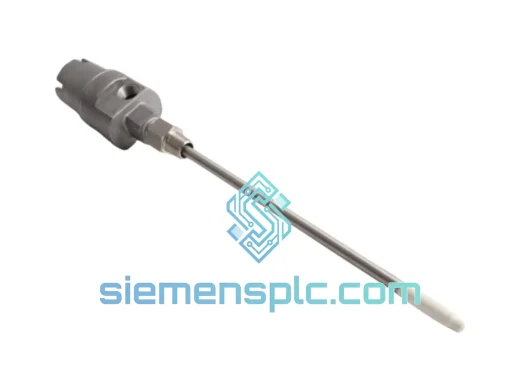
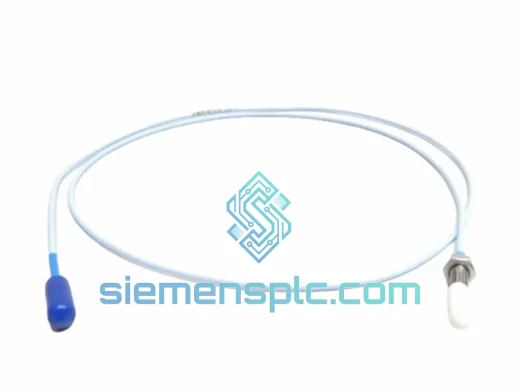
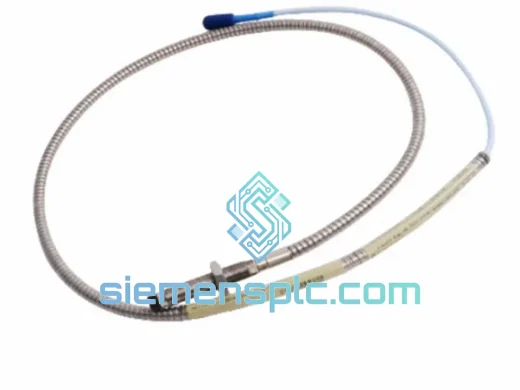
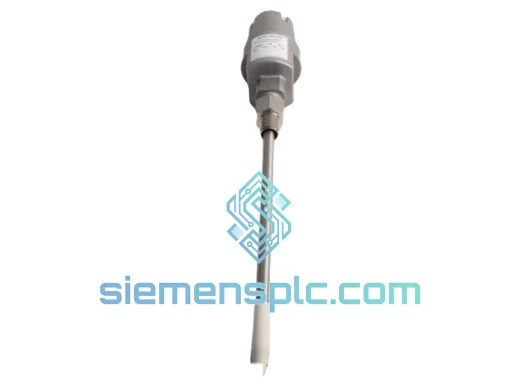
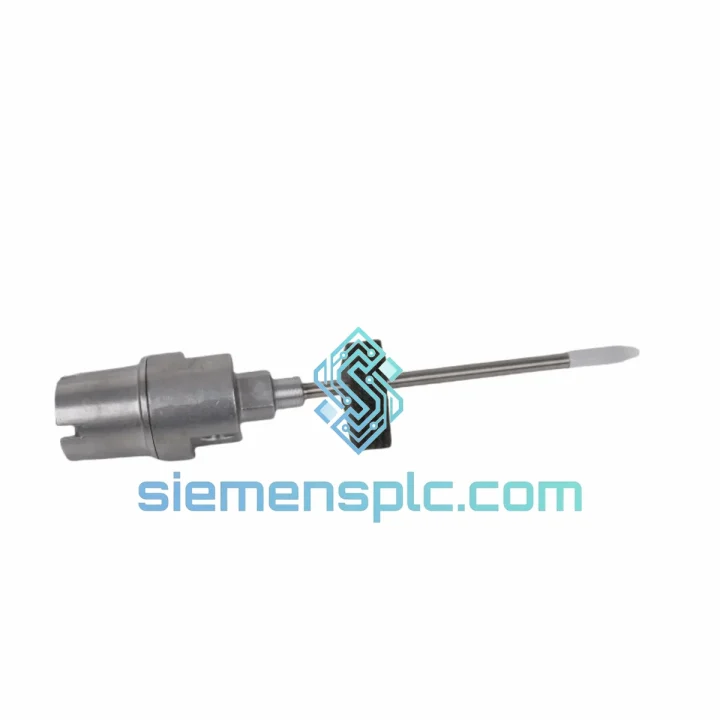
Bently Nevada 21000-34-10-00-085-04-02 Proximity Probe Housing Assembly
21000 Series
Origin US
Proximity Probe Housing Assembly
Request verified availability, condition, replacement risk review, packing options and courier lead time for 21000-16-10-20-060-03-02.
Click Request Quote and the part number is inserted into the inquiry form automatically.
Core fields for model confirmation and RFQ routing. Detailed product narrative remains below.
The Bently Nevada 21000-16-10-20-060-03-02 is a fully specified proximity probe housing assembly engineered for the 3300 XL Proximity Transducer System — Bently Nevada’s field-proven platform for continuous, non-contact shaft displacement measurement on critical rotating machinery. This assembly defines the mechanical interface between the eddy-current probe tip and the rotating target surface, governing gap geometry, cable routing, and environmental sealing with OEM-grade dimensional tolerances. It is not a generic enclosure; every segment of the part number encodes a specific mechanical parameter that determines compatibility with a given installation point.
In turbomachinery protection architecture, the housing assembly occupies the first physical node in the vibration signal chain. Its dimensional accuracy directly determines the linearity of the probe’s output voltage-to-gap relationship. A housing that introduces even 0.1 mm of probe tip offset from the design gap will shift the operating point on the eddy-current probe’s sensitivity curve, introducing a systematic measurement error that no downstream signal conditioning can correct. The 21000-16-10-20-060-03-02 eliminates this risk by maintaining OEM-specified probe seating depth and tip-to-target geometry across its full service life.
Real-time Stock & RFQ: [email protected] | WhatsApp: +86 18359268345
| Parameter | Specification |
|---|---|
| Part Number | 21000-16-10-20-060-03-02 |
| Manufacturer | Bently Nevada (Baker Hughes) |
| Platform / Series | 3300 XL Proximity Transducer System |
| Assembly Classification | Proximity Probe Housing Assembly |
| Probe Tip Diameter | 16 mm (P/N field: -16-) |
| Probe Thread Size | M20 × 1.5 (P/N field: -20-) |
| Extension Cable Length | 600 mm / 60 cm (P/N field: -060-) |
| Housing Material | 316L Stainless Steel |
| Environmental Protection | IP67 — dust-tight, immersion-resistant to 1 m depth |
| Operating Temperature | –40 °C to +120 °C |
| Connector / Termination | Integral armored cable; BNC or TNC per system configuration |
| Probe Compatibility | Bently Nevada 3300 XL 8 mm / 11 mm eddy-current probes |
| Compliance Standards | API 670 5th Edition; CE; RoHS |
| Country of Origin | United States of America |
| Approximate Assembly Weight | 1,080 g |
| Warranty | 12 months against manufacturing defects |
The 21000-16-10-20-060-03-02 housing assembly functions as the mechanical precision reference for the eddy-current measurement loop. Understanding its hardware design requires examining three interdependent subsystems: the probe seating geometry, the EMC shielding architecture, and the environmental sealing stack.
Probe Seating Geometry and Gap Calibration: The housing body is machined to hold the 16 mm probe tip at a fixed axial position relative to the mounting thread datum. The M20 × 1.5 thread pitch provides fine positional adjustment during installation — each full rotation advances the probe tip by 1.5 mm, allowing field technicians to set the nominal gap (typically 1.0–1.5 mm for 3300 XL probes) with sub-millimeter resolution using a standard gap-setting procedure. The internal bore concentricity tolerance is held to ±0.02 mm, ensuring the probe tip remains coaxial with the housing centerline and, by extension, with the shaft target area. This concentricity directly determines the uniformity of the electromagnetic field distribution around the probe tip, which governs measurement linearity across the full ±0.5 mm dynamic range.
EMC Shielding Architecture: The 316L stainless steel housing body provides a continuous conductive enclosure around the probe body and the proximal section of the extension cable. This shielding attenuates capacitively coupled interference from adjacent high-voltage cables, variable-frequency drives, and bus bars — all common in turbomachinery control rooms. The shield is bonded to the cable armor at the housing exit point, creating a low-impedance ground path that prevents shield current loops from injecting common-mode noise into the probe output signal. In installations where shaft-to-ground voltage is present (e.g., steam turbines with electrostatic discharge from steam flow), the housing shield also provides a defined discharge path that protects the probe’s internal oscillator circuit from transient overvoltage.
Environmental Sealing Stack: The IP67 rating is achieved through a dual-seal arrangement: a primary elastomeric O-ring at the probe-to-housing interface and a secondary compression seal at the cable exit. The O-ring material is selected for compatibility with steam condensate, light hydrocarbon mist, and industrial cleaning agents. The cable exit seal incorporates a strain-relief clamp that prevents cable flexion from propagating mechanical stress to the seal interface — a failure mode common in high-vibration installations where cable whip can degrade single-seal designs within 6–12 months of service.
Armored Extension Cable: The 600 mm integral cable uses a coaxial construction with a solid center conductor, PTFE dielectric, and a braided stainless steel armor over the outer jacket. The PTFE dielectric maintains stable capacitance per unit length (nominally 30 pF/m) across the full operating temperature range, ensuring that the cable’s electrical contribution to the probe system’s sensitivity factor remains constant. Variation in cable capacitance is a known source of calibration drift in proximity transducer systems; the PTFE construction eliminates this variable.
Every Bently Nevada 21000-16-10-20-060-03-02 unit supplied by siemensplc.com is sourced from verified OEM distribution channels and authenticated surplus inventory with full lot traceability. Prior to dispatch, each assembly undergoes a structured pre-shipment inspection protocol: visual examination of the housing body for machining defects or corrosion, dimensional verification of the probe seating bore and thread form, connector and cable integrity check, and seal condition assessment. Units that do not pass all inspection criteria are quarantined and not shipped.
Documentation available upon request includes: Certificate of Conformance (CoC), original Bently Nevada part number verification, and lot traceability records. For plants operating under ISO 55000 asset management frameworks or API 670 documentation requirements, these records satisfy the traceability obligations for safety-critical instrumentation.
Logistics are managed from our warehouse in Xiamen, China, with direct access to international freight forwarding services via Xiamen Gaoqi International Airport and Xiamen Port. Standard dispatch time is 1–3 business days from order confirmation. Express air freight options (DHL, FedEx, UPS) are available for urgent requirements, with transit times of 3–5 business days to most destinations in Europe, North America, Southeast Asia, and the Middle East. All shipments are packed in anti-static, moisture-barrier packaging with foam cushioning rated for the assembly weight and fragility class. Export documentation (commercial invoice, packing list, certificate of origin) is prepared in compliance with destination country import requirements.
A 12-month warranty against manufacturing defects is provided on all units. Warranty claims are processed directly through siemensplc.com with a target response time of 48 hours.
Email: [email protected]
WhatsApp: +86 18359268345
Web: siemensplc.com
Location: Xiamen, China
© 2026 siemensplc.com. All rights reserved.
We check the full part number, brand, series and visible nameplate information before quotation.
Sales confirms stock path, condition option, quantity and realistic lead time for export dispatch.
DHL, FedEx, UPS or buyer courier arrangements can be reviewed with packing requirements.
Similar brand or category products for fast comparison and multi-item RFQ lists.