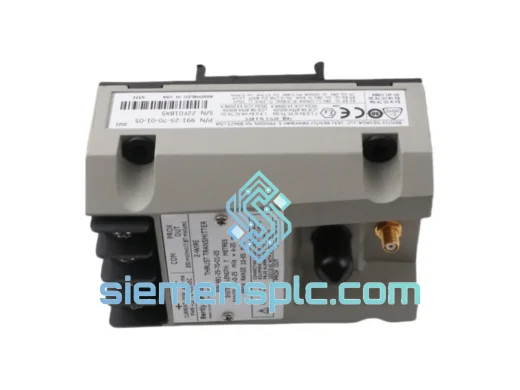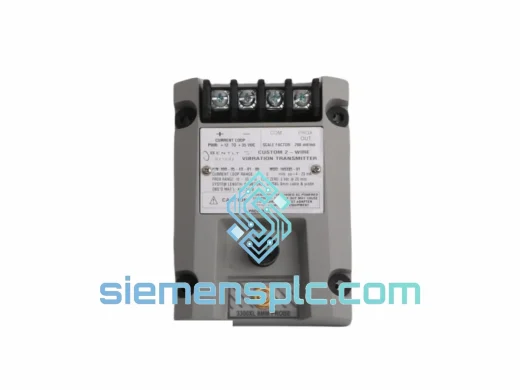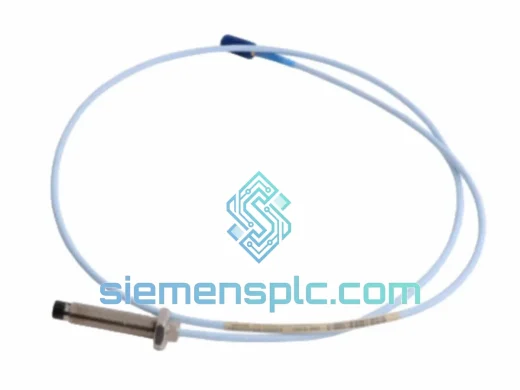
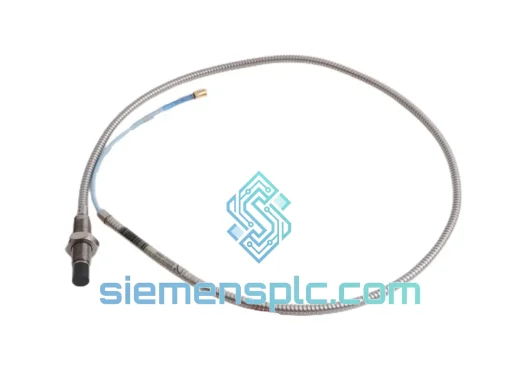
Bently Nevada
RFQ Ready
Bently Nevada RS901104-03-050-10-01 Proximitor Sensor – 3300 XL Series
3300 XL
Origin US
Proximitor Sensor
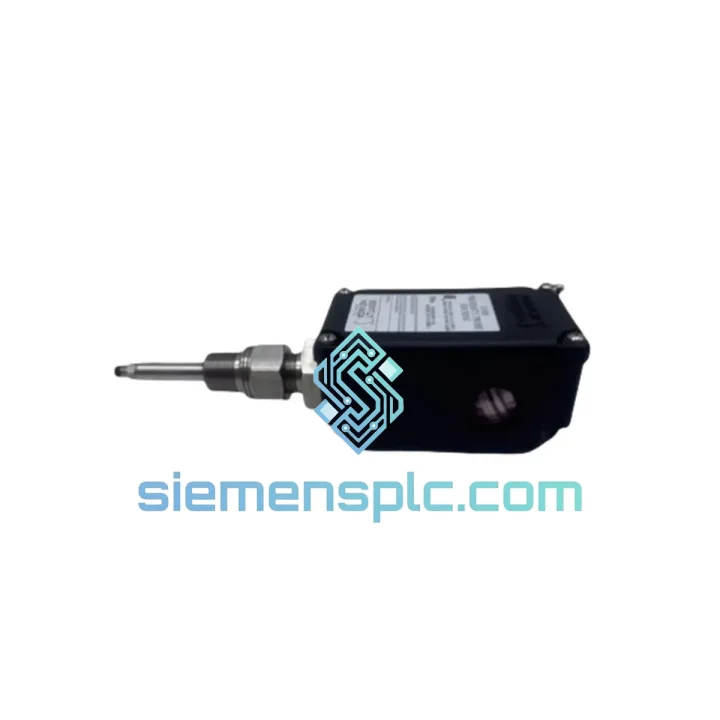
Request verified availability, condition, replacement risk review, packing options and courier lead time for 31000-16-05-15-040-02-02.
Click Request Quote and the part number is inserted into the inquiry form automatically.
Core fields for model confirmation and RFQ routing. Detailed product narrative remains below.
Your turbine tripped at 02:40. The vibration monitor threw a Not OK on channel 1. Maintenance pulled the probe — tip shorted, cable abraded at the compression fitting. You need a Bently Nevada 31000-16-05-15-040-02-02 on-site before the next shift handover, or production stays flat. We stock it. We ship it today.
At siemensplc.com, we maintain physical inventory of high-demand Bently Nevada proximity probes specifically for emergency replacement scenarios. No broker delays, no “check back in 6 weeks.” One call, one shipment, machine back online.
URGENT REQUIREMENT? Contact: [email protected] | WhatsApp: +86 18359268345
| Parameter | Specification |
|---|---|
| Part Number | 31000-16-05-15-040-02-02 |
| Brand | Bently Nevada (Baker Hughes) |
| Series | 31000 / 32000 Series — 3300 XL Platform |
| Probe Type | Eddy-current proximity transducer housing assembly |
| Tip Diameter | 5 mm |
| Cable Length | 5 m (16 ft) integrated armored coaxial |
| Thread Size | M10 × 1.0 metric fine |
| Sensitivity | 7.87 V/mm (200 mV/mil) nominal |
| Linear Range | 0.25 mm – 2.25 mm (10 – 90 mil) |
| Supply Voltage | –24 VDC nominal |
| Output Range | –2 VDC to –18 VDC |
| Operating Temp | –35°C to +177°C |
| Ingress Protection | IP67 |
| Connector | 2-pin MIL-spec coaxial |
| Weight | 1,700 g (assembly with cable) |
| Country of Origin | United States |
| Stock Status | ✅ Ready to Ship — Xiamen Warehouse |
Ten years of field calls on Bently Nevada systems teach you the same lessons repeatedly. Here is what actually matters when you are swapping a 31000-series probe under pressure:
Step 1 — Isolate before you touch anything. De-energize the proximitor driver at the 3300 XL rack. Do not just pull the probe with the driver live — you will spike the monitor input and potentially latch a false danger alarm that requires a rack reset to clear. Tag out the channel.
Step 2 — Record the gap voltage before removal. If the machine is still turning slowly (barring gear), note the DC gap voltage on the monitor display. Your target after reinstallation is –10.0 VDC ±0.5 V at the nominal air gap. Write it down. You will need it for the post-installation check.
Step 3 — Matched set rule — non-negotiable. The 31000-16-05-15-040-02-02 probe must be paired with a matched extension cable and a 3300 XL Proximitor from the same series. Mixing a 3300 XL probe with a 7200 series proximitor will shift your sensitivity by up to 15% and invalidate your API 670 calibration. Check the proximitor label before you connect anything.
Step 4 — Thread engagement and torque. M10 × 1.0 fine thread. Hand-tighten into the bracket, then torque to 14 N·m (10 ft·lb). Over-torquing cracks the housing nose — a mistake that is invisible until the probe reads erratic at operating temperature. Use a calibrated torque wrench, not a crescent.
Step 5 — Set the air gap mechanically. Target gap for a 5 mm probe on AISI 4140 steel shaft: 1.0 mm (40 mil). Use feeler gauges. Do not rely on the voltage reading alone until you have confirmed the mechanical gap first. Lock the jam nut to 20 N·m after gap is set.
Step 6 — Verify gap voltage with shaft stationary. Energize the proximitor. Read DC output at the monitor. Should be –10.0 VDC ±0.5 V. If you read –7 V, your gap is too wide. If you read –13 V, you are too close. Adjust in 0.1 mm increments.
Common fault codes on 3300/3500 monitors after probe swap:
The 31000-series housing was not designed for a clean room. It was designed for the bearing pedestals of steam turbines running at 3,000 RPM in 55°C ambient, next to lube oil headers and high-pressure steam lines. The design reflects that reality.
The probe body is machined from 316 stainless steel with a PTFE-lined cable exit to resist oil ingress at the compression fitting — the single most common failure point on competitive probes. The armored coaxial cable uses a double-braid shield that maintains signal integrity in environments with multiple VFDs running within 10 meters. We have seen these probes pulled from service after 12 years of continuous operation on gas compressor trains with no measurable sensitivity drift.
IP67 rating means the assembly survives full immersion to 1 meter for 30 minutes — relevant when a lube oil system overflow floods the bearing housing. The operating temperature ceiling of +177°C covers every hot-section turbine installation we have encountered in the field, including high-pressure steam extraction points where ambient temperatures routinely exceed 140°C.
Vibration immunity is equally critical. The probe housing is rated to withstand 20 g sinusoidal vibration across 10–2,000 Hz — the frequency range that covers both structural resonance and blade-pass frequencies on most turbomachinery. Loose probe brackets are a far more common failure mode than probe body failure; always inspect the bracket weld and fastener torque when you are on-site.
Our inventory is physically located in Xiamen, Fujian, China — one of the most logistics-efficient export hubs in Asia, with direct DHL and FedEx gateway access. Here is what the timeline looks like from the moment you confirm your order:
We have shipped to refineries in Saudi Arabia, power plants in Vietnam, paper mills in Finland, and compressor stations in Texas. The process is the same every time: fast, documented, and traceable.
📧 Email: [email protected]
📱 WhatsApp: +86 18359268345
🌐 Web: siemensplc.com
© 2026 siemensplc.com. All rights reserved.
We check the full part number, brand, series and visible nameplate information before quotation.
Sales confirms stock path, condition option, quantity and realistic lead time for export dispatch.
DHL, FedEx, UPS or buyer courier arrangements can be reviewed with packing requirements.
Similar brand or category products for fast comparison and multi-item RFQ lists.