Bently Nevada
RFQ Ready
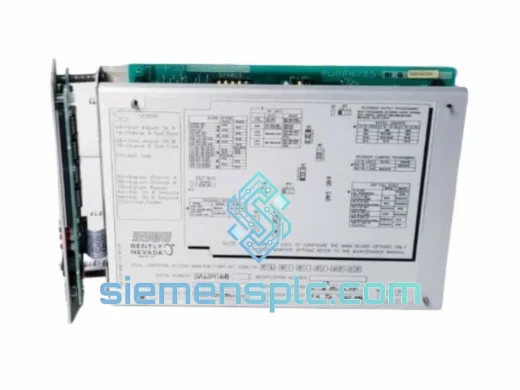
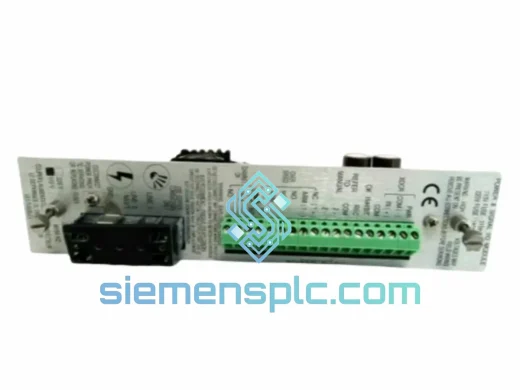
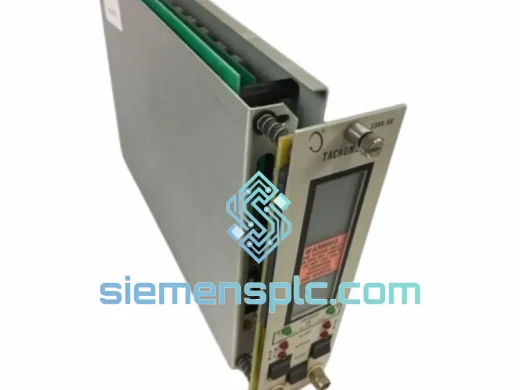
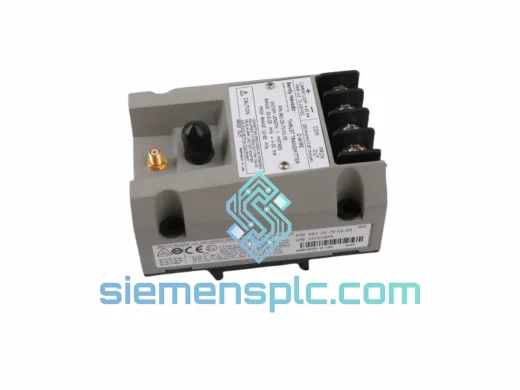
Bently Nevada 991-25-70-01-05 Thrust Position Transmitter
3300 Series
Origin US
Thrust Position Transmitter
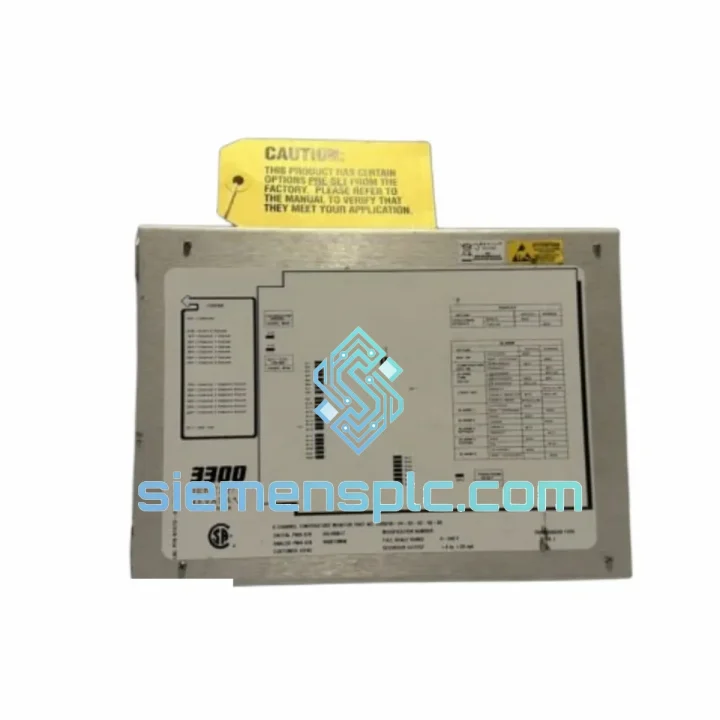
Request verified availability, condition, replacement risk review, packing options and courier lead time for 3300/30.
Click Request Quote and the part number is inserted into the inquiry form automatically.
Core fields for model confirmation and RFQ routing. Detailed product narrative remains below.
The Bently Nevada 3300/30 is a six-channel temperature monitoring module purpose-built for the 3300 Series machinery protection rack. Its primary function within a control loop is to serve as the thermal acquisition front-end: it conditions raw sensor signals from thermocouples or RTDs, applies compensation algorithms, and delivers calibrated temperature values to the rack backplane at a fixed scan rate — enabling the system’s alarm and trip logic to act on accurate, low-latency thermal data. In rotating machinery applications, where bearing temperature rise of 10–15 °C above baseline can indicate imminent lubrication failure, the 3300/30 provides the measurement resolution and channel density required to sustain continuous, multi-point thermal surveillance without gaps in coverage.
Unlike discrete temperature transmitters wired individually to a DCS analog input card, the 3300/30 consolidates six measurement points into a single rack slot. This architectural choice reduces field wiring termination count, eliminates inter-device grounding loops, and ensures all six channels share a common time base — a prerequisite for correlating thermal events across adjacent bearing positions on a single machine train.
📩 Real-time Stock & RFQ: [email protected] | WhatsApp: +86 18359268345
| Model | 3300/30 |
| Manufacturer | Bently Nevada (Baker Hughes) |
| Platform Series | 3300 Proximity Instrumentation System |
| Monitoring Channels | 6 independent temperature input channels |
| Supported Input Types | Thermocouple: J, K, T, E, R, S, B types; RTD: Pt100 (2-wire, 3-wire), Pt1000 |
| Measurement Range | –200 °C to +1820 °C (upper limit type-dependent; Pt100 RTD: –200 °C to +850 °C) |
| Measurement Accuracy | ±1 °C typical (Pt100 RTD, 3-wire); ±2 °C typical (Type K thermocouple at 25 °C ambient) |
| Cold Junction Compensation | Automatic, internal reference; ±0.5 °C CJC accuracy |
| Alarm Architecture | Alert (1st level) and Danger (2nd level) relay outputs per channel; independently configurable setpoints |
| Analog Output | 4–20 mA per channel; scalable to engineering unit range |
| Backplane Interface | 3300 Series rack backplane; 24 VDC nominal supply via rack power module |
| Rack Slot Compatibility | Full-size module slot, Bently Nevada 3300 Series rack only |
| Operating Temperature | 0 °C to +65 °C |
| Storage Temperature | –40 °C to +85 °C |
| Relative Humidity | 5% to 95% RH, non-condensing |
| EMC Compliance | CE marked; EN 61326-1 industrial environment |
| Hazardous Area Suitability | Class I, Division 2 (with approved barriers); ATEX Zone 2 (consult datasheet revision) |
| Module Weight | Approx. 2,100 g (module with connector assembly) |
| Configuration Interface | Bently Nevada System 1 software; legacy 3300 configuration utility; hardware DIP switches (revision-dependent) |
| Warranty | 12 months against manufacturing defects from date of shipment |
The 3300/30 employs a per-channel signal conditioning architecture rather than a multiplexed single-ADC design. Each of the six input channels has its own dedicated input buffer and analog front-end stage, which means channel-to-channel crosstalk is suppressed at the hardware level rather than relying on software time-division isolation. This matters in high-noise industrial environments where adjacent power cables or variable-frequency drives generate common-mode interference in the millivolt range — precisely the signal amplitude of thermocouple outputs.
For thermocouple inputs, the module performs automatic cold junction compensation (CJC) using an on-board precision thermistor reference mounted at the terminal block. The CJC circuit continuously measures the terminal block temperature and applies a correction coefficient matched to the thermocouple type selected in configuration. This eliminates the measurement offset that occurs when ambient temperature at the rack deviates from the standard 0 °C reference — a common source of systematic error in installations where control room temperature is not tightly regulated.
For RTD inputs, the module drives a known excitation current through the sensor element and measures the resulting voltage drop. In 3-wire RTD mode, the module uses a differential measurement technique to cancel lead resistance: it measures the voltage across the RTD element and subtracts the voltage drop across one lead (assumed equal to the other), yielding a lead-resistance-compensated reading. This technique reduces lead resistance error to below 0.1 °C for lead resistances up to approximately 20 Ω — adequate for most field installations with standard 1.5 mm² copper cable runs under 100 m.
The module’s EMC design incorporates transient suppression at each input terminal (TVS diodes rated for ±1 kV transient per IEC 61000-4-5), differential-mode filtering to attenuate high-frequency noise above 10 kHz, and galvanic isolation between the field-side input circuits and the backplane logic. The isolation barrier — typically implemented with optocouplers or transformer-coupled DC/DC converters — prevents ground potential differences between the sensor installation point and the rack from introducing measurement error or damaging the module’s input circuitry.
Every 3300/30 unit supplied through siemensplc.com is sourced as genuine Bently Nevada (Baker Hughes) manufactured hardware. Units are procured through verified industrial automation supply channels and undergo a structured pre-shipment verification process: visual inspection for physical damage, connector integrity check, firmware revision documentation, and functional power-on verification where test equipment is available. Serial numbers are recorded and cross-referenced against known counterfeit indicators prior to dispatch.
Shipment originates from our warehouse in Xiamen, China — a major logistics hub with direct access to international freight forwarders, express courier networks (DHL, FedEx, UPS), and sea freight consolidation services. In-stock units are dispatched within 1–3 business days of order confirmation. Express air freight to Europe, North America, Southeast Asia, and the Middle East typically achieves door-to-door delivery in 3–7 business days. For bulk orders or project-critical timelines, dedicated freight arrangements are available on request.
All export documentation — commercial invoice, packing list, certificate of origin, and HS code classification — is prepared in compliance with destination country import requirements. Customers in regulated industries (oil & gas, nuclear, defense-adjacent) should advise on any additional documentation requirements (e.g., end-user certificates) at the time of inquiry. A 12-month warranty covers manufacturing defects; return authorization is processed within 5 business days of fault report submission.
📧 Email: [email protected]
💬 WhatsApp: +86 18359268345
🌐 Web: siemensplc.com
📍 Location: Xiamen, China
© 2026 siemensplc.com. All rights reserved.
We check the full part number, brand, series and visible nameplate information before quotation.
Sales confirms stock path, condition option, quantity and realistic lead time for export dispatch.
DHL, FedEx, UPS or buyer courier arrangements can be reviewed with packing requirements.
Similar brand or category products for fast comparison and multi-item RFQ lists.