Bently Nevada
RFQ Ready
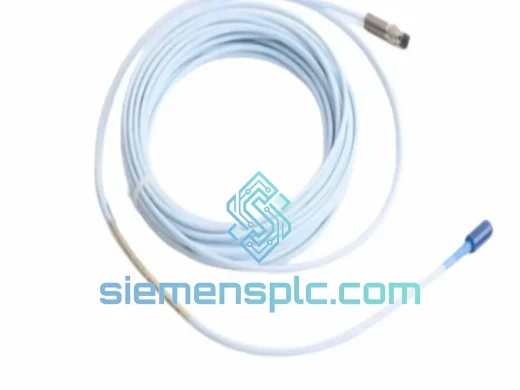
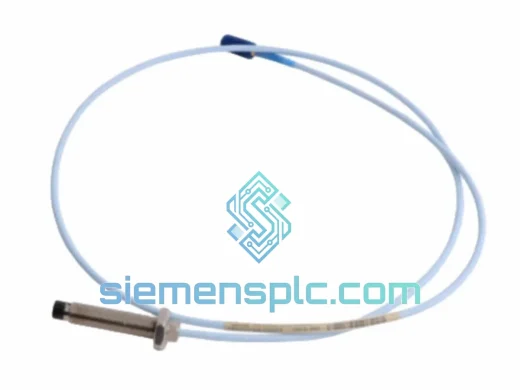
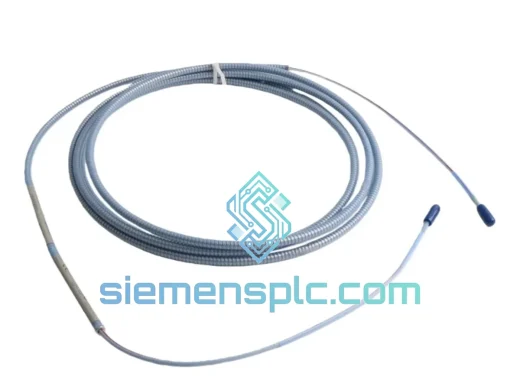
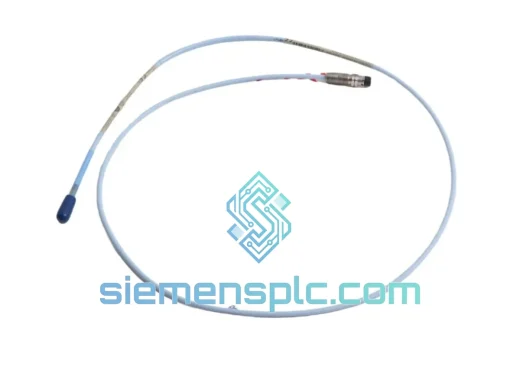
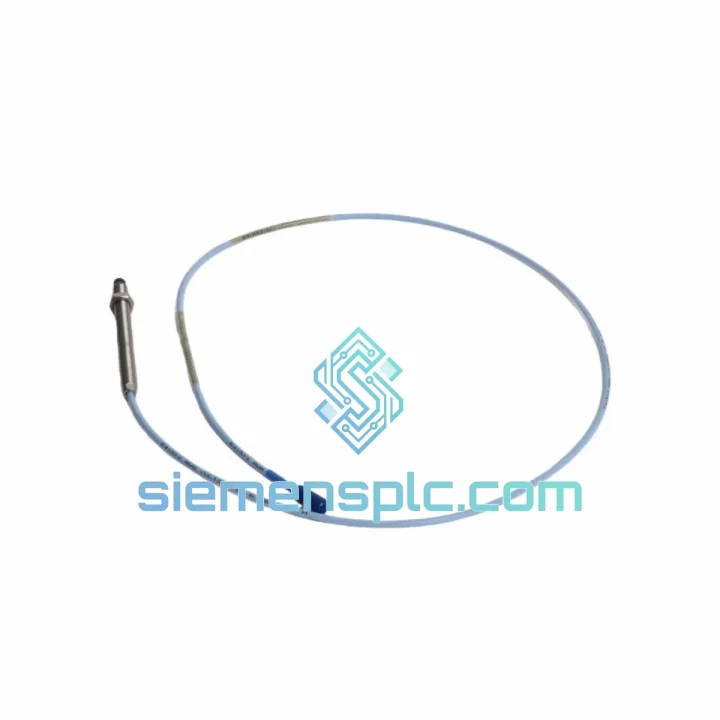
Bently Nevada 330196-05-30-10-00 Proximity Probe – 3300 XL ETR
3301
Origin US
Proximity Probe
Request verified availability, condition, replacement risk review, packing options and courier lead time for 330103-00-20-10-02-CN.
Click Request Quote and the part number is inserted into the inquiry form automatically.
Core fields for model confirmation and RFQ routing. Detailed product narrative remains below.
You already know the cost. A tripped vibration monitor, a NOT OK relay, a compressor that won’t restart until the probe system checks out — every hour of forced outage is burning through your maintenance budget and your production schedule simultaneously. The Bently Nevada 330103-00-20-10-02-CN is the exact 8 mm eddy-current proximity probe your 3300 XL system is waiting for, and it is sitting on our shelf in Xiamen right now. We do not broker, we do not drop-ship from a third party, and we do not quote lead times measured in weeks. You confirm the order, we pull the unit, and it moves to DHL or FedEx the same business day.
This is a 100% original Bently Nevada part — not a compatible substitute, not a remanufactured pull, not a clone from an unlicensed factory. The CN-connector variant is built specifically for installations where the Chinese market connector standard is required, and it mates directly with the 330130 and 330180 extension cable series without adapters or field modifications. If your plant’s existing cable harness uses CN terminations, this probe drops straight in.
URGENT REQUIREMENT? Contact: [email protected] | WhatsApp: +86 18359268345
| Parameter | Specification | Notes |
|---|---|---|
| Part Number | 330103-00-20-10-02-CN | ✅ Ready to Ship |
| Manufacturer | Bently Nevada (Baker Hughes) | |
| Series | 3300 XL | |
| Probe Diameter | 8 mm | |
| Probe Body Length | 200 mm | |
| Integral Cable Length | 1.0 m (39.4 in) | |
| Sensitivity | 7.87 V/mm (200 mV/mil) | |
| Linear Range | 0.25 – 2.54 mm (10 – 100 mil) | |
| Frequency Response | DC to 10,000 Hz (–3 dB) | |
| Supply Voltage | –24 VDC nominal | |
| Operating Temp (Probe Tip) | –35 °C to +177 °C | |
| Target Material | AISI 4140 steel or equivalent | |
| Connector Type | CN (Chinese market standard) | |
| Compatible Proximitor | 3300 XL 8 mm Proximitor (330180 series) | |
| Compatible Extension Cable | 330130 / 330180 series | |
| Compatible Monitor | Bently Nevada 3500 Series MPS | |
| Compliance | CE, RoHS, API 670 | |
| Country of Origin | USA | |
| Weight | ~230 g | |
| Warehouse Location | Xiamen, China | ✅ In Stock |
Ten years of field calls teach you that most 330103 failures fall into four categories. Knowing which one you are dealing with before you pull the probe saves time and prevents a second trip to the bearing housing.
Fault Pattern 1 — Gap Voltage Out of Range: The Proximitor output for an 8 mm probe at a 1.0 mm air gap should read –10.5 VDC ± 0.5 V. If your reading is outside –2 V to –18 V, disconnect the probe at the Proximitor first. If the output voltage recovers toward –24 V (open circuit), the probe or its integral cable is the fault. If it stays abnormal, the Proximitor or extension cable is suspect — do not replace the probe yet.
Fault Pattern 2 — Intermittent NOT OK Trips: Intermittent faults that clear on their own almost always trace to the CN connector, not the probe tip. Moisture ingress at the connector causes a resistive path that shifts gap voltage just enough to trip the OK relay under certain temperature conditions. Before ordering a replacement probe, clean and inspect the CN connector pins. Apply silicone RTV around the mated connector body in humid environments.
Fault Pattern 3 — Elevated 1× Vibration at Startup: If you see a repeatable 1× spike that diminishes as the machine reaches operating speed, check the probe tip for physical contact damage. A probe tip that has touched the shaft — even briefly during a rub event — will have a deformed sensing face that generates a false once-per-revolution signal. The probe body may look intact externally. Replace it; the sensing coil geometry cannot be restored.
Fault Pattern 4 — Noisy Baseline Signal: Eddy-current probes are sensitive to ferromagnetic discontinuities on the shaft surface. If your slow-roll runout suddenly increases without a mechanical change, verify that the probe is not positioned over a keyway, cross-drilled hole, or weld repair on the shaft. The 3300 XL 8 mm probe requires a minimum target surface width of 25 mm. Repositioning the probe axially by 5–10 mm often resolves this without a hardware change.
Replacement Procedure — Field-Proven Steps:
Configuration Note: The 330103-00-20-10-02-CN is a passive eddy-current device — no DIP switches, no firmware, no self-addressing. All sensitivity scaling and OK-limit configuration lives in the Proximitor module and the 3500 monitor rack. After replacement, confirm the monitor channel is set to 8 mm probe type, 200 mV/mil sensitivity, –24 VDC supply. No software re-commissioning is required beyond gap voltage verification.
The 3300 XL probe body is machined from 316L stainless steel with a PEEK (polyether ether ketone) tip housing. That material pairing is not accidental — 316L resists chloride pitting in offshore and coastal installations, while PEEK maintains its dimensional stability from cryogenic temperatures up to the probe’s rated +177 °C tip limit. In petrochemical service where H₂S, ammonia, and hydrocarbon condensate are part of the daily environment, the fully potted probe body prevents electrolyte ingress that would otherwise shift the probe’s sensitivity curve over months of operation.
Vibration qualification for the 3300 XL series covers 20 g sinusoidal excitation across 10–2,000 Hz per IEC 60068-2-6. In practical terms, this means the probe is designed to survive being bolted to a compressor casing that is itself vibrating — without the probe’s own structural resonance corrupting the shaft displacement signal it is trying to measure. The integral cable is strain-relieved at the probe body exit point, which is where fatigue cracking initiates on lower-grade competitive designs after 12–18 months of service.
Thermal cycling performance is a function of the probe’s matched-coefficient construction. From a cold-soak start at –35 °C in an outdoor arctic installation to a stabilized bearing housing temperature of +150 °C, the gap calibration drift stays within the system’s published accuracy specification. You do not need to re-gap the probe after a cold start or a planned shutdown. This matters on machines that cycle frequently — gas turbine peakers, standby compressors, and emergency generators where the probe sees dozens of thermal cycles per year.
Our Xiamen warehouse sits 15 minutes from Xiamen Gaoqi International Airport (XMN), a primary DHL and FedEx gateway for southern China. That proximity is not coincidental — it means the window between your purchase confirmation and the moment your package enters the airline freight system is under four hours on any standard business day.
Typical door-to-door transit times by region:
Every shipment includes a commercial invoice, packing list, and certificate of origin. For regulated-industry customers, we provide a material test report (MTR) and our internal inspection certificate on request. The 330103-00-20-10-02-CN exports under HS Code 9031.80 (measuring and checking instruments) — no export license is required for standard commercial shipments to most destinations worldwide.
For plant turnarounds or emergency shutdowns where the schedule cannot slip, contact us before placing your order. We coordinate Saturday dispatch, can work directly with your freight forwarder, and can arrange delivery to a bonded warehouse or port of entry if your site requires it.
Email: [email protected]
WhatsApp: +86 18359268345
Web: siemensplc.com
© 2026 siemensplc.com. All rights reserved.
We check the full part number, brand, series and visible nameplate information before quotation.
Sales confirms stock path, condition option, quantity and realistic lead time for export dispatch.
DHL, FedEx, UPS or buyer courier arrangements can be reviewed with packing requirements.
Similar brand or category products for fast comparison and multi-item RFQ lists.