Bently Nevada
RFQ Ready
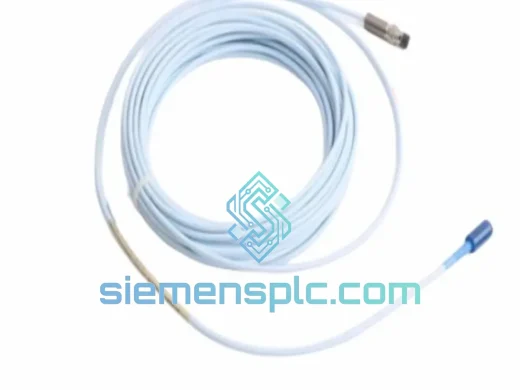
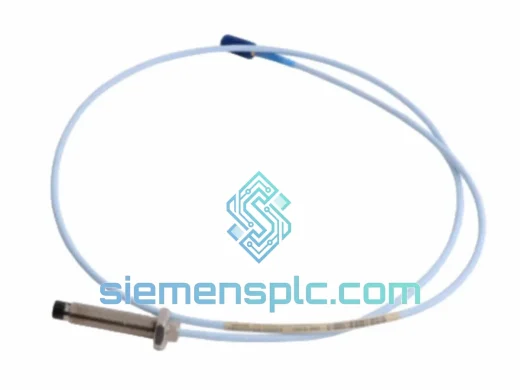
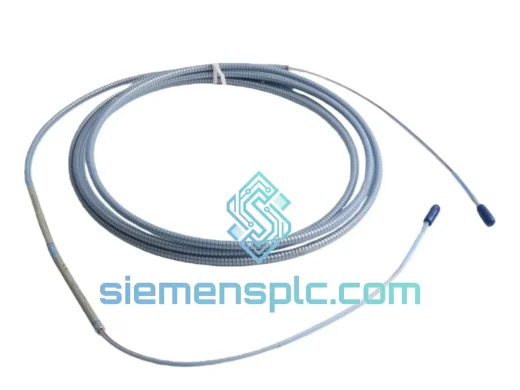
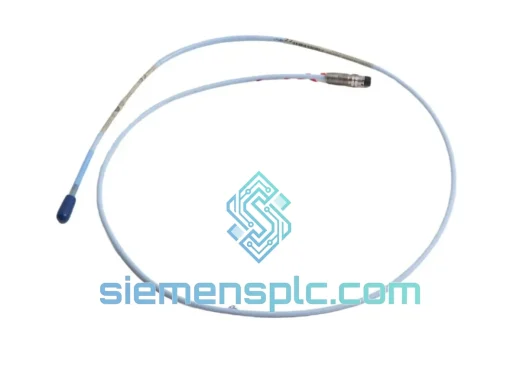
Bently Nevada 330196-05-30-10-00 Proximity Probe – 3300 XL ETR
3301
Origin US
Proximity Probe
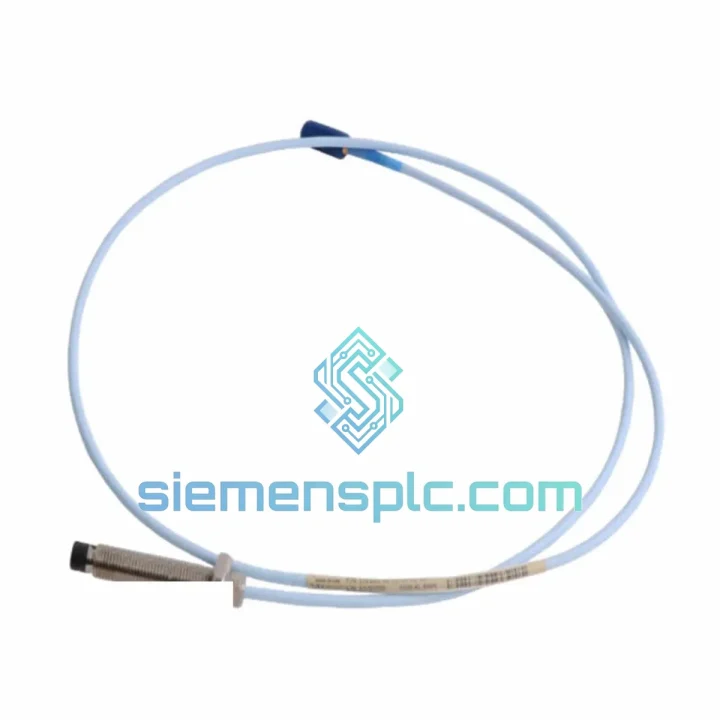
Request verified availability, condition, replacement risk review, packing options and courier lead time for 330104-00-11-05-02-00.
Click Request Quote and the part number is inserted into the inquiry form automatically.
Core fields for model confirmation and RFQ routing. Detailed product narrative remains below.
Your turbine is down. The DCS alarm is screaming. Maintenance is standing by. The only thing between you and restart is a replacement 3300 XL proximity probe — and you need it now, not in three weeks. The Bently Nevada 330104-00-11-05-02-00 is on our shelf in Xiamen. We ship same day via DHL Express. This is not a catalog listing — this is a live inventory position.
The 330104-00-11-05-02-00 is the 8 mm eddy-current sensing element at the heart of Bently Nevada’s 3300 XL Proximity Transducer System — the most widely deployed shaft monitoring platform in API 670-compliant machinery protection worldwide. When this probe fails, your entire vibration channel goes blind. Rotor imbalance, bearing wear, shaft misalignment — all invisible. The risk of catastrophic machinery failure climbs with every minute the channel is offline. Get the part. Get back online.
⚡ URGENT REQUIREMENT? Contact: [email protected] | WhatsApp: +86 18359268345
| Parameter | Specification |
|---|---|
| Part Number | 330104-00-11-05-02-00 |
| Manufacturer | Bently Nevada (Baker Hughes) |
| Series | 3300 XL 8mm Proximity Transducer System |
| Sensing Technology | Eddy-current, non-contact |
| Probe Tip Diameter | 8 mm |
| Integral Cable Length | 5 m (armored) |
| Thread | M10 × 1 metric |
| Sensitivity | 7.87 V/mm (200 mV/mil) nominal |
| Linear Range | 0.25 mm – 2.54 mm (10–100 mil) |
| Operating Temperature | –35 °C to +177 °C |
| Target Material | AISI 4140 steel or equivalent |
| Connector | Integral coaxial — mates with 330130 extension cable |
| Certifications | CE, ATEX, IECEx |
| Weight | ~100 g |
| Stock Status | ✔ Ready to Ship — Xiamen Warehouse |
Common failure signatures for the 330104-00-11-05-02-00:
Step-by-step replacement procedure (field-verified):
Configuration notes: The 330104-00-11-05-02-00 does not have DIP switches or firmware — it is a passive sensing element. All configuration (gap, sensitivity scaling, alarm setpoints) is handled at the Proximitor® sensor and the 3500 Series monitor card. If you are replacing a probe that was part of a calibrated system, re-verify the overall system sensitivity (probe + cable + Proximitor®) using a calibrated gap simulator before returning the channel to service.
The 3300 XL platform was engineered for environments that destroy lesser sensors. The 330104-00-11-05-02-00 operates continuously in conditions that would be considered extreme in any other context — and it does so without complaint.
The probe body is constructed from 316 stainless steel with a PEEK (polyether ether ketone) tip encapsulant. PEEK maintains dimensional stability from cryogenic temperatures to 177 °C, resists hydrocarbon solvents, steam, and H₂S exposure common in refinery and gas processing environments. The armored integral cable uses a stainless steel braid over a fluoropolymer-insulated coaxial core — it survives continuous immersion in turbine lube oil and resists the mechanical abrasion of cable trays in high-vibration machinery bays.
Vibration resistance is not a marketing claim for this probe — it is a design requirement. The 330104 series is routinely installed on gas turbines where the probe holder itself sees broadband vibration exceeding 10 g RMS. The integral cable strain relief and the M10 jam-nut locking system prevent probe migration under these conditions. In over two decades of field deployment, probe body failure due to vibration fatigue is essentially unheard of in properly installed 3300 XL systems. The failure modes are almost always the cable (flex fatigue at the connector) or the target surface — not the probe body itself.
For installations in classified hazardous areas (Zone 1/Zone 2 gas, Zone 21/Zone 22 dust), the ATEX and IECEx certifications on the 330104-00-11-05-02-00 allow direct installation without additional barriers, provided the complete system (probe + extension cable + Proximitor®) is certified as a matched set. Verify the system certificate number against your installation’s area classification before deployment.
Our warehouse is located in Xiamen, Fujian Province, China — one of the most logistics-efficient export hubs in Asia, with direct DHL Express and FedEx International Priority service to over 220 countries and territories.
Typical transit times from Xiamen:
Export documentation included with every shipment: Commercial invoice (with accurate HS code 9026.80 for instrumentation), packing list, certificate of origin, and — upon request — a certificate of conformance. For ATEX-certified installations, we can provide the relevant system certification documentation. All export declarations are filed in compliance with Chinese customs regulations. No surprises at your receiving dock.
For orders placed before 14:00 CST (UTC+8), same-day dispatch is standard for in-stock items. You will receive a DHL or FedEx tracking number within 2 hours of dispatch. If your plant requires a specific courier account number for billing, provide it at the time of order and we will ship on your account at no additional handling charge.
For critical emergency shipments where every hour counts, contact us directly via WhatsApp for real-time coordination of the fastest available routing from Xiamen to your site.
Email: [email protected]
WhatsApp: +86 18359268345
Web: siemensplc.com
© 2026 siemensplc.com. All rights reserved.
We check the full part number, brand, series and visible nameplate information before quotation.
Sales confirms stock path, condition option, quantity and realistic lead time for export dispatch.
DHL, FedEx, UPS or buyer courier arrangements can be reviewed with packing requirements.
Similar brand or category products for fast comparison and multi-item RFQ lists.