Bently Nevada
RFQ Ready
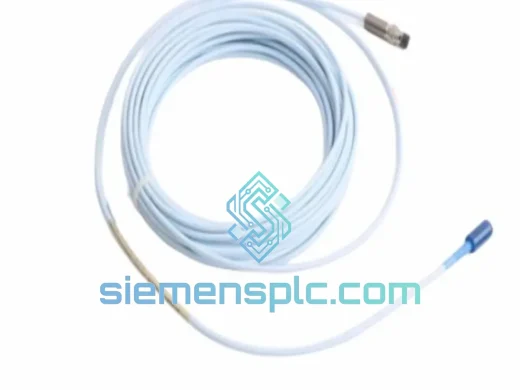
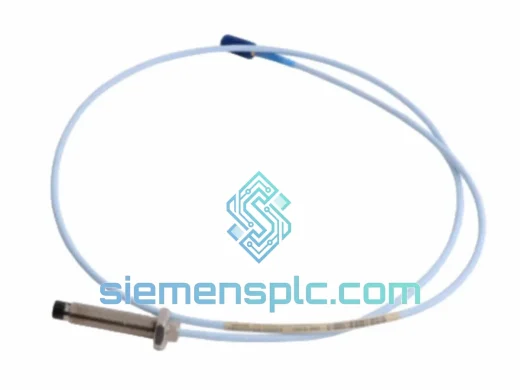
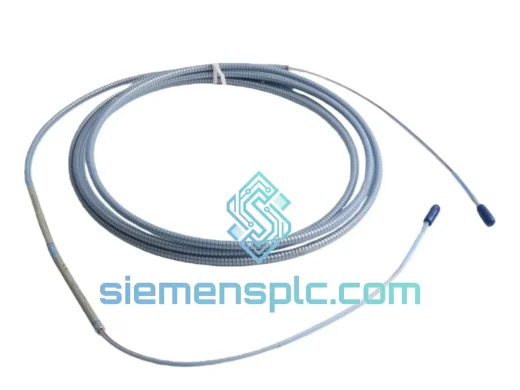
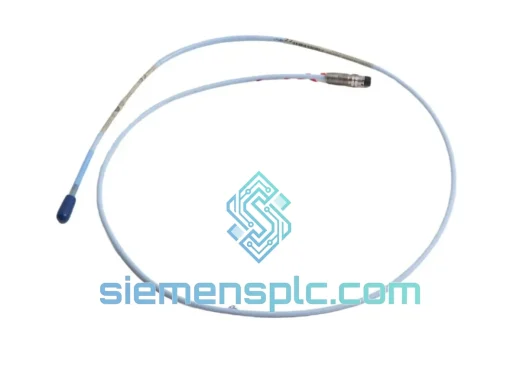
Bently Nevada 330196-05-30-10-00 Proximity Probe – 3300 XL ETR
3301
Origin US
Proximity Probe
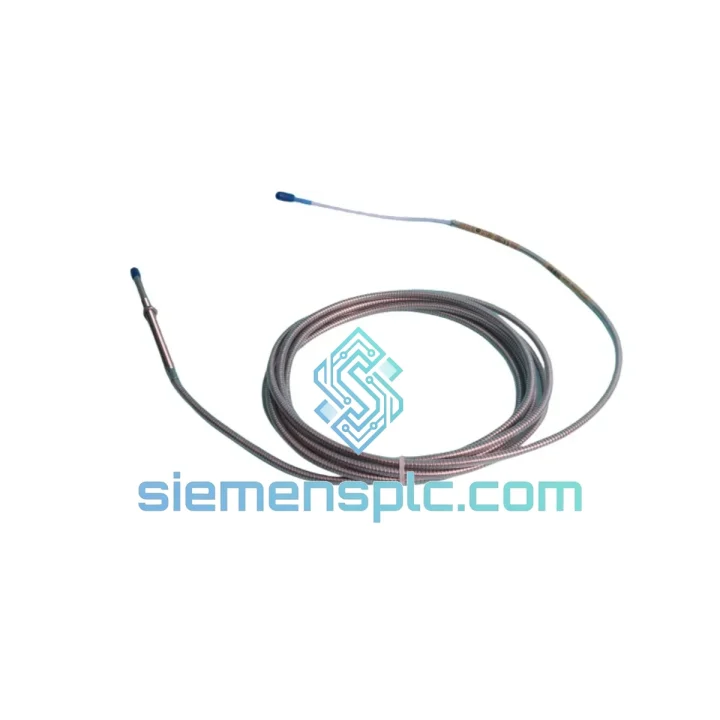
Request verified availability, condition, replacement risk review, packing options and courier lead time for 330104-00-21-05-01-00.
Click Request Quote and the part number is inserted into the inquiry form automatically.
Core fields for model confirmation and RFQ routing. Detailed product narrative remains below.
Every hour a turbine or compressor train sits idle, the losses compound. Lost throughput, emergency labor premiums, contractual penalties — the clock doesn’t stop. The Bently Nevada 330104-00-21-05-01-00 proximity transducer is on the shelf in Xiamen right now. We ship DHL/FedEx Express within 24 hours of order confirmation. That’s the only number that matters when your machinery protection system is down.
This is a 100% genuine Bently Nevada (Baker Hughes) 3300 XL Series eddy-current proximity transducer — not a clone, not a compatible substitute. The full 18-digit part number is exact: 330104-00-21-05-01-00. It encodes a 21-inch integral cable, 5/16-28 UNF thread, and the specific connector termination your existing 3300 XL rack expects. Drop-in replacement. No re-engineering. No recalibration of the monitor rack required.
URGENT REQUIREMENT? Contact: [email protected] | WhatsApp: +86 18359268345
| Parameter | Specification | Status |
|---|---|---|
| Part Number / SKU | 330104-00-21-05-01-00 | ✅ Ready to Ship |
| Manufacturer | Bently Nevada (Baker Hughes) | |
| Series | 3300 XL Proximity Transducer System | |
| Measurement Principle | Eddy-current, non-contacting | |
| Measurement Range | 0 – 90 mil pp (0 – 2.286 mm pp) | |
| Sensitivity | 200 mV/mil (7.87 V/mm) nominal | |
| Frequency Response | DC – 10,000 Hz (–3 dB) | |
| Integral Cable Length | 21 inches (encoded in PN: -21-) | |
| Thread Size | 5/16-28 UNF (encoded in PN: -05-) | |
| Supply Voltage | –24 VDC nominal (from proximitor) | |
| Output Signal | –2 VDC to –18 VDC (linear range) | |
| Operating Temperature | –35°C to +177°C (transducer tip) | |
| Ingress Protection | IP67 | |
| Target Material | AISI 4140 steel (standard) | |
| Compliance | API 670 5th Ed., CE, ATEX (zone-dependent) | |
| Weight | ~80 g (transducer assembly) | |
| Origin | United States | |
| Dispatch Location | Xiamen, China | ✅ Ready to Ship |
Before you pull the transducer, confirm the fault is actually the probe. The 3300 XL system is a three-component chain — transducer, extension cable, and proximitor driver. A failed proximitor or a cracked extension cable will produce identical symptoms to a dead transducer: gap voltage out of range, OK relay de-energized, or a flat-line vibration reading. Swap the extension cable first — it’s the most common failure point in field installations due to connector corrosion and cable fatigue at the conduit entry.
Common fault signatures and what they actually mean:
Replacement procedure — field checklist:
The 330104-00-21-05-01-00 is not a lab instrument. It was designed for the inside of a turbine bearing housing — an environment that combines high-frequency vibration, oil mist, elevated temperature, and zero tolerance for sensor drift. The IP67-rated transducer body withstands continuous immersion in lube oil and resists the hydrocarbon vapors present in compressor and turbine enclosures.
The integral cable construction eliminates the most common failure mode seen in field-assembled sensor systems: the field-spliced connector. Factory-terminated cables are crimped and potted under controlled conditions, not assembled with a hand tool in a bearing housing access port at 2 AM during an emergency shutdown. The result is a cable assembly that maintains its impedance characteristics across the full operating temperature range — critical for preserving the calibration accuracy of the eddy-current measurement chain.
Vibration resistance is validated to IEC 60068-2-6 profiles covering the frequency ranges generated by rotating machinery foundations, piping-induced vibration, and seismic events. The transducer coil assembly is epoxy-encapsulated to prevent resonance of internal components under sustained vibration loading. In offshore and coastal installations where salt fog and humidity are constant factors, the stainless steel housing and sealed connector interface prevent the galvanic corrosion that degrades unprotected sensor assemblies within months.
For high-temperature applications — steam turbine bearing pedestals, hot gas expanders — the 330104 series is rated to +177°C at the transducer tip. This covers the vast majority of industrial turbomachinery bearing environments without requiring a special high-temperature variant. For applications above this threshold, contact us before ordering.
Stock is held at our Xiamen warehouse, positioned specifically for rapid international dispatch. Xiamen Gaoqi International Airport (XMN) has direct cargo connections to DHL and FedEx hub networks, enabling next-flight-out shipments to major industrial hubs across Southeast Asia, the Middle East, Europe, and the Americas.
Standard dispatch timeline: Orders confirmed before 14:00 CST ship same business day. Orders confirmed after 14:00 CST ship the following morning. DHL Express and FedEx International Priority are the default carriers — both provide door-to-door tracking and customs clearance handling.
Typical transit times from Xiamen:
Export documentation — commercial invoice, packing list, and Certificate of Origin — is prepared in-house and transmitted to the carrier electronically. For plant QA requirements, a Certificate of Conformance (CoC) is available upon request at time of order. HS code classification and EAR/ECCN review are handled for each shipment to prevent customs delays at the destination port.
For emergency AOG (Aircraft on Ground equivalent) or plant-shutdown-critical shipments, contact us directly via WhatsApp for real-time coordination on the fastest available routing. We have arranged same-day courier handoffs for critical plant situations — this is not a standard service, but it is available when the situation demands it.
📧 Email: [email protected]
💬 WhatsApp: +86 18359268345
🌐 Web: siemensplc.com
© 2026 siemensplc.com. All rights reserved.
We check the full part number, brand, series and visible nameplate information before quotation.
Sales confirms stock path, condition option, quantity and realistic lead time for export dispatch.
DHL, FedEx, UPS or buyer courier arrangements can be reviewed with packing requirements.
Similar brand or category products for fast comparison and multi-item RFQ lists.