Bently Nevada
RFQ Ready
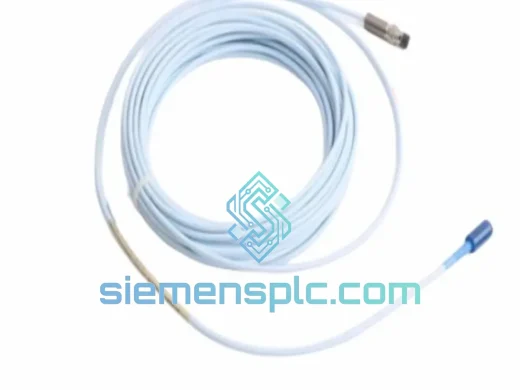
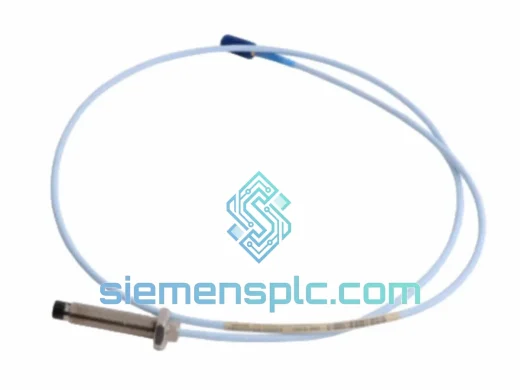
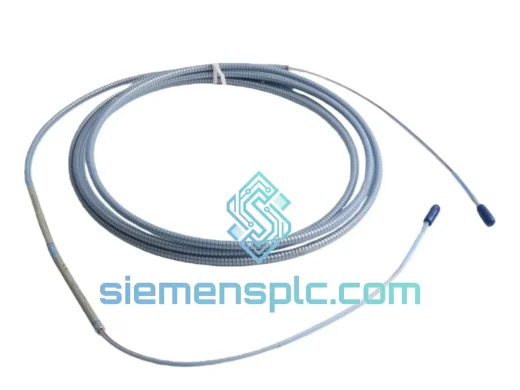
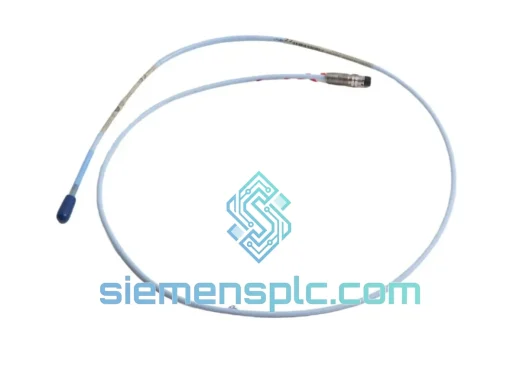
Bently Nevada 330196-05-30-10-00 Proximity Probe – 3300 XL ETR
3301
Origin US
Proximity Probe
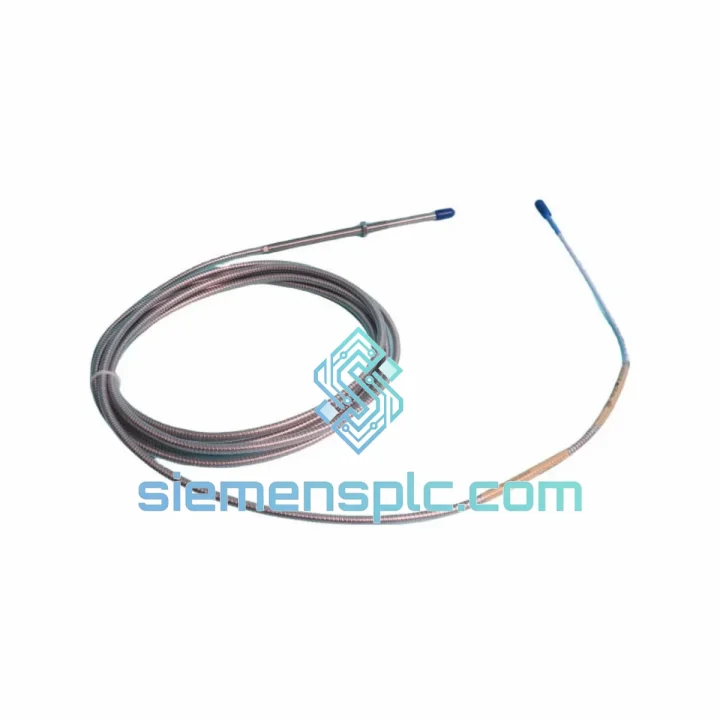
Request verified availability, condition, replacement risk review, packing options and courier lead time for 330104-05-16-10-02-CN.
Click Request Quote and the part number is inserted into the inquiry form automatically.
Core fields for model confirmation and RFQ routing. Detailed product narrative remains below.
The Bently Nevada 330104-05-16-10-02-CN is a non-contact eddy-current proximity transducer belonging to the 3300 XL Series — a platform engineered specifically for continuous, real-time measurement of radial shaft vibration, axial position, and eccentricity in critical rotating machinery. Unlike piezoelectric accelerometers that measure surface acceleration, this transducer operates on the principle of electromagnetic induction: a high-frequency oscillating magnetic field generated at the probe tip induces eddy currents in the conductive target surface. The resulting impedance change in the probe coil is processed by the matched Proximitor driver into a DC-biased voltage signal proportional to the physical gap between probe tip and shaft surface. This architecture eliminates mechanical contact entirely, removing wear as a failure mode and enabling indefinite service life under continuous operation.
The -CN suffix in the part number designates a Chinese-market connector configuration, making this variant directly compatible with domestically installed cable assemblies and junction boxes without adapter hardware. The core sensing chain — probe body, extension cable, and Proximitor driver — must be treated as a calibrated system. Substituting any single element without recalibration invalidates the sensitivity constant and introduces measurement error that cannot be corrected at the monitor card level.
In turbomachinery protection architectures governed by API 670, the 330104-05-16-10-02-CN serves as the primary sensing element for radial vibration channels. The monitor card (typically a Bently Nevada 3500/42M or 3300/16) receives the analog voltage output, compares it against programmed alert and danger setpoints, and initiates relay-based protective actions — including turbine trip — within deterministic response windows. The transducer’s DC-to-10,000 Hz frequency response ensures that both low-frequency rotor bow events and high-frequency subsynchronous instabilities are captured without signal attenuation.
Real-time Stock & RFQ: [email protected] | WhatsApp: +86 18359268345
| Parameter | Value |
|---|---|
| Part Number | 330104-05-16-10-02-CN |
| Series | Bently Nevada 3300 XL Proximity Transducer System |
| Sensing Principle | Eddy-current (non-contact electromagnetic induction) |
| Probe Tip Diameter | 5 mm |
| Cable Length (Probe) | 16 cm integral cable |
| Output Signal | −18 VDC nominal at 1.0 mm gap (standard Bently Nevada bias) |
| Sensitivity | 7.87 V/mm (200 mV/mil) |
| Linear Measurement Range | 0.25 mm – 2.25 mm (10 mil – 90 mil) |
| Frequency Response | DC to 10,000 Hz (−3 dB) |
| Operating Temperature – Probe | −35°C to +177°C |
| Operating Temperature – Driver | −35°C to +85°C |
| Supply Voltage | −24 VDC (±10%) |
| Target Material | AISI 4140 steel or equivalent ferromagnetic alloy |
| Connector Type | CN-type (Chinese market standard) |
| Compliance Standards | API 670, CE, ISO 10816 |
| Approximate System Weight | 230 g (probe + integral cable) |
| Warranty | 12 months from date of shipment |
The 330104-05-16-10-02-CN probe body houses a precision-wound coil embedded in a thermally stable epoxy matrix. The coil geometry is fixed during manufacture and laser-trimmed to achieve a nominal inductance within ±0.5% tolerance — a critical parameter because the Proximitor driver’s oscillator circuit is tuned to this specific inductance value. Any deviation caused by mechanical damage or thermal shock shifts the resonant frequency of the LC tank circuit, producing a non-linear output that cannot be compensated by software gain correction alone.
The integral cable between probe and extension cable junction uses a coaxial construction with a low-loss dielectric. The shield is grounded at the driver end only (single-point grounding), which suppresses common-mode noise injection from adjacent power cables operating at 50/60 Hz or variable-frequency drive switching frequencies (typically 2–16 kHz). This single-point shield topology is a deliberate EMC design choice: double-grounding the shield would create a ground loop, converting the cable into an antenna for conducted interference.
The Proximitor driver associated with this probe series employs a demodulation circuit that separates the DC gap component from the AC vibration component. The DC output represents static shaft position (useful for thrust position monitoring and eccentricity measurement at startup), while the AC component — after high-pass filtering — represents dynamic vibration amplitude. This dual-channel extraction from a single sensing element reduces wiring complexity in bearing housings where space is constrained.
EMC robustness is further enhanced by the probe’s stainless steel housing, which provides a Faraday shield around the coil assembly. The housing is rated for IP67 ingress protection, allowing operation in environments with oil mist, condensation, and periodic wash-down cycles common in compressor and turbine bearing pedestals. The ceramic-filled epoxy potting compound used in the probe tip region maintains dimensional stability across the full −35°C to +177°C operating range, preventing thermal expansion from altering the effective coil-to-target geometry.
Every unit of the Bently Nevada 330104-05-16-10-02-CN supplied through siemensplc.com is sourced as genuine OEM hardware. Each shipment is accompanied by a factory calibration data sheet documenting the measured sensitivity constant, linear range endpoints, and gap voltage at the nominal 1.0 mm installation gap. Anti-counterfeit inspection is performed on all units prior to dispatch: coil inductance is verified against the factory nominal, connector pin-out is confirmed, and the probe housing serial number is cross-referenced against the calibration record.
Logistics operations are managed from Xiamen, China — a major export hub with direct access to international express carriers including DHL, FedEx, and UPS. Standard in-stock orders are processed and dispatched within 2–3 business days. Export documentation — commercial invoice, packing list, certificate of origin, and test report — is prepared as standard for all international shipments. For customers in regions requiring import permits or specific HS code declarations (HS 9031.80 for proximity transducers), our logistics team provides pre-shipment documentation review to prevent customs clearance delays.
All units carry a 12-month warranty from the date of shipment, covering manufacturing defects and calibration drift beyond the specified ±1% sensitivity tolerance. Warranty claims are processed with a target replacement dispatch of 5 business days from receipt of the defective unit.
Email: [email protected]
WhatsApp: +86 18359268345
Web: siemensplc.com
Location: Xiamen, China
© 2026 siemensplc.com. All rights reserved.
We check the full part number, brand, series and visible nameplate information before quotation.
Sales confirms stock path, condition option, quantity and realistic lead time for export dispatch.
DHL, FedEx, UPS or buyer courier arrangements can be reviewed with packing requirements.
Similar brand or category products for fast comparison and multi-item RFQ lists.