Bently Nevada
RFQ Ready
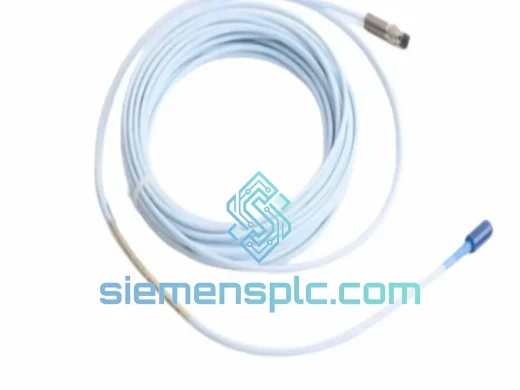
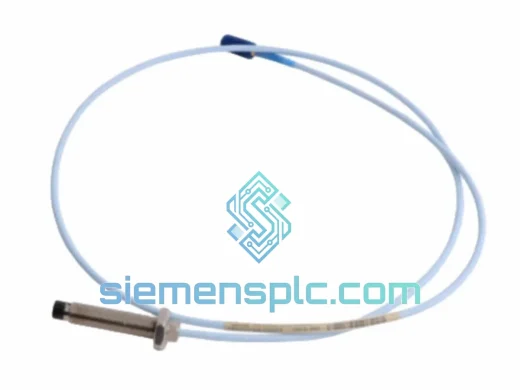
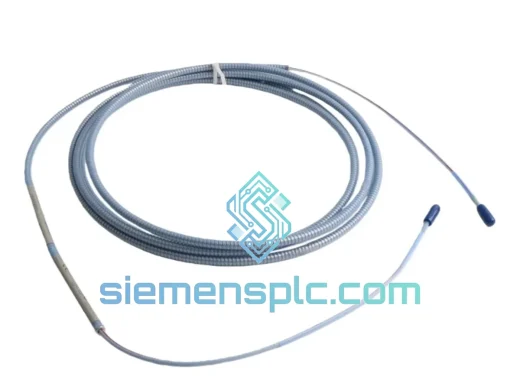
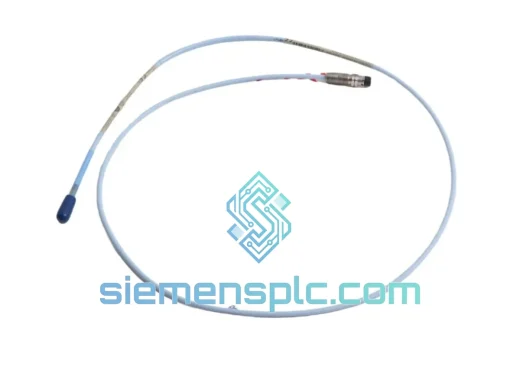
Bently Nevada 330196-05-30-10-00 Proximity Probe – 3300 XL ETR
3301
Origin US
Proximity Probe
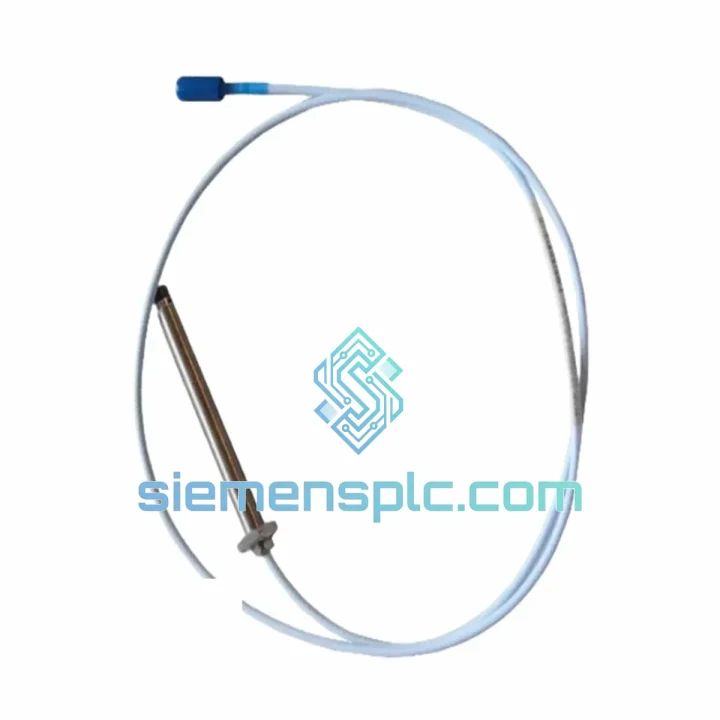
Request verified availability, condition, replacement risk review, packing options and courier lead time for 330130-080-03-05.
Click Request Quote and the part number is inserted into the inquiry form automatically.
Core fields for model confirmation and RFQ routing. Detailed product narrative remains below.
You are not reading a product page because things are going well. A 3300 XL channel has gone dark, gap voltage is off-rail, and your rotating equipment is either tripped or running blind. Every minute you spend sourcing the right cable is a minute of lost production. The Bently Nevada 330130-080-03-05 — the factory-matched 8-meter armored extension cable for the 3300 XL proximity transducer system — is on our shelf in Xiamen right now. Confirm before 15:00 CST and it leaves today.
This is not a compatible substitute or a third-party equivalent. It is the OEM assembly: same impedance profile, same connector geometry, same PTFE dielectric that the 3300 XL proximitor was calibrated against at the factory. Fit anything else and you inherit a gap voltage offset that either nuisance-trips your machine or — worse — masks a real fault. Neither outcome is acceptable on a critical train.
URGENT REQUIREMENT? Contact: [email protected] | WhatsApp: +86 18359268345
| Part Number | 330130-080-03-05 ✅ Ready to Ship |
| Manufacturer | Bently Nevada (Baker Hughes) |
| Platform | 3300 XL Proximity Transducer System |
| Function | Probe-to-Proximitor Signal Extension, Eddy-Current Path |
| Cable Length | 8.0 m (26.2 ft) — encoded as “080” in part number |
| Outer Jacket | Stainless steel armor braid over PTFE inner jacket |
| EMI Shielding | Aluminum foil + copper braid, >85 dB @ 200 kHz |
| Connector | Proprietary Bently Nevada coaxial, both ends |
| System Impedance | Matched to 3300 XL calibration curve (~50 Ω nominal) |
| Temperature Range | –50 °C to +120 °C |
| Ingress Protection | IP67 (connectors mated) |
| Certifications | CE, CSA, FM (system-level) |
| Weight | ~300 g |
| Country of Origin | USA |
| Dispatch | ✅ Same business day from Xiamen (order before 15:00 CST) |
The extension cable is the most mechanically stressed component in the 3300 XL signal chain. It flexes at every support clamp, absorbs vibration from the machine casing, and lives in the same environment as the bearing it is monitoring. Here is how failures actually present — and what to do about each one.
Fault 1 — Gap Voltage Pinned at Supply Rail (–24 V) or Open
The proximitor oscillator has no load. The center conductor is open somewhere along the cable run. Disconnect at both ends and measure continuity: center conductor should read near 0 Ω, shield-to-center should read infinite. Any deviation confirms an open conductor. Do not attempt a field splice — the impedance discontinuity will corrupt the calibration. Replace the full assembly.
Fault 2 — Gap Voltage Near Zero or Shorted
Center conductor is shorted to shield. Most common cause: cable pinched under a pipe clamp or conduit fitting. Disconnect both ends, apply 500 VDC between center and shield with an insulation resistance meter. Healthy cable reads >100 MΩ. Anything below 10 MΩ is a confirmed dielectric failure. Flex the cable in sections while watching the meter — resistance will collapse at the fault point.
Fault 3 — Intermittent 1X Spikes or Elevated Noise Floor
Conductor fatigue from cyclic flexing. The fault is RPM-sensitive: it appears at certain speed bands and clears at others, which makes it look like a rotor dynamics anomaly. Flex the cable by hand at each clamp while watching the proximitor output on a handheld meter. Any flicker confirms the fault. This will eventually cause a spurious trip on a live machine — treat it as an emergency, not a scheduled item.
Fault 4 — Slow Gap Voltage Drift Over Days or Weeks
Connector corrosion at the mating interface. The oxidized contact layer adds resistance that increases with thermal cycling. Clean both connectors with IPA and inspect plating under magnification. If drift resumes within 48 hours of cleaning, the plating is gone. Connector-only replacement is not possible on this proprietary assembly — replace the cable.
Replacement Procedure — Field Checklist
The 330130-080-03-05 is a system-specific assembly, not a general instrumentation cable dressed up with the right connectors. Every material choice in its construction addresses a specific failure mode encountered in continuous rotating machinery service.
The stainless steel armor braid handles crush loads in congested pipe racks, abrasion where cables cross structural steel, and rodent damage in outdoor installations. It sustains repeated flexing at the minimum bend radius through the rated service life without inducing conductor fatigue — a requirement that eliminates most general-purpose armored cables from consideration before you even check the connector type.
The PTFE dielectric holds its electrical properties from cryogenic LNG service temperatures up to 120 °C. That range covers steam turbine bearing housings, hot gas expanders, and fired heater fan drives without derating. There is no temperature in normal industrial rotating machinery service that forces a compromise on this cable.
The dual-layer EMI shield — aluminum foil bonded to copper braid — delivers greater than 85 dB of shielding effectiveness across the 200 kHz proximitor oscillator band. In substations, motor control centers, and VFD-dense environments, that shielding is the difference between a clean gap voltage signal and a noise floor that masks a developing bearing fault until the machine fails catastrophically. A compromised shield does not degrade gracefully; it fails silently.
IP67 sealing at the mated connectors means the assembly survives wash-down cycles, condensation, and temporary immersion. For offshore platforms and outdoor installations in tropical climates, this is not a specification upgrade — it is the minimum acceptable standard for a cable that is expected to outlast the next planned turnaround.
Our warehouse is in Xiamen, Fujian Province — one of China’s primary export hubs with direct access to DHL, FedEx, and UPS international gateways. Orders confirmed before 15:00 CST ship the same business day. We have handled emergency dispatches to active turnarounds in Qatar, Germany, Singapore, and Texas. We understand that a part sitting in a warehouse overnight is a cost your plant cannot absorb.
Typical transit times from Xiamen:
Every shipment includes a commercial invoice with HS code declaration, packing list, and Certificate of Conformance where required for customs clearance. For regulated installations requiring ATEX/IECEx system documentation, contact us before ordering — we prepare the paperwork package in parallel with dispatch so documentation does not add a day to your timeline. Tracking numbers are issued within 2 hours of dispatch. For critical shipments, we provide direct WhatsApp updates at each logistics milestone.
Email: [email protected]
WhatsApp: +86 18359268345
Web: siemensplc.com
© 2026 siemensplc.com. All rights reserved.
We check the full part number, brand, series and visible nameplate information before quotation.
Sales confirms stock path, condition option, quantity and realistic lead time for export dispatch.
DHL, FedEx, UPS or buyer courier arrangements can be reviewed with packing requirements.
Similar brand or category products for fast comparison and multi-item RFQ lists.