Bently Nevada
RFQ Ready
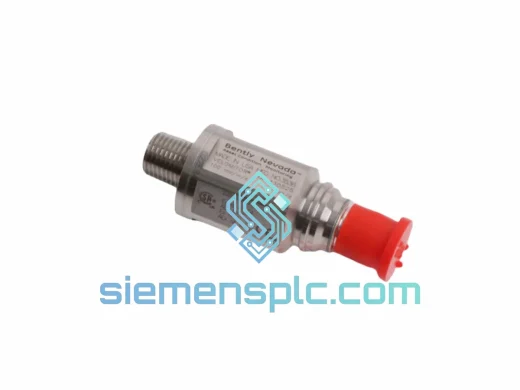
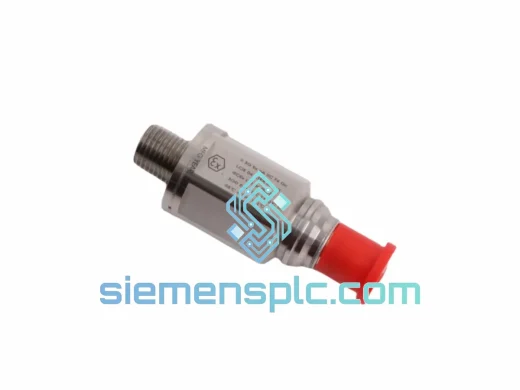
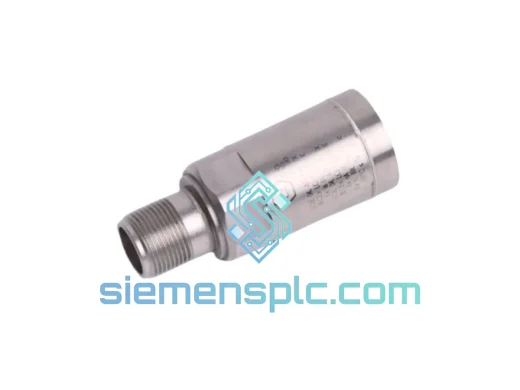
Bently Nevada VELOMITOR 330500 Velocity Sensor – VELOMITOR Series
3305
Origin US
Velocity Sensor
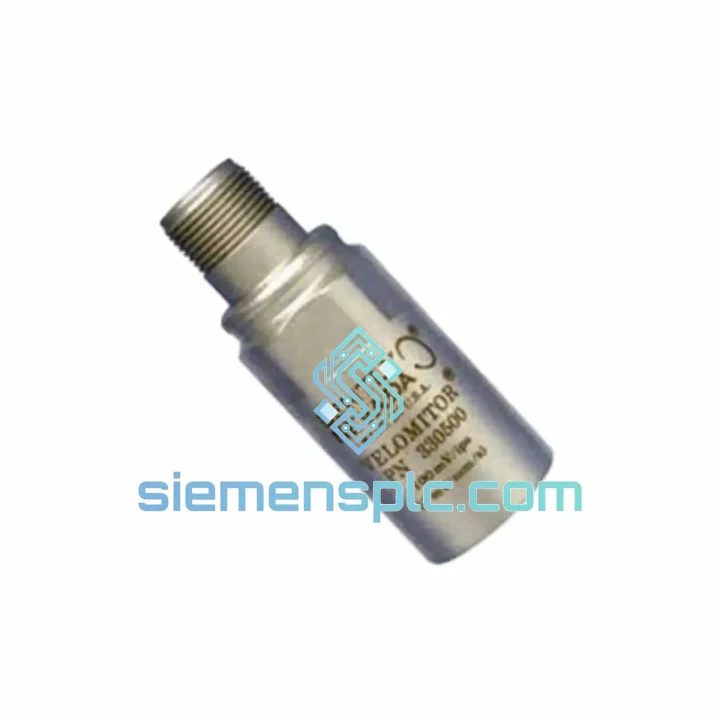
Request verified availability, condition, replacement risk review, packing options and courier lead time for 330500-02-00.
Click Request Quote and the part number is inserted into the inquiry form automatically.
Core fields for model confirmation and RFQ routing. Detailed product narrative remains below.
The 330500-02-00 is a passive piezoelectric velocity transducer manufactured by Bently Nevada, designed to operate as a primary sensing element within the 3300 XL continuous machinery monitoring platform. Its function within a protection loop is unambiguous: it converts mechanical casing velocity — the integrated expression of bearing-transmitted vibration — into a proportional analog voltage that the 3300 XL monitor uses to evaluate machine health, generate alarms, and initiate trip commands.
Unlike proximity probes, which measure relative shaft displacement, a piezo-velocity sensor measures absolute casing motion. This distinction is operationally significant. In machines where shaft-to-casing clearances are large or where the bearing housing itself is the primary vibration transmission path — steam turbines, centrifugal compressors, large boiler feed pumps — casing velocity measurement provides diagnostic information that proximity probes cannot capture. The 330500-02-00 fills this measurement gap with a transducer rated for continuous service across the full API 670 velocity measurement frequency band.
The sensor’s 100 mV/in/s (3.937 mV/mm/s) nominal sensitivity is calibrated to interface directly with 3300 XL velocity monitor input circuits without external signal conditioning. The ±5% sensitivity tolerance is tight enough that alarm and trip setpoints configured in the monitor do not require field adjustment when the sensor is replaced — a critical operational requirement in facilities where protection system setpoint changes require formal management-of-change documentation and engineering sign-off.
Mechanically, the 330500-02-00 is housed in a stainless steel body with a ¼-28 UNF threaded stud mount. The stud mount provides a rigid, repeatable mechanical coupling to the machine casing, which is essential for maintaining measurement consistency across sensor replacement cycles. Loose or compliant mounting introduces resonance artifacts into the velocity signal that can mask genuine fault signatures or generate spurious alarms. The factory-terminated armored integral cable eliminates field-made terminations at the sensor body — a common source of intermittent signal faults in high-vibration environments.
Environmental ratings reflect the realities of industrial installation. The IP67 ingress protection rating means the sensor withstands temporary immersion and continuous exposure to wash-down water, steam condensate, and process fluid mist — conditions routinely encountered on turbine decks and compressor skids. The operating temperature range of –40 °C to +121 °C covers the full envelope of outdoor installations in arctic climates through to hot-section installations adjacent to steam piping. Shock survival at 50 g (11 ms half-sine, per MIL-STD-810) ensures the sensor survives the mechanical transients associated with machine startups, emergency trips, and process upsets without internal element fracture.
The 330500-02-00 is CE marked and RoHS compliant, satisfying the regulatory requirements for installation in EU-jurisdiction facilities and for export to markets with RoHS-aligned import regulations. When integrated with a 3300 XL monitor module, the complete measurement chain meets the API 670 (5th Edition) standard for machinery protection systems — a requirement enforced by insurers, engineering contractors, and regulatory bodies in refinery, LNG, and power generation projects globally.
Real-time Stock & RFQ: [email protected] | WhatsApp: +86 18359268345
| Parameter | Value |
|---|---|
| Part Number | 330500-02-00 |
| Manufacturer | Bently Nevada (Baker Hughes) |
| Transducer Type | Passive piezoelectric velocity (seismic) |
| Nominal Sensitivity | 100 mV/in/s (3.937 mV/mm/s) |
| Sensitivity Tolerance | ±5% |
| Frequency Response | 10 Hz – 1,000 Hz (±3 dB) |
| Output Impedance | ≤3,000 Ω |
| Electrical Connector | 2-pin MIL-C-5015 style |
| Mounting Thread | ¼-28 UNF stud mount |
| Housing Material | 316 stainless steel |
| Approximate Weight | 140 g (sensor body) |
| Operating Temperature | –40 °C to +121 °C (–40 °F to +250 °F) |
| Ingress Protection | IP67 (IEC 60529) |
| Shock Survival | 50 g, 11 ms half-sine (MIL-STD-810) |
| Vibration Survival | 20 g RMS, 20–2,000 Hz |
| Applicable Standard | API 670 (5th Edition) |
| Certifications | CE, RoHS |
| Compatible Monitor Platform | Bently Nevada 3300 XL Series |
| Warranty | 12 months from date of shipment |
| Country of Origin | United States |
The 330500-02-00 operates on a passive piezoelectric sensing principle: a pre-stressed piezoelectric crystal stack is mechanically coupled to a seismic mass. When the sensor body accelerates due to casing vibration, the inertia of the seismic mass applies a compressive or tensile force to the crystal stack proportional to the acceleration magnitude. The crystal’s piezoelectric effect converts this mechanical stress into a charge displacement across its electrodes. An internal charge-to-voltage conversion network — implemented as a passive RC circuit rather than an active amplifier — produces the output voltage signal. The absence of active electronics is a deliberate architectural choice: it eliminates the sensor as a source of loop-powered noise, removes the need for a sensor supply voltage, and makes the device inherently immune to common-mode voltage transients on the signal cable.
The 10 Hz lower frequency bound is determined by the RC time constant of the internal charge conversion network. Below 10 Hz, the network’s high-pass characteristic attenuates the output, which is acceptable because sub-10 Hz casing motion in rotating machinery is typically associated with structural resonances rather than bearing-related fault frequencies. The 1,000 Hz upper bound is set by the mechanical resonance frequency of the seismic mass-spring system; above this frequency, the mass-spring system enters its resonant region and sensitivity becomes nonlinear. The flat ±3 dB passband between these limits covers the fundamental and first several harmonics of running speed for machines operating between 600 RPM and 60,000 RPM — the practical range of most turbomachinery.
EMC performance is achieved through the armored integral cable construction. The cable shield, terminated at the monitor end only (single-point grounding), prevents ground loop currents from injecting common-mode noise into the differential signal path. The stainless steel housing provides a Faraday enclosure around the sensing element, attenuating radiated electric field interference from adjacent variable-frequency drives, switchgear, and high-current bus bars — all common sources of EMI on industrial machinery decks. The MIL-C-5015 connector’s metal shell provides a continuous shield bond between the cable armor and the sensor housing, closing the EMC enclosure at the mechanical interface point.
The ¼-28 UNF stud mount geometry is not arbitrary. The thread pitch and engagement depth are sized to produce a mounting resonance frequency well above 1,000 Hz when torqued to specification on a steel or cast iron casing surface. This ensures that the mounting interface does not introduce a mechanical resonance within the sensor’s measurement passband, which would appear as a frequency-dependent sensitivity error and corrupt vibration amplitude readings at specific running speeds.
Every BENTLY NEVADA 330500-02-00 unit supplied through siemensplc.com is sourced as genuine OEM hardware. Each unit undergoes a structured pre-shipment verification sequence: visual and mechanical inspection of the housing, connector, cable jacket, and stud thread against OEM dimensional references; electrical continuity and output impedance measurement verified within the ≤3,000 Ω specification; and documentation review confirming certificate of conformance, factory test report, and material traceability records where available.
Shipments originate from Xiamen, China — a major international logistics hub with direct access to DHL, FedEx, UPS, and TNT express networks, as well as consolidated sea freight services to all major global ports. Standard express delivery to Europe, North America, Southeast Asia, and the Middle East is achieved within 3–7 business days from order confirmation. For time-critical plant shutdowns or emergency replacements, same-day dispatch is available for in-stock units confirmed before 14:00 CST. Export documentation — commercial invoice, packing list, certificate of origin, and CoC — is prepared as standard for all international shipments, supporting customs clearance in regulated import markets.
All units are shipped in anti-static packaging with desiccant inserts, protecting the sensor’s piezoelectric element and connector contacts from electrostatic discharge and humidity exposure during transit. Long-term storage units are sealed in nitrogen-purged bags where applicable.
Email: [email protected]
WhatsApp: +86 18359268345
Web: siemensplc.com
Location: Xiamen, China
© 2026 siemensplc.com. All rights reserved.
We check the full part number, brand, series and visible nameplate information before quotation.
Sales confirms stock path, condition option, quantity and realistic lead time for export dispatch.
DHL, FedEx, UPS or buyer courier arrangements can be reviewed with packing requirements.
Similar brand or category products for fast comparison and multi-item RFQ lists.