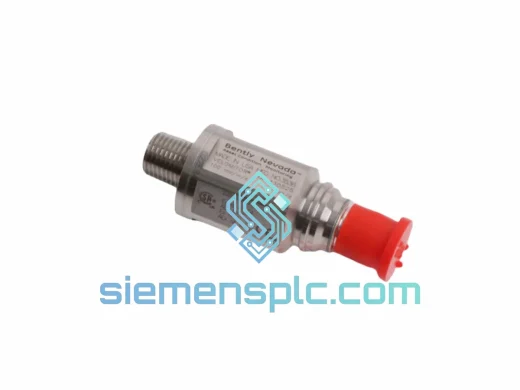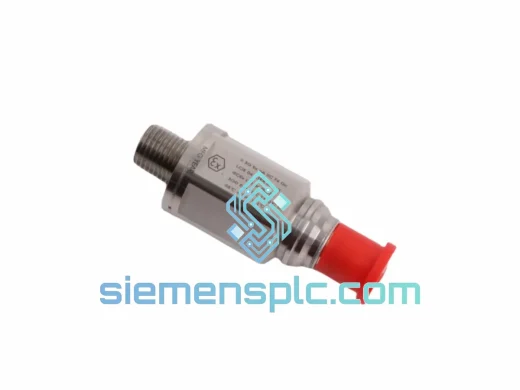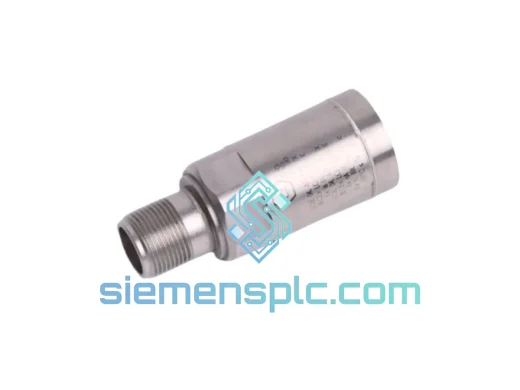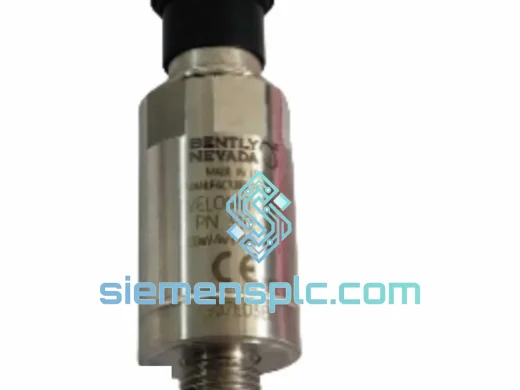
Bently Nevada
RFQ Ready
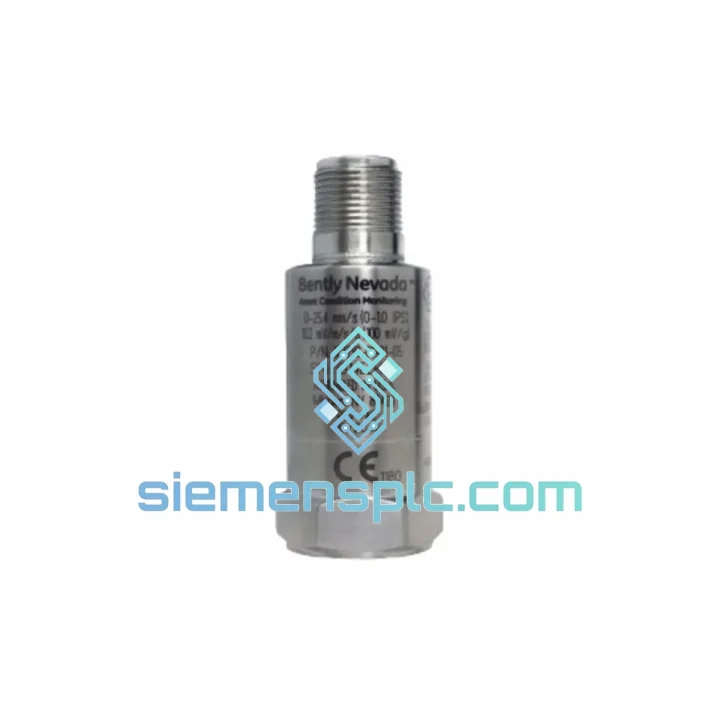
Bently Nevada VELOMITOR 330500 Velocity Sensor – VELOMITOR Series
3305
Origin US
Velocity Sensor
Request verified availability, condition, replacement risk review, packing options and courier lead time for 330500-04-04.
Click Request Quote and the part number is inserted into the inquiry form automatically.
Core fields for model confirmation and RFQ routing. Detailed product narrative remains below.
The Bently Nevada 330500-04-04 is a permanently installed, IEPE-compatible piezo-electric velocity transducer engineered for absolute casing vibration measurement on rotating machinery. Its application domain spans centrifugal compressors, steam turbines, cooling tower fans, boiler feed pumps, and any rotating asset where shaft-relative proximity measurement is geometrically impractical or where casing-borne structural vibration constitutes the primary diagnostic parameter. The transducer generates a voltage output directly proportional to surface velocity, bypassing the need for external integrators or signal conditioners in standard monitoring architectures.
Within a closed-loop machinery protection system, the 330500-04-04 occupies the front-end sensing node of the signal chain. Its 100 mV/in/s (4 mV/mm/s) nominal sensitivity and a flat frequency response spanning 2 Hz to 1,000 Hz allow the transducer to resolve the complete spectral content of most industrial rotating equipment — from low-speed fans at 60 RPM through high-speed centrifugal stages operating above 10,000 RPM. The IEPE output interfaces directly with Bently Nevada 3500 Series monitor cards and System 1 software without intermediate signal conditioning, reducing the number of active components in the signal path and the associated failure probability.
The 316L stainless steel hermetically sealed housing provides structural and chemical resistance against hydrocarbon mist, steam condensate, and industrial cleaning agents. The 1/4-28 UNF threaded stud mount, when torqued to the manufacturer-specified 2.8 N·m, establishes a rigid, repeatable mechanical coupling that maintains phase-coherent data across multi-year trending intervals — a requirement that adhesive or magnetic mounts cannot reliably satisfy. Field termination is accomplished via a 2-pin MIL-C-5015 style connector, allowing cable replacement without disturbing the sensor body or its calibrated mounting torque.
Real-time Stock & RFQ: [email protected] | WhatsApp: +86 18359268345
| Parameter | Specification |
|---|---|
| Part Number | 330500-04-04 |
| Manufacturer | Bently Nevada (Baker Hughes) |
| Product Series | Velomitor® Piezo-Velocity Sensor |
| Measurement Type | Absolute casing velocity (IEPE / ICP® compatible) |
| Sensitivity | 100 mV/in/s ± 10% (4 mV/mm/s) |
| Frequency Response (±3 dB) | 2 Hz – 1,000 Hz |
| Amplitude Range | 0.001 – 50 in/s pk (0.025 – 1,270 mm/s pk) |
| Bias Voltage Output | 8 – 12 VDC (constant-current IEPE excitation) |
| Excitation Current | 2 – 20 mA (constant-current source required) |
| Output Noise Floor | < 50 µV RMS (broadband, 2–1,000 Hz) |
| Transverse Sensitivity | < 5% of axial sensitivity |
| Operating Temperature | −40 °C to +121 °C (−40 °F to +250 °F) |
| Storage Temperature | −55 °C to +150 °C |
| Shock Limit (non-operating) | 5,000 g peak |
| Housing Material | 316L Stainless Steel, hermetically sealed |
| Ingress Protection | IP67 |
| Connector | 2-pin MIL-C-5015 style, 360° metallic shell |
| Mounting Thread | 1/4-28 UNF threaded stud, torque: 2.8 N·m (25 in-lb) |
| Mounted Resonance Frequency | > 5,000 Hz (at specified torque) |
| Maximum Cable Length | 300 m (low-impedance IEPE output) |
| Sensor Weight | Approx. 1,130 g (with integral cable) |
| Country of Origin | United States |
| Warranty | 12 months from date of shipment |
The 330500-04-04 uses a shear-mode piezo-electric crystal stack as its primary sensing element. Shear-mode loading decouples the crystal’s mechanical response from base strain — the crystal deforms in shear only when the housing accelerates axially, not when the mounting surface undergoes thermal expansion or structural bending. This is a deliberate architectural choice: in petrochemical and power generation environments, bearing housing surfaces routinely experience thermal gradients of 40–80 °C across a single operating shift, which would generate spurious compression-mode signals in a conventional stack-compression design. The shear-mode geometry suppresses this artifact, reducing nuisance alarm rates without requiring software filtering that would otherwise introduce phase lag into the alarm response chain.
The internal ASIC-based signal conditioning circuit presents a low output impedance — typically below 100 Ω — which allows cable runs up to 300 m without measurable signal attenuation or high-frequency roll-off within the 1,000 Hz operational band. This is a direct consequence of the IEPE architecture: the constant-current excitation source charges the cable capacitance independently of the signal path, so the sensor’s output voltage is not loaded by cable capacitance as it would be in a charge-mode (high-impedance) configuration. For large-footprint facilities — offshore platforms, LNG terminals, or multi-train compressor stations — this eliminates the need for remote charge amplifiers at intermediate junction boxes, reducing both installed cost and maintenance access requirements.
EMC hardening is achieved through three concurrent mechanisms. First, the all-metal hermetic housing functions as a continuous Faraday enclosure, attenuating external electric field coupling into the crystal element. Second, the MIL-C-5015 connector’s metallic shell provides 360° cable shield termination at the sensor body, preventing shield discontinuities that would otherwise create antenna loops. Third, the IEPE front-end’s differential signal architecture rejects common-mode interference induced by variable-frequency drives (VFDs), high-voltage bus bars, and RF sources present in motor control centers. The combined effect is a broadband noise floor below 50 µV RMS — 6 to 10 dB lower than competing sensors that rely on single-ended output stages without full metallic enclosure.
The 1/4-28 UNF stud mount, torqued to 2.8 N·m, achieves a mounted resonance frequency exceeding 5,000 Hz. Since the sensor’s operational bandwidth terminates at 1,000 Hz, the mounted resonance is separated from the measurement band by more than a decade in frequency. This margin ensures that no resonance amplification artifact appears within the spectral range used for alarm setpoints or spectral trending, a failure mode that is common in adhesive-mounted or magnetically coupled sensors where mounted resonance can fall as low as 1,500–2,500 Hz and produce false spectral peaks at 2× or 3× running speed harmonics.
Each Bently Nevada 330500-04-04 unit dispatched by siemensplc.com undergoes a structured pre-shipment verification sequence. Physical inspection covers housing surface integrity, connector shell continuity and pin retention force, label authenticity cross-referenced against Bently Nevada factory marking standards, and serial number traceability against procurement documentation. Functional verification confirms IEPE bias voltage output within the 8–12 VDC specification window and signal path continuity under simulated constant-current excitation at 4 mA and 20 mA boundary conditions.
Shipments originate from our Xiamen, China operations center. Xiamen’s port and air cargo infrastructure supports DHL Express, FedEx International Priority, UPS Worldwide Express, and sea freight consolidation for volume orders. Standard express transit times are 3–5 business days to Southeast Asia and East Asia, 5–7 business days to Europe, the Middle East, and South Asia, and 5–8 business days to North America and Oceania. All units are packed in anti-static foam-lined cartons with calibrated shock indicator labels; orders above threshold value include wooden outer crating and silica gel desiccant packs as standard practice.
Export documentation — commercial invoice, packing list, certificate of origin, and HS code 9031.80 classification — is prepared for each consignment to support customs clearance in all major import jurisdictions. Customers in regulated industries (nuclear, defense, pharmaceutical) may request a material traceability statement and procurement chain declaration upon order confirmation. The 12-month warranty covers manufacturing defects and premature functional failure under normal operating conditions as defined in the product datasheet; warranty claims are acknowledged within 24 hours and processed within 5 business days of receipt of the returned unit at our Xiamen facility.
Email: [email protected]
WhatsApp: +86 18359268345
Web: siemensplc.com
Location: Xiamen, China
© 2026 siemensplc.com. All rights reserved.
We check the full part number, brand, series and visible nameplate information before quotation.
Sales confirms stock path, condition option, quantity and realistic lead time for export dispatch.
DHL, FedEx, UPS or buyer courier arrangements can be reviewed with packing requirements.
Similar brand or category products for fast comparison and multi-item RFQ lists.