Bently Nevada
RFQ Ready
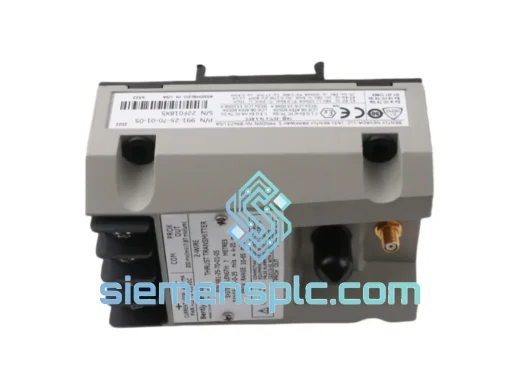
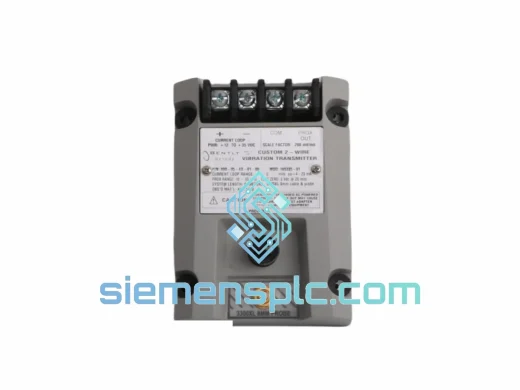
Bently Nevada RS901104-03-050-10-01 Proximitor Sensor – 3300 XL Series
3300 XL
Origin US
Proximitor Sensor
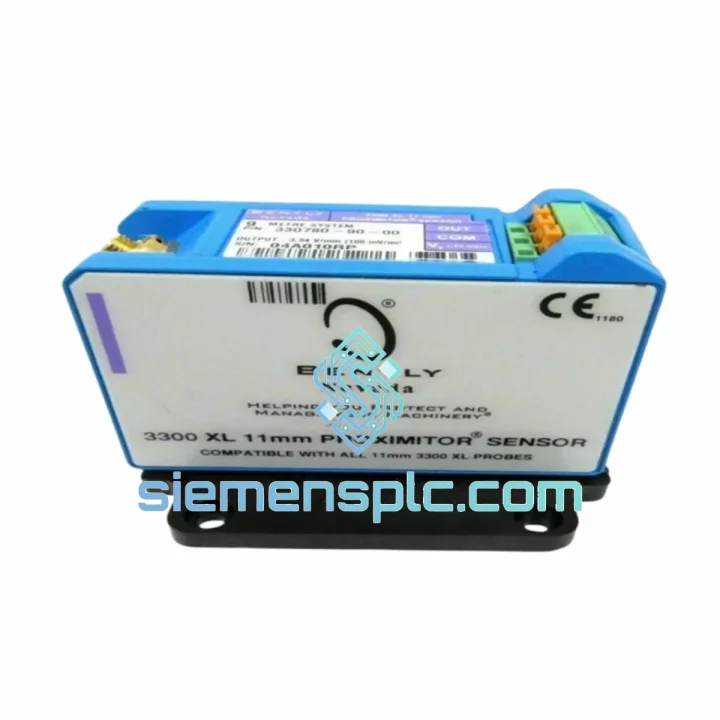
Request verified availability, condition, replacement risk review, packing options and courier lead time for 330780-90-00.
Click Request Quote and the part number is inserted into the inquiry form automatically.
Core fields for model confirmation and RFQ routing. Detailed product narrative remains below.
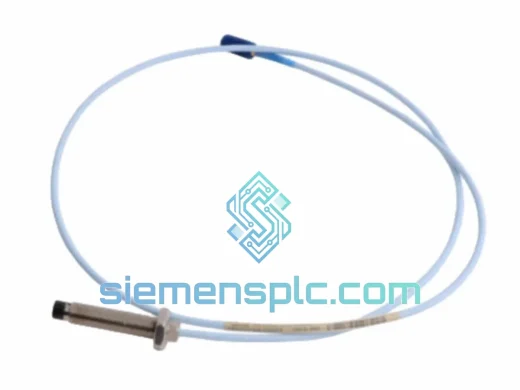
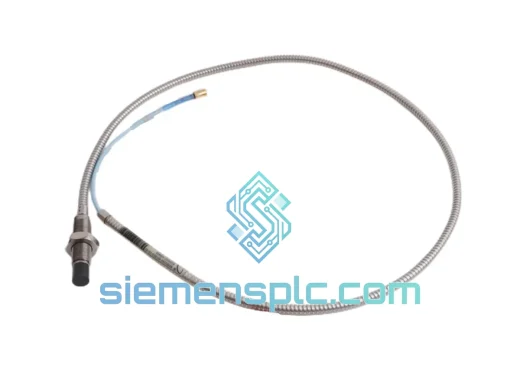
The 330780-90-00 is a 5 mm tip-diameter eddy-current proximity transducer manufactured by Bently Nevada (Baker Hughes), designed as a primary sensing element within the 3300 XL Series machinery protection platform. It operates on the principle of electromagnetic induction: a high-frequency oscillator circuit within the paired proximitor driver energizes the transducer coil, generating a focused electromagnetic field at the probe tip. When a conductive target — typically a precision-ground journal surface — enters this field, eddy currents are induced in the target material, loading the oscillator and producing a proportional change in output voltage. This voltage shift, calibrated at a nominal scale factor of 7.87 V/mm (200 mV/mil), represents the instantaneous gap between probe tip and shaft surface with sub-micron resolution.
The 330780-90-00 carries a 5-metre integral coaxial cable terminated for direct connection to Bently Nevada 3300 XL extension cables (330130-xx-xx series), forming a matched impedance measurement chain. Total system cable length — transducer cable plus extension cable — must correspond to the proximitor driver’s calibration length, typically 5 m + 5 m for a 10-metre system. Deviation from the calibrated cable length introduces scale factor error and must be corrected through driver recalibration or use of a length-matched system.
This transducer is specified under API 670 (Machinery Protection Systems) for radial shaft vibration, axial position, differential expansion, and eccentricity measurement on turbines, compressors, pumps, and generators. Its 316 stainless steel housing, IP67 ingress protection, and operating temperature ceiling of +177 °C make it suitable for hot-section bearing housings, wet gas environments, and offshore installations where sensor longevity under thermal and chemical stress is a primary design constraint.
Real-time Stock & RFQ: [email protected] | WhatsApp: +86 18359268345
| Parameter | Specification |
|---|---|
| Part Number | 330780-90-00 |
| Manufacturer | Bently Nevada (Baker Hughes) |
| Series | 3300 XL Proximity Transducer System |
| Sensing Principle | Eddy-Current (Non-Contact Inductive) |
| Probe Tip Diameter | 5 mm |
| Thread Size | M8 × 1.0 |
| Integral Cable Length | 5 m (16.4 ft), MIL-C-17 coaxial |
| Linear Measurement Range | 0.25 mm – 2.25 mm (10 – 90 mil) |
| Nominal Scale Factor | 7.87 V/mm (200 mV/mil) |
| Frequency Response (–3 dB) | DC – 10,000 Hz |
| Supply Voltage | –24 VDC (supplied via proximitor driver) |
| Output Voltage Range | –1 VDC to –21 VDC |
| Nominal Gap (Center of Range) | 1.0 mm (40 mil) → approx. –10 VDC output |
| Target Material (Factory Cal.) | AISI 4140 Steel |
| Operating Temperature | –35 °C to +177 °C (–31 °F to +350 °F) |
| Housing Material | 316 Stainless Steel |
| Ingress Protection | IP67 |
| Compliance | API 670, CE, ATEX (zone-dependent on driver selection) |
| Compatible Driver | Bently Nevada 3300 XL 8 mm Proximitor (330180-xx-xx) |
| Compatible Extension Cable | 330130-xx-xx Series |
| Weight (with cable) | Approx. 220 g |
| Warranty | 12 months from date of shipment |
The 330780-90-00 probe coil is wound on a ferrite core and encapsulated in a thermally stable polymer compound within the 316 SS housing. The coil geometry is optimized for a 5 mm tip diameter to achieve a focused field depth of approximately 2× the tip diameter — roughly 10 mm — which defines the effective sensing zone and limits sensitivity to adjacent conductive structures. This geometry is critical in multi-probe installations (e.g., XY radial vibration pairs) where cross-talk between adjacent probes must remain below 1% of full-scale output.
The integral coaxial cable uses a low-loss dielectric with controlled characteristic impedance matched to the 3300 XL driver’s oscillator circuit. Any impedance discontinuity — caused by cable damage, connector contamination, or unauthorized splicing — introduces reflection losses that shift the effective scale factor and degrade linearity. The MIL-C-17 coaxial construction provides a shielded, low-capacitance signal path that maintains signal integrity across the full DC–10 kHz bandwidth, capturing sub-synchronous instabilities (e.g., oil whirl at 0.43–0.48× running speed) as well as high-frequency blade-pass events.
EMC performance is achieved through the coaxial shield’s continuous 360° coverage from probe body to connector, providing greater than 60 dB common-mode rejection of radiated interference from variable-frequency drives, high-current bus bars, and RF sources common in industrial environments. The 316 SS housing acts as a secondary Faraday shield, attenuating capacitively coupled interference from adjacent high-voltage conductors. This dual-layer shielding architecture ensures that the output noise floor remains below 25 mV peak-to-peak under typical plant EMC conditions, preserving the resolution required for early-stage bearing wear detection.
The probe’s thermal coefficient of sensitivity is specified at less than ±0.05% per °C across the operating range, achieved through matched thermal expansion coefficients between the coil former, encapsulant, and housing. This thermal stability is essential in hot-section applications where bearing housing temperatures can vary by 80–100 °C between cold startup and full-load steady state, as uncorrected thermal sensitivity drift would appear as a false axial position shift in the monitoring system.
Every 330780-90-00 unit offered through siemensplc.com is sourced from authorized distribution channels or verified OEM-surplus inventory with full traceability. Incoming inspection covers visual examination of the probe body and cable jacket, coaxial continuity and shield integrity verification, tip impedance measurement against Bently Nevada factory specification, and connector condition assessment. Units with anomalous impedance readings, cable jacket damage, or non-conforming date codes are quarantined and excluded from sale.
Storage conditions maintain temperature between 15 °C and 25 °C with relative humidity below 60%, non-condensing, in ESD-safe packaging to preserve coil calibration and cable dielectric properties. Certificate of Conformance (CoC) documentation is available upon request for critical applications requiring traceability records.
Logistics are managed from our warehouse in Xiamen, China, with daily dispatch via DHL Express, FedEx International Priority, and UPS Worldwide Expedited. Standard transit times are 3–5 business days to Europe, 4–6 business days to North America, and 2–4 business days to Southeast Asia. Export documentation — including commercial invoice, packing list, and HS code 9031.80 classification — is prepared for each shipment to ensure smooth customs clearance. For urgent plant outage requirements, same-day dispatch is available for orders confirmed before 14:00 CST.
Email: [email protected]
WhatsApp: +86 18359268345
Web: siemensplc.com
Location: Xiamen, China
© 2026 siemensplc.com. All rights reserved.
We check the full part number, brand, series and visible nameplate information before quotation.
Sales confirms stock path, condition option, quantity and realistic lead time for export dispatch.
DHL, FedEx, UPS or buyer courier arrangements can be reviewed with packing requirements.
Similar brand or category products for fast comparison and multi-item RFQ lists.