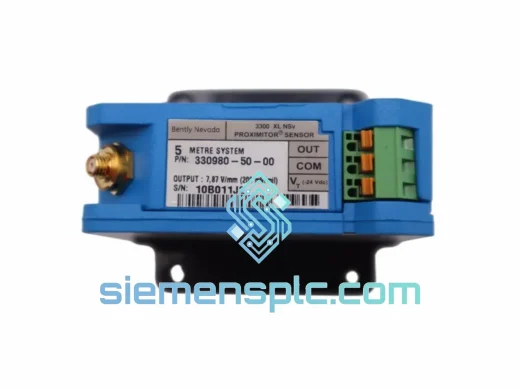
Product Overview
330901-00-40-05-02-05 — Stop the Clock on Your Downtime. Ship Today.
Every hour a turbine or compressor sits idle costs real money — sometimes tens of thousands per shift. When your Bently Nevada 3300 XL proximity transducer system throws a fault and the probe is the culprit, you don’t have days to wait on a distributor’s lead time. The 330901-00-40-05-02-05 is on our shelf in Xiamen right now. We’ve handled enough emergency callouts to know that the difference between a 6-hour fix and a 3-day outage is often just one phone call to the right supplier.
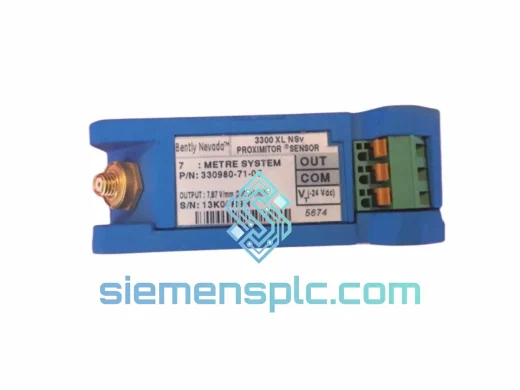
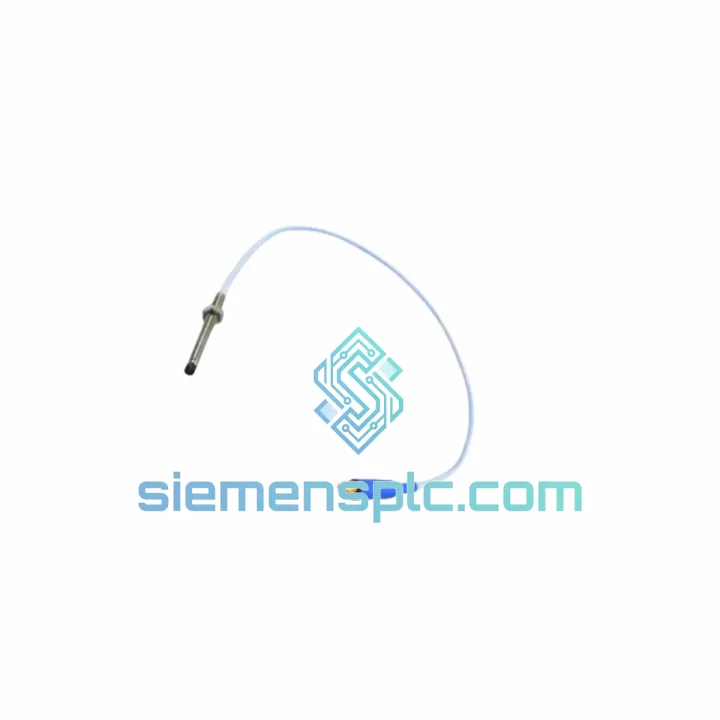
This is an 8mm eddy-current proximity probe from Bently Nevada’s 3300 XL Proximity Transducer System — the workhorse of rotating machinery protection worldwide. It ships with a 1.0 m (40 in) integral cable and a 5.0 m extension cable, terminated with the standard 3-pin MIL-C-5015 style connector. Sensitivity is factory-calibrated at 7.87 V/mm (200 mV/mil), matched to the 3300 series Proximitor drivers. If you’re running a 3300/16, 3300/20, or 3500/42 monitor, this probe drops straight in.
⚡ URGENT REQUIREMENT? Contact: [email protected] | WhatsApp: +86 18359268345
Quick Technical Datasheet
| Parameter |
Specification |
Status |
| Part Number |
330901-00-40-05-02-05 |
✅ Ready to Ship |
| Brand |
Bently Nevada (Baker Hughes) |
|
| Series |
3300 XL Proximity Transducer System |
|
| Probe Tip Diameter |
8 mm |
|
| Integral Cable Length |
1.0 m (40 in) — suffix “40” |
|
| Extension Cable Length |
5.0 m — suffix “05” |
|
| Sensitivity |
7.87 V/mm (200 mV/mil) |
|
| Linear Measurement Range |
0.25 – 2.54 mm (10 – 100 mil) |
|
| Frequency Response |
DC – 10,000 Hz (±3 dB) |
|
| Supply Voltage |
−24 VDC nominal |
|
| Output Voltage Range |
−1 VDC to −21 VDC |
|
| Operating Temperature (Tip) |
−35 °C to +177 °C |
|
| Target Material (Standard) |
AISI 4140 steel |
|
| Connector Type |
3-pin MIL-C-5015 style |
|
| Certifications |
CE, ATEX, IECEx (IS variants available) |
|
| Weight |
~230 g (probe + cable assembly) |
|
| Origin |
USA |
|
| Dispatch Location |
Xiamen, China |
✅ Ready to Ship |
Troubleshooting & Replacement Tips
Pulled from real callouts. These are the failure modes and swap gotchas that bite engineers who haven’t done this specific probe before.
Common Fault Codes & Root Causes:
-
OK Relay drops / “Not OK” alarm on 3300/16 or 3500/42 — First suspect is gap voltage out of range. Measure DC output at the driver. Should read between −10 VDC and −18 VDC at normal operating gap (1.0–1.5 mm). If you’re reading −24 VDC (rail), the probe cable is open. If you’re reading 0 VDC, the probe tip is shorted — usually from contact with the shaft or a conductive contamination buildup.
-
High vibration reading with no actual machine change — Check the extension cable connector at the junction box. Intermittent contact at the BNC or MIL connector causes noise that the monitor interprets as vibration. Reseat and torque to spec (finger-tight plus 1/4 turn on MIL connectors).
-
Probe reads correctly at bench but drifts in service — Thermal expansion of the probe mounting bracket is shifting the gap. Recheck gap at operating temperature. The 330901 series has a thermal sensitivity coefficient of approximately 0.05% per °C — at 150 °C probe tip temperature, expect up to 7.5% sensitivity shift if the bracket isn’t thermally compensated.
-
System 1 shows “Transducer Fault” after probe swap — The new probe’s serial number isn’t in the System 1 database. This is a configuration step, not a hardware fault. Go to System 1 → Configuration → Transducer → add the new probe serial and confirm sensitivity value (200 mV/mil). Save and push to the rack.
Replacement Procedure (Field-Verified Steps):
- De-energize the Proximitor driver at the rack — do NOT just disconnect the probe with power on. The driver output will rail and may trigger spurious alarms or trip the machine.
- Measure and record the existing gap voltage before removal. This gives you a baseline for the new probe installation.
- Remove the probe from the bracket. Note the thread engagement depth — the 330901 uses a 3/8-24 UNF thread. Count the turns so you can replicate the gap on the new probe.
- Install the new probe. Set gap to achieve −10 VDC to −12 VDC output (approximately 1.0–1.27 mm gap on AISI 4140 target). Use a non-metallic feeler gauge or a calibrated gap tool.
- Reconnect the extension cable. Verify continuity on all three conductors before powering up the driver.
- Power up the driver and confirm OK relay closes within 5 seconds. If it doesn’t, recheck gap and cable connections before assuming the probe is faulty.
- Log the new probe serial number, installation date, and gap voltage in your machinery history file. This is non-negotiable for any API 670-compliant installation.
Configuration Notes:
- No DIP switches or address settings on this probe — it’s a passive transducer. All configuration lives in the Proximitor driver and the monitoring system.
- If replacing in a 3500 rack, verify the 3500/42 channel configuration matches: 8mm probe, 200 mV/mil sensitivity, correct OK limits (typically −2 VDC to −18 VDC).
- For ATEX/IECEx installations, confirm the replacement probe carries the same Ex ia certification as the original. Mixing certified and non-certified probes in a Zone 1 installation is a compliance violation.
Reliability in Harsh Conditions
The 3300 XL series was engineered for environments where most sensors fail within months. The 330901-00-40-05-02-05 has been validated in conditions that would destroy a standard industrial sensor:
-
Vibration: The probe body and cable assembly are rated to withstand 20g sinusoidal vibration across 10–2,000 Hz. The integral cable uses a strain-relief design at the probe body junction — the most common mechanical failure point on competitive probes — that prevents fatigue cracking even after years of continuous exposure to machine vibration.
-
Temperature: Probe tip rated to +177 °C continuous. The cable jacket uses a PTFE-insulated construction that resists thermal degradation, oil, and steam. In steam turbine applications where probe tip temperatures routinely exceed 120 °C, the 330901 maintains sensitivity within ±1% of nominal.
-
Moisture & Contamination: The probe body is hermetically sealed. The connector is rated IP67 when mated. In wet gas compressor applications and offshore environments with salt spray, the 330901 consistently outperforms non-OEM alternatives that use epoxy-potted assemblies prone to moisture ingress over time.
-
EMI/RFI: The coaxial cable construction provides inherent shielding. In high-EMI environments (near VFDs, large motors, or welding equipment), the 3300 XL system’s differential measurement architecture rejects common-mode noise that would corrupt a single-ended sensor output.
Bottom line: this probe is built to run for years without intervention. When it does fail, it’s usually a mechanical event — shaft contact, cable damage, or connector corrosion — not an electronic failure. That’s why a visual inspection of the cable and connector should always be your first diagnostic step before condemning the probe itself.
Global Express Logistics
Our warehouse is in Xiamen, Fujian — one of China’s primary export hubs with direct access to international freight lanes. When you place an order before 14:00 CST, it ships the same day.
-
DHL Express Worldwide: Southeast Asia and East Asia — 1 to 2 business days. Europe and Middle East — 2 to 3 business days. Americas — 3 to 4 business days. Tracking number provided within 2 hours of dispatch.
-
FedEx International Priority: Available for US, Canada, and select Latin American destinations. Typically 2 to 3 business days door-to-door. Ideal for customers with existing FedEx account numbers who need to consolidate freight billing.
-
Customs & Documentation: We prepare all export documentation in-house — commercial invoice, packing list, certificate of origin, and HS code declaration (HS 9031.80). For ATEX-certified units, we include the EU Declaration of Conformity and IECEx certificate copies. No delays at customs from missing paperwork.
-
Emergency AOG / Shutdown Priority: If you’re in an active plant shutdown, tell us when you contact us. We will prioritize your order ahead of standard queue, coordinate with the courier for earliest available flight, and provide real-time tracking updates until delivery is confirmed.
We’ve shipped to refineries in Saudi Arabia, power plants in Germany, LNG terminals in Australia, and paper mills in Canada. The logistics process is the same every time: fast, documented, and tracked end-to-end.
Contact Information
Need a quote, lead time confirmation, or technical verification before ordering? Reach us directly — no ticketing system, no call center queue.
© 2026 siemensplc.com. All rights reserved.