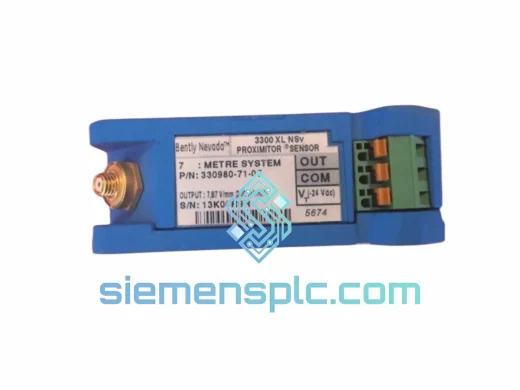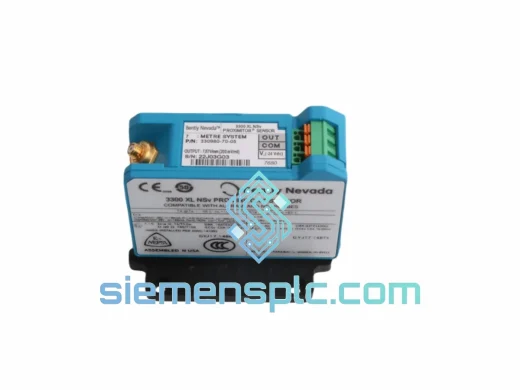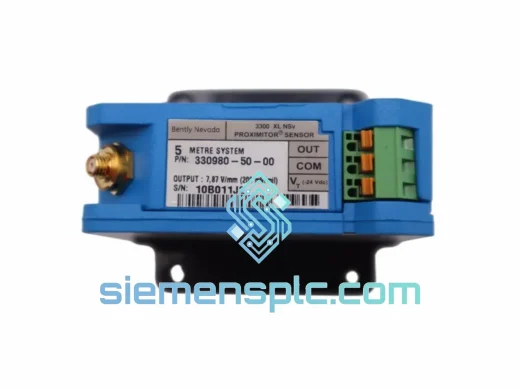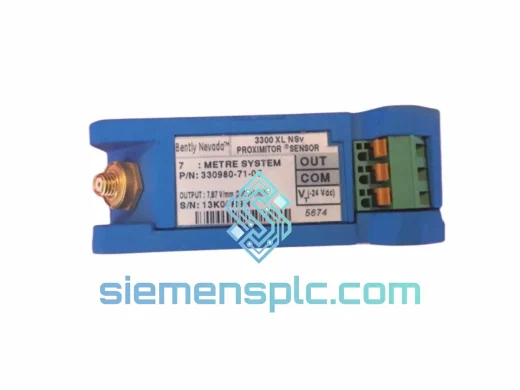
Bently Nevada
RFQ Ready
Bently Nevada 330980-71-05 NSV Proximitor Sensor
3309
Origin US
Proximitor Sensor
Request verified availability, condition, replacement risk review, packing options and courier lead time for 330903-16-23-10-01-00.
Click Request Quote and the part number is inserted into the inquiry form automatically.
Core fields for model confirmation and RFQ routing. Detailed product narrative remains below.
You’re standing at the bearing pedestal. The 3500 rack is flashing Not OK. Your DCS has lost channel 4. The turbine is on bypass and your shift supervisor is already on the phone. This is not a procurement exercise — this is a recovery operation, and every hour the machine stays down is money your plant cannot recover.
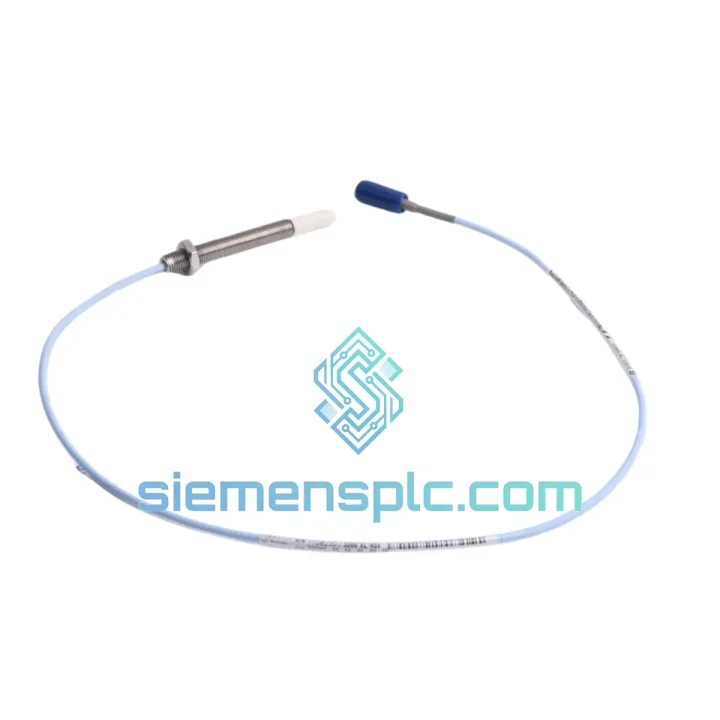
The Bently Nevada 330903-16-23-10-01-00 is a 5 m, 23 mm, 10-32 UNF eddy-current proximity probe from the 3300 NSv transducer system — one of the most widely deployed shaft-monitoring probes in rotating machinery protection worldwide. We stock it. It is on the shelf in our Xiamen warehouse right now. Place your order before 15:00 CST and it leaves today.
We don’t sell catalog promises. We sell confirmed stock with same-day dispatch, full export documentation, and DHL/FedEx tracking in your inbox within four hours of pickup. That’s the only metric that matters when your machine is down.
⚡ URGENT REQUIREMENT? Contact: [email protected] | WhatsApp: +86 18359268345
| Parameter | Specification |
|---|---|
| Part Number | 330903-16-23-10-01-00 |
| Manufacturer | Bently Nevada (Baker Hughes) |
| Series | 3300 NSv Proximity Transducer System |
| Sensing Principle | Eddy-Current, Non-Contact |
| Cable Length | 5 m (16 ft) |
| Probe Body Length | 23 mm |
| Thread | 10-32 UNF |
| Connector | BNC (standard) |
| Scale Factor | 7.87 V/mm (200 mV/mil) |
| Linear Range | 0.25 – 2.54 mm (10 – 100 mil) |
| Nominal Gap | 1.0 mm → −7.87 VDC at Proximitor output |
| Operating Temperature | −35°C to +177°C |
| Target Material | AISI 4140 Steel (standard reference) |
| Compliance | API 670, CE, RoHS |
| Compatible Proximitor | 330180 / 330181 NSv Proximitor |
| Condition | New, Original, Factory Sealed |
| Stock Status | ✅ Ready to Ship — Xiamen Warehouse |
The 330903-16-23-10-01-00 is a passive probe — no internal electronics, no firmware, no address switches. That simplicity is its strength, but it also means faults are almost always mechanical or installation-related. Here’s what field experience actually looks like:
Fault Pattern 1 — NOK on 3500/40M Monitor Card
Pull the gap voltage at the Proximitor terminal strip immediately. Nominal is −7.87 VDC at 1.0 mm gap. If you’re reading outside −2 to −18 VDC, the probe or cable is open or shorted. Disconnect the probe at the Proximitor and measure cable continuity with a multimeter. A dead short between center conductor and shield almost always means the cable jacket has been pinched at a conduit entry — not a probe failure.
Fault Pattern 2 — Vibration Alarm with No Process Change
Before condemning the probe, check the target surface. Scoring, pitting, or a buildup of magnetic debris on the shaft journal will modulate the eddy-current field and generate false vibration signals. Clean the target area and re-gap. If the alarm clears, the probe was fine — the target was the problem.
Fault Pattern 3 — Intermittent Signal Dropout
Flex the cable at the BNC connector and at the probe body junction while watching the gap voltage on a meter. If voltage fluctuates with cable movement, you have a broken conductor inside the cable — typically at the first bend point behind the probe body. Replace the full probe-cable assembly. Splicing is not acceptable on a machinery protection circuit.
Fault Pattern 4 — Channel Reads Zero, System Shows OK
Verify the Proximitor sensitivity jumper matches this probe’s 200 mV/mil scale factor. A Proximitor configured for a 100 mV/mil probe will output half the expected voltage, and the monitor card may interpret this as a valid zero-vibration signal rather than a fault. This is the most commonly missed configuration error during probe swaps.
Replacement Procedure — Field Steps:
System Matching Note: This probe must be paired with a 330130-series extension cable (5 m) and a 330180 or 330181 NSv Proximitor. Mixing with non-NSv Proximitors or mismatched cable lengths shifts the scale factor outside calibration tolerance. If the system has been in service beyond five years in a high-temperature zone, replace the full transducer set — probe, cable, and Proximitor — as a matched assembly.
Rotating machinery environments are not kind to instrumentation. Bearing pedestals on large turbomachinery run at sustained temperatures above 120°C. Lube oil mist saturates the air around the probe mounting boss. Shaft vibration at the bracket can reach 3–6 g continuously. The 330903-16-23-10-01-00 was designed to operate inside these conditions, not merely survive them.
The stainless-steel probe body resists corrosion from process fluid exposure, lube oil, and steam condensate without dimensional change that would drift your gap setting. The cable sheathing is rated to 177°C continuous — not a peak rating, a sustained operating limit. In hot-section installations where ambient temperatures at the probe bracket exceed 150°C, this margin is what separates a probe that lasts three years from one that fails in six months.
Mechanical retention is handled by the 10-32 UNF thread and locknut system. Under sustained vibration loads, a properly torqued locknut maintains probe position within ±0.02 mm — well inside the gap tolerance required to keep your scale factor accurate. Probes that work loose under vibration are almost always under-torqued at installation, not mechanically inadequate.
In coastal and tropical installations — LNG terminals, offshore platforms, tropical power plants — humidity is the primary long-term threat. The BNC connector and cable terminations are the entry points for moisture. Apply dielectric grease to the BNC mating surfaces at installation. Inspect and re-grease annually. This single maintenance step eliminates the majority of humidity-driven signal degradation failures seen in these environments.
Cold-start performance at −35°C maintains scale factor accuracy within ±1% of nominal — critical for standby machinery protection systems that must be fully armed from the moment a cold unit is brought online, with no warm-up grace period.
Our warehouse is in Xiamen, Fujian, China — a primary DHL and FedEx gateway with direct international freight access. The logistics sequence after your order is confirmed:
We have delivered to refineries in Saudi Arabia, power stations in Vietnam, compressor stations in Kazakhstan, and offshore platforms in the North Sea. If your site has a nominated freight forwarder, we coordinate directly with them. If not, we manage end-to-end logistics from our warehouse to your receiving dock.
📧 Email: [email protected]
📱 WhatsApp: +86 18359268345
🌐 Web: siemensplc.com
© 2026 siemensplc.com. All rights reserved.
We check the full part number, brand, series and visible nameplate information before quotation.
Sales confirms stock path, condition option, quantity and realistic lead time for export dispatch.
DHL, FedEx, UPS or buyer courier arrangements can be reviewed with packing requirements.
Similar brand or category products for fast comparison and multi-item RFQ lists.