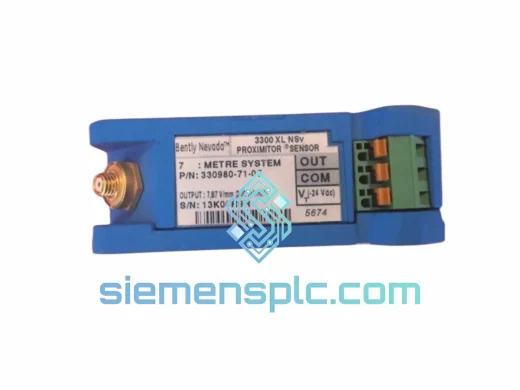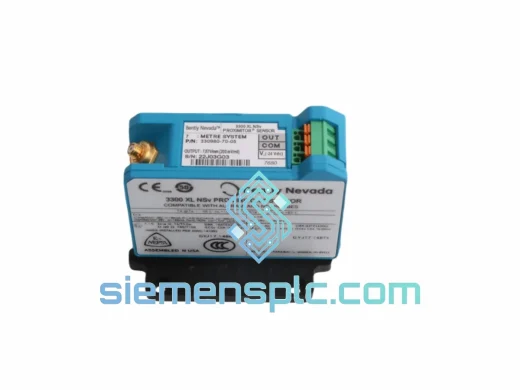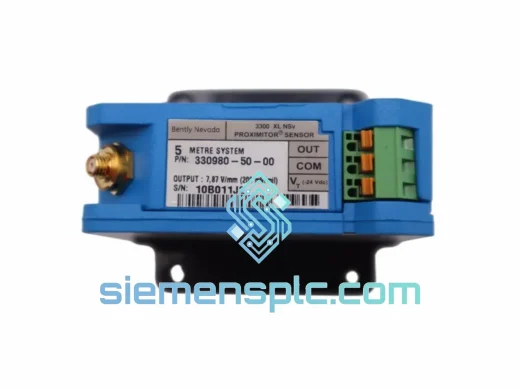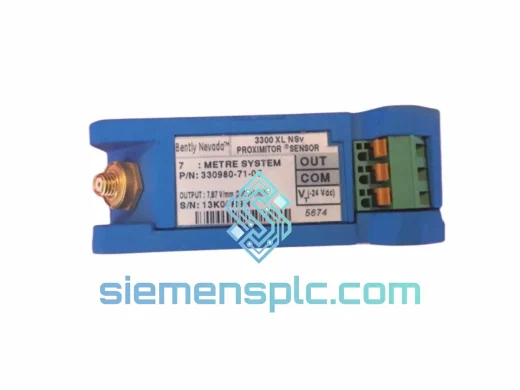
Bently Nevada
RFQ Ready
Bently Nevada 330980-71-05 NSV Proximitor Sensor
3309
Origin US
Proximitor Sensor
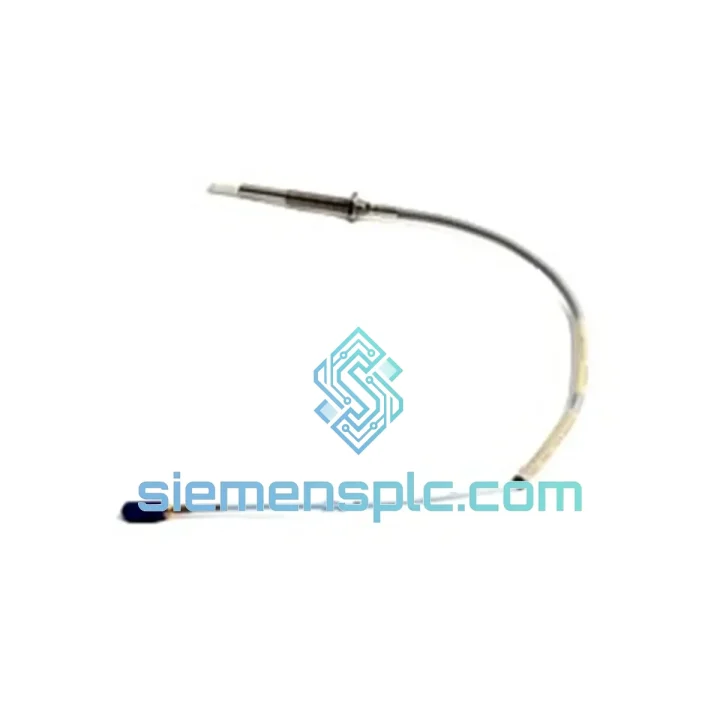
Request verified availability, condition, replacement risk review, packing options and courier lead time for 330910-06-25-05-11-00.
Click Request Quote and the part number is inserted into the inquiry form automatically.
Core fields for model confirmation and RFQ routing. Detailed product narrative remains below.
Every hour a turbine or compressor sits idle costs real money — in lost throughput, penalty clauses, and emergency labor. The Bently Nevada 330910-06-25-05-11-00 3300 NSv proximity probe is on our shelf right now. We ship same day from Xiamen via DHL Express or FedEx International Priority. While your procurement team is still drafting the PO, your replacement unit is already moving.
This is not a refurbished pull. Not a grey-market clone. This is a 100% original Bently Nevada 3300 NSv eddy-current proximity probe, factory-calibrated at 7.87 V/mm (200 mV/mil), ready to drop into your 3300/16 or 3500-series rack without a single parameter change.
URGENT REQUIREMENT?
📧 Email: [email protected]
📱 WhatsApp: +86 18359268345
| Parameter | Specification | Status |
|---|---|---|
| Part Number | 330910-06-25-05-11-00 | ✅ Ready to Ship |
| Brand / Series | Bently Nevada 3300 NSv | |
| Probe Type | Non-contacting eddy-current proximity probe | |
| Tip Diameter | 25 mm | |
| Integral Cable Length | 6 m | |
| Thread | M10 × 1 | |
| Linear Range | 0.25 – 2.54 mm (10 – 100 mil) | |
| Scale Factor | 7.87 V/mm / 200 mV/mil | |
| Output Polarity | Negative DC voltage | |
| Connector | Integral coaxial, 11 mm | |
| Operating Temperature | −35 °C to +177 °C | |
| Target Material (nominal) | AISI 4140 steel | |
| Certifications | CE, ATEX (zone-specific — confirm datasheet) | |
| Compatible Monitors | 3300/16, 3500/42 (with 3300 NSv driver) | |
| Origin | USA | |
| Condition | New, original OEM | ✅ Ready to Ship |
Step 1 — Confirm the fault before you pull the probe. A failed 330910-06-25-05-11-00 typically presents as one of three alarm states on the 3300/16 or 3500 monitor: a sustained OK/Not-OK relay trip with no corresponding process change, a gap voltage reading outside the −10 VDC to −18 VDC window (nominal gap is −10.4 VDC at 1.27 mm), or a flat-line vibration signal at 0 mV with the driver still powered. If you see gap voltage drifting slowly over weeks, suspect cable jacket degradation or connector corrosion before condemning the probe body itself.
Step 2 — Power down the driver, not just the monitor. The 3300 NSv driver supplies −24 VDC to the probe. Disconnecting the probe under live power will not damage the driver, but it will trigger a Not-OK condition and may latch alarms downstream. Coordinate with the control room before disconnecting.
Step 3 — Record the existing gap voltage before removal. Use a calibrated DVM on the driver’s gap output terminals. Write it down. Your target after installing the replacement probe is to restore gap voltage to within ±0.5 VDC of the original reading. This tells you the new probe is seated at the correct air gap without needing a full calibration run.
Step 4 — Thread engagement and torque. The M10 × 1 thread on the 330910-06-25-05-11-00 is fine-pitch. Do not use impact tools. Hand-tighten to the bracket, then apply 5–7 N·m with a torque wrench. Over-torquing the probe body against a steel bracket will crack the ceramic tip housing — a failure mode that looks identical to a probe fault on the monitor.
Step 5 — Verify gap voltage, then check dynamic signal. After installation, restore driver power and confirm gap voltage is within spec. Then check the vibration channel for a clean AC signal at running speed. A noisy or clipped waveform at this stage usually indicates a grounding issue at the bracket, not a probe defect.
Common fault codes on 3500/42 paired with this probe:
The 3300 NSv probe series was designed for environments that destroy lesser sensors. The 330910-06-25-05-11-00 carries an operating temperature range of −35 °C to +177 °C — wide enough to cover arctic pipeline compressor stations and the bearing pedestals of high-pressure steam turbines in the same product family.
The probe body is constructed from 316 stainless steel with a ceramic-filled epoxy tip. This combination resists the hydrocarbon mists, H₂S atmospheres, and cooling water spray common in refinery and offshore compressor trains. The integral cable uses a fluoropolymer jacket rated for continuous immersion and repeated flexing — critical in applications where the cable must be routed through tight conduit runs that vibrate with the machine.
Vibration immunity is not an afterthought. The probe assembly is qualified to withstand the broadband vibration environments specified in API 670, including the resonance sweep profiles that simulate decades of service on a gas turbine baseplate. The coaxial connector is crimped and potted, not just clamped — it will not work loose under the micro-vibration that defeats standard BNC connectors within months.
For ATEX-classified installations, confirm the zone rating on the probe’s nameplate against your area classification drawing. The 330910-06-25-05-11-00 is available in variants certified for Zone 1 and Zone 2 hazardous areas. Contact us with your area classification and we will confirm the correct suffix before shipment.
Our warehouse is located in Xiamen, Fujian, China — one of the most logistics-connected export hubs in Asia. We maintain active accounts with DHL Express, FedEx International Priority, and UPS Worldwide Express. For critical plant shutdowns, we can arrange same-day pickup cutoffs for orders confirmed before 14:00 CST.
Typical transit times from Xiamen:
Every shipment includes a commercial invoice with accurate HS code classification (HS 9031.80 for precision measurement instruments), a packing list, and a certificate of origin where required for import duty reduction under applicable trade agreements. For orders requiring an ATEX declaration of conformity or calibration certificate, these documents are prepared and included in the shipment package — not sent separately after the fact.
We track every shipment and proactively notify you of customs holds or carrier delays. If your order is time-critical, tell us your shutdown window and we will select the routing that gets the part to your site before your maintenance window closes.
📧 Email: [email protected]
📱 WhatsApp: +86 18359268345
🌐 Web: siemensplc.com
© 2026 siemensplc.com. All rights reserved.
We check the full part number, brand, series and visible nameplate information before quotation.
Sales confirms stock path, condition option, quantity and realistic lead time for export dispatch.
DHL, FedEx, UPS or buyer courier arrangements can be reviewed with packing requirements.
Similar brand or category products for fast comparison and multi-item RFQ lists.