Bently Nevada
RFQ Ready
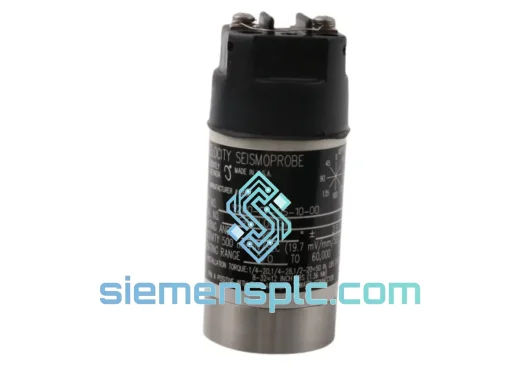
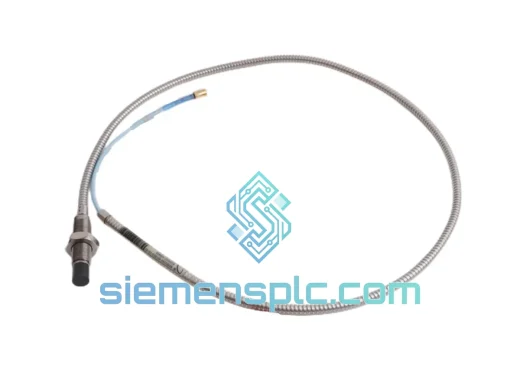
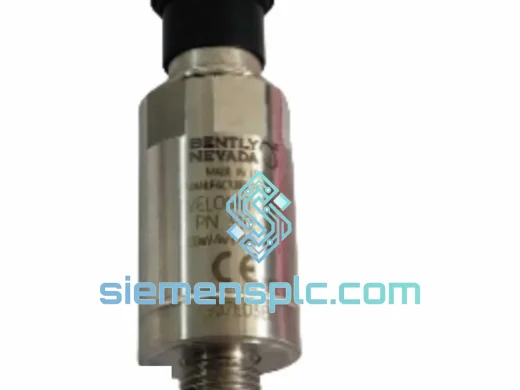
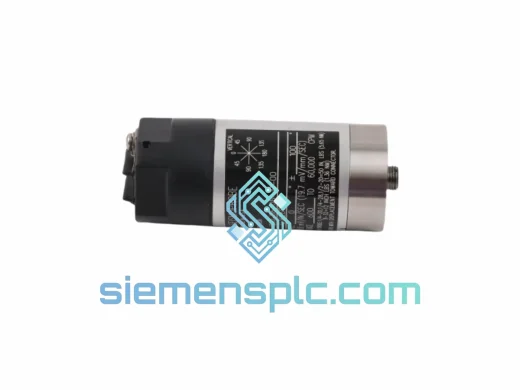
Bently Nevada 9200-06-05-10-00 Seismic Velocity Transducer
9200 Series
Origin US
Seismic Velocity Transducer
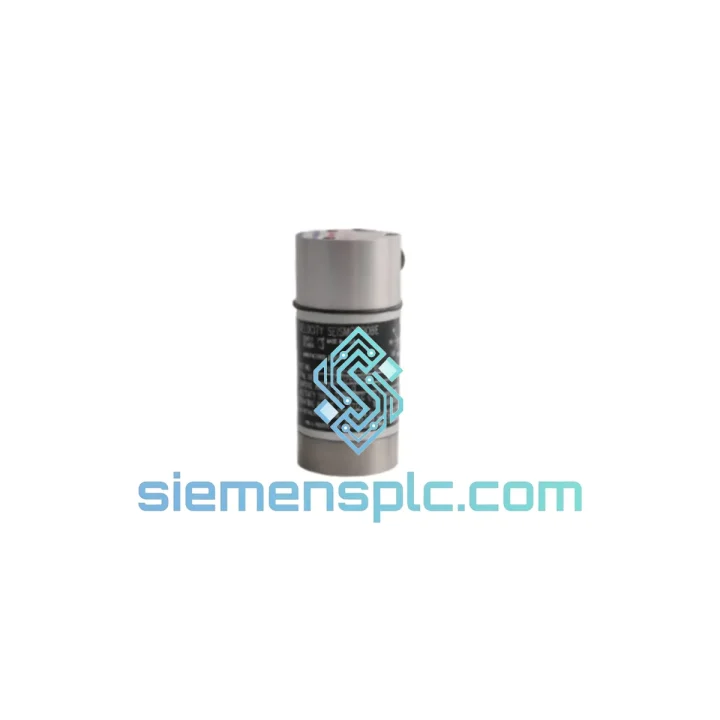
Request verified availability, condition, replacement risk review, packing options and courier lead time for 9200-01-02-10-00.
Click Request Quote and the part number is inserted into the inquiry form automatically.
Core fields for model confirmation and RFQ routing. Detailed product narrative remains below.
Every hour a critical rotating machine sits idle costs real money — compressor trains, steam turbines, refinery pumps. When your proximity transducer fails or reads erratic, you don’t have time for a 6-week OEM lead time. The Bently Nevada 9200-01-02-10-00 is on our shelf in Xiamen right now. We ship DHL/FedEx same day on confirmed orders. That’s the difference between a 4-hour fix and a 4-day outage.
URGENT REQUIREMENT? Contact: [email protected] | WhatsApp: +86 18359268345
| Parameter | Specification | Status |
|---|---|---|
| Part Number | 9200-01-02-10-00 | Ready to Ship |
| Series | Bently Nevada 9200 | — |
| Sensing Technology | Eddy-Current, Non-Contact | — |
| Probe Tip Diameter | 8 mm | — |
| Linear Range | 0 to 2 mm (0 to 80 mil) | — |
| Output Sensitivity | 7.87 V/mm (200 mV/mil) nominal | — |
| Frequency Response | DC to 10,000 Hz (-3 dB) | — |
| Operating Temperature | -35 C to +120 C | — |
| Supply Voltage | -24 VDC via Proximitor driver | — |
| Cable | 1 m integral armored cable | — |
| Connector | MIL-C-5015 compatible | — |
| Target Material Reference | AISI 4140 steel | — |
| Ingress Protection | IP67 | — |
| Compliance | API 670, ATEX/IECEx, CE | — |
| Weight | approx 100 g | — |
| Origin | USA | — |
| Stock Location | Xiamen, China | In Stock |
After handling hundreds of proximity system failures in the field, these are the failure modes and swap pitfalls that catch engineers off guard:
1. Confirm the fault is the probe, not the Proximitor or cable.
Before pulling the probe, check the driver output voltage at the monitor terminal. A healthy 9200-series loop at 1 mm gap reads approximately -10.5 VDC. If you are seeing -24 VDC (rail high) or 0 VDC (rail low), the Proximitor or extension cable is the more likely culprit. Swap the cable first — it is the highest-failure-rate component in the loop and the cheapest fix.
2. Gap setting is non-negotiable.
The 9200-01-02-10-00 has a linear range of 0 to 2 mm. Install gap must be set to the midpoint — typically 1.0 mm (40 mil) — using a feeler gauge or the driver voltage output as a reference (target: -10.5 VDC plus or minus 0.5 V at gap). Do not rely on the old probe locknut position; shaft journals wear and the gap shifts over time.
3. Target material correction.
This probe is factory-calibrated against AISI 4140 steel. If your shaft is 316 stainless, Inconel, or titanium, the sensitivity curve shifts. You will need a material correction factor or a field recalibration against a known gap standard. Skipping this step introduces a systematic measurement error that can mask real vibration increases.
4. Driver compatibility — 9200 is not interchangeable with 3300 XL.
The 9200 Series probe requires a dedicated 9200-series Proximitor (e.g., 9200-01-05-10-00). Plugging a 9200 probe into a 3300 XL driver will produce an out-of-range voltage and a monitor fault. Verify your driver part number before ordering.
5. Common monitor fault codes when replacing this probe:
6. Torque the locknut properly.
Probe body threads are fine-pitch. Over-torquing cracks the housing; under-torquing allows vibration-induced loosening that shifts the gap mid-run. Use OEM-specified torque (typically 14 to 20 N·m depending on bracket design) and apply thread-locking compound rated for the operating temperature.
The 9200-01-02-10-00 is built for environments that destroy lesser sensors. The IP67-rated housing keeps process fluids, steam condensate, and wash-down water out of the sensing element. The armored integral cable resists abrasion from insulation, pipe lagging, and maintenance foot traffic — a failure mode that accounts for a disproportionate share of proximity system outages in the field.
Operating temperature range of -35 C to +120 C covers everything from arctic compressor stations to hot-section turbine bearing pedestals. The eddy-current sensing coil has no moving parts, no contact surfaces, and no wear mechanism — mean time between failures on properly installed 9200-series probes is measured in decades, not years. Vibration immunity is inherent to the non-contact design: the probe does not experience the machine vibration as mechanical stress because it measures it without touching the shaft.
ATEX/IECEx certification means this unit can be installed in Zone 1 classified areas — gas processing, offshore platforms, chemical reactors — without additional barriers in most configurations. Verify the specific certification suffix against your area classification before installation.
Our warehouse is in Xiamen, Fujian, China — one of the country’s primary export hubs with direct access to international freight lanes. Here is how a typical urgent order moves:
For plant shutdowns or turnaround projects requiring multiple units or consolidated shipments, contact us directly. We have handled emergency air freight to offshore platforms, remote mining sites, and island power stations — if there is a flight, we can get it on it.
Email: [email protected]
WhatsApp: +86 18359268345
Web: siemensplc.com
2026 siemensplc.com. All rights reserved.
We check the full part number, brand, series and visible nameplate information before quotation.
Sales confirms stock path, condition option, quantity and realistic lead time for export dispatch.
DHL, FedEx, UPS or buyer courier arrangements can be reviewed with packing requirements.
Similar brand or category products for fast comparison and multi-item RFQ lists.