Bently Nevada
RFQ Ready
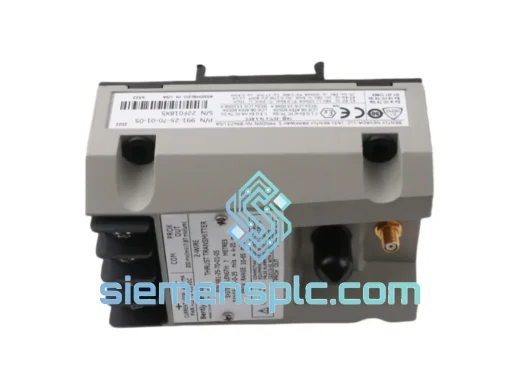
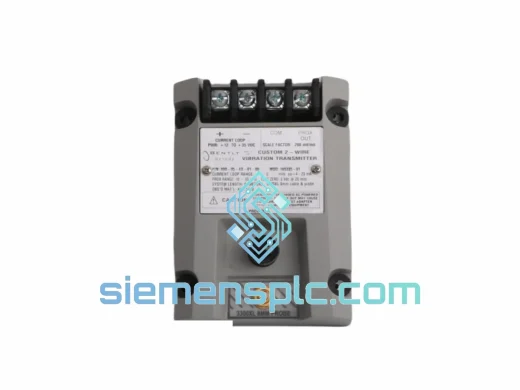
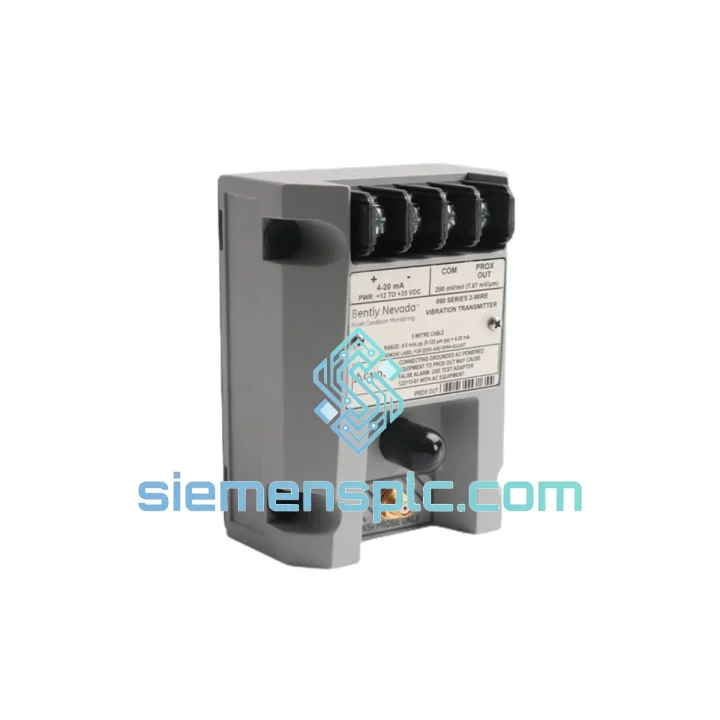
Bently Nevada RS901104-03-050-10-01 Proximitor Sensor – 3300 XL Series
3300 XL
Origin US
Proximitor Sensor
Request verified availability, condition, replacement risk review, packing options and courier lead time for 990-05-50-02-01.
Click Request Quote and the part number is inserted into the inquiry form automatically.
Core fields for model confirmation and RFQ routing. Detailed product narrative remains below.
Every hour a critical rotating machine sits idle costs real money. In a mid-size refinery, a single compressor trip can run $80,000–$200,000 per hour in lost throughput. When the root cause traces back to a failed proximity transducer assembly — a component that costs a fraction of that figure — the frustration is compounded by one question: where do I get a verified replacement, fast?
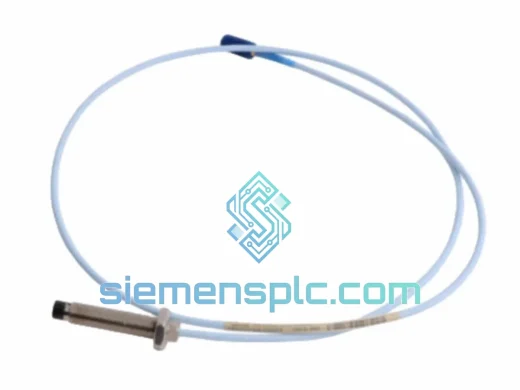
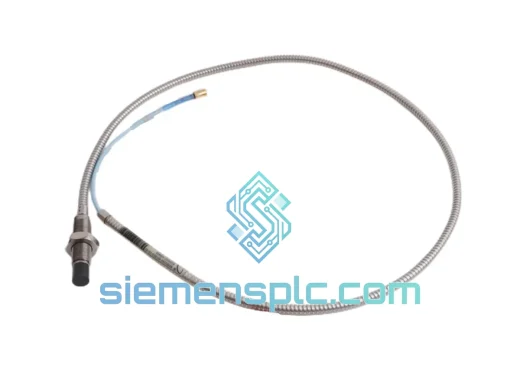
The Bently Nevada 990-05-50-02-01 is a factory-matched 3300 XL Proximity Transducer System: 8 mm probe, 5-metre extension cable, and Proximitor signal conditioner calibrated as a single unit. It is not a generic sensor. The factory calibration ties the probe, cable, and Proximitor together — swap any one element independently and you introduce scale factor error that will either generate false trips or, worse, mask real vibration events. When you need a replacement, you need the complete matched assembly. That is exactly what ships from our Xiamen warehouse.
URGENT REQUIREMENT? Contact: [email protected] | WhatsApp: +86 18359268345
| Part Number | 990-05-50-02-01 ✔ Ready to Ship |
| Manufacturer | Bently Nevada (Baker Hughes) |
| Series | 3300 XL Proximity Transducer System |
| Probe Diameter | 8 mm |
| Extension Cable Length | 5 metres (factory-matched, do not extend without recalibration) |
| Measurement Range | 0–50 mil pp (0–1.27 mm pp) |
| Scale Factor | 200 mV/mil (7.87 V/mm) — verify monitor channel config before swap |
| Output Signal | 4–20 mA, 2-wire loop-powered |
| Bias Voltage (nominal) | –10.5 VDC at mid-gap |
| Frequency Response | DC to 10,000 Hz (–3 dB) |
| Supply Voltage | 18–30 VDC |
| Operating Temperature | –35°C to +85°C (probe); –35°C to +65°C (Proximitor) |
| Enclosure Rating | IP67 (probe assembly) |
| Hazardous Area Cert. | ATEX Ex ia IIC T6 Ga / IECEx / FM Class I Div. 1 Groups A–D |
| Standard Compliance | API 670 5th Edition, CE |
| Weight | 440 g (complete assembly) |
| Lead Time | In stock — ships within 24 hours of order confirmation |
After ten years of field calls, the same failure patterns repeat. Here is what to check before you order and what to do the moment the replacement arrives on site.
Common Failure Signatures
Step-by-Step Replacement Procedure
The 3300 XL platform was not designed for benign environments. The 990-05-50-02-01 is routinely installed in conditions that would destroy consumer-grade sensors within weeks.
The probe assembly carries an IP67 rating, meaning it survives temporary immersion — relevant in pump bearing housings where oil mist and condensate accumulate. The stainless-steel probe body resists H2S-laden atmospheres common in sour gas service, where carbon steel probes corrode and lose dimensional accuracy within months. The ATEX Ex ia IIC T6 certification covers Group IIC — the most demanding hazardous gas group, covering hydrogen and acetylene atmospheres — so the same assembly that works in a natural gas compressor station also qualifies for hydrogen service without re-certification.
Vibration survival is rated at 20 g across 10–2,000 Hz. In practice, this means the Proximitor housing can be mounted on a gearbox casing that is itself vibrating — a common installation compromise in space-constrained machinery trains — without the housing resonating and introducing measurement error. The operating temperature range of –35°C to +85°C covers arctic upstream installations and high-ambient refinery environments in the same part number, eliminating the need for separate cold-weather and hot-weather spares.
Every unit we ship has been functionally tested: 24 VDC applied, output linearity verified across the full 0–50 mil range, scale factor deviation confirmed within plus or minus 1% of the 200 mV/mil nominal. Units that fail this check are quarantined and not offered for sale. You receive a test report with the shipment.
Our warehouse is located in Xiamen, Fujian — one of China’s primary international freight hubs, with direct DHL, FedEx, and UPS gateway connections operating daily. This is not a transit point; it is a stocking location, which means your order does not wait for consolidation or inter-warehouse transfer before it moves.
Standard express timeline (DHL Express / FedEx International Priority):
For genuine emergencies — a compressor down, a turbine on turning gear, a plant holding start-up — contact us directly on WhatsApp. We can arrange same-day dispatch for orders confirmed before 14:00 CST, with DHL On-Demand Delivery tracking pushed to your phone the moment the shipment is collected.
Export documentation is handled in-house: commercial invoice, packing list, certificate of origin, and ATEX declaration of conformity are prepared as standard. For customers in countries requiring import permits for industrial instrumentation, we provide the HS code classification (8543.70.9000) and product description in the format required by your customs authority. DDP (Delivered Duty Paid) terms are available for most destinations — you pay one price, we handle customs clearance and import duties at the destination. No surprise charges on delivery.
Email: [email protected]
WhatsApp: +86 18359268345
Web: siemensplc.com
© 2026. All rights reserved.
We check the full part number, brand, series and visible nameplate information before quotation.
Sales confirms stock path, condition option, quantity and realistic lead time for export dispatch.
DHL, FedEx, UPS or buyer courier arrangements can be reviewed with packing requirements.
Similar brand or category products for fast comparison and multi-item RFQ lists.