Emerson
RFQ Ready
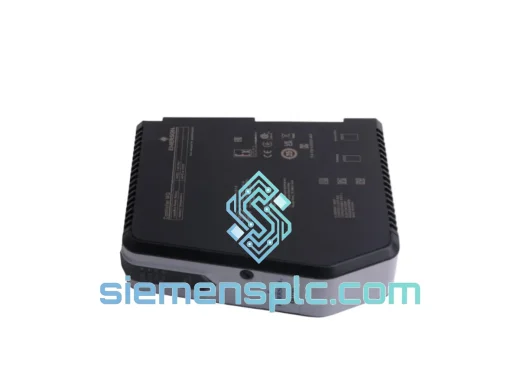
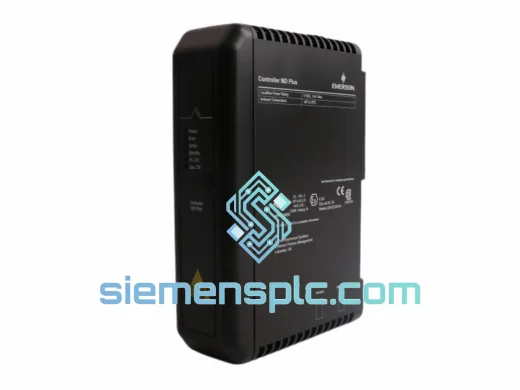
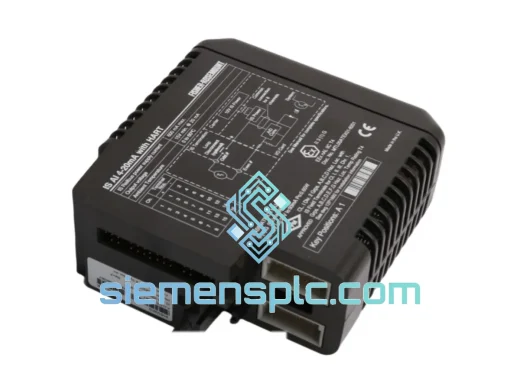
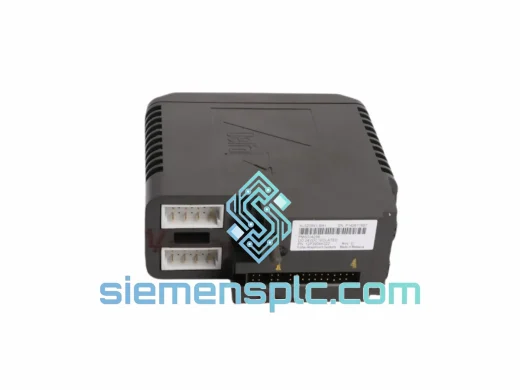
EMERSON KJ3208X1-BA1 12P3904X022 Discrete Output Card
DeltaV
Origin US
Discrete Output Card
Request verified availability, condition, replacement risk review, packing options and courier lead time for KJ2201X1-BA1.
Click Request Quote and the part number is inserted into the inquiry form automatically.
Core fields for model confirmation and RFQ routing. Detailed product narrative remains below.
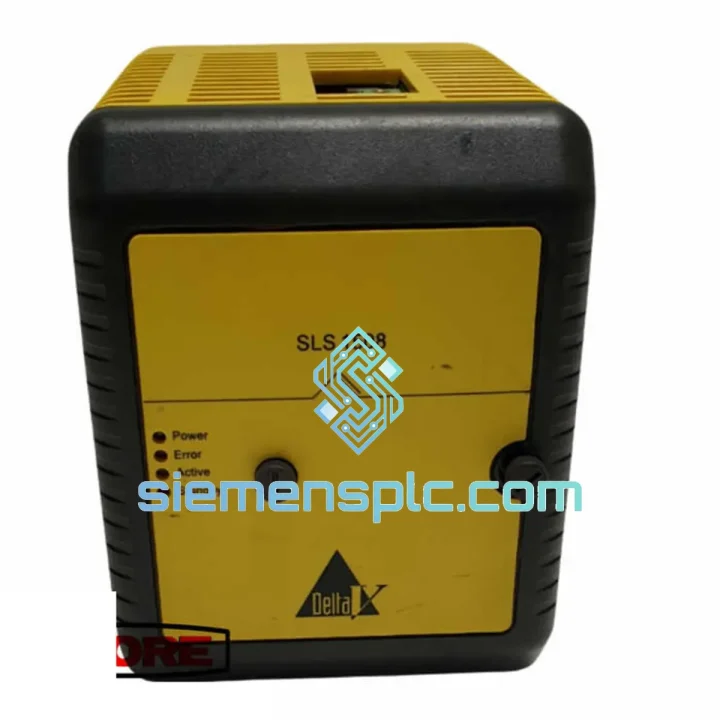
The EMERSON SLS1508, cross-referenced under part number KJ2201X1-BA1 and factory build code 12P3162X162, is a purpose-built Safety Logic Solver (SLS) module designed exclusively for the DeltaV SIS (Safety Instrumented System) platform. Its operational domain is strictly confined to the SIS execution layer — physically and electrically segregated from the Basic Process Control System (BPCS) backplane — in full conformance with the architectural independence requirements of IEC 61511-1 Clause 11.2. The module accepts field sensor signals, resolves voted safety logic, and commands final control elements to a defined safe state within a bounded, deterministic response window. Depending on the voting topology configured in the DeltaV SIS engineering environment, the SLS1508 supports Safety Integrity Level 2 in a 1oo1D single-module arrangement and SIL 3 when deployed in a 1oo2D paired configuration. These integrity levels make it directly applicable to Emergency Shutdown (ESD), Burner Management System (BMS), High-Integrity Pressure Protection System (HIPPS), and compressor anti-surge protection functions across oil and gas upstream and midstream, LNG liquefaction, petrochemical cracking, power generation, and specialty chemical manufacturing sectors.
The SLS1508 is not a repurposed DCS I/O card with a safety firmware overlay. It is a hardware-differentiated module with an independent processor subsystem, independent power regulation, and an independent communication path to the SIS controller — three attributes that collectively satisfy the hardware fault tolerance (HFT) requirements for SIL 2 and SIL 3 targets as defined in IEC 61508-2 Table 3. Its 8-channel I/O capacity, configurable per channel as analog input (4–20 mA HART), discrete input (24 VDC wet/dry contact), or discrete output (solid-state, 2 A), provides the flexibility to address a wide range of SIF loop topologies without requiring additional marshalling hardware.
Real-time Stock & RFQ: [email protected] | WhatsApp: +86 18359268345
| Parameter | Specification |
|---|---|
| Manufacturer | Emerson Electric Co. — Process Systems & Solutions |
| Module Designation | SLS1508 |
| Catalog Part Number | KJ2201X1-BA1 |
| Factory Build Reference | 12P3162X162 |
| Functional Classification | Safety Logic Solver (SLS) — SIS Execution Layer |
| Compatible Platform | Emerson DeltaV SIS (v11.3.1 and above) |
| Safety Integrity Level | SIL 2 (1oo1D); SIL 3 (1oo2D paired) |
| I/O Channel Count | 8 channels — AI (4–20 mA HART), DI (24 VDC), DO (solid-state 2 A) |
| SIS Bus Interface | DeltaV SIS proprietary bus — electrically isolated from BPCS backplane |
| Nominal Supply Voltage | 24 VDC (operating range: 18–32 VDC) |
| Maximum Power Dissipation | 8 W at full I/O load |
| Logic Scan Cycle | 100 ms fixed, deterministic |
| Channel Isolation Voltage | 500 V RMS (optical isolation per channel) |
| Output Driver Rating | 2 A continuous at 24 VDC; solid-state relay technology |
| Diagnostic Coverage (DC) | >99% for dangerous detected (DD) failure modes |
| Proof Test Interval | Up to 10 years (application-dependent per SRS) |
| Operating Temperature | 0 °C to +60 °C |
| Storage Temperature | −40 °C to +85 °C |
| Relative Humidity | 5% to 95% RH, non-condensing |
| EMC Immunity — Surge | IEC 61000-4-5 Level 4 (4 kV line-to-earth) |
| EMC Immunity — EFT | IEC 61000-4-4 Level 3 (2 kV) |
| Safety Certifications | TÜV Rheinland; IEC 61508 SIL 3; FM Class I Div 2; ATEX Zone 2 |
| Form Factor | DeltaV SIS carrier-mounted; DIN-rail compatible chassis |
| Module Weight | Approx. 500 g |
| Warranty | 12 months from confirmed shipment date |
At the processor level, the SLS1508 implements a dual-core lockstep architecture. Two independent microprocessors execute an identical copy of the compiled safety application on every scan cycle. At the end of each 100 ms execution window, the output vectors of both processors are compared by a dedicated comparison circuit before any physical output state change is committed. A single-bit discrepancy between the two computed output vectors is sufficient to assert a diagnostic alarm and, depending on the configured fail-safe output state, drive the affected channel to its de-energized safe position. This mechanism satisfies the IEC 61508-2 requirement for hardware fault tolerance HFT = 1 at the module level, without relying on external voting hardware.
Each of the eight I/O channels is individually optically isolated using high-speed optocouplers with a defined propagation delay of less than 1 ms. The isolation barrier sustains 500 V RMS continuously, preventing ground potential differences between field junction boxes and the control room cabinet from inducing common-mode noise into the logic processing domain. For analog input channels, the signal conditioning chain includes a 16-bit sigma-delta ADC with hardware overrange detection, ensuring that a shorted or open-loop 4–20 mA transmitter is flagged as a channel fault within one scan cycle rather than being silently clamped to a rail value.
EMC hardening is implemented at three layers. At the PCB level, a six-layer stackup with dedicated power and ground planes reduces radiated emissions and provides a low-impedance return path for high-frequency transients. At the component level, ferrite bead filters are placed in series on all I/O signal lines entering the PCB, attenuating conducted interference above 10 MHz. At the module boundary, transient voltage suppression (TVS) diodes rated to IEC 61000-4-5 Level 4 clamp surge events to safe levels before they reach the isolation barrier. The combined result is a module that meets IEC 61000-4-2 (ESD 8 kV contact), IEC 61000-4-3 (radiated immunity 10 V/m), and IEC 61000-4-4 (EFT 2 kV) without external filtering — a measurable advantage in cabinets co-located with variable-frequency drives or large motor starters.
The SIS bus communication layer uses a time-division multiplexed frame structure with CRC-16 error detection appended to every data frame. The SIS controller polls each connected SLS module at a fixed interval and expects a valid CRC-verified response within a defined timeout window. A missed response or CRC failure increments a fault counter; three consecutive failures trigger a communication fault alarm surfaced to the DeltaV SIS operator station within one bus scan cycle (typically under 100 ms). This deterministic fault detection path ensures that a degraded communication link is never silently masked — a systematic capability requirement under IEC 61508 SC 3.
Output drivers use solid-state relay technology with integrated open-load detection circuitry. During the de-energized (safe) state, the driver continuously injects a low-level diagnostic current through the load circuit and monitors the resulting voltage signature. An open-circuit condition — indicating a broken wire or failed solenoid coil — is detected within one scan cycle and reported as a channel diagnostic fault. This capability enables partial stroke testing (PST) of final elements to be executed under software control without requiring manual field intervention, directly reducing proof test downtime in continuous-process facilities where unplanned shutdowns carry significant economic consequence.
Each EMERSON SLS1508 KJ2201X1-BA1 12P3162X162 unit dispatched from our Xiamen, China facility passes a structured incoming inspection protocol before it is allocated to any customer order. The inspection sequence covers: physical examination of the PCB surface, connector pin geometry, and label authenticity against Emerson reference specimens; firmware version verification against the Emerson published release matrix for the declared hardware revision; and a powered functional verification confirming that the module’s internal self-test sequence completes without active fault codes. Units that do not pass all three stages are quarantined and excluded from customer stock.
Where original OEM packaging is intact, it is preserved through the entire storage and dispatch process. New-stock units are supplied in the original Emerson anti-static bag, foam-lined carton, and factory-sealed outer box. A Certificate of Conformance (COC) accompanies every shipment. For SIL-critical procurement, factory test reports, TÜV certification copies, and material traceability documentation are available upon written request and are provided at no additional charge.
International logistics from Xiamen are executed via DHL Express, FedEx International Priority, and UPS Worldwide Express. Typical transit times are 3–5 business days to Western Europe, 4–6 business days to North America, and 2–3 business days to Southeast Asia and Northeast Asia. All shipments include a commercial invoice, detailed packing list, and certificate of origin. Export classification is reviewed against current ECCN and EAR99 determinations prior to each shipment. Trade terms available include EXW Xiamen, FOB Xiamen, and CIF named destination port. For in-stock units, same-day dispatch is available for orders confirmed before 14:00 CST. A 12-month warranty covers all units against manufacturing defects and premature failure under specified operating conditions, with a target replacement dispatch of 5 business days from fault confirmation.
Email: [email protected]
WhatsApp: +86 18359268345
Web: siemensplc.com
Location: Xiamen, China
© 2026 siemensplc.com. All rights reserved.
We check the full part number, brand, series and visible nameplate information before quotation.
Sales confirms stock path, condition option, quantity and realistic lead time for export dispatch.
DHL, FedEx, UPS or buyer courier arrangements can be reviewed with packing requirements.
Similar brand or category products for fast comparison and multi-item RFQ lists.