EPRO
RFQ Ready
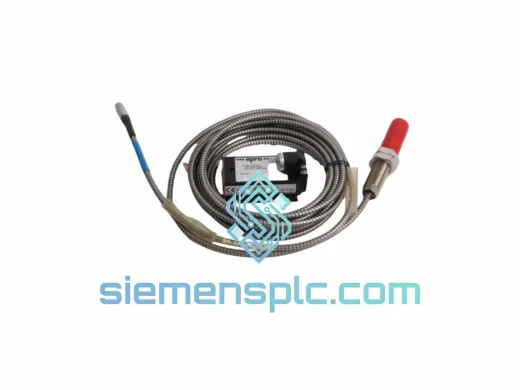
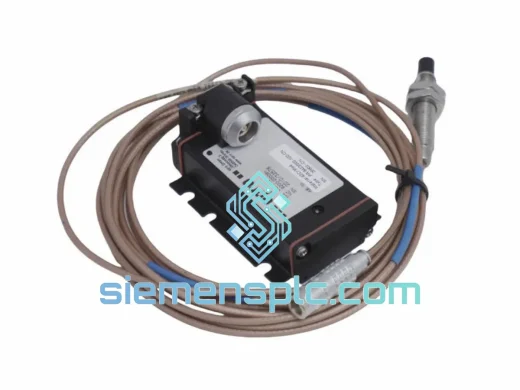
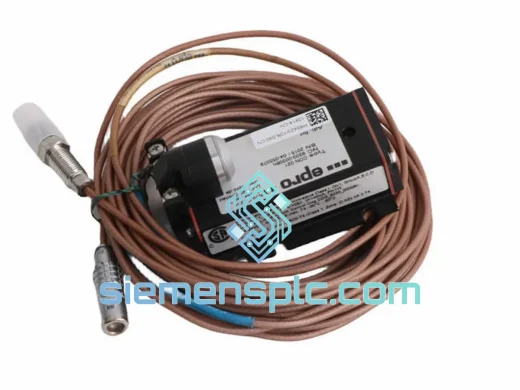
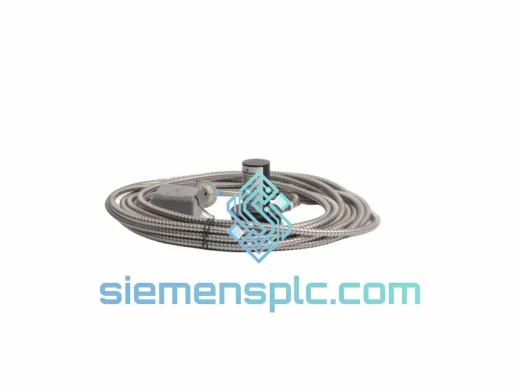
EPRO PR9268/302-000 Velocity Sensor – PR9268 Series
PR9268 Series
Origin DE
Velocity Sensor
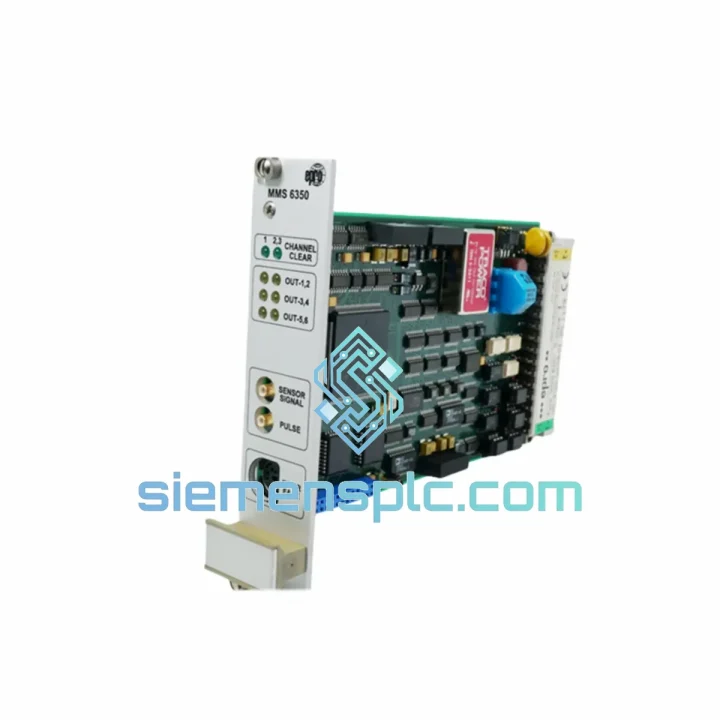
Request verified availability, condition, replacement risk review, packing options and courier lead time for MMS6350/DP.
Click Request Quote and the part number is inserted into the inquiry form automatically.
Core fields for model confirmation and RFQ routing. Detailed product narrative remains below.
Your turbine tripped. The overspeed protection module is flagged. Production is at zero. You’ve already called three suppliers and gotten the same answer: 2–6 weeks lead time. That’s not acceptable when a gas turbine compressor station is offline, when a steam turbine in a refinery is cold, or when a power plant is buying spot electricity to cover its own load.
The EPRO MMS6350/DP is a dual-processor digital overspeed protection module from the MMS6000 machine protection platform. It is the safety-critical component that stands between your rotating asset and a catastrophic overspeed event. When it fails — or when a false trip locks out your machine — you need a verified replacement on your bench within 48 hours, not 48 days. We stock it. We ship it today from Xiamen.
URGENT REQUIREMENT? Contact: [email protected] | WhatsApp: +86 18359268345
| Parameter | Specification |
|---|---|
| Part Number | MMS6350/DP |
| Manufacturer | EPRO (Baker Hughes Group) |
| Series | MMS6000 Machine Protection System |
| Function | Digital Overspeed Protection — Dual Processor |
| Architecture | Dual-channel independent voting (DP) |
| Speed Input | Magnetic pickup / eddy current proximity probe |
| Trip Output | Relay outputs — configurable NC/NO |
| Setpoint Configuration | Software-configurable via MMS6000 configuration tool |
| Safety Rating | Suitable for SIL-rated safety instrumented systems |
| Operating Temperature | 0°C to +60°C |
| Humidity | 5% to 95% RH, non-condensing |
| Weight | 1,320 g |
| Form Factor | MMS6000 rack-mount module |
| Origin | Germany |
| Stock Status | ✔ Ready to Ship — Xiamen Warehouse |
Common failure signatures for MMS6350/DP:
In the field, this module typically presents failure in one of three ways. First, a spurious trip — the machine trips on overspeed but the tachometer signal is clean and within normal operating range. This almost always points to internal comparator drift or a degraded voting channel inside the DP architecture. Second, a channel fault alarm — the module’s self-diagnostics flag one processor channel as failed, leaving you running on a single-channel trip logic. This is a pre-failure state; do not ignore it. Third, complete loss of speed signal output — the module stops passing speed data to the DCS, which may cause the control system to default to a safe-state trip or, worse, mask the actual machine speed entirely.
Before you pull the module, verify these four things:
1. Sensor integrity first. Confirm your magnetic pickup or proximity probe gap is within spec (typically 0.5–1.5 mm for eddy current probes). A gap drift of 0.3 mm can produce enough signal amplitude variation to confuse the module’s threshold detection. Check probe output voltage at rated speed — it should be consistent and within the module’s input range.
2. Rack backplane seating. The MMS6000 rack uses a card-edge connector. Vibration over time causes micro-fretting corrosion on the gold contacts. Before condemning the module, reseat it firmly. Clean the connector with isopropyl alcohol if the unit has been in service for more than 3 years in a high-vibration environment.
3. Configuration backup is mandatory before swap. The MMS6350/DP stores its overspeed setpoints, time delays, and channel voting logic in non-volatile memory. A replacement module ships with factory defaults — typically a very low overspeed setpoint that will immediately trip your machine on startup. You must upload your site-specific configuration file before energizing the new module. If you don’t have the configuration file backed up, you will need to reconstruct it from your original commissioning documentation or the machine’s rated speed nameplate data.
4. Firmware version matching. If your MMS6000 rack is running a specific firmware baseline — particularly in plants where the system was commissioned before 2015 — confirm that the replacement module’s firmware is compatible with your rack controller version. Mismatched firmware can cause the module to fail its self-test on boot or produce erratic trip behavior. Contact us with your rack serial number and we will confirm firmware compatibility before shipment.
Replacement procedure summary: Power down the rack or use hot-swap procedure if your rack revision supports it → extract the failed module using the ejector levers → inspect the backplane connector for damage → seat the replacement module firmly until the locking tabs engage → restore configuration via the MMS6000 configuration software → verify speed signal acquisition and trip setpoint confirmation on the module’s front-panel display → perform a controlled overspeed test at reduced speed if plant safety procedures permit → return to service.
The MMS6350/DP was not designed for a climate-controlled server room. It was built for turbine halls where ambient temperatures swing from 5°C at startup to 55°C at full load, where the floor vibrates at 10–200 Hz from adjacent rotating machinery, and where humidity from cooling water systems keeps the air at 80%+ RH for months at a time.
The module’s PCB uses conformal coating on all signal-level components, providing a barrier against condensation, airborne oil mist, and conductive particulates common in compressor stations and refineries. The dual-processor architecture means that even if one channel’s analog front-end degrades due to thermal cycling, the second channel maintains trip integrity and the module flags the fault rather than silently failing.
Vibration resistance is achieved through a combination of through-hole component mounting on critical circuits, potted transformer assemblies, and the mechanical rigidity of the MMS6000 rack’s card-guide system. Units that have been in continuous service for 10+ years in offshore compressor applications have been returned to us for refurbishment — not replacement — because the core electronics remain functional. That is the build quality standard you are working with.
Every unit we ship has been visually inspected under magnification for PCB delamination, capacitor bulge, relay contact wear, and connector pin integrity. Functional units are powered up and verified for speed signal acquisition and trip relay operation before packaging. We do not ship modules that have not passed this bench check.
Our warehouse is located in Xiamen, Fujian Province — one of China’s primary export hubs with direct access to DHL, FedEx, and UPS international express networks. For urgent industrial replacement orders, this geography matters: Xiamen has daily direct flights to major hub airports in Europe, the Middle East, Southeast Asia, and North America, which means your module is not sitting in a secondary city waiting for a connecting flight.
Standard express timeline from order confirmation:
Same-day dispatch is available for orders confirmed before 14:00 CST. DHL Express typically delivers to Western Europe in 3–4 business days, to the Middle East in 2–3 business days, to Southeast Asia in 1–2 business days, and to North America in 4–5 business days. FedEx International Priority is available as an alternative carrier for destinations where DHL performance is inconsistent.
We handle all export documentation in-house: commercial invoice, packing list, certificate of origin, and — where required — an end-user declaration for controlled industrial electronics. For customers in countries with specific import requirements for electronic modules (EU, India, Brazil), we can prepare documentation in advance to prevent customs clearance delays. We have shipped to 40+ countries and understand the documentation requirements for each major market.
Packaging is anti-static bag → foam-lined rigid carton → outer corrugated box with fragile and orientation markings. The module will not shift in transit. A full tracking number is provided within 2 hours of dispatch, and we monitor shipments proactively — if a customs hold occurs, we contact you immediately with the documentation needed to clear it.
For customers with plant shutdown windows measured in days, not weeks: tell us your deadline. We will tell you honestly whether we can meet it, and if we can, we will prioritize your order accordingly.
Email: [email protected]
WhatsApp: +86 18359268345
Web: siemensplc.com
© 2026 siemensplc.com. All rights reserved.
We check the full part number, brand, series and visible nameplate information before quotation.
Sales confirms stock path, condition option, quantity and realistic lead time for export dispatch.
DHL, FedEx, UPS or buyer courier arrangements can be reviewed with packing requirements.
Similar brand or category products for fast comparison and multi-item RFQ lists.