FOXBORO
RFQ Ready
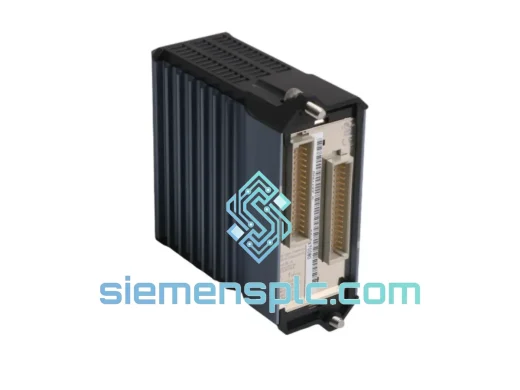
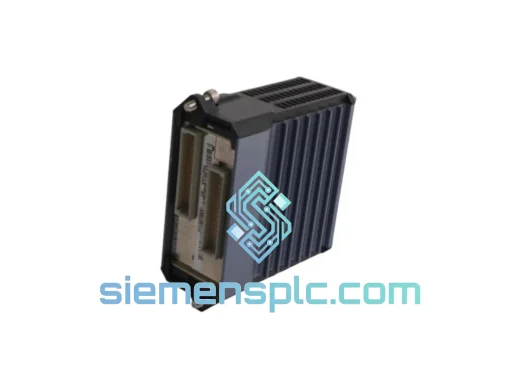
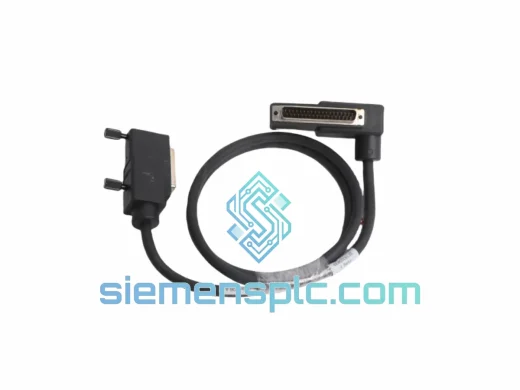
FOXBORO RH916DB DCS Termination Cable – I/A Series
I/A Series
Origin FR
DCS Termination Cable
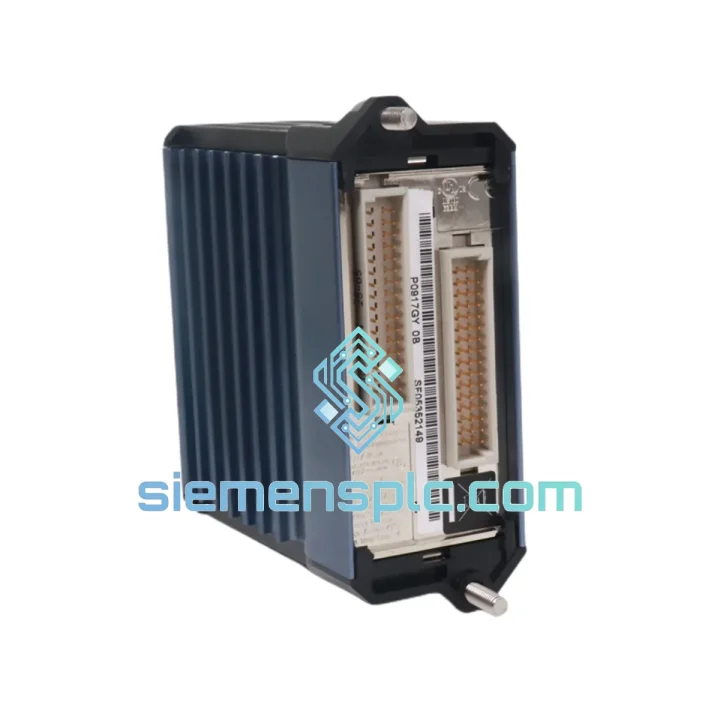
Request verified availability, condition, replacement risk review, packing options and courier lead time for FBM207C.
Click Request Quote and the part number is inserted into the inquiry form automatically.
Core fields for model confirmation and RFQ routing. Detailed product narrative remains below.
In continuous-process environments — refining, power generation, chemical manufacturing — the discrete input tier is where physical plant reality meets the control system’s decision logic. A valve is open or closed. A motor is running or tripped. A pressure switch has actuated. These binary states, sourced from dry-contact and wet-contact field devices, must be acquired with deterministic accuracy and delivered to the Control Processor without ambiguity, latency, or cross-channel contamination. The FOXBORO FBM207C is engineered to fulfill exactly that function within the I/A Series Distributed Control System.
The FBM207C is a multi-channel discrete contact sense input module that plugs directly into the I/A Series FBM baseplate. It translates field contact closures into digital signals transmitted over the I/A Series Nodebus to the site’s Control Processor — CP40B, CP60S, CP270, or CP280 — without requiring external signal conditioning hardware. Its architecture reflects decades of FOXBORO field experience: channel-to-channel galvanic isolation, rear-termination via baseplate field wiring terminals, and hot-swap capability that allows module replacement without process interruption.
Across refineries in the Middle East, power stations in Southeast Asia, and chemical complexes in Europe, the FBM207C has accumulated an operational track record measured in decades. Its continued deployment in brownfield facilities — where DCS migration is cost-prohibitive or operationally impractical — underscores its engineering durability and the depth of its integration into existing control architectures.
Real-time Stock & RFQ: [email protected] | WhatsApp: +86 18359268345
| Parameter | Specification |
|---|---|
| Part Number | FBM207C |
| Module Category | Discrete Contact Sense Input (DI) |
| Compatible DCS Platform | FOXBORO I/A Series |
| Input Signal Type | Dry contact / wet contact (field-powered) |
| Communication Bus | I/A Series Nodebus (Fieldbus Module Bus) |
| Channel Isolation | Galvanic isolation, channel-to-channel and channel-to-bus |
| Power Source | Derived from I/A Series FBM baseplate; no external PSU required |
| Form Factor | Standard I/A Series FBM plug-in module |
| Mounting Method | Rear-termination via baseplate field wiring terminals |
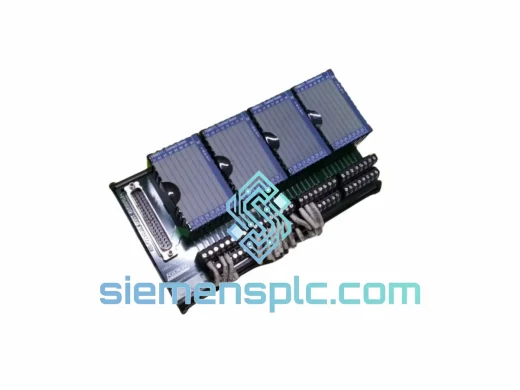
| Compatible Baseplates | I/A Series 4-slot and 8-slot FBM baseplates |
| Compatible Control Processors | CP40B, CP60S, CP270, CP280 |
| Operating Temperature | 0°C to +60°C |
| Storage Temperature | -40°C to +70°C |
| Relative Humidity | 5% to 95% non-condensing |
| Vibration / Shock Compliance | IEC 60068-2 environmental test standards |
| Signal Standard Compliance | IEC 61131-2 discrete input thresholds |
| Approximate Weight | 320 g |
| Warranty | 12 months from date of shipment |
The FBM207C’s internal architecture addresses three failure modes that historically compromise discrete input reliability in industrial environments: ground loop injection, cross-channel leakage, and bus communication latency under high-scan-rate conditions.
Galvanic Isolation Architecture: Each input channel is isolated from adjacent channels and from the module’s internal bus interface using optocoupler-based galvanic barriers. This design prevents ground potential differences between field devices — common in large-footprint plants where field wiring traverses multiple earthing zones — from inducing false state transitions. The isolation barrier sustains the channel’s logical integrity even when field wiring is routed alongside 480 V AC motor power cables, a scenario that routinely causes nuisance trips in non-isolated input architectures.
Contact Debounce and State Filtering: Mechanical contacts — limit switches, pressure switches, relay auxiliary contacts — produce bounce transients during state transitions, typically 1–20 ms in duration. The FBM207C incorporates hardware-level debounce filtering that suppresses these transients before the signal reaches the Nodebus scan cycle. This eliminates false ON/OFF transitions that would otherwise generate spurious alarms or trigger unintended interlock logic in the CP’s function block execution.
EMC Design and Shielding: The module’s PCB layout follows IEC 61000-4 series EMC design principles. Signal traces carrying field-level inputs are physically separated from the Nodebus interface circuitry, with ground plane segmentation that prevents high-frequency noise coupled from the bus from appearing on the input signal paths. This is particularly relevant in substations and motor control centers where variable-frequency drives generate conducted and radiated interference across a broad spectrum.
Nodebus Communication Determinism: The FBM207C participates in the I/A Series Nodebus scan cycle as a standard FBM peripheral. Its internal state registers are updated synchronously with the CP’s scan period, ensuring that contact state changes are captured within one scan cycle — typically 100 ms to 500 ms depending on CP configuration. This deterministic update behavior is a prerequisite for SIS-adjacent applications where input latency must be bounded and documented.
Hot-Swap Mechanical Design: The module’s connector and locking mechanism are rated for repeated insertion/extraction cycles without degradation of contact resistance. During extraction, the baseplate’s bus interface logic detects the module’s absence and flags the associated I/O points as faulted in the CP’s diagnostic registers — providing operators with immediate visibility of the maintenance event rather than silent data loss.
Every FOXBORO FBM207C unit dispatched from our Xiamen, China facility undergoes a structured acceptance and verification process before shipment. Visual inspection confirms PCB integrity, connector pin condition, firmware revision labeling, and absence of physical damage from prior handling. Each module is then seated in a live I/A Series test baseplate and powered up; Nodebus communication handshake, LED status behavior, and channel-level contact sense response are verified against factory specification parameters.
Units sourced as new-in-box are verified against original FOXBORO factory packaging and documentation. Refurbished units are clearly graded and accompanied by a test report detailing the verification steps performed. Upon request, we provide photographic condition documentation and a certificate of conformance issued by our technical team.
Packaging follows IEC 61340-5-1 ESD protection requirements: anti-static bags, foam cushioning, and rigid outer cartons rated for international air and sea freight handling. Export documentation — commercial invoice, packing list, certificate of origin, and HS code classification — is prepared for each shipment to facilitate customs clearance in destination countries across Asia, the Middle East, Europe, and the Americas.
Standard in-stock orders are dispatched within 1–2 business days. Expedited freight options (DHL Express, FedEx Priority, TNT) are available for urgent plant maintenance situations, with transit times of 3–5 business days to most international destinations. For large-volume orders or scheduled maintenance programs, consolidated shipment arrangements can be coordinated to optimize freight cost.
Email: [email protected]
WhatsApp: +86 18359268345
Web: siemensplc.com
Location: Xiamen, China
© 2026
We check the full part number, brand, series and visible nameplate information before quotation.
Sales confirms stock path, condition option, quantity and realistic lead time for export dispatch.
DHL, FedEx, UPS or buyer courier arrangements can be reviewed with packing requirements.
Similar brand or category products for fast comparison and multi-item RFQ lists.