FOXBORO
RFQ Ready
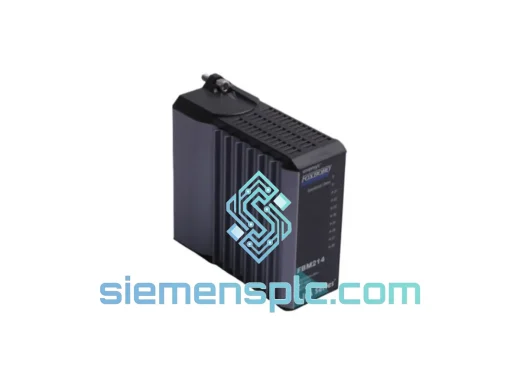
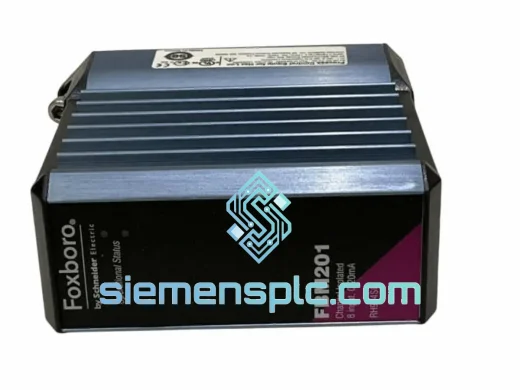
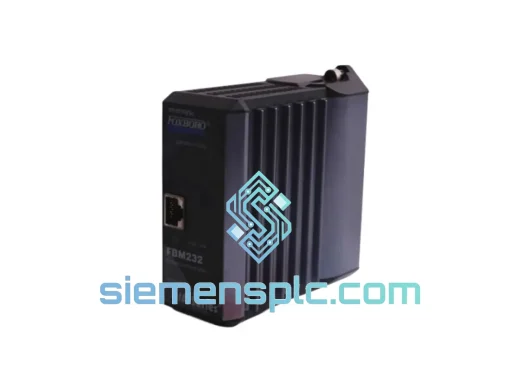
FOXBORO FBM233 P0926GX Ethernet Communication Module
I/A Series
Origin FR
Ethernet Communication Module
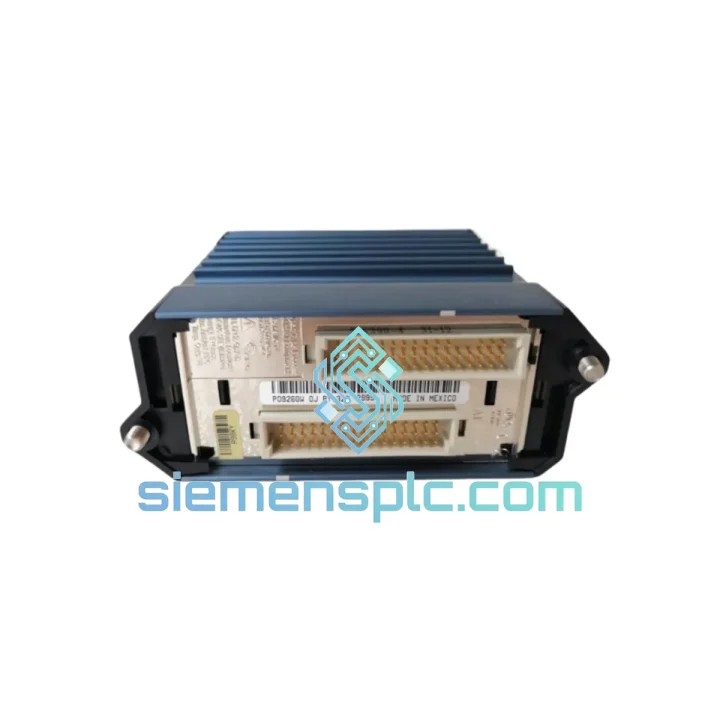
Request verified availability, condition, replacement risk review, packing options and courier lead time for FBM230 P0926GU.
Click Request Quote and the part number is inserted into the inquiry form automatically.
Core fields for model confirmation and RFQ routing. Detailed product narrative remains below.
The FBM230, ordered under reference code P0926GU, is a dedicated Nodebus communication interface module designed for deployment within Foxboro I/A Series distributed control system (DCS) cabinets. Its function is structurally distinct from field I/O modules: rather than conditioning analog or discrete signals at the process boundary, the FBM230 manages the serial data arbitration layer between the Field Control Processor (FCP) and the downstream FBM I/O subsystem. In a correctly configured I/A Series cabinet, the FCP270 or FCP280 issues cyclic polling requests across the Nodebus at a fixed scan interval; the FBM230 governs the token-passing sequence that determines which FBM module responds within each scan window. Degradation of this arbitration function — whether from hardware fault, connector contamination, or address conflict — produces measurable scan jitter that propagates directly into loop execution timing. For applications such as reactor temperature control, compressor anti-surge protection, or distillation column pressure regulation, scan jitter above threshold is operationally unacceptable and constitutes a process risk event.
The module’s physical construction follows the standard I/A Series single-slot FBM carrier form factor, enabling direct plug-in installation into any compatible baseplate without mechanical modification. Power is drawn from the cabinet backplane at the 5 VDC logic rail and 24 VDC field rail, with internal DC-DC conversion providing regulated supply to the communication ASIC and management processor independently. The front-panel LED array — COMM, FAULT, and ACTIVE indicators — provides first-level diagnostic visibility without requiring a connected engineering workstation, a practical advantage during live plant fault isolation where workstation access may be restricted by safety procedures. Nodebus station address is configured via DIP switch on the module body, supporting addresses 1 through 32 within a single Nodebus segment.
From a lifecycle management perspective, the FBM230 P0926GU is a direct plug-in replacement for earlier FBM230 hardware revisions within the same cabinet slot. No FCP configuration file modification or firmware re-flashing is required for like-for-like substitution, provided the DIP switch address settings are replicated from the outgoing unit. This characteristic positions the FBM230 as a mandatory line item in any I/A Series critical spare parts inventory, particularly for facilities operating beyond the original Foxboro OEM support window where factory replacement lead times are extended or unpredictable.
Real-time Stock & RFQ: [email protected] | WhatsApp: +86 18359268345
| Parameter | Specification |
|---|---|
| Part Number | FBM230 |
| Order Reference | P0926GU |
| Manufacturer | Foxboro (Schneider Electric) |
| Product Series | I/A Series DCS |
| Module Function | Nodebus Serial Communication Interface |
| Compatible Processors | FCP270, FCP280 |
| Communication Protocol | Foxboro Nodebus (proprietary token-passing serial) |
| Nodebus Address Range | 1–32 (DIP switch configurable) |
| Backplane Power Supply | 5 VDC (logic) + 24 VDC (field), backplane-sourced |
| Operating Temperature | 0°C to +60°C |
| Storage Temperature | -40°C to +85°C |
| Relative Humidity | 5%–95%, non-condensing |
| Module Weight | Approx. 630 g |
| Form Factor | Single-slot FBM carrier, I/A Series standard baseplate |
| Front-Panel Diagnostics | COMM / FAULT / ACTIVE LED indicators |
| ESD Protection | TVS diode clamping at backplane connector, ±2 kV contact discharge (IEC 61000-4-2) |
| Warranty | 12 months from date of shipment |
| Country of Origin | China (Xiamen stocking point) |
The FBM230’s internal architecture implements a two-plane separation between the Nodebus communication engine and the module management processor. The communication ASIC operates as an autonomous state machine handling all Nodebus protocol functions — frame synchronization, CRC-16 validation, token acquisition, collision detection, and retry sequencing — without sharing execution cycles with the management processor. This architectural separation has a concrete operational consequence: a Nodebus CRC error or token collision event is captured, logged, and reported to the FCP as a diagnostic event without interrupting the module’s self-monitoring functions. The module does not enter a fault-halt state on communication errors; it continues operating and reporting, which is the correct behavior for a component embedded in a continuous process control loop where silent failure is more dangerous than a flagged fault.
Electromagnetic compatibility (EMC) hardening is implemented at three distinct layers. At the PCB level, Nodebus signal traces are routed with controlled impedance over a continuous ground plane, suppressing radiated emissions and maintaining signal integrity across the operating temperature range. At the backplane interface boundary, opto-isolation provides galvanic separation between the FCP’s logic ground reference and the FBM230’s internal ground, eliminating ground loop current paths that are endemic in large industrial cabinets with mixed-voltage backplane architectures. At the connector level, TVS diodes clamp transient events to within safe operating limits per IEC 61000-4-2, protecting the communication ASIC from ESD events introduced during module handling or hot-swap operations.
The internal power supply section uses a fixed-frequency synchronous buck converter topology with a switching frequency above 200 kHz. This places all switching harmonics well above the Nodebus signal band, which operates in the low-frequency serial range, eliminating the need for additional LC filtering on communication signal lines and contributing to the module’s low conducted emissions profile. An internal watchdog timer monitors both the communication ASIC and the management processor on independent channels; if either processor fails to service the watchdog within the configured timeout window, the module asserts a FAULT signal to the FCP and executes an autonomous reset sequence. This behavior prevents silent data corruption — a condition where a faulted module continues to occupy a Nodebus address without generating valid data, which would cause the FCP to operate on stale process values without generating an alarm.
Each FBM230 P0926GU unit supplied through siemensplc.com is sourced via verified industrial procurement channels with traceable documentation. Prior to shipment, every unit undergoes a structured pre-dispatch inspection: physical examination of PCB surface, connector pin condition, and label integrity; power-on verification with LED status confirmation against expected COMM and ACTIVE states; and Nodebus communication handshake test against a reference FCP bench configuration where test infrastructure permits. Units that do not satisfy all inspection criteria are quarantined and removed from available inventory. Pre-shipment inspection photographs and video documentation are available on request at no additional charge.
All shipments originate from Xiamen, China, utilizing major international express freight carriers including DHL Express, FedEx International Priority, and UPS Worldwide Expedited. Indicative transit times: Southeast Asia 2–4 business days; Europe and Middle East 3–6 business days; North America 4–7 business days. Each shipment includes commercial invoice, packing list, and country of origin certificate to support customs clearance at the destination port. All electronic modules are packed in ESD-safe anti-static bags within foam-lined cartons rated for the module’s weight and dimensional envelope. A 12-month warranty covering verified manufacturing defects applies from the date of shipment.
Email: [email protected]
WhatsApp: +86 18359268345
Web: siemensplc.com
Location: Xiamen, China
© 2026 siemensplc.com. All rights reserved.
We check the full part number, brand, series and visible nameplate information before quotation.
Sales confirms stock path, condition option, quantity and realistic lead time for export dispatch.
DHL, FedEx, UPS or buyer courier arrangements can be reviewed with packing requirements.
Similar brand or category products for fast comparison and multi-item RFQ lists.