Fuji Electric
RFQ Ready
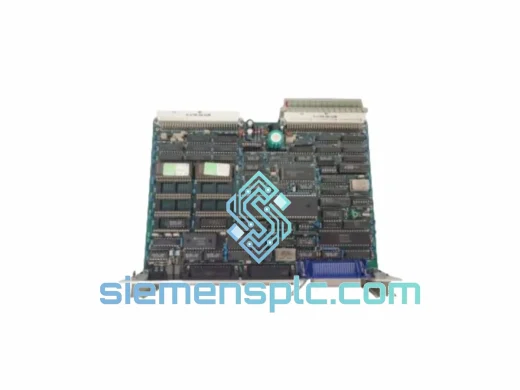
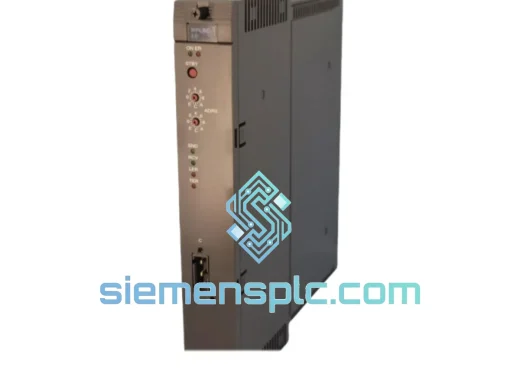
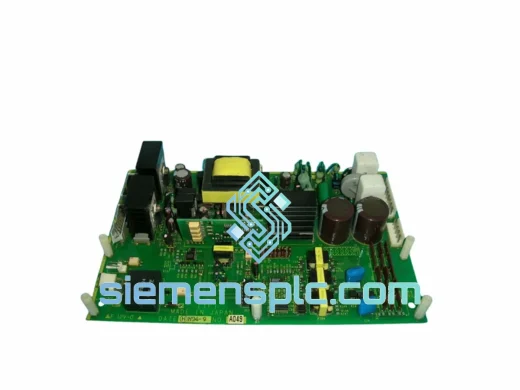
FUJI Electric EP-3531D C1-Z1 Inverter Control Board
P-3531D C1-Z1 FRENIC Series
Origin Japan
Inverter Drive Control Board
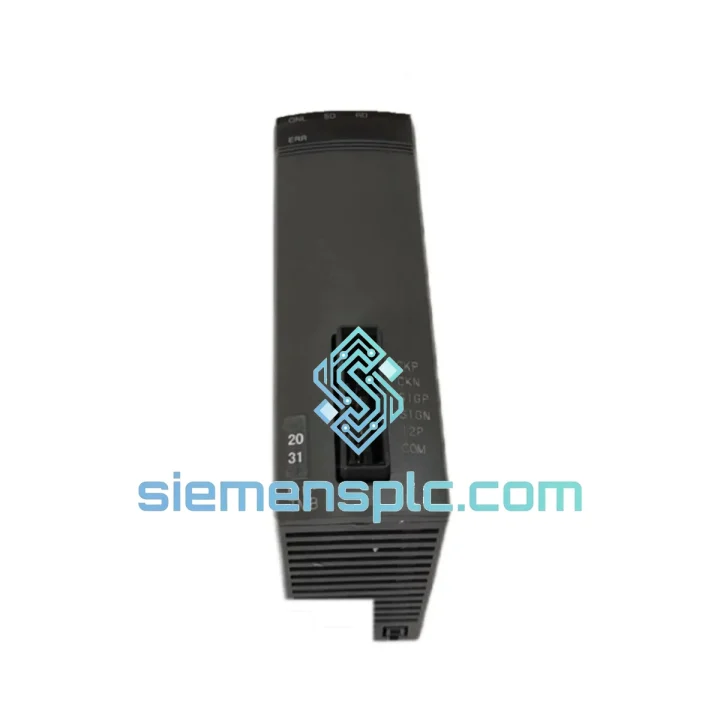
Request verified availability, condition, replacement risk review, packing options and courier lead time for NP1L-TMB.
Click Request Quote and the part number is inserted into the inquiry form automatically.
Core fields for model confirmation and RFQ routing. Detailed product narrative remains below.
The NP1L-TMB occupies a structurally defined role within the Fuji Electric MICREX-NX control platform: it serves as the dedicated operator interface node mounted directly on the NX-series backplane, bridging the gap between the CPU’s internal process state and the human operator standing at the panel door. Unlike standalone HMI terminals connected via serial or Ethernet, the NP1L-TMB communicates over the NX internal bus, which means operator commands and status reads are processed within the same deterministic scan cycle as the control logic itself — eliminating the latency and protocol overhead associated with external HMI polling.
In a typical MICREX-NX rack configuration, the CPU module (NP1PS series) arbitrates the backplane bus at a fixed cycle time. The NP1L-TMB participates in this bus as a peripheral node, receiving process variable data and alarm states pushed by the CPU during each output phase, and returning operator-initiated setpoint changes or acknowledgment signals during the input phase. This tight coupling means that an operator pressing a function key on the NP1L-TMB interface does not wait for an asynchronous HMI poll — the input is captured in the next CPU scan, typically within 1–10 ms depending on the configured scan period. For process applications where operator response time directly affects safety interlock behavior, this architectural characteristic is not a convenience feature — it is a functional requirement.
The module’s physical design reflects the thermal and electromagnetic constraints of industrial panel environments. The housing is constructed to withstand continuous operation across an ambient temperature range of 0°C to 55°C, with storage tolerance extending to -20°C to +70°C. Vibration resistance conforms to IEC 60068-2-6 test profiles, making the module suitable for installation in panels mounted on or near rotating machinery, compressors, or press equipment where structural vibration is a persistent condition. The connector interface uses a keyed, positive-locking backplane edge connector that prevents misalignment during installation and resists intermittent contact caused by panel vibration over extended service periods.
From a system maintenance perspective, the NP1L-TMB’s modular form factor directly reduces mean time to repair (MTTR). When an operator interface failure is diagnosed, the module can be extracted from the backplane and replaced without disturbing adjacent I/O modules, power supply connections, or field wiring. The CPU retains its program and configuration in non-volatile memory, so the replacement module is operational as soon as the rack is powered — no re-programming or re-configuration of the operator interface is required at the module level. This characteristic is particularly valuable in continuous-process industries where planned maintenance windows are measured in hours, not days.
Real-time Stock & RFQ: [email protected] | WhatsApp: +86 18359268345
| Parameter | Specification |
|---|---|
| Part Number / SKU | NP1L-TMB |
| Manufacturer | Fuji Electric Co., Ltd. |
| Series | MICREX-NX |
| Module Category | Operator Interface Module (Backplane-Mount HMI Node) |
| Bus Interface | MICREX-NX internal backplane bus |
| Operating Temperature | 0°C to +55°C (ambient, panel-mount) |
| Storage Temperature | -20°C to +70°C |
| Relative Humidity | 10% to 90% RH, non-condensing |
| Vibration Resistance | IEC 60068-2-6 compliant |
| Form Factor | Modular, NX-series backplane slot |
| Mounting | Direct backplane insertion, keyed connector |
| Weight | Approx. 150 g |
| Country of Origin | Japan |
| Warranty | 12 months from date of shipment |
| Compliance | Fuji Electric industrial standards; CE-compatible platform |
The NP1L-TMB’s integration into the MICREX-NX backplane bus architecture carries several hardware-level implications that distinguish it from externally connected operator terminals.
Backplane Bus Participation and Scan Synchronization: The NX backplane operates as a synchronous parallel bus, with the CPU acting as bus master. Peripheral modules, including the NP1L-TMB, are addressed in a fixed slot-based scheme. During each CPU scan cycle, the bus master sequentially reads input data from all peripheral slots and writes output data to them. The NP1L-TMB’s input data — operator keystrokes, setpoint entries — is captured in the input phase and is available to the CPU’s ladder or function block program within the same scan. This eliminates the asynchronous polling latency inherent in Ethernet-connected or RS-232-connected HMI terminals, where the HMI’s own scan cycle and communication protocol overhead introduce variable delays of 50–500 ms.
EMC Design and Signal Integrity: Industrial panel environments expose backplane-mounted modules to conducted and radiated electromagnetic interference from variable-frequency drives, contactors, and high-current switching loads. The NP1L-TMB’s PCB layout follows Fuji Electric’s standard EMC design rules for the NX platform: power supply decoupling capacitors are placed at the module’s backplane connector pins to suppress high-frequency conducted noise from the rack power bus; signal lines between the backplane interface logic and the operator interface circuitry are routed with controlled impedance and guarded by ground planes to minimize capacitive coupling from adjacent high-voltage traces. The module housing provides a Faraday enclosure for the internal electronics, with the backplane connector frame bonded to chassis ground to provide a low-impedance return path for induced currents.
Connector Mechanical Reliability: The backplane edge connector uses a gold-plated contact surface with a specified insertion/extraction cycle rating consistent with Fuji Electric’s NX module family standards. The keyed mechanical guide prevents incorrect slot insertion, and the positive-locking retention mechanism maintains consistent contact pressure across the connector’s full pin count under vibration conditions. This is a non-trivial design consideration: intermittent backplane contact in an operator interface module can produce spurious operator inputs or missed alarm acknowledgments — failure modes that are difficult to diagnose and potentially hazardous in safety-relevant applications.
Power Consumption and Thermal Management: The NP1L-TMB draws its operating power from the NX rack’s internal power bus. Its power consumption is within the NX platform’s per-slot power budget, allowing it to be installed in any available slot without requiring power budget recalculation in standard rack configurations. The module’s thermal dissipation is managed passively through the housing’s surface area and the rack’s natural convection airflow path — no forced cooling is required for operation within the specified ambient temperature range.
Every NP1L-TMB unit supplied through siemensplc.com is sourced from verified supply channels with full traceability documentation. Pre-shipment inspection covers physical integrity, label authenticity, connector condition, and — where test fixtures are available — functional verification against known-good reference systems. Units are packed in anti-static (ESD-safe) bags with moisture barrier protection, placed in rigid foam-lined cartons rated for international air freight handling. A certificate of conformity and supply chain traceability record are available upon request.
Shipments originate from Xiamen, China, a major international logistics hub with direct air freight connections to Europe, North America, Southeast Asia, the Middle East, and Oceania. Standard international shipments are dispatched via DHL Express, FedEx International Priority, or UPS Worldwide Expedited, with door-to-door transit times of 3–7 business days to most destinations. Full export documentation — commercial invoice, packing list, certificate of origin, and HS code declaration — is prepared for every international shipment. For orders requiring specific customs documentation, CITES certificates, or end-user declarations, our logistics team coordinates the required paperwork prior to dispatch.
A 12-month warranty covers manufacturing defects and premature failure under normal operating conditions. Warranty claims are processed with a target response time of 1 business day; replacement units are dispatched from Xiamen stock upon claim approval. For customers requiring extended warranty coverage or on-site spare parts stocking agreements, contact our sales team to discuss available options.
Email: [email protected]
WhatsApp: +86 18359268345
Web: siemensplc.com
Location: Xiamen, China
© 2026 siemensplc.com. All rights reserved.
We check the full part number, brand, series and visible nameplate information before quotation.
Sales confirms stock path, condition option, quantity and realistic lead time for export dispatch.
DHL, FedEx, UPS or buyer courier arrangements can be reviewed with packing requirements.
Similar brand or category products for fast comparison and multi-item RFQ lists.