
GE
In Stock OK
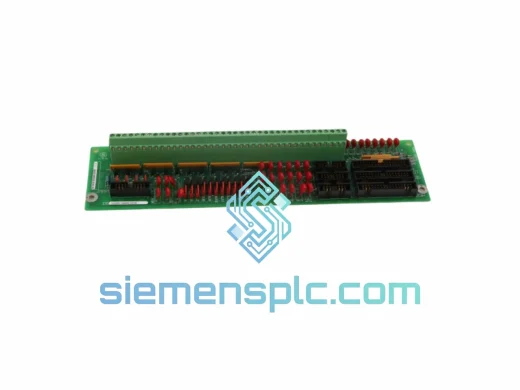
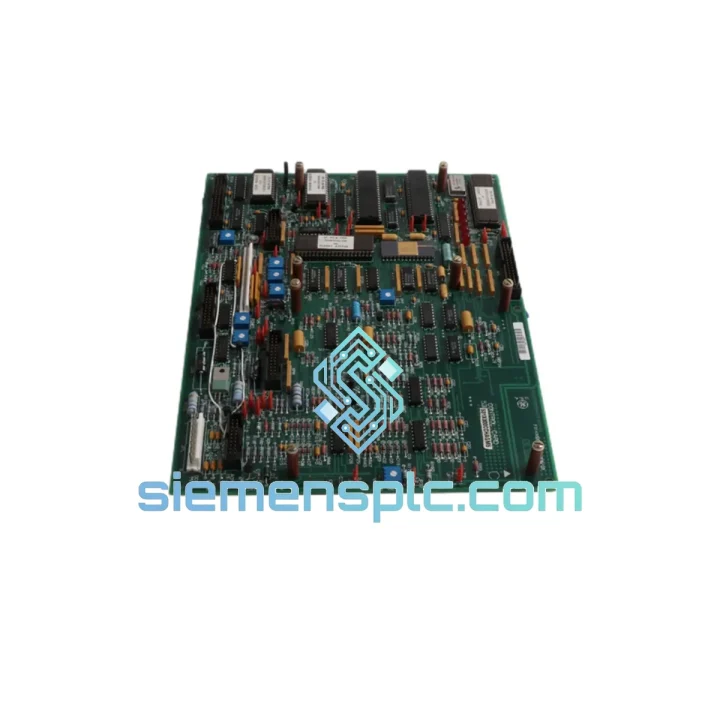
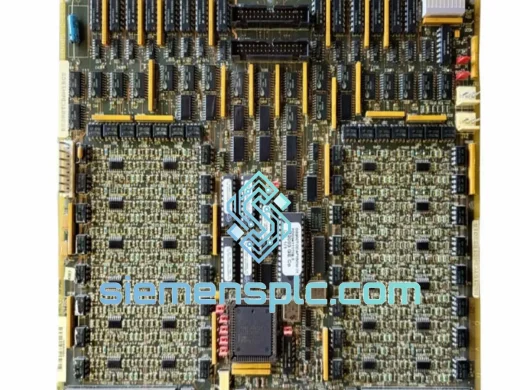
GE 531X300CCHAGM5 Control Card – Mark V Series
Request verified availability, condition, replacement risk review, packing options and courier lead time for 531X300CCHAGM5.
BrandGE
Part Number531X300CCHAGM5
ConditionAvailability Check
Lead TimeRFQ Confirmation
DocumentsDatasheet / photos by RFQ
ShippingExport packing available
Auto-filled RFQ
531X300CCHAGM5
Click Request Quote and the part number is inserted into the inquiry form automatically.
- Reply by email: [email protected]
- WhatsApp / Tel: +86 18359268345
- Mon-Sat 9:00-18:00 GMT+8
Procurement Data
Key Product Information
Core fields for model confirmation and RFQ routing. Detailed product narrative remains below.
- Brand
- GE
- Primary Part Number
- 531X300CCHAGM5
- Product Type
- Control Card
- Series / Family
- Mark V
- Manufacturer
- General Electric (GE)
- Country of Origin
- US
- Catalog Category
- PLCs & Controllers
- Operating Temp.
- 0°C to +60°C (panel-mounted, forced-air cooled enclosure)
- Warranty
- 12 months from date of shipment
Model confirmed for inquiry
531X300CCHAGM5
Send quantity, destination and urgency. The RFQ form keeps this part number attached.
Request Quote
Product Overview
GE 531X300CCHAGM5 Mark V Turbine Control Card: Backbone of Closed-Loop Turbine Regulation
The GE 531X300CCHAGM5 is a dedicated control card engineered for deployment within the General Electric Mark V Turbine Control System — a distributed, triple-redundant architecture designed to govern gas and steam turbine operation in power generation, petrochemical, and heavy industrial facilities. Within the Mark V panel topology, this card occupies a defined slot in the , , or controller core and participates in the continuous voting logic that arbitrates control output across three independent processing channels.
Unlike general-purpose PLCs, the Mark V architecture assigns each physical card a deterministic role in the control loop. The 531X300CCHAGM5 functions as the core control and communication hub within its assigned controller, managing analog and discrete signal conditioning, executing turbine protection algorithms, and maintaining synchronous data exchange with the Mark V’s internal high-speed serial bus (IONET). Its firmware is tightly coupled to GE’s proprietary control block library, which encodes turbine-specific logic for speed governing, temperature limiting, load sharing, and emergency trip sequencing.
The card’s physical construction reflects the thermal and vibration demands of turbine hall environments. The PCB substrate is a multi-layer glass-epoxy laminate with controlled impedance traces for high-frequency signal integrity. Onboard voltage regulators supply isolated ±15 V and +5 V rails to analog front-end circuits, decoupling sensitive measurement chains from backplane power fluctuations. Conformal coating is applied to the assembled board to resist condensation and airborne contaminants common in outdoor or semi-enclosed turbine enclosures.
From a signal-processing standpoint, the 531X300CCHAGM5 interfaces with thermocouple and RTD inputs through dedicated cold-junction compensation circuits and precision instrumentation amplifiers, achieving measurement accuracy within ±0.1% of full scale across the operating temperature range. Discrete I/O channels are optically isolated at the board boundary, with isolation voltages rated to withstand transient surges generated by large inductive loads — a critical design requirement in environments where motor starters and transformer switching events are routine.
The card’s role in the Mark V voting architecture means that its internal watchdog and self-diagnostic circuits are not optional features — they are load-bearing elements of the system’s safety case. On detection of an internal fault (RAM parity error, clock drift, or A/D converter out-of-range), the card asserts a hardware fault flag on the backplane, triggering the Mark V’s arbitration logic to isolate the faulted channel and continue operation on the remaining two. This behavior is deterministic and does not depend on software intervention, which is a fundamental distinction from software-based fault management in conventional DCS platforms.
Real-time Stock & RFQ: [email protected] | WhatsApp: +86 18359268345
Technical Parameters
| Parameter | Specification |
|---|---|
| Manufacturer | General Electric (GE) |
| Part Number | 531X300CCHAGM5 |
| Series | Mark V Turbine Control System |
| Module Function | Core Control & Communication Card |
| Backplane Interface | GE IONET high-speed serial bus |
| Analog Input Accuracy | ±0.1% of full scale (thermocouple / RTD channels) |
| Discrete I/O Isolation | Optical isolation, rated for inductive transient environments |
| Onboard Power Rails | Isolated ±15 V, +5 V (regulated) |
| PCB Construction | Multi-layer glass-epoxy, controlled impedance, conformal coated |
| Watchdog / Self-Diagnostics | Hardware-level, backplane fault flag assertion |
| Redundancy Role | Participates in triple-redundant <R>/<S>/<T> voting logic |
| Operating Temperature | 0°C to +60°C (panel-mounted, forced-air cooled enclosure) |
| Weight | Approx. 440 g |
| Country of Origin | United States |
| Warranty | 12 months from date of shipment |
Hardware Logical Analysis
The 531X300CCHAGM5 implements several hardware design disciplines that distinguish it from commodity control cards:
Triple-Channel Voting Architecture Participation: The card is designed to operate as one of three identical controllers in the Mark V <R>, <S>, <T> configuration. Each controller independently executes the same control algorithm and broadcasts its output to the IONET bus. A dedicated voter circuit — implemented in hardware, not firmware — compares the three outputs on a cycle-by-cycle basis and selects the median value for actuator command. This 2-of-3 selection logic ensures that a single card failure cannot produce a spurious trip or a missed trip, satisfying IEC 61511 SIL 2 architectural constraints for turbine protection functions.
EMC and Transient Suppression Design: The card’s I/O boundary incorporates multi-stage transient suppression: TVS diodes at the connector pins clamp fast transients below 1 µs rise time, followed by RC filters that attenuate conducted interference in the 150 kHz–30 MHz range. The optical isolators at discrete I/O channels provide a galvanic break that prevents ground-loop currents — a persistent source of measurement error in large industrial installations with distributed earthing systems — from corrupting signal integrity.
Analog Front-End Architecture: Thermocouple and RTD measurement channels use dedicated instrumentation amplifiers with common-mode rejection ratios (CMRR) exceeding 100 dB at 50/60 Hz, enabling accurate temperature measurement in environments with strong power-frequency interference. Cold-junction compensation is performed in hardware using a precision thermistor mounted at the terminal block interface, eliminating the software-based compensation errors that accumulate over time in systems with temperature-variable firmware execution rates.
Deterministic Fault Propagation: Unlike software watchdog implementations that depend on the operating system scheduler to execute the watchdog service routine, the 531X300CCHAGM5 uses a hardware timer that must be strobed by the main processor within a fixed window. If the processor fails to strobe the timer — due to a software hang, memory fault, or clock failure — the timer expires and directly asserts the backplane fault line without any software intervention. This guarantees a bounded fault detection time independent of software state.
System Integration Benefits
- Deterministic Real-Time Response: The card’s IONET interface operates on a fixed-cycle scan rate, ensuring that control output updates reach the voter circuit within a guaranteed latency window — a prerequisite for turbine speed governing loops where response time directly affects overspeed protection margin.
- Non-Intrusive Diagnostics: Onboard self-test routines execute in the background without interrupting the control scan, allowing maintenance personnel to assess card health during live turbine operation without requiring a controlled shutdown.
- Seamless Hot-Swap Compatibility: Within a properly configured Mark V panel, a faulted card can be replaced while the remaining two controllers maintain turbine operation, reducing planned maintenance windows and eliminating forced outages for card-level repairs.
- Firmware Consistency Enforcement: The Mark V system verifies firmware version parity across all three controller cards at startup and during runtime. The 531X300CCHAGM5 participates in this handshake, preventing version mismatch conditions that could introduce asymmetric control behavior between channels.
- Structured Alarm and Event Logging: Fault events detected by the card’s hardware diagnostics are time-stamped at the IONET bus level and propagated to the Mark V’s historian, providing a traceable sequence-of-events record for post-incident analysis without relying on operator-initiated logging.
- Isolation of Ground Faults: The optical isolation architecture on discrete I/O channels allows the Mark V system to detect and localize field wiring ground faults without propagating the fault condition into the controller’s internal logic supply, maintaining control integrity during field wiring maintenance activities.
- Compatibility with Mark V Migration Paths: GE’s Mark VIe migration program preserves the physical I/O wiring infrastructure of existing Mark V installations. The 531X300CCHAGM5 is a supported component in this migration framework, meaning its replacement extends the operational life of the surrounding panel hardware without requiring a full rewire.
- Reduced Spare Parts Inventory Complexity: The card’s standardized form factor and connector pinout are consistent across multiple Mark V panel configurations, allowing a single spare unit to serve as a replacement across different turbine frame sizes — reducing the total spare parts inventory burden for multi-unit power plant operators.
Quality Assurance & Global Logistics
Every GE 531X300CCHAGM5 unit supplied by siemensplc.com is sourced through verified industrial channels and subjected to a structured inspection protocol before dispatch. Part number markings, date codes, and board-level component population are cross-referenced against GE OEM documentation to confirm authenticity. Visual inspection covers solder joint integrity, component seating, and the absence of counterfeit indicators including re-marked ICs and non-OEM connector housings. Where test equipment is available, functional bench verification is performed under controlled power conditions.
Units are packaged in anti-static bags with foam-lined cartons rated for international air freight handling. Export documentation — commercial invoice, packing list, and certificate of origin — is prepared as standard for every international shipment. Additional documentation including ECCN classification, material safety data sheets, and inspection reports is available upon request.
Shipments originate from Xiamen, China, with access to DHL Express, FedEx International Priority, and UPS international services. In-stock units are dispatched within 1–3 business days of order confirmation. Sourced units carry a 7–15 business day lead time depending on supply chain availability. All shipments are covered by a 12-month quality warranty from the date of dispatch. Regions served include Asia-Pacific, the Middle East, Europe, the Americas, and Africa.
Contact Information
Email: [email protected]
WhatsApp: +86 18359268345
Web: siemensplc.com
Location: Xiamen, China
© 2026 siemensplc.com. All rights reserved.
Ready to quote
[email protected]
Send This Part Number to Sales
RFQ workflow
Quality workflow ->
Confirmation Process
01Model confirmation
We check the full part number, brand, series and visible nameplate information before quotation.
02Availability reply
Sales confirms stock path, condition option, quantity and realistic lead time for export dispatch.
03Packing & courier
DHL, FedEx, UPS or buyer courier arrangements can be reviewed with packing requirements.
Continue sourcing
Browse full catalog ->
Related Automation Parts
Similar brand or category products for fast comparison and multi-item RFQ lists.
GE
RFQ Ready
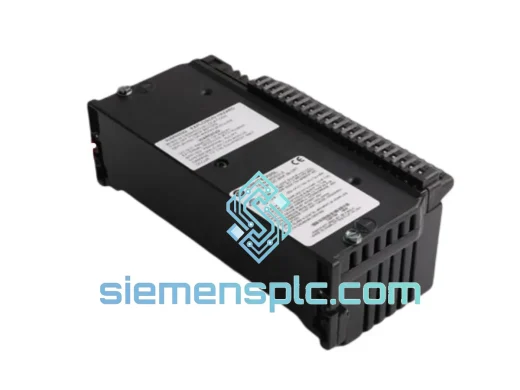
GE IC3600TUAA1 PLC Amplifier Board – Mark V Speedtronic
Mark V
Origin US
PLC Amplifier Board
GE
RFQ Ready
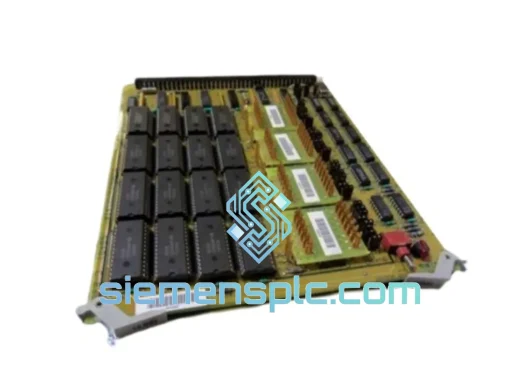
GE DS200TCDAH1BGD Interface Option Board – Mark V Speedtronic
Mark V
Origin US
Interface Option Board