GE
RFQ Ready
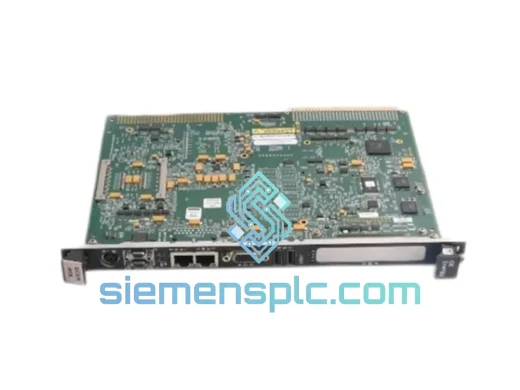
GE IS210MVRBH1A I/O Interface Board – Mark VIe Series
Mark VI
Origin US
I/O Interface Board
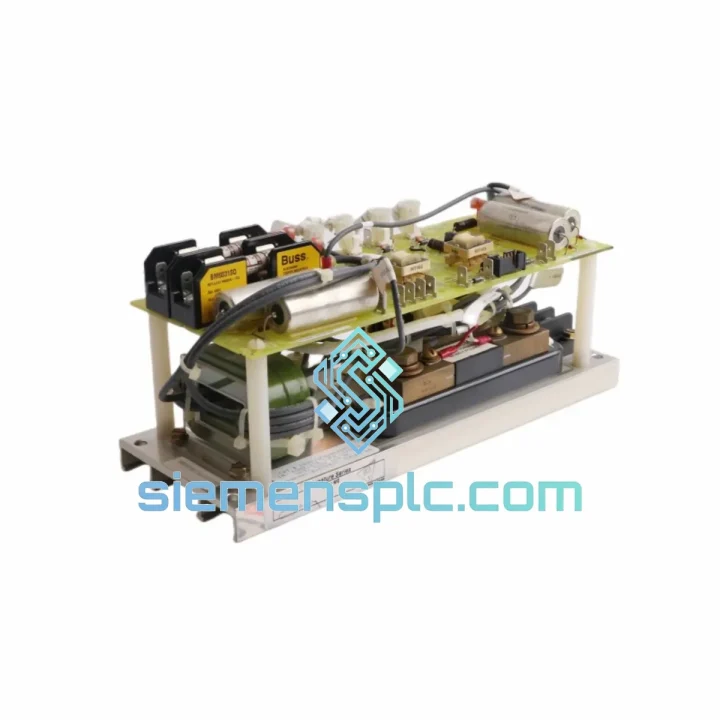
Request verified availability, condition, replacement risk review, packing options and courier lead time for DS200FSAAG2ABA.
Click Request Quote and the part number is inserted into the inquiry form automatically.
Core fields for model confirmation and RFQ routing. Detailed product narrative remains below.
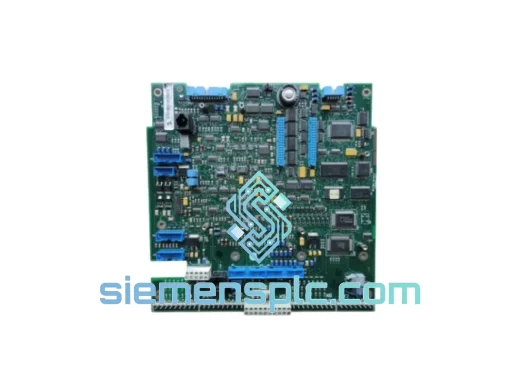
Every hour a Mark VI-controlled turbine sits idle costs real money — lost generation capacity, contractual penalties, and the kind of pressure that makes a 3 AM phone call feel routine. The GE DS200FSAAG2ABA is the I/O signal conditioning module that sits at the nerve center of your Mark VI panel, and when it fails, nothing downstream works. We stock it. We test it. We ship it the same day you call.
Our warehouse in Xiamen holds verified DS200FSAAG2ABA units ready for immediate dispatch via DHL Express or FedEx International Priority. From the moment you confirm your order to the moment the module clears customs at your plant gate, our logistics team tracks every leg. No broker delays. No “lead time TBD.” Just a part on a plane.
URGENT REQUIREMENT? Contact: [email protected] | WhatsApp: +86 18359268345
| Part Number | DS200FSAAG2ABA ✔ Ready to Ship |
| Manufacturer | General Electric (GE) |
| Platform | Mark VI Turbine Control System |
| Module Function | Field Signal Conditioning & I/O Interface |
| Form Factor | PCB module — Mark VI chassis rack-mount |
| Supply Voltage | 24 VDC via Mark VI backplane |
| Operating Temperature | 0 °C to +60 °C | Storage: −40 °C to +85 °C |
| Communication Bus | Mark VI proprietary I/O bus + IONet Ethernet backbone |
| TMR Support | Yes — compatible with Triple Modular Redundancy panels |
| Compliance | CE, UL (per GE Mark VI system certification) |
| Unit Weight | ~380 g |
| Condition | New surplus / Tested refurbished (stated per unit) |
| Dispatch Lead Time | Same day / Next business day — stock confirmed |
| Warranty | 12 months from shipment date |
| Origin | USA (GE manufactured) |
Most common failure signatures for DS200FSAAG2ABA:
Replacement checklist (field-proven sequence):
The DS200FSAAG2ABA was not designed for a climate-controlled server room. It was built for the inside of a turbine control panel — where ambient temperatures swing with load cycles, where vibration from the turbine deck transmits through the floor and into the rack, and where humidity from coastal or tropical sites condenses on PCB surfaces during cold startups.
GE’s Mark VI hardware qualification program subjects modules like the DS200FSAAG2ABA to IEC 60068-series environmental stress screening: thermal cycling from −40 °C to +85 °C, sinusoidal and random vibration per IEC 60068-2-6 and 2-64, and damp heat exposure at 40 °C / 93% RH for 21 days. Conformal coating on the PCB provides a barrier against condensation and airborne contaminants — a critical feature in coastal power plants and offshore platforms where salt-laden air accelerates corrosion on unprotected boards.
Every unit we ship has been inspected for coating integrity, connector pin condition, and component-level anomalies under magnification. Units showing evidence of thermal stress, arc damage, or corrosion are rejected — not refurbished and resold. You receive a module that will perform, not one that will fail again in six months.
Our dispatch hub is located in Xiamen, Fujian — one of China’s primary export ports with direct DHL and FedEx gateway access. Here is exactly what happens after you confirm your order:
For plant sites in remote locations or countries with complex import requirements, contact us before ordering — we have handled shipments to offshore platforms, landlocked industrial zones, and free-trade zones across 40+ countries and can advise on the fastest compliant routing.
Email: [email protected]
WhatsApp: +86 18359268345
Web: siemensplc.com
© 2026. All rights reserved.
We check the full part number, brand, series and visible nameplate information before quotation.
Sales confirms stock path, condition option, quantity and realistic lead time for export dispatch.
DHL, FedEx, UPS or buyer courier arrangements can be reviewed with packing requirements.
Similar brand or category products for fast comparison and multi-item RFQ lists.