GE
RFQ Ready
GE IS200VTCCH1CBD Thermocouple Processor Board – Mark VI IS200 Series
Mark VI
Origin US
Thermocouple Processor Board
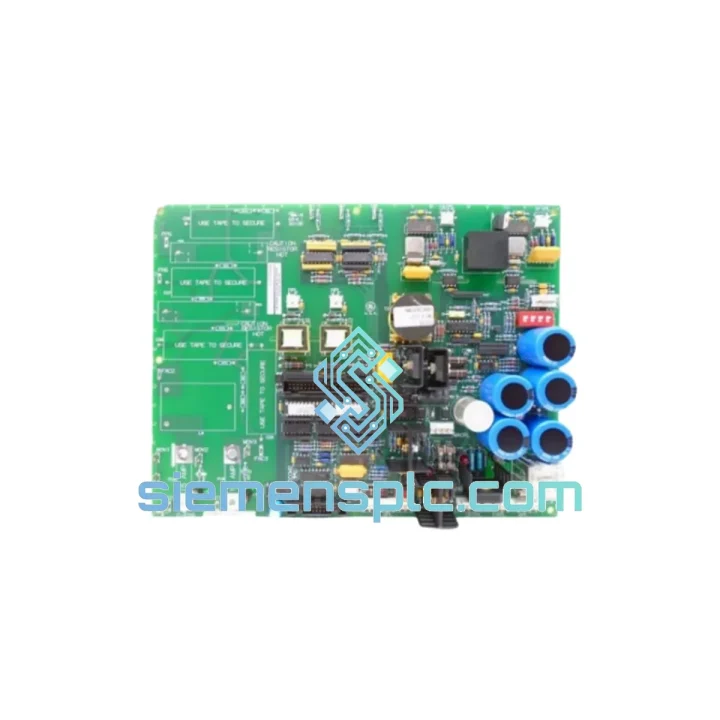
Request verified availability, condition, replacement risk review, packing options and courier lead time for DS200SDCIG2ABA.
Click Request Quote and the part number is inserted into the inquiry form automatically.
Core fields for model confirmation and RFQ routing. Detailed product narrative remains below.
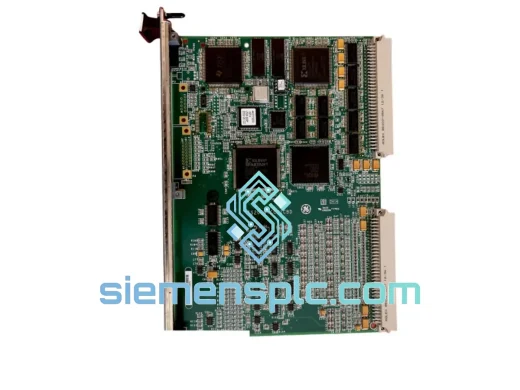
A failed DS200SDCIG2ABA doesn’t just trip an alarm — it blinds your entire Mark VI control loop. Thermocouples go unread, RTD signals drop out, and the turbine protection system loses its eyes. The result: a hard shutdown, a scrambling maintenance crew, and a clock ticking at $10,000–$50,000 per hour in lost generation capacity. We’ve seen it dozens of times. The fix is not complicated — the board needs to be replaced, and it needs to happen fast.
At siemensplc.com, we stock the GE DS200SDCIG2ABA Signal Conditioning Instrumentation Board for exactly this scenario. Verified stock, same-day dispatch from Xiamen, DHL/FedEx express to your plant gate. No 6-week OEM lead time. No procurement committee. Just a working board on your bench within 48–72 hours.
URGENT REQUIREMENT? Contact: [email protected] | WhatsApp: +86 18359268345
| Parameter | Specification |
|---|---|
| Part Number | DS200SDCIG2ABA |
| Manufacturer | GE (General Electric) / GE Vernova |
| Series | Mark VI Turbine Control System |
| Board Function | Signal Conditioning & Instrumentation Interface |
| Input Types Supported | Thermocouple (J/K/T/E), RTD (PT100/PT1000), 4–20 mA, Discrete I/O |
| Form Factor | VME-compatible PCB module, rack-mountable |
| Redundancy Support | TMR (Triple Modular Redundancy) compatible |
| Operating Temperature | 0°C to +60°C (storage: -40°C to +85°C) |
| Humidity Tolerance | 5–95% RH, non-condensing |
| Weight | Approx. 360 g |
| Condition | New Surplus / Refurbished & Tested |
| Compatibility | GE Mark VI / Mark VIe (verify backplane revision) |
| Stock Status | ✅ Ready to Ship – Xiamen Warehouse |
| Lead Time | Same-day dispatch; 48–72 hrs door delivery (DHL/FedEx) |
Common Failure Signatures for DS200SDCIG2ABA:
Replacement Procedure — Field Checklist:
Configuration Note — Mark VIe Compatibility: The DS200SDCIG2ABA is native to the Mark VI VME architecture. If your panel has been upgraded to Mark VIe (Ethernet-based I/O), verify the backplane revision code before ordering. Mark VIe uses IS200-series I/O boards with a different connector standard. Our team can cross-reference your panel serial number to confirm compatibility.
Turbine control rooms are not office environments. The DS200SDCIG2ABA was engineered for the realities of industrial deployment — not lab conditions.
Vibration: Gas turbine skids transmit continuous broadband vibration through the control panel structure. The DS200SDCIG2ABA’s PCB layout uses conformal coating on all signal-path components and reinforced solder joints at high-stress connector points. Component-level vibration testing is conducted per IEC 60068-2-6 (sinusoidal) and IEC 60068-2-64 (random). Boards that fail these tests never reach our shelf.
Thermal Cycling: Cold startups followed by full-load operation create significant thermal stress on PCB laminates and solder joints. The SDCI board’s multi-layer PCB uses controlled-impedance traces with thermal relief pads at all through-hole components. Operating range is validated from 0°C to +60°C continuous, with short-term excursions to +70°C tolerated without performance degradation.
Humidity & Condensation: Coastal power plants, offshore platforms, and tropical installations expose control panels to sustained high humidity. The DS200SDCIG2ABA’s conformal coating (acrylic, IPC-CC-830 compliant) provides a moisture barrier across the entire board surface, protecting against condensation-induced leakage currents that corrupt analog signal integrity.
EMI/RFI Immunity: High-voltage switchgear, variable frequency drives, and generator excitation systems generate significant electromagnetic interference. The SDCI board’s analog input stages incorporate hardware low-pass filtering and differential signal architecture to reject common-mode noise — a critical design feature in environments where a 1 mV noise spike on a thermocouple input can trigger a spurious turbine trip.
Every unit we ship has been inspected and tested under conditions that replicate these stresses. We do not ship boards that have passed only a visual check.
Our dispatch hub is in Xiamen, China — a major international freight gateway with daily DHL and FedEx export flights to Europe, the Middle East, Southeast Asia, and the Americas. Here’s exactly how your order moves:
We have shipped GE Mark VI components to power plants in 40+ countries. Customs clearance, import duties, and HS code classification are handled correctly the first time — no re-exports, no delays caused by documentation errors.
Email: [email protected]
WhatsApp: +86 18359268345
Web: siemensplc.com
© 2026 siemensplc.com. All rights reserved.
We check the full part number, brand, series and visible nameplate information before quotation.
Sales confirms stock path, condition option, quantity and realistic lead time for export dispatch.
DHL, FedEx, UPS or buyer courier arrangements can be reviewed with packing requirements.
Similar brand or category products for fast comparison and multi-item RFQ lists.