GE
RFQ Ready
GE IS210MVRBH1A I/O Interface Board – Mark VIe Series
Mark VI
Origin US
I/O Interface Board
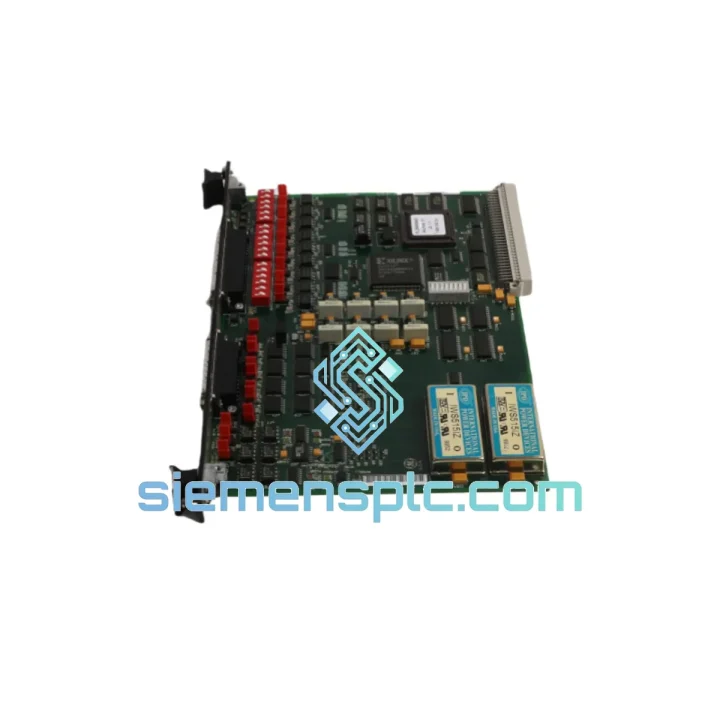
Request verified availability, condition, replacement risk review, packing options and courier lead time for DS200SIOBH1ABA.
Click Request Quote and the part number is inserted into the inquiry form automatically.
Core fields for model confirmation and RFQ routing. Detailed product narrative remains below.
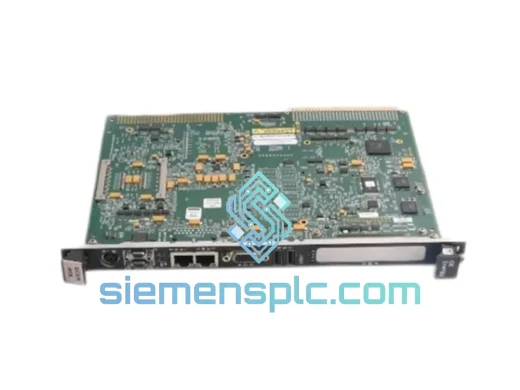
The DS200SIOBH1ABA is the Serial I/O Board (SIOB) within GE’s Speedtronic Mark VI turbine control platform — a board whose function is deceptively simple in name but structurally critical in practice. Every real-time data exchange between the Mark VI controller core and its distributed I/O racks passes through this board. When it fails, the controller loses its communication backbone. The turbine does not degrade gracefully; it trips. Understanding the DS200SIOBH1ABA’s role in the control loop is therefore not an academic exercise — it is a prerequisite for any procurement or maintenance strategy involving Mark VI-based assets.
The Mark VI platform uses a proprietary high-speed serial bus architecture to interconnect the main controller boards (TCEA, TCQA, TCQC) with the I/O terminal boards distributed across the control cabinet. The SIOB sits at the physical and logical boundary of this bus, managing the serialization and deserialization of process data, handshaking protocols, and fault-state signaling. In Triple Modular Redundant (TMR) configurations — the standard for gas turbines operating under continuous-duty power generation obligations — three SIOB boards operate in parallel, with the Mark VI’s voting logic continuously arbitrating their outputs. A single board degradation is masked at the system level, but the degraded board must be replaced before the next planned outage to restore full redundancy margin.
Real-time Stock & RFQ: [email protected] | WhatsApp: +86 18359268345
| Parameter | Specification |
|---|---|
| Part Number | DS200SIOBH1ABA |
| Manufacturer | General Electric (GE) |
| Series | Speedtronic Mark VI Turbine Control System |
| Board Function | Serial I/O Interface Board (SIOB) |
| Form Factor | PCB module, Mark VI rack-mount format |
| Bus Architecture | GE proprietary high-speed serial I/O bus |
| Redundancy Support | Simplex and TMR (Triple Modular Redundant) configurations |
| Controller Compatibility | TCEA, TCQA, TCQC Mark VI controller boards |
| Operating Temperature | 0 °C to +60 °C |
| Storage Temperature | –40 °C to +85 °C |
| Humidity | 5% to 95% RH, non-condensing |
| Power Supply | +5 VDC via Mark VI backplane; ±15 VDC for analog signal conditioning |
| Weight | Approx. 300 g |
| Lead Time (In Stock) | Ships within 2–3 business days of order confirmation |
| Lead Time (Out of Stock) | Global sourcing: typically 2–4 weeks; contact for current status |
| Warranty | 12 months against functional failure under normal operating conditions |
| Condition | New surplus / Tested and verified |
The DS200SIOBH1ABA’s hardware design reflects the engineering constraints of a platform built for continuous, unattended operation in high-vibration, high-EMI environments typical of gas turbine enclosures. Several design decisions are worth examining from a systems architecture perspective.
Serial Bus Serialization Logic. The SIOB implements a dedicated UART-class serialization engine that converts parallel backplane data into a framed serial stream for transmission to I/O terminal boards. The framing protocol includes cyclic redundancy check (CRC) fields per data packet, enabling the receiving terminal board to detect single-bit and burst errors without requiring a retransmission handshake — a design choice that preserves deterministic cycle time even under marginal signal conditions.
EMC Hardening. The board’s analog front-end and digital logic sections are separated by a ground plane partition, reducing capacitive coupling between high-frequency digital switching noise and the lower-level analog signal paths. Ferrite bead filters are placed at the board’s I/O connector interfaces to suppress common-mode noise injected from long cable runs between the control cabinet and field junction boxes — a practical necessity in turbine enclosures where cable trays run adjacent to high-current motor starters and ignition transformers.
TMR Voting Interface. In TMR configurations, the SIOB does not independently arbitrate between the three controller channels. Instead, it presents its serialized data stream to the Mark VI’s dedicated voting logic (implemented in the TCEA/TCQA controller boards), which performs 2-of-3 majority voting at the process variable level. The SIOB’s role is to ensure its data stream is time-stamped and sequenced correctly so the voting logic can align inputs from all three channels within the same scan cycle. Any SIOB that introduces latency beyond the voting window tolerance is flagged as a fault source, isolating the degraded channel without tripping the turbine.
Connector and Mechanical Integrity. The board uses gold-plated edge connectors on the VME-compatible backplane interface, chosen for their resistance to fretting corrosion — a failure mode common in vibrating environments where repeated micro-motion between connector surfaces degrades contact resistance over time. The PCB substrate is a multi-layer FR4 construction with controlled impedance traces on the high-speed serial signal layers, maintaining signal integrity at the bus operating frequency across the full operating temperature range.
Every DS200SIOBH1ABA unit supplied by siemensplc.com undergoes a structured intake and verification process before dispatch. Boards are visually inspected at component level for signs of thermal stress, corrosion, mechanical damage, and counterfeit indicators. Units designated as tested stock are bench-verified using Mark VI-compatible test configurations to confirm serial communication functionality and signal integrity across the full channel set. Inspection records are maintained per unit and are available to buyers operating under quality-audited procurement frameworks.
Packaging follows ESD-safe handling protocols throughout: anti-static bags, foam-lined cartons, and moisture barrier film for international shipments. Each shipment includes a commercial invoice, packing list, and country-of-origin documentation prepared in compliance with Xiamen Customs export regulations — ensuring smooth clearance at destination ports across North America, Europe, the Middle East, Southeast Asia, and beyond.
Dispatch is from Xiamen, China — a designated international logistics hub with direct freight connections to major global ports and express courier hubs. DHL Express, FedEx International Priority, and UPS Worldwide Express services are available, with typical transit times of 3–5 business days to most destinations. For bulk orders or freight-sensitive shipments, sea freight consolidation via Xiamen Port is also available with full export documentation support.
All units are covered by a 12-month warranty against functional failure under normal operating conditions. Warranty claims are handled directly by our technical team, with replacement dispatch prioritized to minimize any impact on plant operations.
Email: [email protected]
WhatsApp: +86 18359268345
Web: siemensplc.com
Location: Xiamen, China
© 2026 siemensplc.com. All rights reserved.
We check the full part number, brand, series and visible nameplate information before quotation.
Sales confirms stock path, condition option, quantity and realistic lead time for export dispatch.
DHL, FedEx, UPS or buyer courier arrangements can be reviewed with packing requirements.
Similar brand or category products for fast comparison and multi-item RFQ lists.