
GE
In Stock OK
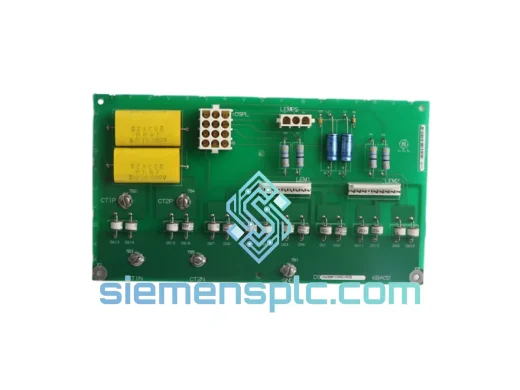
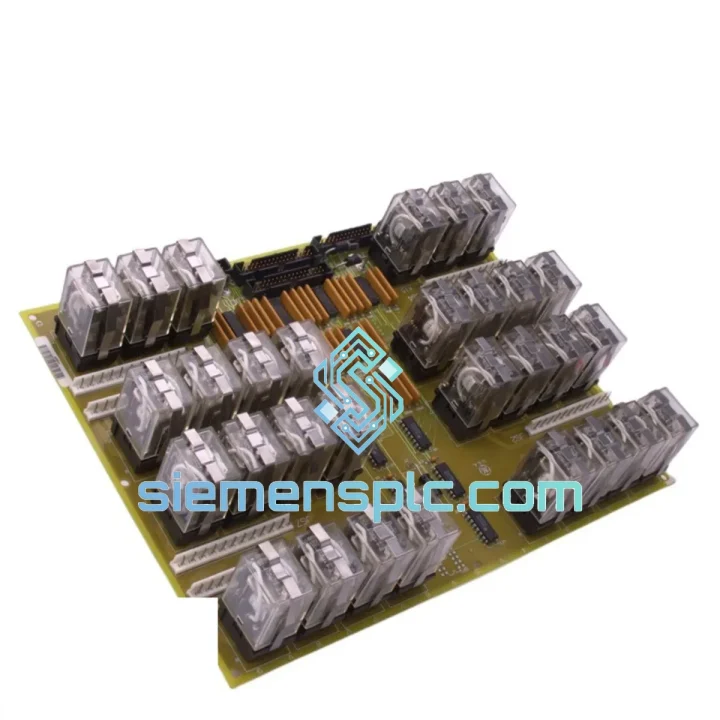
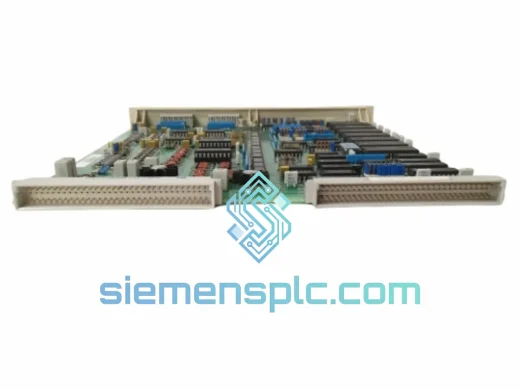
GE DS200SLCCG3ACC DS215DENQG3QZZ01A PC Board – Mark V Speedtronic
Request verified availability, condition, replacement risk review, packing options and courier lead time for DS200SLCCG3ACC DS215DENQG3QZZ01A.
BrandGE
Part NumberDS200SLCCG3ACC DS215DENQG3QZZ01A
ConditionAvailability Check
Lead TimeRFQ Confirmation
DocumentsDatasheet / photos by RFQ
ShippingExport packing available
Auto-filled RFQ
DS200SLCCG3ACC DS215DENQG3QZZ01A
Click Request Quote and the part number is inserted into the inquiry form automatically.
- Reply by email: [email protected]
- WhatsApp / Tel: +86 18359268345
- Mon-Sat 9:00-18:00 GMT+8
Procurement Data
Key Product Information
Core fields for model confirmation and RFQ routing. Detailed product narrative remains below.
- Brand
- GE
- Primary Part Number
- DS200SLCCG3ACC DS215DENQG3QZZ01A
- Product Type
- PC Board
- Series / Family
- Mark V
- Manufacturer
- General Electric (GE)
- Country of Origin
- US
- Catalog Category
- Industrial Automation Spares
- Operating Temp.
- 0 °C to +60 °C (panel interior ambient)
- Humidity
- 5% to 95% RH, non-condensing
- Warranty
- 12 months — functional guarantee from date of shipment
Model confirmed for inquiry
DS200SLCCG3ACC DS215DENQG3QZZ01A
Send quantity, destination and urgency. The RFQ form keeps this part number attached.
Request Quote
Product Overview
GE DS200SLCCG3ACC DS215DENQG3QZZ01A — Signal Logic Control Card in the Mark V Speedtronic Architecture
The DS200SLCCG3ACC, paired with its companion assembly DS215DENQG3QZZ01A, constitutes the Signal Logic Control Card (SLCC) subsystem within the GE Mark V Speedtronic Turbine Control System. This dual-board assembly occupies a defined slot in the Mark V panel chassis and serves as the primary interface between field-wired analog/discrete signals and the core TCCA (Turbine Control Core Assembly) processor. Its function is not peripheral — it sits directly in the deterministic control path governing fuel valve positioning, speed governing, protective trip sequencing, and load control for gas and steam turbines rated from Frame 5 through Frame 9.
Unlike generic I/O expanders, the SLCC architecture implements hardware-level signal validation prior to data transfer across the Mark V backplane. Each input channel passes through discrete conditioning circuitry before being latched into the dual-ported RAM buffer shared with the TCCA. This design eliminates the possibility of a corrupted field signal propagating undetected into the control algorithm — a requirement that is non-negotiable in turbine protection applications where a missed trip can result in catastrophic overspeed.
Real-time Stock & RFQ: [email protected] | WhatsApp: +86 18359268345
Technical Parameters
| Manufacturer | General Electric (GE) |
| Primary Part Number | DS200SLCCG3ACC |
| Companion Assembly | DS215DENQG3QZZ01A |
| Board Designation | Signal Logic Control Card (SLCC) |
| Platform | GE Mark V Speedtronic Turbine Control System |
| Backplane Interface | Mark V proprietary VME-derivative parallel bus |
| Analog Input Channels | Up to 16 differential analog inputs (configuration-dependent) |
| Discrete I/O | 24 VDC discrete inputs; relay-driven discrete outputs |
| Signal Isolation | Optical isolation on all discrete input channels; transformer isolation on analog inputs |
| Operating Voltage | +5 VDC (logic), ±15 VDC (analog rails) — supplied via Mark V backplane |
| Operating Temperature | 0 °C to +60 °C (panel interior ambient) |
| Humidity | 5% to 95% RH, non-condensing |
| EMC Compliance | Designed to GE Speedtronic EMC specifications; shielded PCB layers |
| Form Factor | Rack-mount PCB, Mark V panel chassis slot |
| Revision | G3 (third hardware revision of DS200SLCC series) |
| Condition Available | Refurbished / Tested / New Old Stock (NOS) |
| Warranty | 12 months — functional guarantee from date of shipment |
Hardware Logical Analysis
The DS200SLCCG3ACC implements a three-stage signal processing pipeline before any data reaches the Mark V backplane. In the first stage, incoming field wiring terminates on the DS215DENQG3QZZ01A terminal board, which provides physical screw-terminal landing points and passive surge suppression. Transient voltage suppressors (TVS diodes) rated at ±60 V clamp inductive kickback from solenoid coils and relay coils wired to the same field cable bundle — a common source of board failure in older G1 and G2 revisions that lacked this protection tier.
In the second stage, discrete input signals pass through optocoupler arrays. The G3 revision specifies high-speed optocouplers with a propagation delay of under 2 µs, ensuring that fast-changing discrete events — such as proximity probe pulses from the turbine speed wheel — are captured without aliasing at the 10 ms scan rate of the TCCA. Analog inputs are routed through instrumentation amplifiers with a common-mode rejection ratio (CMRR) exceeding 80 dB at 50/60 Hz, which is critical in turbine enclosures where ground loops between thermocouple shields and panel ground can introduce several hundred millivolts of common-mode noise.
The third stage is the dual-ported RAM interface. The SLCC writes conditioned signal data into a shared memory block that the TCCA reads on every control scan. This architecture decouples the I/O acquisition timing from the control execution timing, allowing the TCCA to maintain a deterministic 10 ms control loop regardless of field signal update rates. The G3 hardware revision also introduced a watchdog timer on the SLCC side: if the TCCA fails to read the shared memory within a configurable timeout window, the SLCC asserts a hardware fault flag on the backplane, triggering a diagnostic alarm without requiring software intervention.
EMC hardening on the DS200SLCCG3ACC includes a four-layer PCB stackup with dedicated ground planes on layers 2 and 3, isolating the analog signal traces on layer 1 from the digital logic on layer 4. Ferrite beads are placed on all power supply entry points to suppress high-frequency conducted emissions from the backplane power rails. The board’s metal front panel provides a Faraday shield effect when properly seated in the grounded Mark V chassis, attenuating radiated emissions from adjacent high-power SCR firing boards that share the same panel enclosure.
System Integration Benefits
- Deterministic scan-cycle integrity: The dual-ported RAM architecture guarantees that the TCCA control loop executes at a fixed 10 ms interval regardless of field signal activity, preserving the real-time determinism that turbine governing algorithms require.
- Hardware-enforced signal validation: Optocoupler and instrumentation amplifier stages reject out-of-range signals before they enter the control data path, preventing false trips or missed trips caused by field wiring faults.
- Backplane fault transparency: The onboard watchdog timer generates a discrete fault flag readable by the Mark V diagnostic software (CIMPLICITY or GE Toolbox), enabling maintenance teams to isolate SLCC faults without removing the board from service for bench testing.
- Surge-protected field termination: TVS diode arrays on the DS215DENQG3QZZ01A companion board protect the SLCC from inductive transients up to ±60 V, extending mean time between failures (MTBF) in installations with long field cable runs.
- High CMRR analog front end: 80 dB+ CMRR at power-line frequencies eliminates the need for signal isolators on thermocouple and RTD inputs, reducing BOM cost and panel wiring complexity.
- Direct slot-for-slot replacement: The DS200SLCCG3ACC maintains physical and electrical compatibility with the Mark V chassis slot originally occupied by G1 and G2 revisions, eliminating the need for panel rewiring or firmware changes in most replacement scenarios.
- Reduced forced-outage duration: Stocking a tested spare SLCC assembly on-site reduces the mean time to repair (MTTR) for I/O-related faults from weeks (OEM lead time) to hours (board swap and functional verification).
- Compatibility across turbine frames: Verified for use in Mark V panels controlling GE Frame 5, Frame 6B, Frame 7EA, Frame 7FA, and Frame 9E turbines, covering the majority of the installed base in power generation and industrial compression applications.
- Supports TMR (Triple Modular Redundancy) configurations: In Mark V TMR panels, three SLCC boards operate in parallel with majority-vote arbitration. A single board replacement does not require system shutdown if the remaining two channels remain healthy, enabling online maintenance.
- Documented test traceability: Each unit shipped from our facility carries a functional test record including channel-by-channel I/O verification results, providing the documentation baseline required for ISO 55000 asset management and NERC CIP maintenance records.
Quality Assurance & Global Logistics
Every DS200SLCCG3ACC / DS215DENQG3QZZ01A assembly offered through siemensplc.com undergoes a structured acceptance test protocol before it is added to available inventory. The protocol covers visual PCB inspection under 10× magnification (checking for lifted pads, cracked solder joints, corroded traces, and failed electrolytic capacitors), powered functional verification of all I/O channels against known reference signals, and a 4-hour burn-in soak at 50 °C to screen for early-life component failures. Units that do not pass all three stages are quarantined and not offered for sale.
Sourcing is conducted exclusively through decommissioned power plant asset liquidations, certified MRO distributors with documented chain-of-custody records, and verified OEM surplus channels. Counterfeit screening includes part marking verification against GE engineering drawings and component-level inspection of critical ICs for remarked date codes.
Shipment originates from our warehouse in Xiamen, China. In-stock units are dispatched within 1–3 business days of order confirmation. Export documentation — including commercial invoice, packing list, and certificate of origin — is prepared to meet customs requirements for all major import markets including the EU, USA, Middle East, and Southeast Asia. Freight options include DHL Express (3–5 days door-to-door), FedEx International Priority, and sea freight for multi-unit orders. All shipments use ESD-safe inner packaging with foam-lined outer cartons rated for air freight handling.
Contact Information
Email: [email protected]
WhatsApp: +86 18359268345
Web: siemensplc.com
Location: Xiamen, China
© 2026 siemensplc.com. All rights reserved.
Ready to quote
[email protected]
Send This Part Number to Sales
RFQ workflow
Quality workflow ->
Confirmation Process
01Model confirmation
We check the full part number, brand, series and visible nameplate information before quotation.
02Availability reply
Sales confirms stock path, condition option, quantity and realistic lead time for export dispatch.
03Packing & courier
DHL, FedEx, UPS or buyer courier arrangements can be reviewed with packing requirements.
Continue sourcing
Browse full catalog ->
Related Automation Parts
Similar brand or category products for fast comparison and multi-item RFQ lists.
GE
RFQ Ready
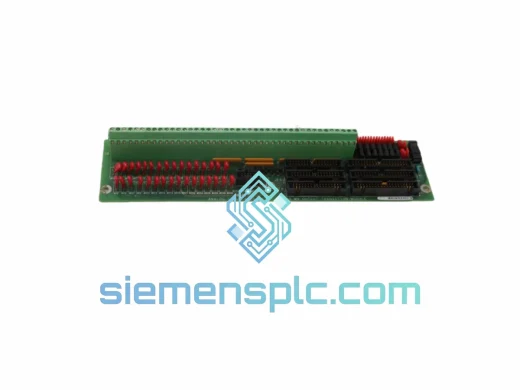
GE DS200TBQCG1ABB Analog Termination Board – Mark V Series
Mark V
Origin US
Analog Termination Board
GE
RFQ Ready
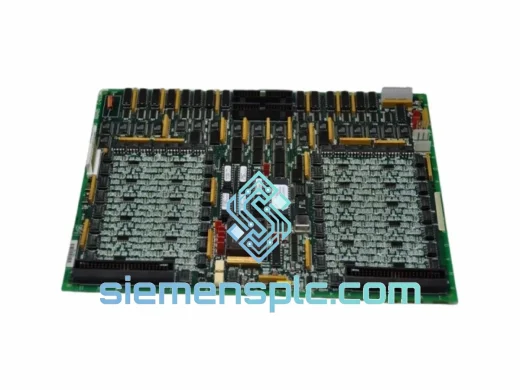
GE DS215TCDAG1BZZ01A DS200TCDAG1BDB Turbine Control PCB – Mark V
Mark V
Origin US
Turbine Control PCB
GE
RFQ Ready
GE DS200TCPDG2B Power Distribution Module – Mark V Speedtronic
Mark V
Origin US
Power Distribution Module